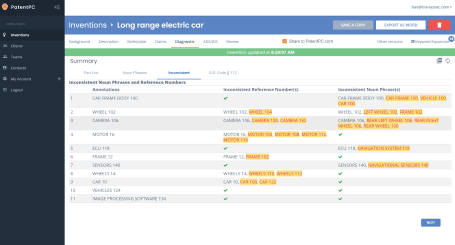
If you are building something new, your ideas are your edge. But ideas are fragile. If you do not capture them the right way, you can lose time, lose control, or even lose your rights. A strong invention disclosure form is not busy work. It is the first real step in turning what is in your head, your code, or your lab into a real asset you can own, defend, and grow. When done right, it makes the patent process faster, clearer, and far less painful. When done poorly, it slows everything down and can weaken your protection before you even begin.
How to Describe Your Invention So Nothing Gets Lost
If your invention disclosure leaves room for guesswork, you are already losing ground. The goal is not to sound smart.
The goal is to remove confusion. When someone reads your disclosure, they should see your invention as clearly as you do.
No gaps. No hidden steps. No missing logic. This section is about how to capture your invention in a way that protects your business, not just documents your idea.
Start With the Core Engine of the Invention
Before you describe features, dashboards, or user flows, slow down and identify the true engine of your invention. Every strong technology has a core that makes it work.
That core might be a new training method for a model, a new way to compress data, a new hardware layout, or a new control system.
Begin by writing a short explanation of that engine as if you were explaining it to a technical peer who has never seen your product. Focus on what actually drives the result.
If your system improves battery life, explain what inside the system makes that happen. If your platform reduces fraud, explain what step or structure causes that reduction.
This forces you to separate the invention from the product. Investors care about the product. Patent protection cares about the engine.
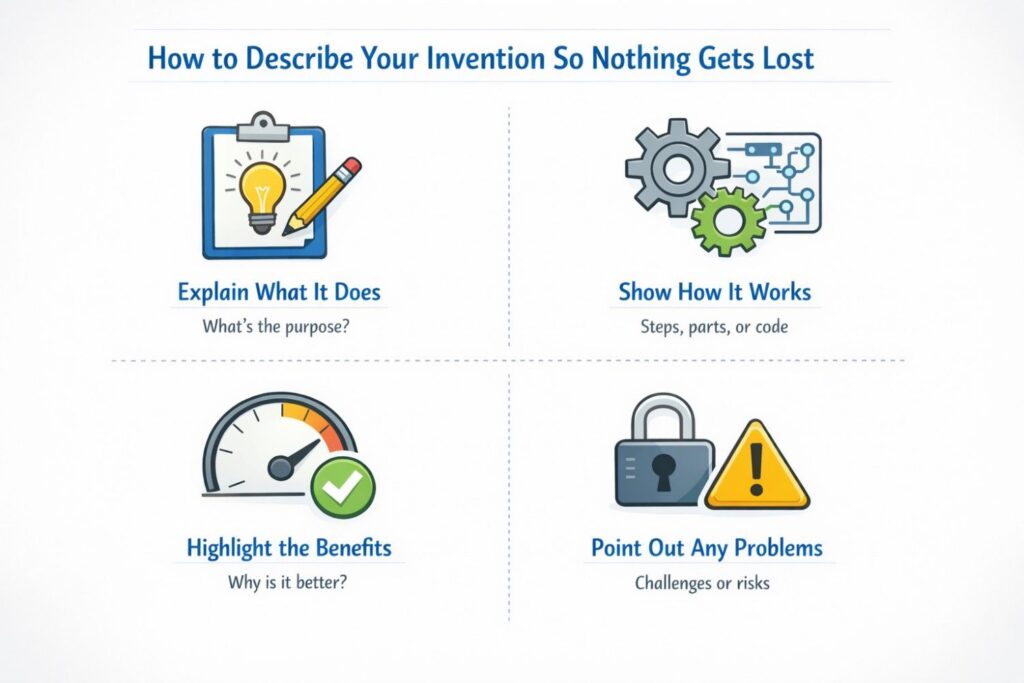
A practical way to do this is to pretend your UI does not exist. If the screens disappeared, what would still remain as your invention? That answer belongs at the center of your disclosure.
Separate What Is Necessary From What Is Optional
Many founders mix core elements with optional features. This creates confusion later when claims are drafted. If everything looks required, your protection may become narrow.
As you describe your invention, clearly explain which components must exist for it to function and which ones are optional improvements.
If your algorithm needs three processing steps to work, state that clearly. If a fourth step improves performance but is not required, say that too.
This gives your attorney room to draft broader protection around the core while also protecting valuable upgrades.
From a business view, this matters. If a competitor removes one small feature and avoids your patent, that is a weak position. A well-structured disclosure prevents that problem early.
Describe the Flow of Information With Precision
For software and deep tech startups, information flow is often where the real invention lives. It is not just about what data you collect. It is about how that data moves, changes, and turns into output.
Take the time to explain where the data starts, how it enters the system, what transformations happen, and what leaves the system. Do not assume the reader understands implied steps.
If you clean data, explain how. If you transform it, describe the logic. If you apply a model, explain how the model is trained and how it is used during operation. If there are thresholds, rules, or decision layers, spell them out.
An effective tactic is to walk through one example from start to finish. Choose a real use case. Follow one piece of data through your system step by step. This makes abstract systems feel concrete.
The more precise you are here, the harder it becomes for someone else to copy your structure without stepping into your claims later.
Capture the Technical Choices You Made and Why
Every invention includes choices. You chose one structure over another. One model over another. One architecture over another.
Those decisions matter.
In your disclosure, explain why you made certain technical choices. Did you select a specific model type because it reduces latency? Did you design your hardware layout to minimize heat?
Did you structure your database in a certain way to improve query speed?
When you explain the reason behind a choice, you highlight the technical advantage. That advantage often becomes a key argument during patent examination.
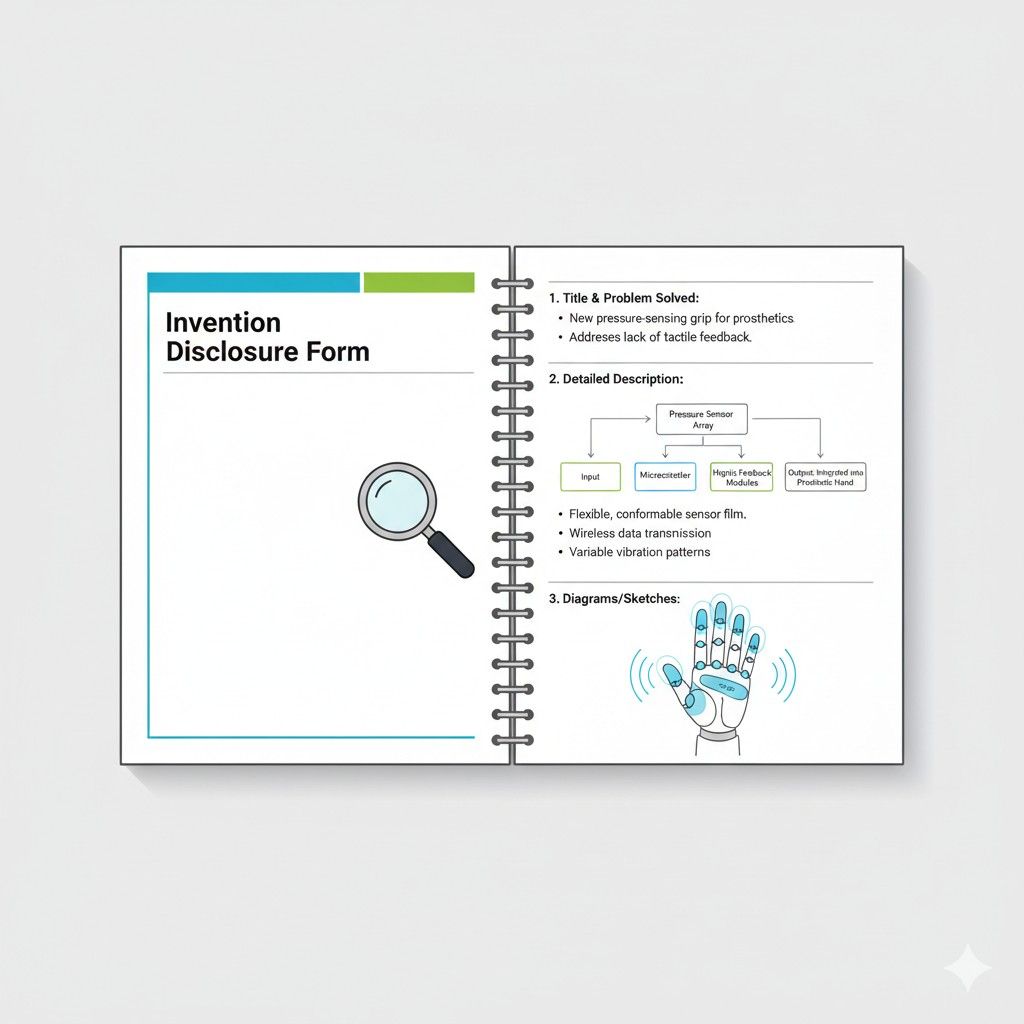
This is also powerful for your business. It forces you to document the thinking behind your system. That record becomes valuable when you scale, hire new engineers, or prepare for due diligence.
Show How the Pieces Work Together as a System
An invention is often more than one new part. It can be the combination of known parts arranged in a new way.
If your invention relies on a specific interaction between modules, describe that interaction clearly. Explain what each component does alone, then explain what changes when they operate together.
For example, maybe your system combines real-time sensor data with historical patterns in a way that improves prediction. The novelty may not be in the sensor or the model alone, but in how they interact.
Make that interaction explicit. Describe timing. Describe dependencies. Describe triggers.
This helps prevent a narrow reading of your invention. It also creates stronger ground for protecting the overall architecture, not just isolated elements.
Address Edge Cases and Failure Modes
Strong disclosures think beyond the happy path.
Ask yourself what happens when inputs are missing, corrupted, or delayed. What happens if a hardware component fails? What happens if the model confidence drops below a threshold?
Describe how your system handles these situations. Even if those features feel secondary, they show depth and technical thought.
From a strategic point of view, this is powerful. It shows that your invention is not a rough concept. It is a robust solution. That can strengthen the patent and strengthen your company story.
It also forces your team to think about resilience. Many startups discover system weaknesses during this exercise, which allows them to improve the product before scaling.
Translate Code Into Clear Functional Language
If your invention lives inside code, do not paste thousands of lines into your disclosure and hope for the best.
Instead, describe what the code does in functional terms. Explain the logic. Explain the structure. Explain how different functions connect.
You can include key snippets if they show something unique, but the heart of your disclosure should explain behavior, not just syntax.
Imagine that your current tech stack disappears in five years. Would your description still make sense? It should.
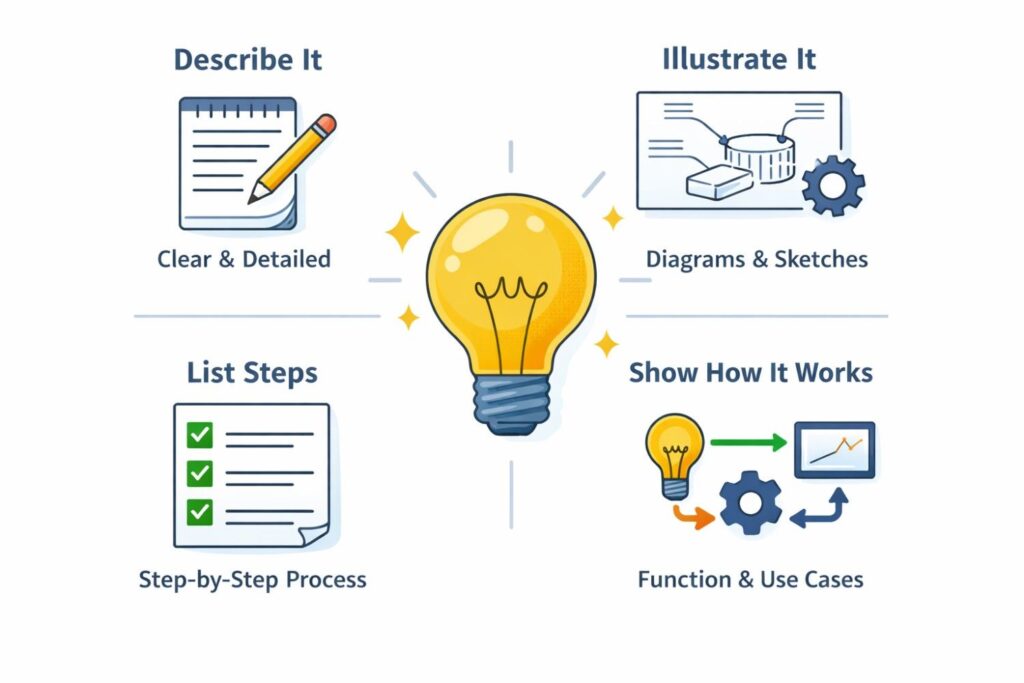
This approach keeps your patent from being tied too tightly to one programming language or framework. That flexibility is critical as your company evolves.
Document Real-World Performance Results
If you have test results, include them. If your system reduces error rates, speeds up processing, cuts energy use, or improves accuracy, state those results clearly.
Explain how you measured them. Briefly describe the test setup.
This is not marketing. It is evidence of technical improvement.
Real performance data strengthens your story during examination. It can also help defend your patent later if challenged.
From a business angle, this builds a record of your technical progress. Investors and partners respect data-backed innovation.
Clarify Who Contributed and When
A good invention disclosure does not just describe the technology. It also records the human side of creation.
Write down who contributed to the inventive concepts. Be specific about contributions. If one engineer designed the core algorithm and another improved the training pipeline, capture that.
Include dates when key breakthroughs occurred.
This protects your company. Clear records reduce disputes and protect ownership. It also ensures the right inventors are named, which is legally important.
For fast-moving startups, this discipline can prevent serious problems later.
Write With the Assumption That Someone Will Challenge It
When describing your invention, adopt a defensive mindset. Imagine a competitor trying to argue that your invention is obvious or not new.
Does your description clearly show what makes it different? Does it explain why the improvement is real? Does it highlight technical advantages?
If the answer is weak, strengthen the explanation.
This mindset creates stronger patents from the start. It also sharpens your understanding of your own edge in the market.
At PowerPatent, our platform guides you through this type of thinking. The software prompts you to expand on weak spots, and real patent attorneys review the disclosure to ensure nothing important is missing.
That combination helps founders avoid costly blind spots and delays. If you want to see how this process works in practice, you can explore it here: https://powerpatent.com/how-it-works
Treat the Disclosure as a Strategic Asset, Not a Form
Finally, shift your mindset.
This is not paperwork for a lawyer. This is a strategic document for your company.
A strong disclosure becomes the backbone of your patent. It supports investor conversations. It strengthens your position during partnerships. It prepares you for due diligence. It can even guide future product development.
When you treat it seriously, you create leverage.
When you rush it, you weaken your own foundation.
Taking an extra few hours to think deeply and describe your invention clearly can save months of back and forth later. It can reduce legal cost. It can increase the strength of your claims.
It can protect the core of your startup when competitors start paying attention.
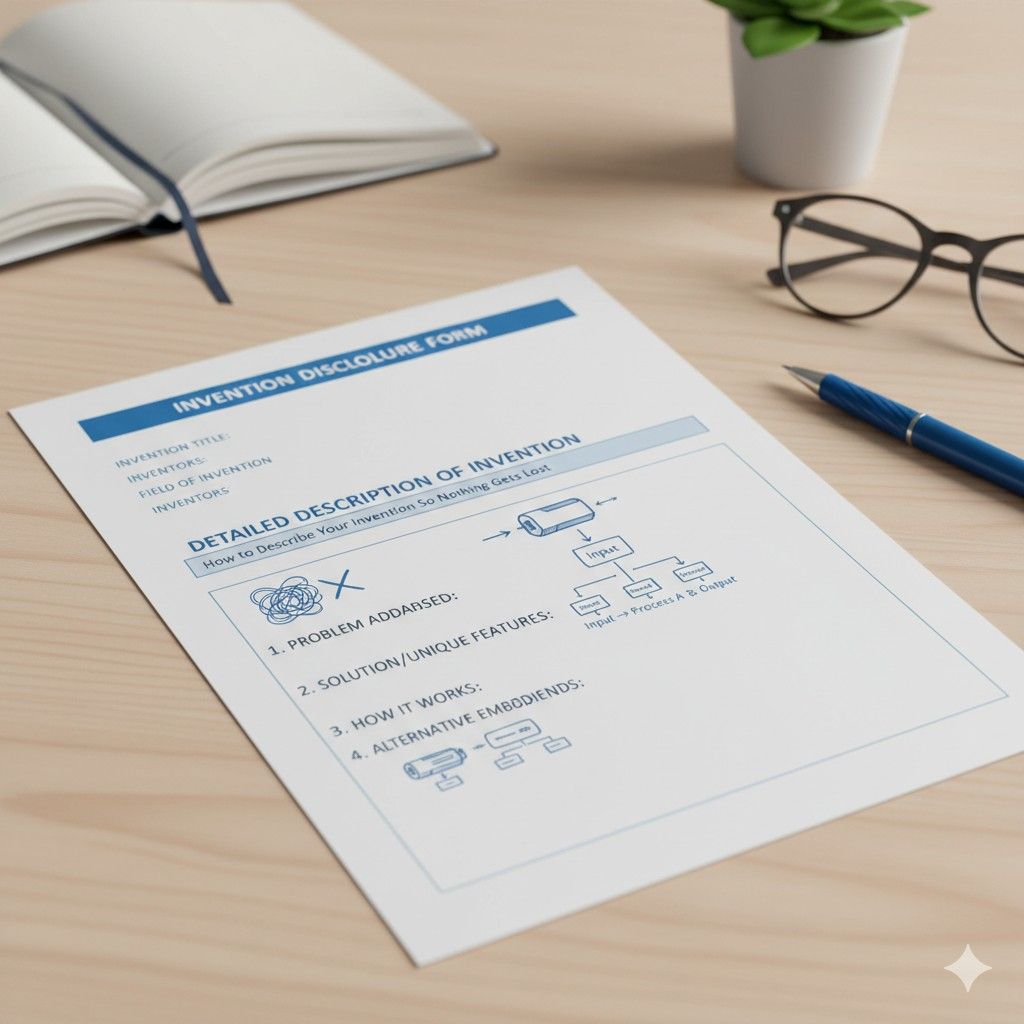
And if you want support that blends smart software with real attorney insight, built specifically for founders and engineers, PowerPatent was designed for exactly this stage.
You can see how it helps you move from idea to strong filing without slowing down your build here: https://powerpatent.com/how-it-works
Turning Technical Details Into Strong Legal Protection
A strong invention is not enough. Many founders build something real and new, yet end up with weak protection because their technical depth never turns into legal strength.
The gap between “we built something great” and “we own something defensible” is where most patents fail. This section is about closing that gap.
When you prepare your invention disclosure, you are not just describing engineering. You are laying the groundwork for legal boundaries. Those boundaries decide what competitors can and cannot copy.
If you do this right, your patent becomes a shield. If you do it poorly, it becomes a framed certificate.
Understand That Patents Protect Structure, Not Hype
Your pitch deck might say your system is “faster, smarter, and more scalable.” That language has no power in a patent.
Legal protection attaches to structure, steps, and relationships. It protects how something works, not how exciting it sounds.
When describing your invention, shift your focus from outcomes to mechanisms. Instead of saying your model improves accuracy, explain the training process, the data pipeline, and the decision logic that produce that improvement.
Instead of saying your hardware is more efficient, describe the layout, control signals, and power management strategy that create the gain.
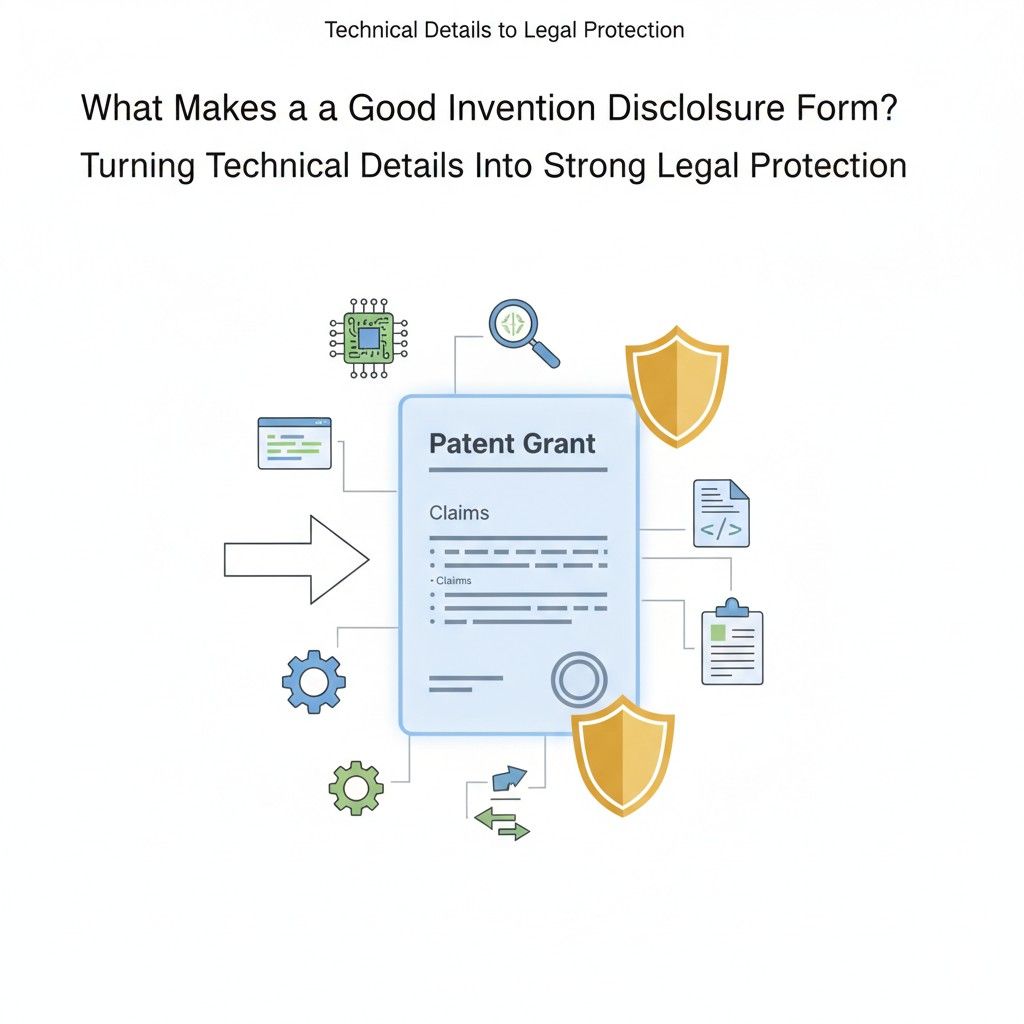
This shift is strategic. It ensures your disclosure feeds directly into strong claims later. Strong claims are built on concrete elements, not marketing language.
Expand Beyond the Single Example You Built
Most startups start with one working version. That is normal. But if your patent only protects that one version, competitors can design around you with small changes.
When you write your disclosure, think beyond the current build. Ask yourself how the same idea could be implemented in different forms.
If your invention uses a neural network, could another type of model perform the same function within your structure? If your system runs in the cloud, could it run on-device?
If your hardware uses a specific material, could another material work under the same design principles?
By describing these variations early, you give your patent room to breathe. You move from protecting a specific configuration to protecting a broader concept.
This is where legal strength begins. Protection should cover the idea at its core, not just the exact snapshot of version one.
Translate Engineering Decisions Into Legal Building Blocks
Engineers think in systems. Patent claims are built from components and steps. Your job in the disclosure stage is to bridge those two worlds.
Take your system apart mentally. Identify the main modules. Identify the inputs and outputs of each module. Identify the transformations that happen in between.
Then describe each of those pieces clearly and independently. Explain what each component does and how it connects to others.
This approach gives attorneys flexibility when drafting claims. They can build independent claims around core modules and dependent claims around specific improvements.
If you only describe the entire system as one big block, you reduce flexibility. Clear modular description creates more strategic options.
Capture Technical Advantages With Specific Cause and Effect
It is not enough to say your invention performs better. You must show why it performs better.
For every major improvement, tie it directly to a structural or procedural feature. If latency is reduced, explain which architectural decision causes that reduction.
If security improves, describe the exact control flow or encryption handling that strengthens it.
Cause and effect language is powerful. It shows that the improvement is not accidental. It flows directly from the design.
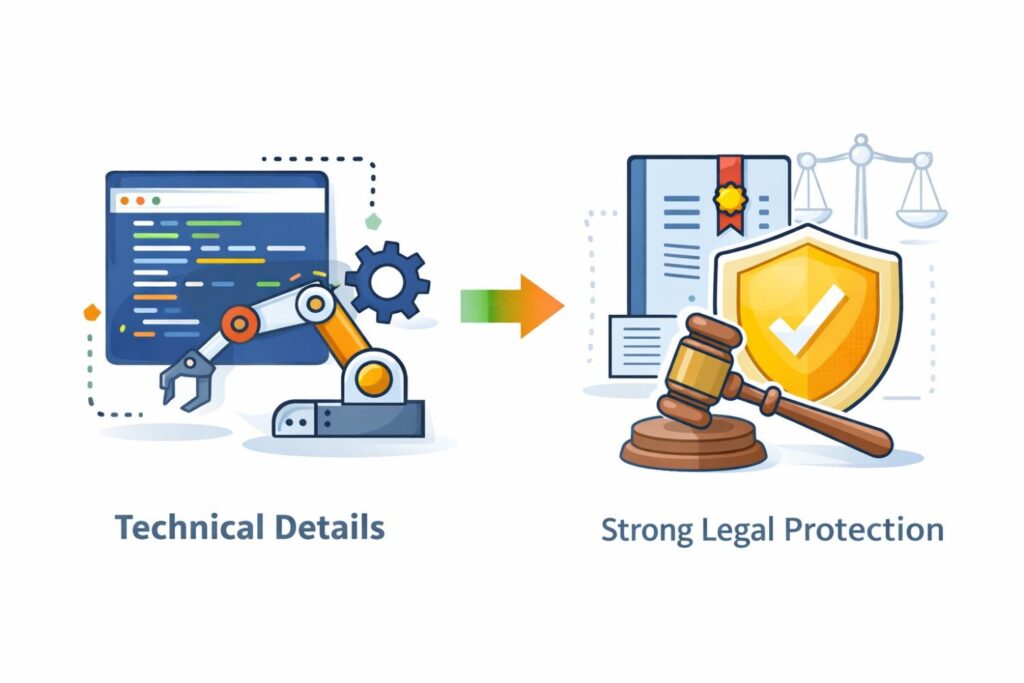
This becomes important during patent examination. If an examiner questions novelty, clear cause-and-effect explanations can help demonstrate that your approach is not just a minor tweak.
From a business view, this discipline also clarifies your competitive edge. It sharpens how you speak about your technology in investor and partner discussions.
Anticipate Design-Around Attempts
Strong legal protection means thinking like a competitor.
Imagine a rival reads your patent and tries to avoid it. What small changes could they make to escape your coverage? Could they remove a step? Replace a component? Change the order of operations?
Now return to your disclosure and see if it already supports broader framing.
For example, if your process includes three steps performed in a fixed order, consider whether the order could vary. If so, describe that flexibility. If a component could be implemented in multiple ways, state that clearly.
You are not gaming the system. You are honestly describing the full scope of your invention. But by doing so carefully, you reduce the chance that someone can slip through narrow wording later.
This mindset turns your disclosure into a defensive strategy, not just a technical report.
Align the Disclosure With Your Long-Term Product Vision
Many founders focus only on what is built today. But legal protection should match where the company is heading.
If you know you plan to expand into new industries, integrate additional data sources, or support larger scale deployments, reflect that in your disclosure where possible.
For example, if your system currently works in healthcare but could apply to finance or logistics with similar architecture, mention that adaptability.
If your method works with one sensor type but could work with others, describe that flexibility.
This does not mean speculating wildly. It means honestly capturing foreseeable extensions of your invention.
This approach prevents your patent from becoming outdated as your startup grows. It protects the platform, not just the prototype.
Be Explicit About Technical Improvements Over Existing Systems
Legal strength often depends on showing how your invention differs from what already exists.
In your disclosure, dedicate space to explaining how current systems operate and where they fall short. Then clearly explain how your approach changes that structure.
Do not rely on general statements like “existing systems are inefficient.” Describe how they process data, where delays occur, or how resources are wasted. Then show how your design avoids those weaknesses.
This clarity arms your attorney with strong material to argue novelty and non-obviousness later. It also forces you to deeply understand the competitive landscape.
Many startups discover that their real differentiation is narrower than they thought. Better to learn that during disclosure than after filing.
Think in Terms of Claim Coverage, Not Just Description
Although you are not drafting claims yourself, you should think about coverage.
Ask yourself what parts of your system you would be upset to see copied by a competitor. Those are the elements that must be described clearly and fully.
If your secret sauce lives in a training method, do not bury it in one short paragraph. If your edge lies in a control loop or feedback mechanism, explain it in depth.
Your disclosure should reflect your business priorities. Protect what matters most to your revenue and growth.
At PowerPatent, our software helps you surface these critical elements by asking focused questions about where your competitive edge truly lies.
Then real patent attorneys review your answers and shape them into strong legal claims.
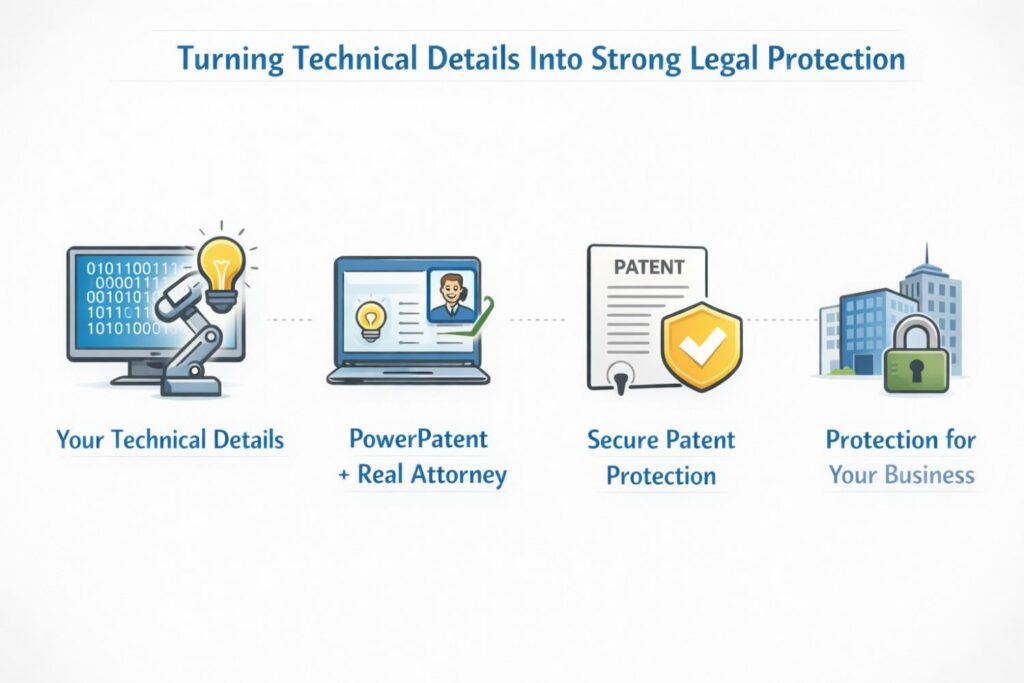
This combined approach reduces weak spots and speeds up filing without cutting corners. You can see how the process works here: https://powerpatent.com/how-it-works
Avoid Over-Narrow Language That Locks You In
Engineers often describe their system in very specific terms. That is natural. But overly narrow wording can limit legal scope.
For example, instead of always referring to a “neural network,” consider whether “machine learning model” better captures the broader concept.
Instead of locking into one database type, consider whether “data storage system” captures more flexibility.
Your disclosure can include specific examples, but it should also signal broader categories where appropriate.
This balance allows your patent to protect the general idea while still supporting detailed implementations.
Document Iterations and Alternative Embodiments
If your invention evolved over time, capture that evolution. Earlier prototypes, rejected approaches, and alternative configurations can all provide useful support.
Even if certain versions were not commercialized, they may help demonstrate the inventive step or support broader claim language.
From a strategic perspective, this builds depth. It shows that your invention is not a lucky accident. It is the result of deliberate design.
It also gives your legal team more material to work with if adjustments are needed during examination.
Treat Legal Strength as a Business Multiplier
At the end of the day, patents are business tools.
Strong legal protection increases valuation. It strengthens negotiation power. It deters competitors. It attracts partners who value defensible technology.
Weak protection does the opposite. It creates false confidence.
Turning technical detail into legal strength is not about writing more words. It is about writing the right words with intention.
When you approach your invention disclosure strategically, you give your startup leverage that compounds over time.
And if you want a system built for founders who move fast but care deeply about protecting their edge, PowerPatent was created for you.
It blends smart software guidance with real attorney oversight so your technical depth turns into real, defensible protection without the usual delays. You can explore how it works here: https://powerpatent.com/how-it-works
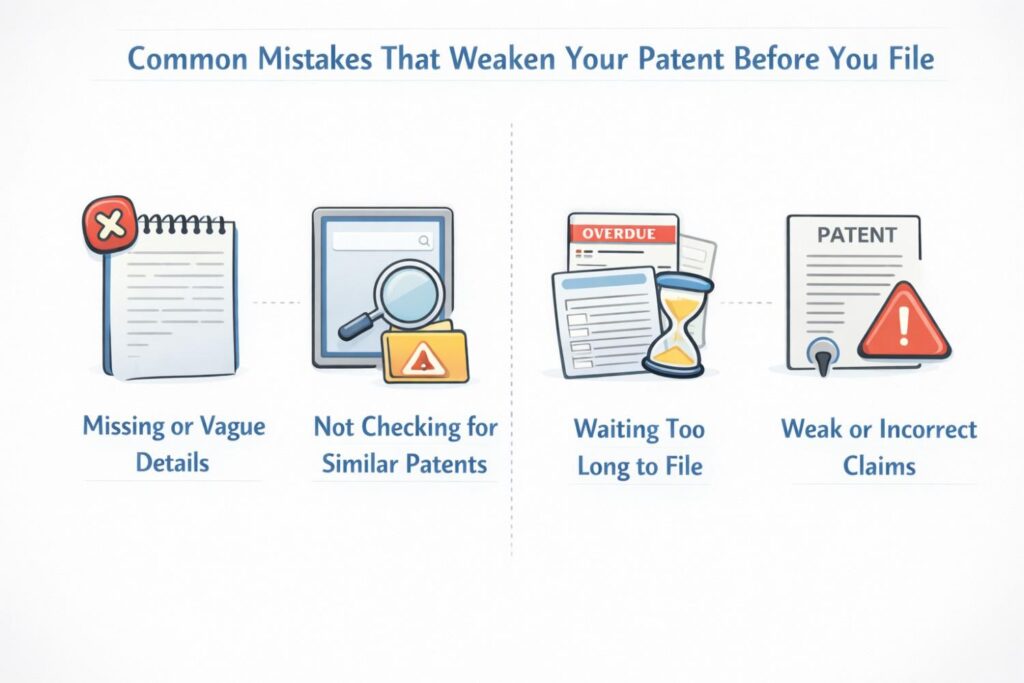
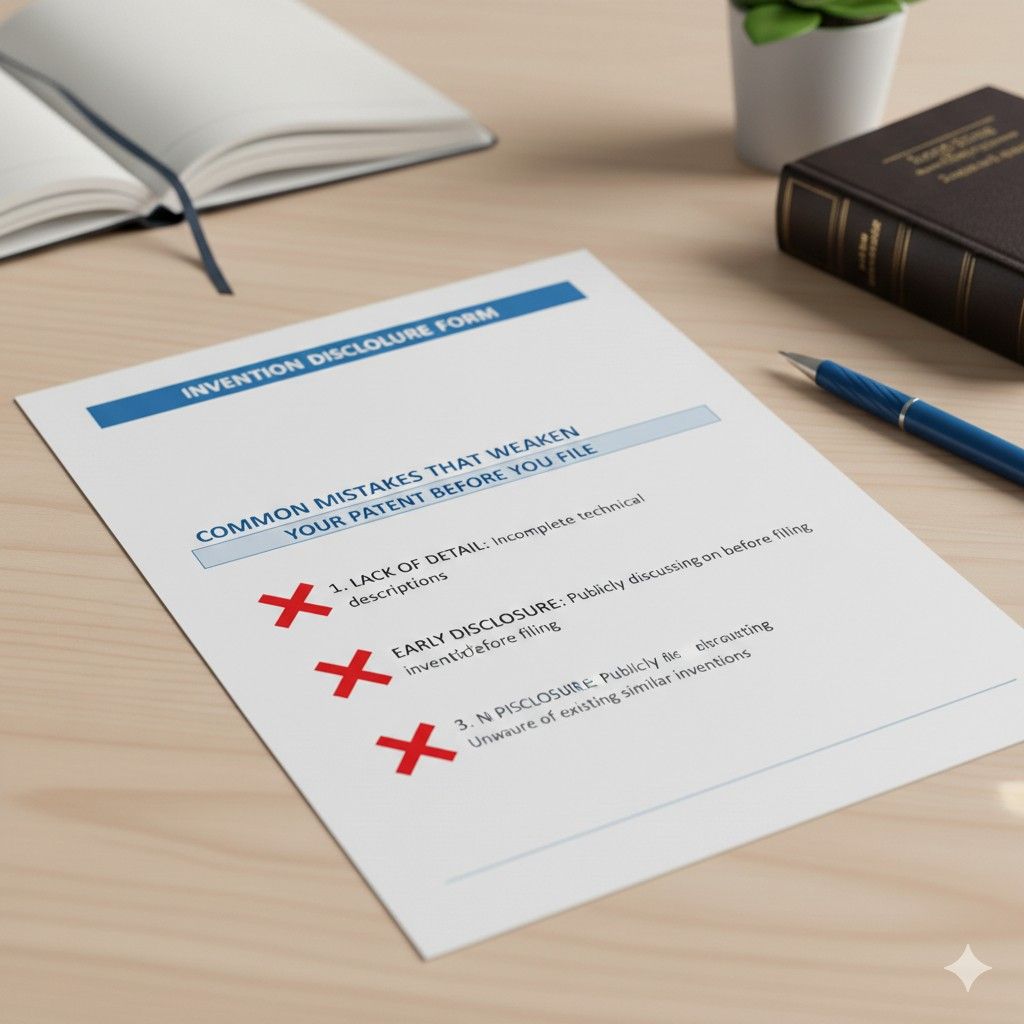
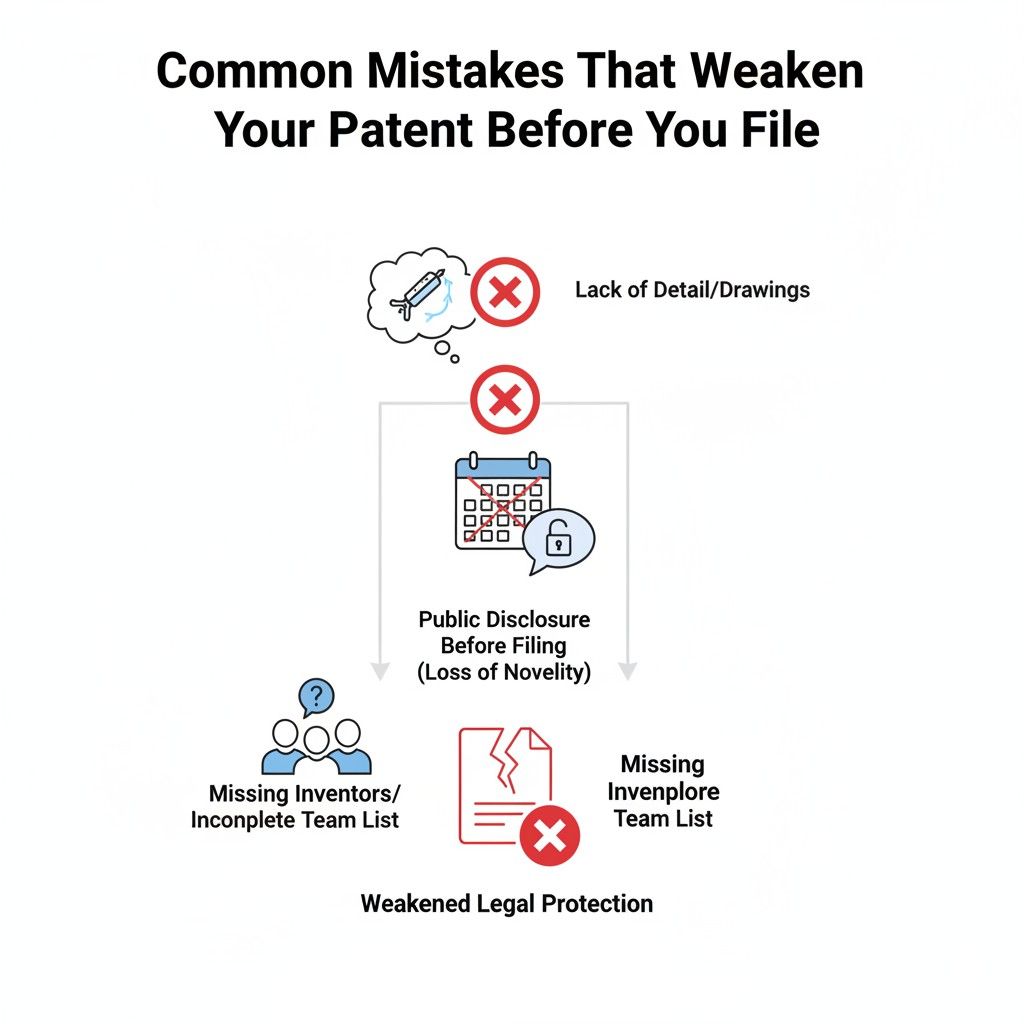
Common Mistakes That Weaken Your Patent Before You File
Most weak patents are not the result of bad luck. They are the result of small mistakes made early, often during the invention disclosure stage. These mistakes feel harmless at the time.
You are moving fast. You are shipping product. You just want to get the filing done.
But small gaps in your disclosure can turn into major limits later.
If you want strong protection, you need to know where founders usually go wrong. Not in theory. In real startup life.
Let’s walk through the mistakes that quietly weaken patents before they are even filed.
Treating the Disclosure Like a Quick Admin Task
One of the most common errors is rushing the invention disclosure as if it were a formality.
Founders will spend months building a system, refining models, and testing hardware. Then they spend thirty minutes filling out a disclosure document. That imbalance shows up in the final patent.
When your disclosure is thin, your attorney has little raw material to work with. They may ask for follow-ups. That delays filing. Or worse, they may draft based on limited input, which leads to narrow claims.
The disclosure is not paperwork. It is the foundation of your protection. If you underinvest here, you cap the strength of everything that follows.
A good internal rule is this: if your invention took six months to build, it deserves more than one rushed afternoon to document.
Describing the Product Instead of the Invention
Many startups confuse product features with inventive concepts.
They describe dashboards, user flows, and customer benefits. But they fail to clearly explain the technical mechanism underneath.
For example, a founder might describe how users can see real-time alerts in a mobile app. That is a feature. But what is the invention? Is it the alert logic? The data processing pipeline? The model that triggers the alert?
If the core mechanism is not clearly described, the patent may end up protecting surface-level features rather than the deep technology that matters.
This mistake is costly because competitors can replicate the underlying structure while presenting it through a different interface.
To avoid this, always ask: if we removed the branding and UI, what technical engine would still exist? That engine must be fully explained.
Being Too Narrow Without Realizing It
Engineers naturally think in specifics. They describe exactly what they built.
But when disclosures are too specific, they lock the patent into one version of the system.
If you only describe one type of model, one hardware layout, or one configuration, your claims may be limited to that structure. A competitor could change one element and step outside your protection.
The mistake is not in being detailed. The mistake is in failing to describe reasonable alternatives.
You can still explain your exact build. But you should also capture variations that follow the same core idea.
Without this broader framing, your patent may look strong on paper but prove easy to design around.
Failing to Clearly Identify What Is Actually New
Another common error is assuming novelty is obvious.
Founders often believe their invention speaks for itself. But patent law does not reward assumptions.
If your disclosure does not clearly state what differentiates your system from existing solutions, your attorney must guess. That is risky.
You should explicitly explain what was done before and how your approach changes the structure or process. Even if you are not certain about every prior system, describe the typical way problems are handled and how your method differs.
Clarity here strengthens the entire application. It shapes the claims and prepares your attorney to argue for patentability.
Silence on novelty creates weakness.
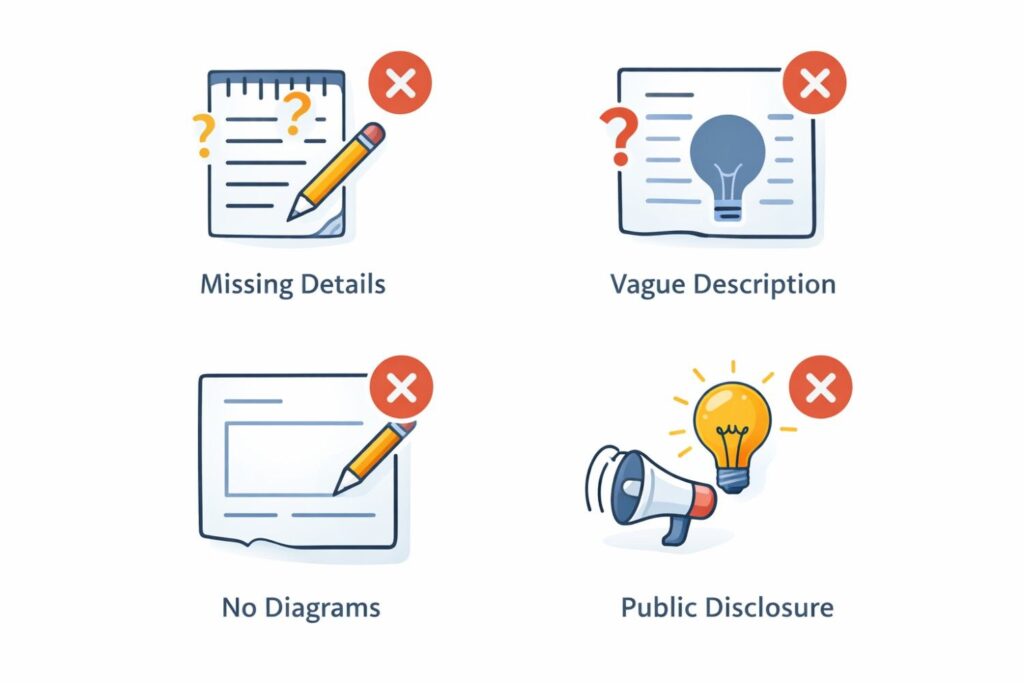
Leaving Out Key Technical Detail
Some founders hesitate to include detailed technical explanations. They worry about revealing too much or assume the attorney will fill in gaps.
That hesitation can backfire.
If your disclosure lacks depth, your patent may not fully support broad claims. During examination, missing detail can limit your options.
Remember, the patent system requires enough explanation to show that the invention is real and workable. Vague descriptions can weaken enforceability later.
You are not publishing your entire source code. You are explaining the structure and logic clearly enough to show substance.
If it feels uncomfortable to share the core mechanism even in a protected setting, that may signal that the invention has not been fully thought through.
Ignoring Future Expansion
Startups evolve quickly. What you build today is rarely the final form.
A common mistake is filing a patent that only covers the current version without thinking about where the product is headed.
If you know you plan to expand into other industries, integrate new data sources, or scale the architecture, capture that direction in the disclosure when it is reasonably foreseeable.
Otherwise, your patent may become outdated just as your company gains traction.
Strong founders think ahead. They protect not just what exists, but what is logically coming next.
Not Documenting Inventorship Clearly
In fast-moving teams, contributions can blur.
If you fail to clearly document who contributed to the inventive concepts, you risk future disputes. Incorrect inventorship can create legal complications and weaken the patent’s integrity.
During disclosure, take the time to identify each contributor and describe their role in shaping the invention.
This protects your company internally and externally. It shows discipline. It also makes due diligence smoother if investors or acquirers review your IP portfolio.
Skipping this step can create avoidable problems years later.
Waiting Too Long to File
Timing mistakes can also weaken your position.
If you publicly disclose your invention before filing, you may limit your rights in certain countries. If you wait too long while competitors move quickly, you risk losing priority.
A delayed disclosure often leads to a delayed filing.
The solution is not panic filing. It is building a habit of documenting inventions as they reach meaningful milestones.
When your team finishes a core breakthrough, capture it. Do not rely on memory months later.
Speed with structure beats delay with uncertainty.
Relying Only on Templates Without Strategic Thinking
Templates can help, but they are not strategy.
If you treat your disclosure like a checklist, you may miss the deeper business alignment. Every patent should connect to your competitive moat.
Ask yourself what truly drives revenue, user growth, or defensibility in your company. Make sure those elements are front and center in your disclosure.
This strategic alignment is what turns a patent from a filing into an asset.
At PowerPatent, the goal is not just to help you fill out forms. The platform guides you through structured questions designed to surface the real core of your invention.
Then real patent attorneys review and refine the material to ensure it supports strong, defensible claims. This reduces weak spots and costly back-and-forth.
If you want to see how that system helps founders move fast without sacrificing strength, you can explore it here: https://powerpatent.com/how-it-works
Underestimating the Business Impact of Weak Patents
The final mistake is psychological.
Some founders assume that having any patent is enough. They believe investors will be impressed by a filing number alone.
Sophisticated investors and acquirers look deeper. They evaluate scope. They assess how easily competitors could design around the claims. They examine how well the patent aligns with the core technology.
A weak patent does not create leverage. It creates a false sense of security.
A strong patent, built on a thoughtful disclosure, becomes a real strategic asset. It can deter competitors. It can increase valuation. It can strengthen your hand in negotiations.
The difference begins before filing. It begins with how seriously you treat your invention disclosure.
If you want protection that matches the quality of what you are building, you cannot afford these early mistakes.
And if you want a faster, smarter way to get it right, PowerPatent was built for founders who care about both speed and strength.
You get guided software to help you think deeply and real attorney oversight to ensure your application stands up to scrutiny. You can learn more about how it works here: https://powerpatent.com/how-it-works
Wrapping It Up
A good invention disclosure form is not about paperwork. It is about power. It captures your idea before it fades. It forces you to think clearly about what you actually built. It separates real innovation from surface features. It documents the structure, the logic, the variations, and the advantage. And most important, it turns your hard work into something you can truly own. When done right, your disclosure becomes the blueprint for strong protection. It makes drafting faster. It reduces legal back-and-forth. It lowers the risk of narrow claims. It increases the chance that your patent will stand up when it matters most.