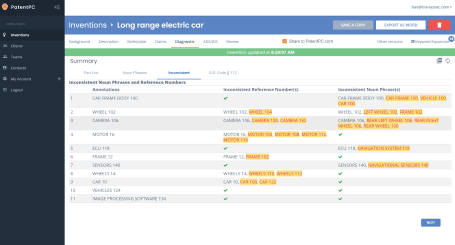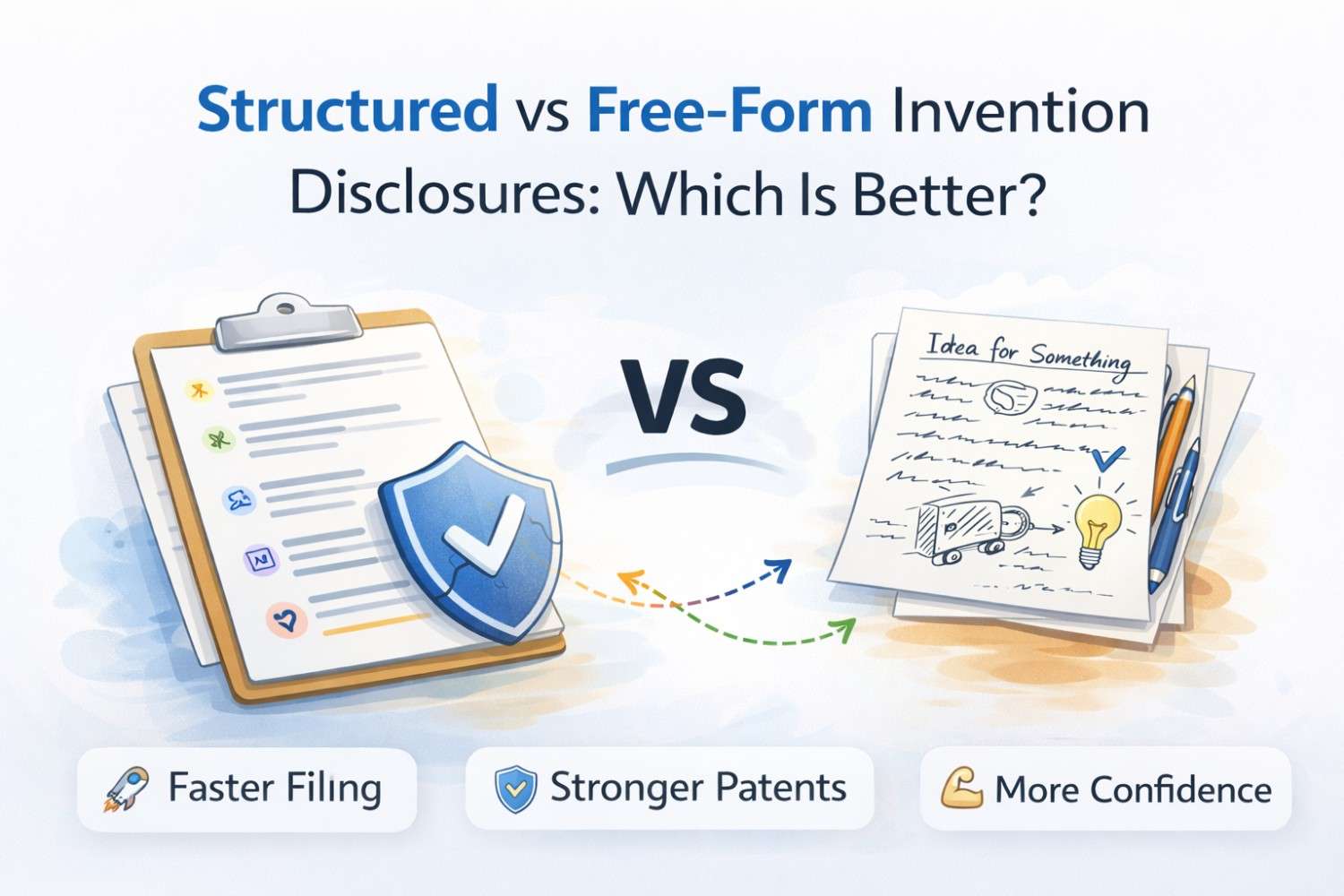
You built something real. Maybe it’s a new AI model. Maybe it’s a hardware system. Maybe it’s a clever backend process that saves hours of compute time. Whatever it is, it matters. And now you’re asking the right question: How do I document this so I can protect it? This is where invention disclosures come in. And this is where founders often get stuck. Do you write everything in a loose, free-flowing document and hope it makes sense later? Or do you use a structured system that walks you step-by-step through what matters?
What Is a Free-Form Invention Disclosure — And Why Founders Like It
Before we compare systems, we need to understand why free-form disclosures are so common in the first place. Many founders do not choose them because they are careless.
They choose them because they feel natural. When you are moving fast, building product, talking to users, and fixing bugs, structure can feel like friction. A blank document feels easier.
A free-form invention disclosure is exactly what it sounds like. You open a doc. You start typing. You explain your idea in your own way. No template. No required sections. No prompts guiding you. Just your thoughts on paper.
At first glance, this feels efficient. It feels creative. It feels founder-friendly. But there is more happening under the surface.
Let’s break this down.
Why Free-Form Feels Fast
The biggest reason founders like free-form disclosures is speed.
You already understand your system in your head. You know how the model works. You know how the hardware connects. You know why your architecture is different. So you start writing as if you are explaining it to a teammate.
There is no waiting for a system to load. No answering structured questions. No worrying about whether you filled every box.
It feels like progress.
But here is the key insight: speed of writing is not the same as speed of filing.
If your disclosure is missing critical details, your patent attorney will have to come back with questions. That creates delays. If your explanation skips edge cases or alternative versions, your protection may be narrow. That creates risk.
So yes, free-form feels fast at the beginning. The real question is whether it stays fast all the way through filing.
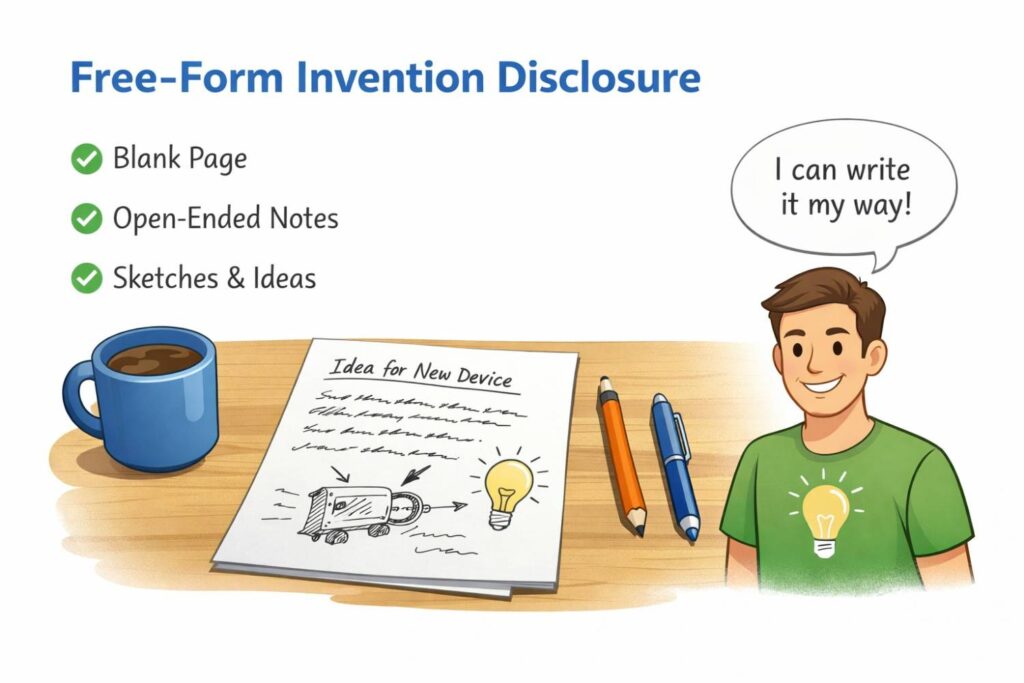
A smart move for founders who prefer free-form is to treat the first draft as a brain dump only. Do not assume it is complete. After writing it, step away and come back with one goal: find what you did not explain.
Ask yourself where a stranger would get confused. This small shift can make your free-form draft far more usable.
It Matches How Builders Think
Engineers do not think in legal sections. They think in systems.
You might start describing the problem. Then jump to your solution. Then explain a specific module. Then show a diagram. Then go back to why existing tools fail.
This nonlinear thinking is natural for technical founders. Free-form writing allows that flow.
There is value in this. When you write without constraint, you often capture insights that would not fit neatly into a box. You may describe performance improvements.
You may explain trade-offs. You may share why you chose one design over another.
Those details are gold.
The danger is not in the thinking style. The danger is in assuming that your natural flow automatically creates a complete patent foundation.
If you are using a free-form approach, here is a tactical move that can raise the quality of your disclosure: record yourself explaining the invention out loud first.
Talk through it like you are pitching it to an investor who is technical but skeptical. Then transcribe that. Spoken explanations often surface hidden assumptions and details that written summaries miss.
This makes your free-form draft much richer.
It Feels Less Intimidating
Many founders delay patents because the process feels heavy. Templates and structured forms can trigger that feeling. They look official. They look legal. They feel like homework.
A blank page feels easier.
You can start with a simple sentence: “We built a system that…” and just go from there.
This lowers resistance. And lowering resistance is important. The worst disclosure is the one that never gets written.
So free-form wins on psychological comfort. It reduces the fear of doing it wrong.
But comfort should not be confused with protection.
If your goal is real, defensible coverage that can stand up to competitors, you need depth. You need detail. You need clarity around what makes your invention different and how it can vary.
One practical way to keep the comfort of free-form while adding strength is to write in layers. Start with a simple explanation. Then go back and add a second layer that focuses only on variations.
Ask yourself how your invention could be implemented in three different ways. Even if you do not plan to build all three, describing them expands your protection later.
This small habit can transform a casual document into something strategic.
It Gives a Sense of Control
Founders like owning their story. A free-form disclosure feels like you are telling your invention’s story in your own voice.
There are no predefined boxes limiting you. No system deciding what matters. You decide what to emphasize.
This sense of control matters, especially for technical founders who have had bad experiences with traditional patent firms. Many have felt misunderstood. Many have seen attorneys rewrite their ideas in ways that lose technical nuance.
So free-form becomes a way of protecting your intent.
The key is to channel that control in a way that strengthens your patent instead of weakening it.
One highly actionable approach is to clearly label what you believe is the core innovation inside your free-form draft. Write a short paragraph that says, in plain words, “The key new part is…” This forces you to separate background detail from the true inventive concept. That clarity will later shape strong claims.
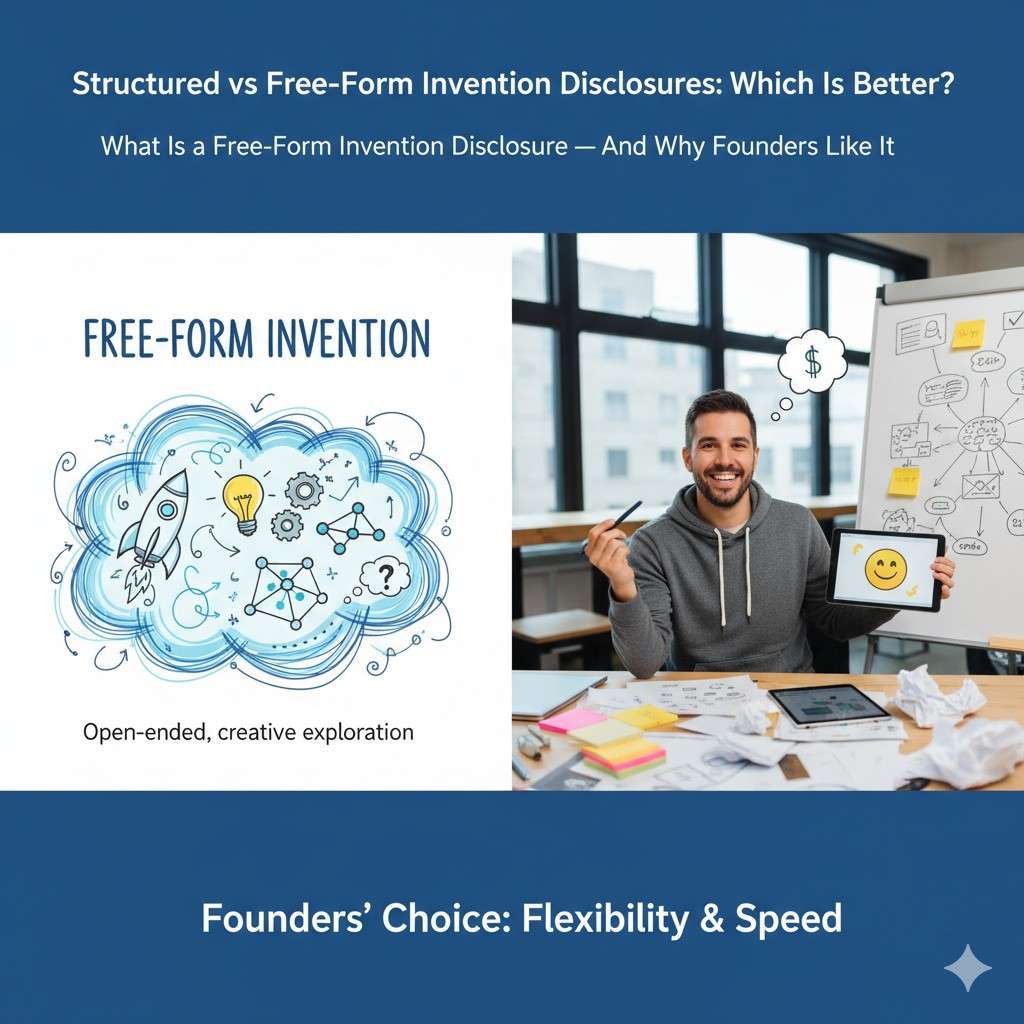
Without this step, many free-form disclosures bury the real innovation inside pages of context.
It Mirrors Startup Culture
Startups value speed. They value iteration. They value minimal process.
A structured disclosure can feel like enterprise behavior. A free-form document feels like something you can write between standups.
In early-stage companies, the person documenting the invention is often the same person writing the code. There is no legal team sitting down the hall. So a quick document in Notion or Google Docs feels natural.
There is nothing wrong with that instinct.
But here is what strong founders understand: culture should not weaken assets.
Your codebase evolves weekly. Your go-to-market changes monthly. But your patent, once filed, is hard to change. It locks in what you described.
That means your disclosure needs to think beyond today’s version.
If you are sticking with free-form, build one discipline into your process. Before finalizing your draft, imagine a competitor reading it three years from now.
Ask yourself whether they could design around what you described by making a small tweak. If the answer is yes, expand your explanation to cover that tweak.
This exercise forces long-term thinking inside a fast-moving culture.
Where Free-Form Often Misses the Mark
Free-form disclosures tend to focus heavily on what was built, not on why it matters in a legal sense.
Founders describe architecture. They describe performance gains. They describe user benefits.
But they often skip alternative embodiments. They skip boundary cases. They skip broader framing.
A patent is not just about describing your current product. It is about defining a space around your idea.
Free-form writing, unless carefully reviewed, often stays too narrow.
Here is a strategic adjustment: after writing your draft, go back and ask three silent questions as you read each section. Could this be implemented in hardware instead of software?
Could this run in a centralized system instead of distributed? Could this apply to a different industry? Even if you never plan those versions, describing them can widen your protection.
This is where modern tools and guided systems can help without killing your flow.
If you want a process that keeps your creative freedom but ensures nothing critical is missed, PowerPatent was built exactly for that balance.
It combines smart software guidance with real patent attorney review, so founders can move fast without leaving gaps. You can see how it works here: https://powerpatent.com/how-it-works
The Hidden Cost of Cleaning It Up Later
Many founders assume they can just “fix it later” if their free-form disclosure is messy.
The reality is that cleaning up a weak disclosure costs time and money. Attorneys must ask follow-up questions. Engineers must revisit decisions they made months ago. Details get forgotten. Context fades.
This creates friction.
A stronger first draft reduces back-and-forth. It speeds up filing. It lowers cost. And it gives you confidence that what you built is actually protected.
If you choose free-form, treat it seriously. Block focused time. Write it as if someone hostile will read it and try to poke holes. Because one day, someone might.
Free-form is not wrong. It is simply incomplete unless handled with discipline.
The real question is not whether free-form feels good. The real question is whether it creates strong protection.
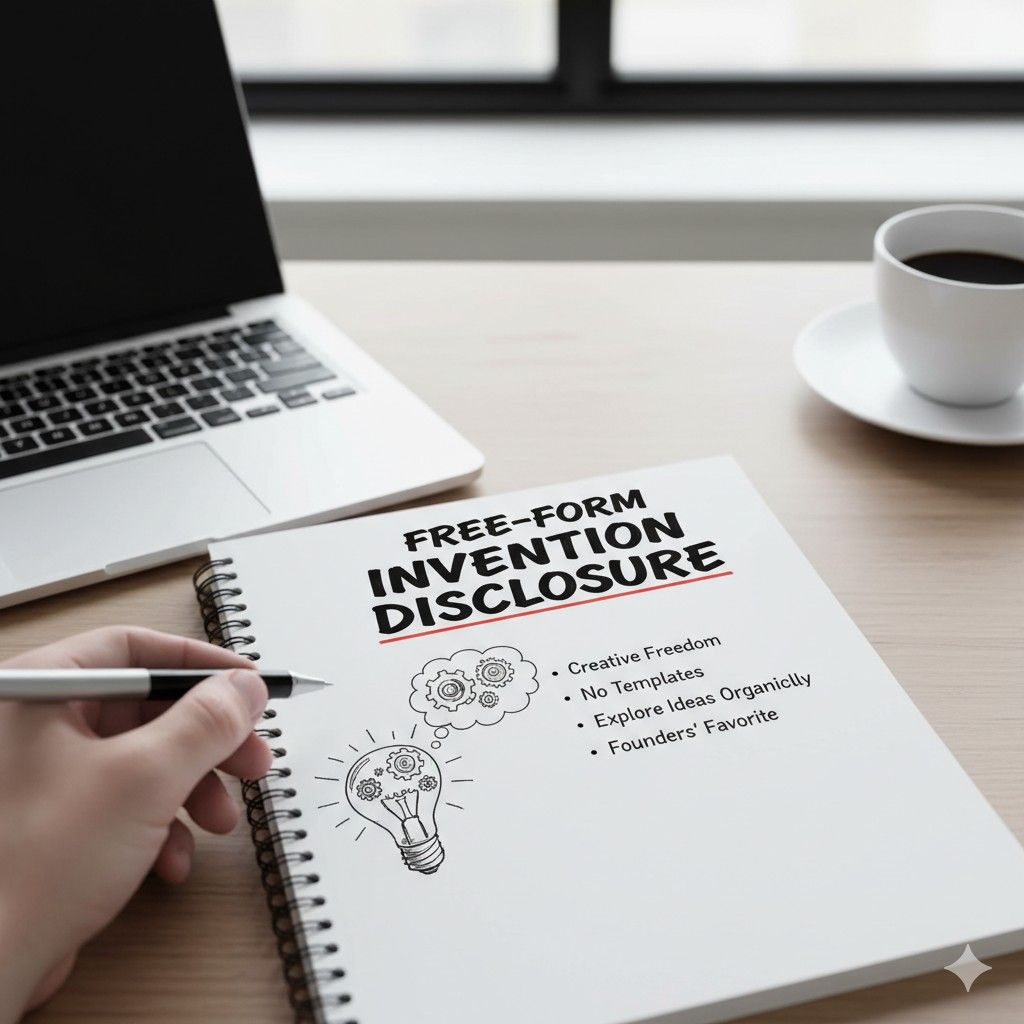
In the next section, we will look at what structured invention disclosures actually do behind the scenes — and why many founders underestimate their power.
What a Structured Invention Disclosure Really Does (That Most People Miss)
Most founders think a structured invention disclosure is just a fancy form.
It looks like a template. It asks questions. It has boxes to fill in. It may even feel rigid at first glance.
So the common reaction is simple: “Why not just write this in my own way?”
What many people miss is this — structure is not about control. It is about coverage.
A well-designed structured disclosure is built to pull out details your brain would normally skip. It is built to protect you from blind spots. And in deep tech, blind spots are expensive.
Let’s unpack what is really happening behind the scenes.
Structure Forces You to Think Beyond the Obvious
When you build something, you are focused on making it work.
You think about performance. You think about scaling. You think about user impact. You think about shipping.
You do not naturally think about how someone might copy your idea with a slight twist.
A structured disclosure changes that.
It asks you questions that feel simple on the surface but are strategically powerful.
It might ask how your system could be implemented differently. It might ask what parts are optional. It might ask what happens if one component is replaced.
These questions expand your thinking.
This is not about paperwork. This is about stretching the boundaries of your invention before someone else does.
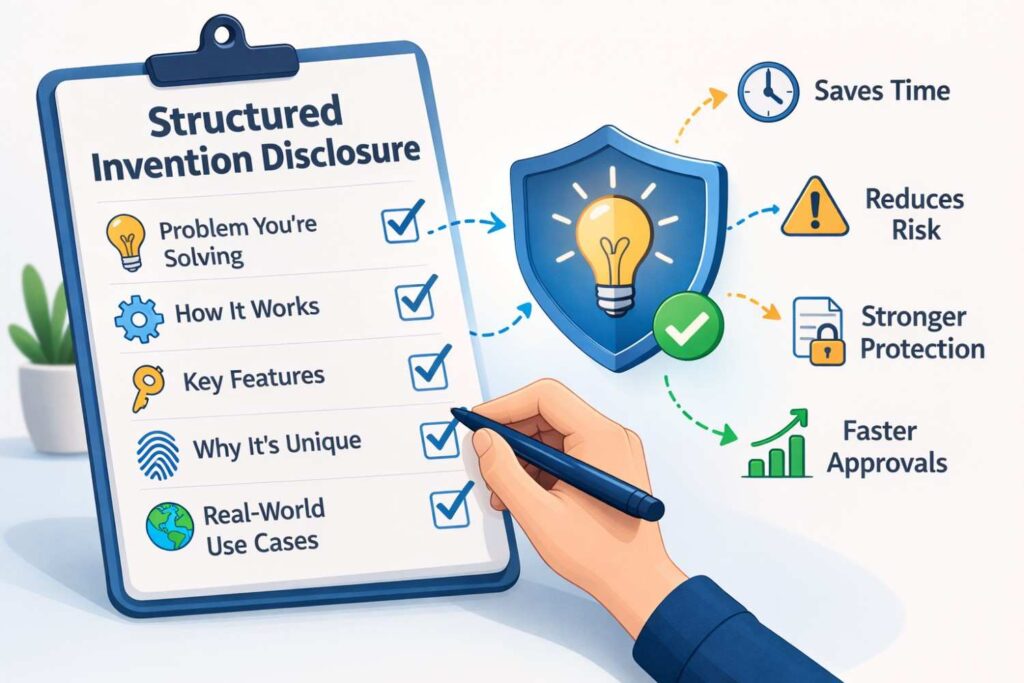
If you are running a startup, this shift matters. The broader your invention is framed, the harder it becomes for competitors to design around it. Structure pushes you to define that broader frame early.
It Separates Core Innovation from Noise
Engineers love detail. And detail is good. But not all details are equal.
In a free-flow document, everything can look important. Architecture decisions sit next to minor implementation notes. Critical breakthroughs sit next to routine setup steps.
A structured system forces separation.
It draws out the central inventive concept. It distinguishes between what is new and what is background. It clarifies what must exist for the invention to work and what is optional.
This clarity is not just helpful for attorneys. It is helpful for you as a founder.
When you clearly define the core innovation, you sharpen your pitch. You refine your product story. You gain conviction about what truly differentiates you.
This is one reason structured disclosures often lead to stronger patents. They reduce noise and highlight what matters most.
If you want to test this yourself, take one of your current product features and try to write a single paragraph explaining what is truly new about it. If that feels hard, structure would help.
It Captures Variations You Did Not Plan to Build
This is one of the biggest hidden advantages.
Founders usually document what they have built. Structured disclosures push you to document what you could build.
This may include different data sources. Different deployment models. Different system configurations. Different use cases.
You might not have time to build all these versions right now. But by describing them, you protect the space around your idea.
That protection can become a powerful strategic asset later. It can block competitors. It can increase valuation. It can create leverage in partnerships.
Without structure, most founders forget to include these variations. Not because they lack vision, but because they are focused on execution.
A structured system creates space for strategic thinking inside a busy startup schedule.
It Reduces Back-and-Forth with Attorneys
Every missing detail creates friction.
When an attorney reviews a weak or incomplete disclosure, they have to guess or follow up. That means more emails. More calls. More delays.
Structured disclosures are designed to anticipate the questions attorneys will ask anyway.
They gather technical details up front. They clarify system interactions. They document edge cases.
This shortens the path from idea to filed patent.
For startups racing toward funding or launch, time matters. Filing earlier can secure priority dates. It can give peace of mind before public announcements.

PowerPatent was built around this idea. Instead of throwing founders into a blank document or slow traditional process, it uses guided software to extract the right details from the start — and then real patent attorneys review and refine it.
That combination speeds things up while keeping quality high. If you want to see how that works in practice, you can explore it here: https://powerpatent.com/how-it-works
It Builds Stronger Claim Foundations
Many founders never see how their disclosure turns into patent claims.
But here is the truth: weak inputs create weak outputs.
If your disclosure is shallow, your claims will be narrow. If your disclosure lacks alternatives, your claims cannot cover them later.
A structured disclosure ensures that when claims are drafted, there is rich material to work with.
It gives attorneys options. It provides technical depth. It supports broader protection.
This is especially important in software and AI. These areas move fast. Competitors iterate quickly. If your patent is too narrow, it becomes easy to work around.
Structure helps future-proof your protection.
It Creates Institutional Memory
Startups evolve quickly. Founders change roles. Engineers leave. New hires join.
A structured invention disclosure captures the logic behind design decisions at a specific moment in time.
This becomes valuable later.
During due diligence, investors often ask about intellectual property. Clear, well-documented inventions signal maturity. They show that the company thinks long term.
If your documentation is messy, it creates doubt. If it is clear and structured, it builds confidence.
This is not just about legal strength. It is about business credibility.
It Encourages Strategic Filing Decisions
When you go through a structured process, patterns emerge.
You may realize that multiple features share a common inventive theme. You may discover that one subsystem is strong enough to justify its own filing. You may identify gaps worth developing further before filing.
Structure does more than document. It reveals strategy.
Founders who treat patents as strategic tools, not just defensive paperwork, gain an edge. They build portfolios aligned with product roadmaps. They file around core advantages. They think ahead.
A structured disclosure supports that level of thinking.
It Balances Creativity with Discipline
Some founders worry that structure kills creativity.
In reality, good structure protects creativity.
It gives you a framework so your ideas do not get lost. It ensures your technical insight translates into legal strength. It channels your thinking without limiting it.
The key is using a structured system designed for builders, not bureaucrats.
That is why modern platforms matter. The right system feels like a guided technical deep dive, not a legal interrogation. It respects how engineers think while making sure no critical piece is missing.
If you are serious about protecting what you are building, you should not choose between speed and strength. You should demand both.
And that is exactly the balance PowerPatent was designed to deliver.
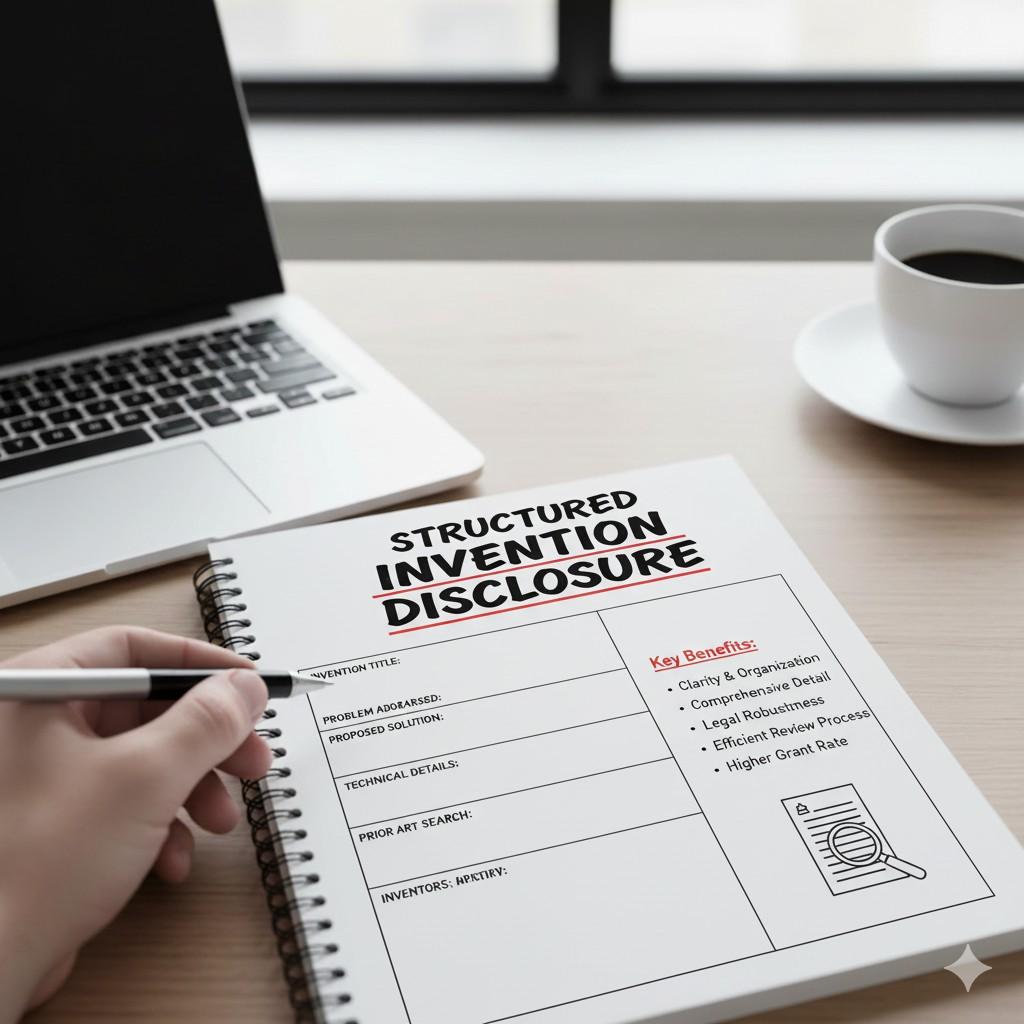
Now that we have explored what structured disclosures really do, the next step is to directly compare outcomes. Where does free-form break down in real startup scenarios? And when does structure clearly win?
Where Free-Form Breaks Down — And How It Can Weaken Your Patent
Free-form feels natural. It feels fast. It feels founder-friendly.
But when it comes to building a real patent asset — something that can survive scrutiny, block competitors, and impress investors — free-form often starts to crack.
The problem is not effort. The problem is structure.
Most founders who use free-form disclosures are smart. They know their systems deeply.
They can explain their architecture in detail. Yet even strong technical minds miss key elements when there is no guided framework pulling the right information out of them.
This is where risk quietly enters the picture.
It Focuses on What You Built, Not What You Own
Free-form disclosures almost always describe the current version of the product.
They explain how the system works today. They walk through the model pipeline. They describe the hardware stack. They outline the data flow.
That sounds good.
But a patent is not about describing what exists. It is about defining what you own.
Ownership requires thinking beyond the present build. It requires capturing variations, broader use cases, alternate implementations, and future paths.
Free-form writing tends to stay anchored to the now.
And when your patent only protects the “current version,” competitors can step slightly to the side and avoid infringement.
This is how design-arounds happen.
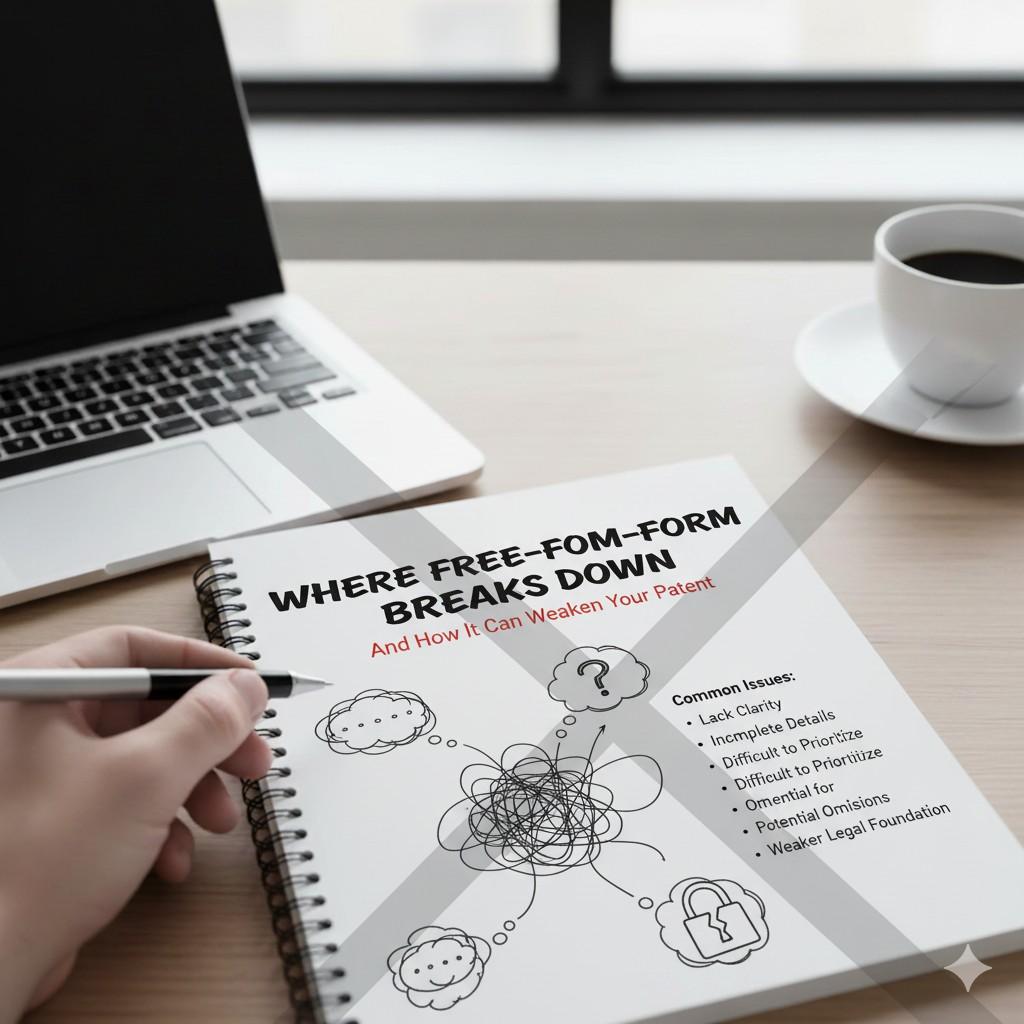
A strong patent should create a fence around your idea. A narrow free-form disclosure often draws a thin line instead of a fence.
If you want to see the danger clearly, imagine a competitor reading your free-form document.
Ask yourself whether they could tweak one element and claim they are different. If the answer is yes, your disclosure may already be too narrow.
It Skips the Edges of the Invention
Every system has boundaries.
What happens when data is incomplete? What happens when latency spikes? What happens if a module is replaced with another method?
Free-form disclosures rarely explore these edge cases unless the founder intentionally thinks about them.
But edge cases matter. They show depth. They support broader claim language. They help demonstrate that your invention is not just a single fragile setup, but a flexible concept.
When those edges are missing, your patent foundation becomes thin.
This weakness does not show up immediately. It shows up later, when drafting claims. If the original disclosure did not describe alternatives, the claims cannot safely cover them.
That is how founders accidentally limit themselves.
It Buries the True Breakthrough
In free-form writing, important details often hide inside long technical explanations.
You may spend five pages describing system architecture, and inside paragraph three is the actual inventive leap. But it is not clearly isolated. It is not highlighted. It is not framed as the core concept.
When attorneys review this kind of document, they must interpret what you believe is new. That interpretation may not perfectly match your intent.
Misalignment here can be costly.
A patent should clearly define the inventive step. If that step is not obvious in your disclosure, it weakens the strategy from day one.
Free-form writing tends to tell a story. Patents require extracting the engine of that story and protecting it directly.
If you do not clearly identify the engine, your patent may end up protecting surface details instead of the true breakthrough.
It Creates Gaps That Cannot Be Fixed Later
Many founders assume that missing details can always be added later.
This is a dangerous assumption.
Once a patent application is filed, you cannot add new technical content without losing your original filing date for that new material. That date matters. It determines priority. It affects enforceability.
If your initial disclosure is incomplete, you may not even realize what is missing until it is too late.
Free-form disclosures increase this risk because they depend entirely on what you happen to remember to include.
Structured systems, on the other hand, are designed to reduce that chance. They are built around the common weak points that attorneys see over and over again.
Free-form relies on memory. Structure relies on process.
In high-stakes IP strategy, process usually wins.
It Makes Claim Drafting Reactive Instead of Strategic
When attorneys receive a free-form disclosure, the drafting process often becomes reactive.
They work with what they have. They fill in gaps as best as possible. They draft claims based on the material available.
But if the disclosure lacks depth in certain areas, the claims must stay narrow to remain supported.
This limits options.
A strong patent strategy gives room to draft broad claims, medium claims, and narrow claims. It provides fallback positions. It creates layers of protection.
Free-form disclosures often fail to provide enough raw material for that layered approach.
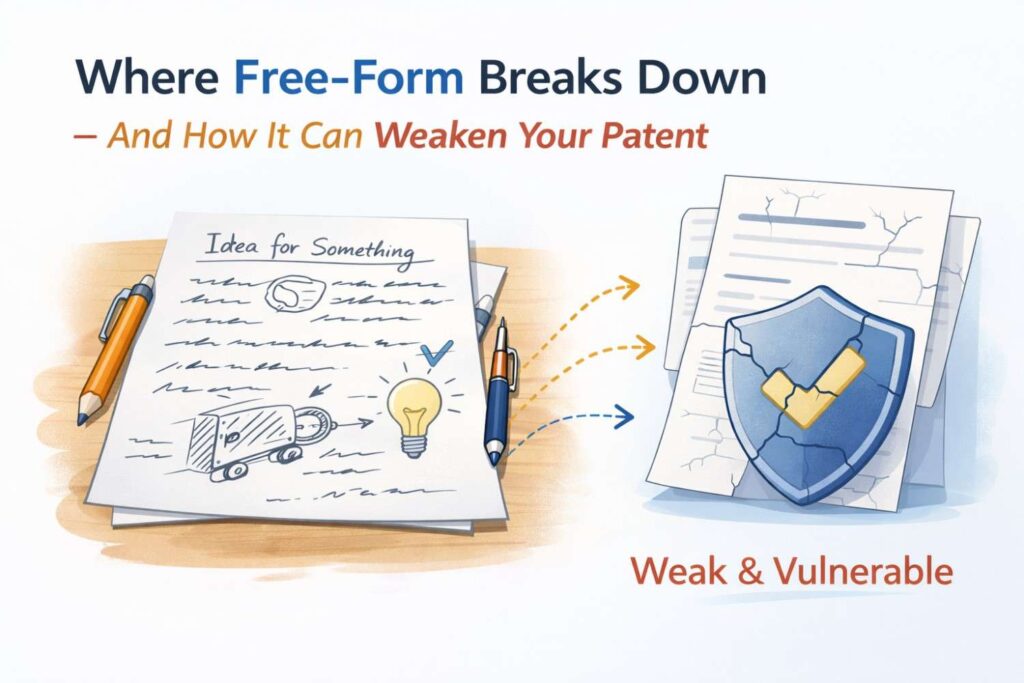
As a result, founders may think they have “filed a patent,” but what they really have is a thin shield.
And thin shields do not scare competitors.
It Slows You Down in Hidden Ways
At first, free-form feels fast.
Later, it slows everything.
Attorneys ask follow-up questions. Engineers revisit old decisions. Diagrams need clarification. Terminology needs alignment.
Weeks pass.
In fast-moving markets, those weeks matter. Especially if you are preparing for a funding round or a product launch.
A structured disclosure reduces that back-and-forth by front-loading the right questions.
This is one of the core reasons modern startups are moving toward guided systems like PowerPatent.
Instead of endless revisions and confusion, founders are walked through the right technical depth from the beginning, and real patent attorneys review the output before filing. That balance prevents costly clean-up work later.
You can see how that streamlined process works here: https://powerpatent.com/how-it-works
It Weakens Investor Confidence
Investors do not read patents line by line. But they do evaluate IP strength.
During due diligence, weak documentation raises red flags.
If your invention disclosures look informal, inconsistent, or incomplete, it signals risk. It suggests that IP was treated casually.
Strong, structured disclosures tell a different story. They show that the company thinks long term. They show that core technology is protected thoughtfully.
Free-form documents rarely communicate that level of discipline.
In competitive funding environments, perception matters. A clear IP strategy can become part of your leverage.
It Leaves You Exposed in Competitive Markets
In deep tech, AI, and hardware, competition moves quickly.
If your patent only protects a narrow implementation, competitors will find ways around it. They will adjust architecture. They will change processing order. They will shift deployment models.
A weak disclosure gives them room.
A strong, structured disclosure reduces that room.
Free-form is not always fatal. But it increases the odds that something important is missed.
And in intellectual property, what you miss is often what matters most.
The real issue is not whether free-form can work. It is whether you want to rely on chance when protecting one of your startup’s most valuable assets.
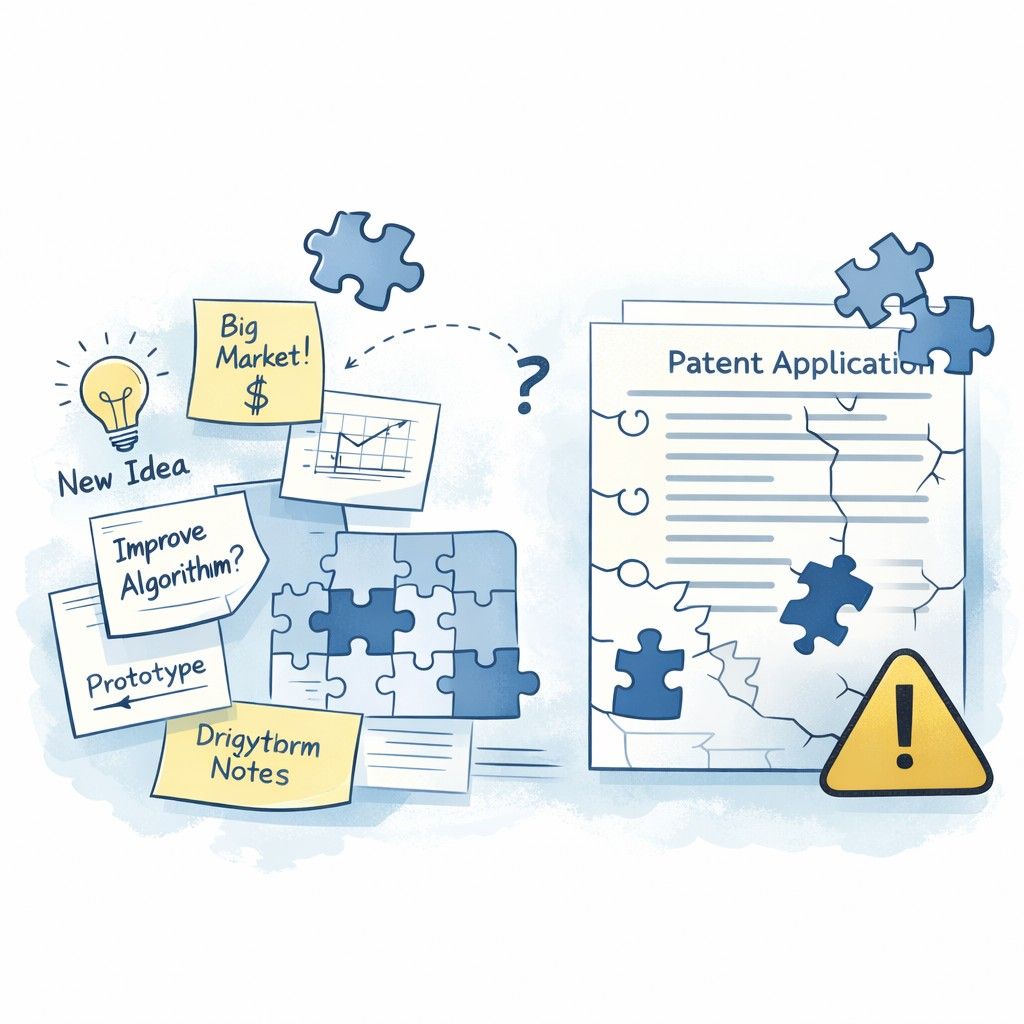
In the final section, we will bring everything together and answer the big question: which approach truly serves fast-moving founders best?
Why Structured Disclosures Help You File Faster, Stronger, and With More Confidence
At this point, the contrast is clear.
Free-form gives you freedom. Structured gives you protection.
Now let’s answer the real question founders care about: which one actually helps you win?
Because this is not about paperwork. It is about leverage. It is about speed without regret. It is about building assets that increase company value instead of sitting in a folder doing nothing.
Structured invention disclosures do something most founders do not fully appreciate.
They turn your technical insight into a strategic weapon.
They Convert Speed Into Durable Advantage
Startups move fast.
You ship. You test. You iterate. You pivot. You improve.
But patents do not work like product updates. You cannot patch them every week. Once filed, they lock in what you described.
A structured disclosure forces you to pause just enough to capture the bigger picture before filing. It makes sure your invention is described not just as it exists today, but as it could exist tomorrow.
That short pause protects years of future growth.
Without structure, founders often file too narrowly, then later realize the market opportunity expanded beyond what they described. At that point, they must file again or accept weaker coverage.
Structure helps you file once with more confidence.
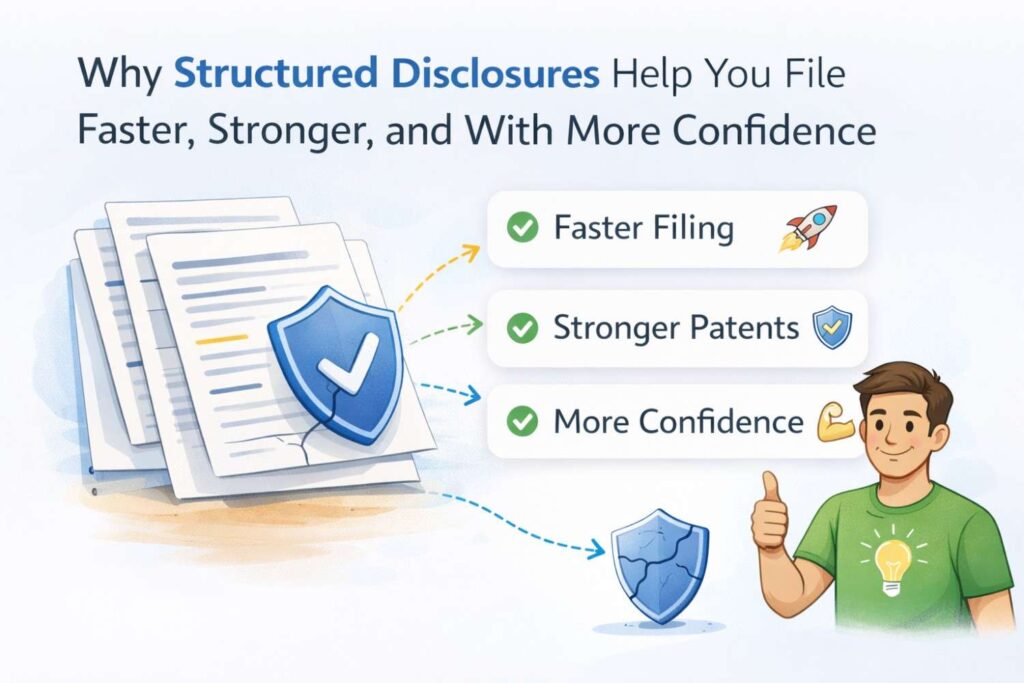
That confidence is not emotional. It is strategic. You know that the core concept, the variations, and the alternative paths are documented.
That means your patent grows with you.
They Turn Technical Depth Into Legal Strength
Engineers naturally think in systems.
Structured disclosures are built to translate system thinking into legal strength.
They ask about data flow. They ask about processing steps. They ask about hardware interaction. They ask about optional modules.
Each answer becomes raw material.
When real patent attorneys draft claims from structured content, they are not guessing. They are working with rich input. That leads to broader, layered claims that are harder to attack and harder to design around.
This is where many founders misunderstand the game.
They assume filing quickly is enough.
It is not enough to file. You need to file smart.
A structured process makes “smart” the default instead of an afterthought.
They Reduce Mental Overhead
Founders are already overloaded.
You are thinking about runway. Hiring. Product-market fit. Customers. Investors.
The last thing you want is endless email threads about missing patent details.
Structured disclosures reduce that noise.
Instead of scattered follow-up questions weeks later, the right questions are asked upfront in a guided way. That reduces friction. It reduces second-guessing. It reduces delays.
This mental clarity is valuable.
It allows you to protect your invention without derailing your focus on building.
That is one reason modern founders are choosing guided systems over old-school law firm workflows. They want protection that fits startup speed.
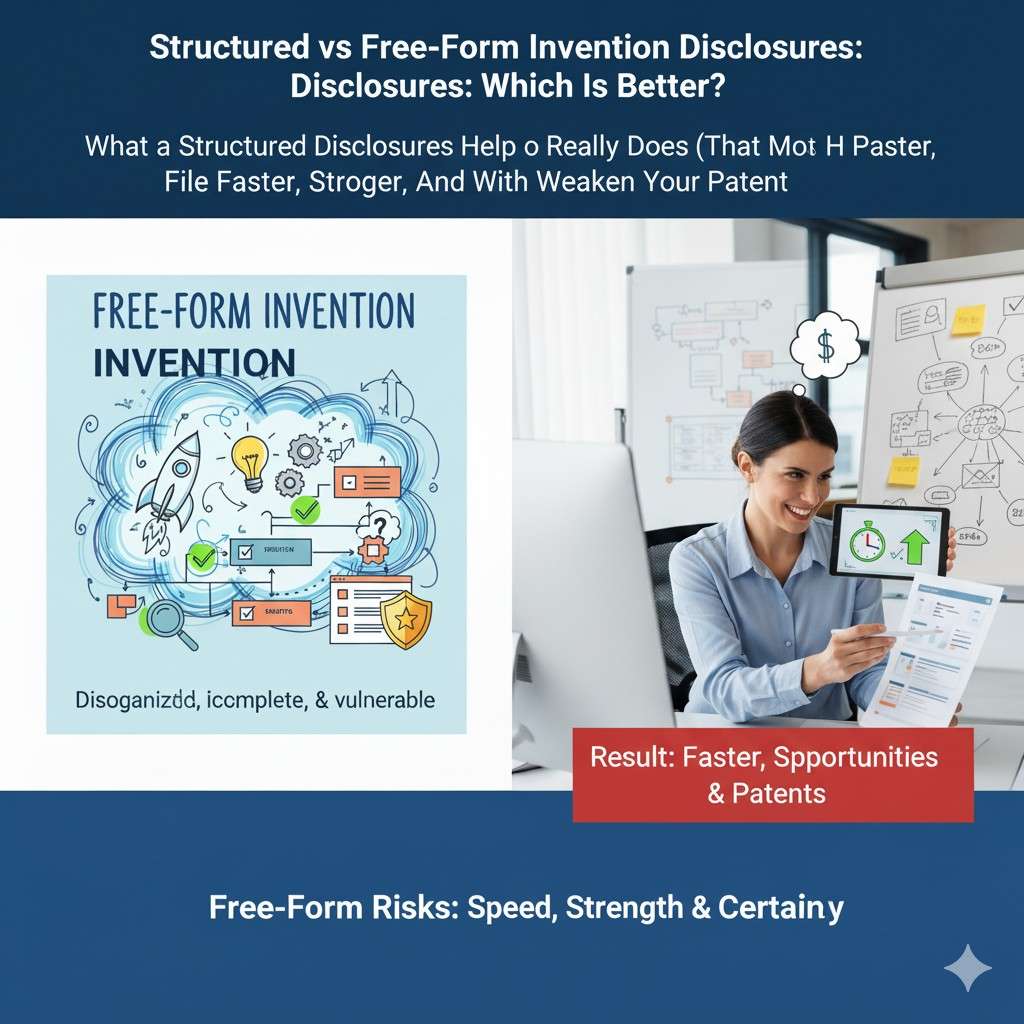
PowerPatent was built around this exact pain point. The software guides you through the right technical depth, and real patent attorneys review and refine everything before filing.
You move quickly, but you are not alone. You can see how that balance works here: https://powerpatent.com/how-it-works
They Strengthen Your Position in High-Stakes Moments
There are moments when IP suddenly becomes very real.
A competitor copies a feature.
An investor asks detailed questions about defensibility.
A potential acquirer reviews your patent portfolio.
In those moments, you do not want to wonder whether your original disclosure missed something important.
Structured disclosures reduce that anxiety.
You know the invention was documented carefully. You know variations were considered. You know the core innovation was clearly defined.
That creates calm in high-pressure situations.
Confidence is not just a feeling. It is the result of disciplined preparation.
They Help You Think Like an Owner, Not Just a Builder
Free-form writing often reflects the mindset of a builder.
Structured disclosures reflect the mindset of an owner.
An owner thinks about territory. About barriers. About long-term leverage.
When you go through a structured process, you begin to see your invention differently. You start asking bigger questions.
What is the broad concept here?
Where else could this apply?
What part of this system would competitors struggle to replicate?
This shift in thinking is powerful.
It turns patents from defensive paperwork into offensive strategy.
And that is where real startup advantage lives.
The Smart Move for Modern Founders
So which is better?
If your goal is casual documentation, free-form may feel easier.
If your goal is real protection, faster filings, stronger claims, and long-term leverage, structured wins.
Not because it is rigid.
But because it is intentional.
The best approach for modern startups is not structure alone. It is structured guidance combined with real attorney oversight and smart software.
That combination gives you speed without sloppiness.
It gives you depth without delays.
It gives you confidence without complexity.
That is exactly why PowerPatent exists.
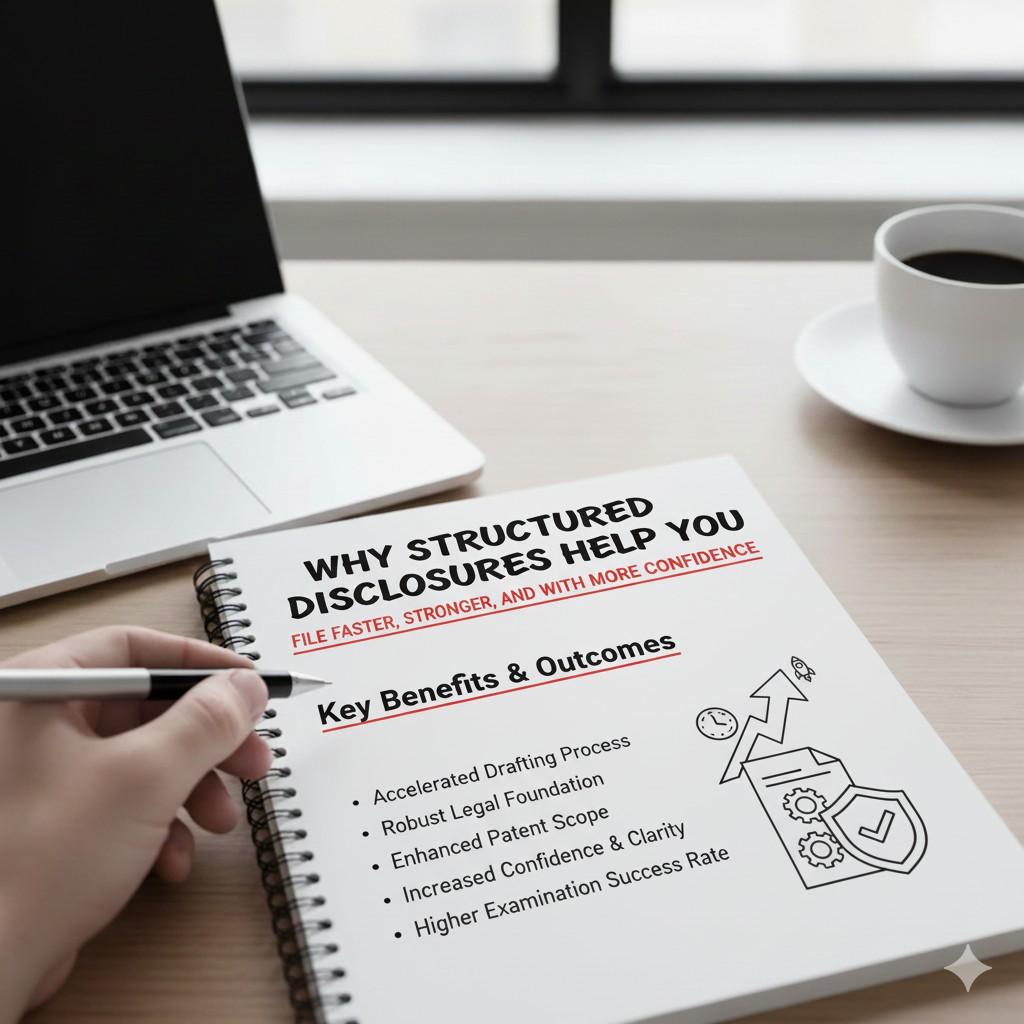
It was designed for founders who build serious technology but do not want to get trapped in outdated patent processes. It helps you turn your code, systems, and models into strong, defensible patents — guided by smart software and backed by real patent attorneys.
If you are building something worth protecting, do not leave it to chance.
Explore how it works here: https://powerpatent.com/how-it-works
Your invention deserves more than a blank document.
It deserves structure that strengthens it.
Wrapping It Up
If you are building real technology, this decision is not small. The way you document your invention shapes the strength of your patent. The strength of your patent shapes your leverage. And leverage shapes outcomes. Free-form disclosures feel easy because they follow your natural thinking. They reduce friction at the start. They let you move quickly without a system guiding you. But ease at the beginning can create weakness at the end.