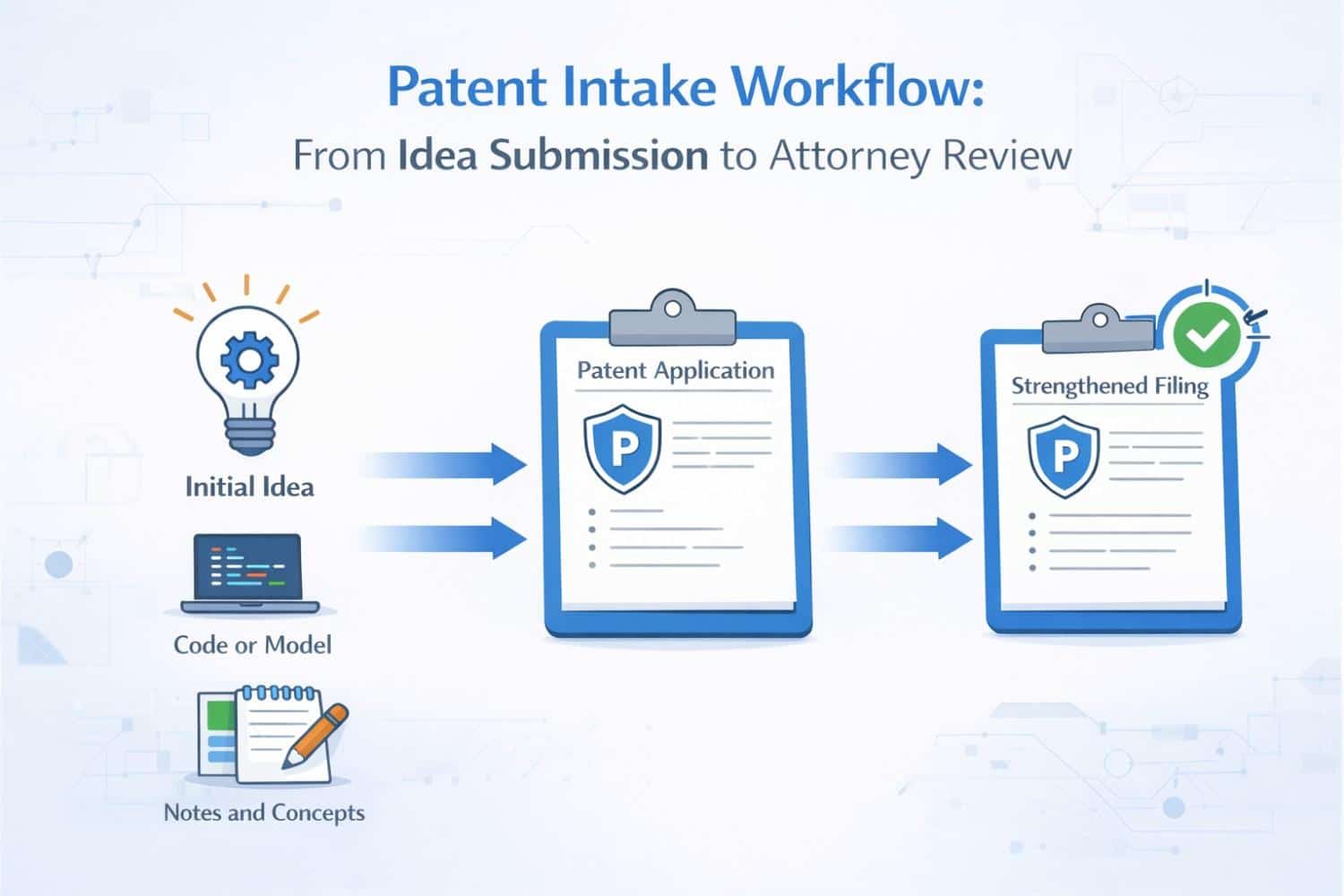
You have built something real. Maybe it is code. Maybe it is a model. Maybe it is a new system that solves a hard problem in a clean way. You know it matters. The question is simple: how do you protect it without slowing down your startup? That is where the patent intake workflow comes in. This is the path your idea takes from “I think this is important” to “an attorney has reviewed this and we are ready to file.” If you understand this flow, you stay in control. You move faster. And you avoid mistakes that cost time and money later. Let’s walk through it step by step, in plain words, so you know exactly what happens from idea submission to attorney review.
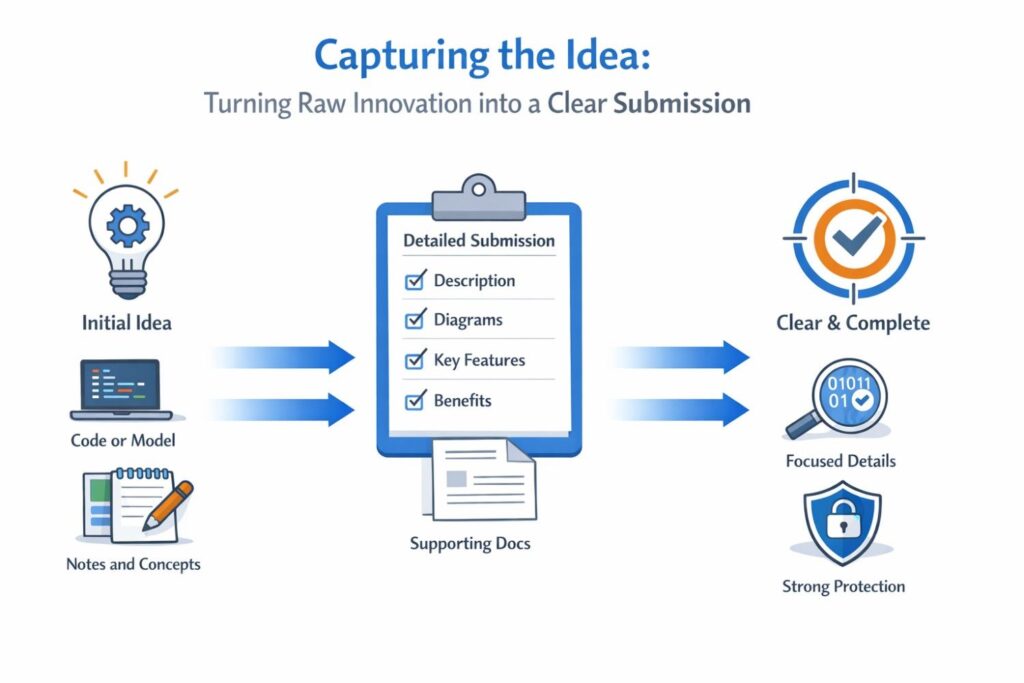
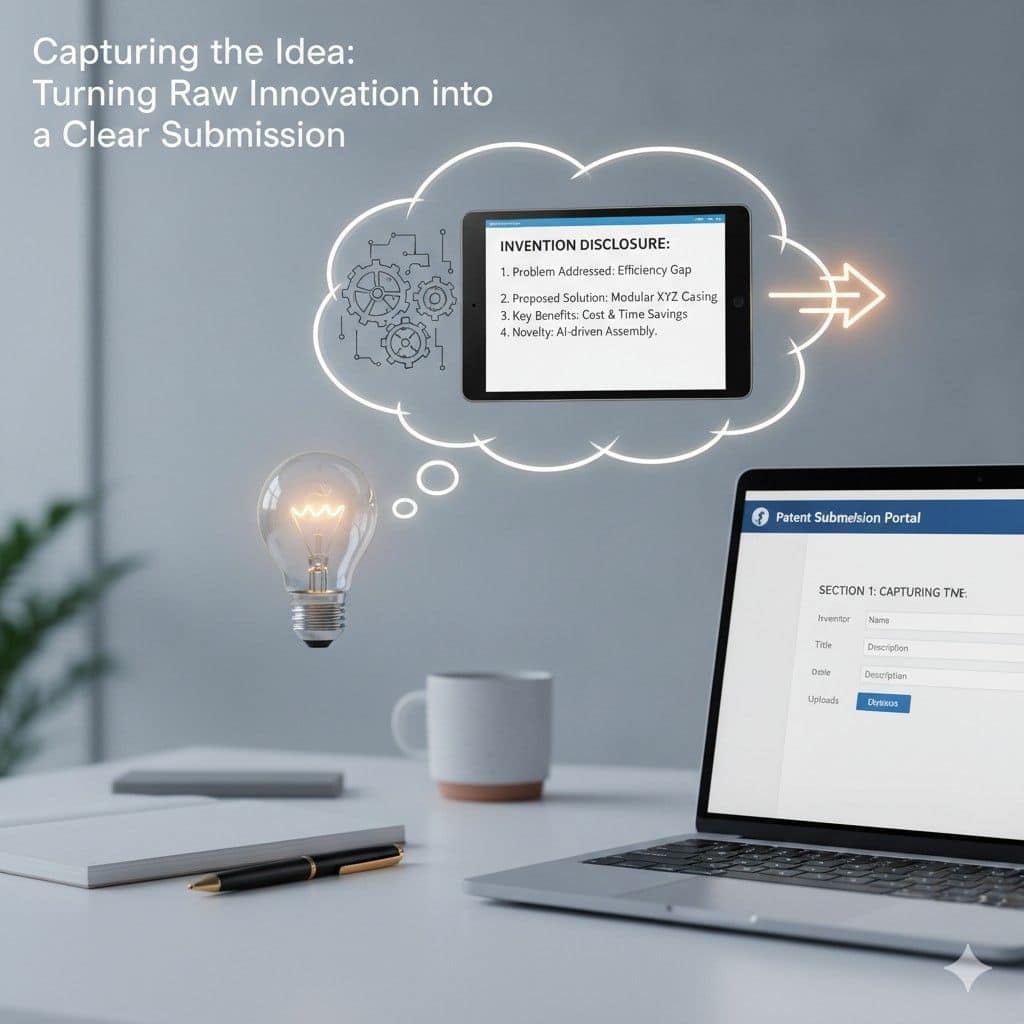
Capturing the Idea: Turning Raw Innovation into a Clear Submission
Most founders wait too long to write things down. They build fast. They ship. They move to the next sprint. But patents reward clarity, not speed alone.
The intake stage is where you slow down just enough to capture what actually makes your work different.
This is not about writing a legal document. It is about freezing the right details before they fade, change, or get buried in new commits.
If this step is weak, everything that follows becomes harder. If this step is strong, the rest of the patent process feels simple and controlled.
The goal here is to turn raw innovation into something structured, complete, and easy for an attorney to understand without guessing.
The Moment You Realize “This Is Different”
Every strong patent starts with a small internal signal. It might be a performance jump.
It might be a new way of structuring data. It might be a system that removes a step everyone else accepts as normal. That signal is your cue to start intake.
This moment is often ignored because it feels too early. Founders think they need a polished product before they submit anything. That is not true.
The best time to capture an idea is when you can still explain why you built it the way you did.
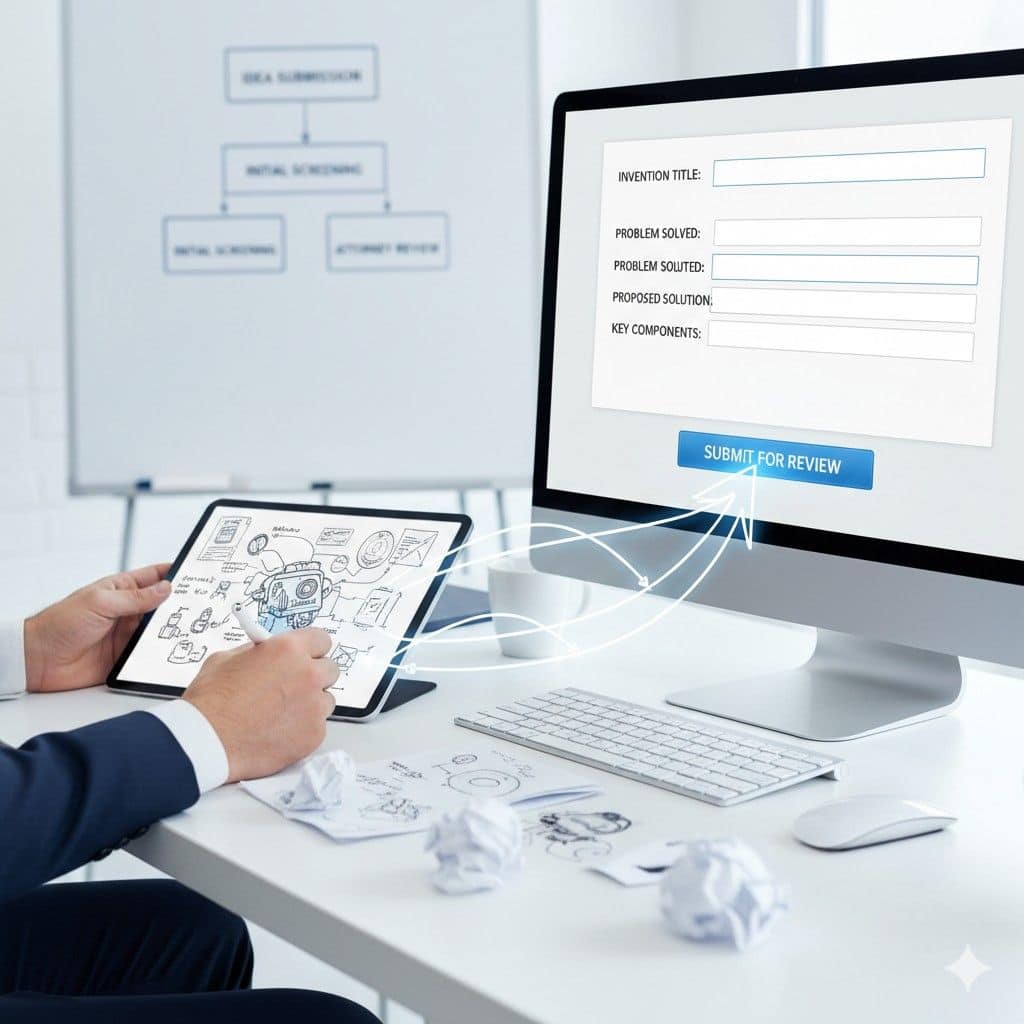
When you notice that signal, pause and ask yourself a simple question. If a competitor copied this exact approach, would it hurt? If the answer is yes, it is time to document it. Waiting only increases risk.
Separating the Core Idea from the Noise
Most inventions sit inside a much bigger product. That product has features, integrations, UI decisions, and edge cases. But your patent is not about the whole product. It is about the engine inside it.
The intake process should force you to isolate that engine. What is the real mechanism? What is the part that actually creates the result? Strip away branding. Strip away surface details. Focus on the underlying system.
A good way to do this is to pretend your code was deleted but you still had to explain the logic to another engineer. What would you describe first? What steps would you draw on a whiteboard? That is the core.
At PowerPatent, this stage matters because the software guides you to focus on what is structurally new, not what is visually impressive. That shift alone prevents weak filings.
If you want to see how this works in practice, you can explore the workflow here: https://powerpatent.com/how-it-works
Writing for Clarity, Not for Legal Language
Founders often freeze because they think they need to “sound patent-like.” They do not. In fact, trying to write in legal language usually makes the submission worse.
The intake phase should be written in plain technical English. Short sentences. Direct explanations. Clear logic. Imagine you are explaining your system to a smart engineer who has never seen your stack before.
Instead of saying “a novel architecture configured to facilitate,” say what it does. For example, “The system splits incoming data into three streams based on latency and processes them in parallel using different models.”
Clear beats fancy every time.
When your submission is written clearly, the attorney can focus on strengthening the protection instead of decoding your intent. That saves time and reduces back-and-forth.
Documenting the Problem in Simple Terms
A patent is not just about what you built. It is also about the problem you solved. During intake, you need to explain the problem in plain language.
What was broken? What was slow? What was expensive? What was inaccurate?
This matters because the scope of your protection often depends on how the problem is framed. If you describe the problem too narrowly, your patent becomes small. If you describe it accurately and broadly, your protection can expand.
Do not assume the problem is obvious. Spell it out. Explain what others were doing before. Explain why it was not good enough. Be specific about pain points.
This is one of the most strategic parts of intake. A well-framed problem sets the stage for stronger claims later.
Capturing Variations Early
Many founders describe only the version that is live in production. That is a mistake. The intake process should capture variations, even if they are not deployed yet.
Maybe your system can use different models. Maybe it can run on different hardware. Maybe it can reorder steps. Include that thinking.
You do not need to implement every variation. You just need to show that the invention is not locked to one narrow form.
This gives your attorney room to draft broader protection. It also future-proofs your patent as your product evolves.
When using a structured intake system like PowerPatent, you are prompted to think about these variations upfront. That small push often makes the difference between a narrow patent and a strong one.
If you are serious about protecting your roadmap, not just your current build, take a look at how structured intake works: https://powerpatent.com/how-it-works
Avoiding the “Feature Dump” Trap
One common mistake during idea submission is dumping every feature into one document. That creates confusion. It also weakens strategy.
Each intake submission should focus on one core inventive concept. If you have multiple innovations, separate them. Treat them as distinct submissions.
This helps in two ways. First, it keeps each patent clean and focused. Second, it allows you to decide which ideas deserve protection now and which can wait.
Think of intake as building a portfolio, not just filing a single patent. A strong portfolio often comes from multiple targeted filings over time, each based on a clear idea captured at the right moment.
Capturing Technical Detail Without Overwhelm
Engineers often struggle with how much detail to include. Too little detail makes the idea vague. Too much detail turns the submission into a code dump.
The right approach is to describe structure and flow, not every line of code. Focus on how data moves. Focus on decision points. Focus on system interactions.
For example, instead of pasting an entire function, explain what that function does in the system and why it exists.
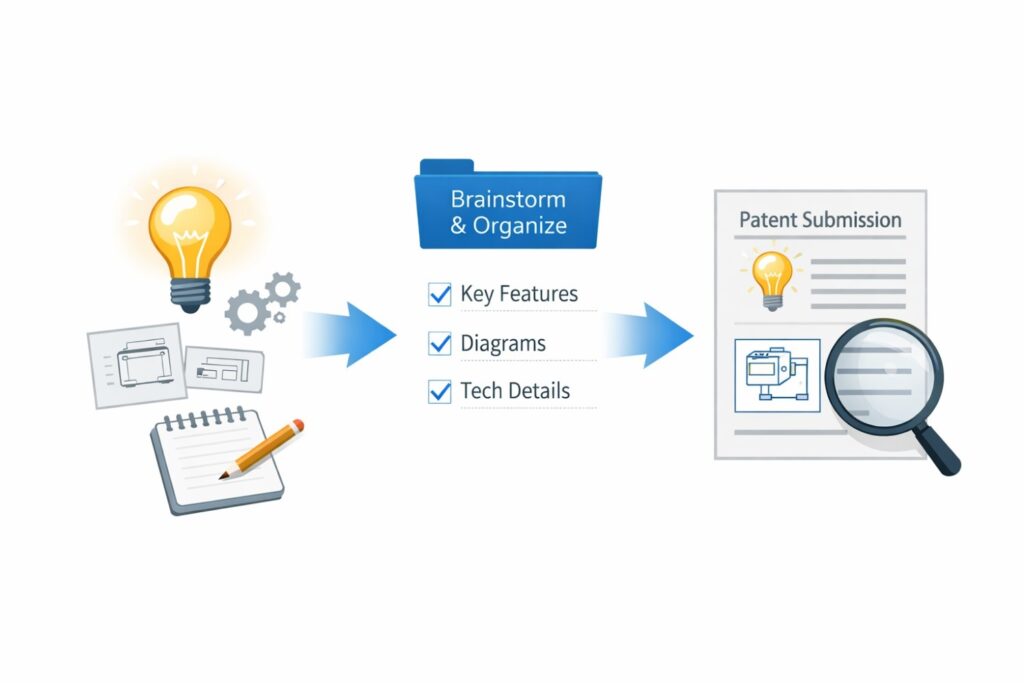
If diagrams help you think clearly, include them. A simple flow diagram can communicate more than pages of text. Even rough sketches are useful.
The goal is to give the attorney a mental model of your system. Once they see the model clearly, they can translate it into strong patent language.
Time-Stamping and Internal Alignment
Another strategic part of intake is internal timing. When you submit an idea, it creates a record. That record shows when the invention was described and by whom.
This is important for startups with multiple co-founders or engineers. Clear records reduce disputes later about inventorship.
It also helps you track what has already been captured and what still needs documentation.
If you build intake into your product workflow, it becomes natural. When a new core feature is merged, you ask: does this deserve a patent submission? That habit alone protects more value than most founders realize.
Creating a Repeatable Intake Culture
The strongest companies do not treat patents as one-off events. They build a system around idea capture.
This means engineers know what qualifies as potentially patentable. Product leads know when to flag something. Leadership reviews submissions regularly.
The intake workflow should feel like part of building, not a legal interruption.
When you use a platform designed for startups, the friction drops. Instead of long meetings and scattered documents, you have a clear path from idea to review.
That clarity encourages more submissions, which leads to stronger protection over time.
PowerPatent was built for this exact reason. It blends smart software with real attorney oversight so your intake is structured from day one. You stay fast. You stay protected.
You can see how founders are using this system to turn raw ideas into defensible patents here: https://powerpatent.com/how-it-works
Thinking Like a Competitor
One powerful exercise during intake is to imagine your toughest competitor reading your submission. What would they try to copy? What small changes would they make to avoid infringement?
When you think this way early, you naturally describe your invention more strategically. You highlight what truly matters instead of surface details.
This mindset strengthens everything that follows. It pushes you to explain not just what you built, but why the structure itself is hard to work around.
That is the real goal of intake. Not just to document. But to capture the heart of your innovation in a way that can be defended.
This is where strong patents begin. Not in legal language. Not in court. But in a clear, honest description of what makes your work different.
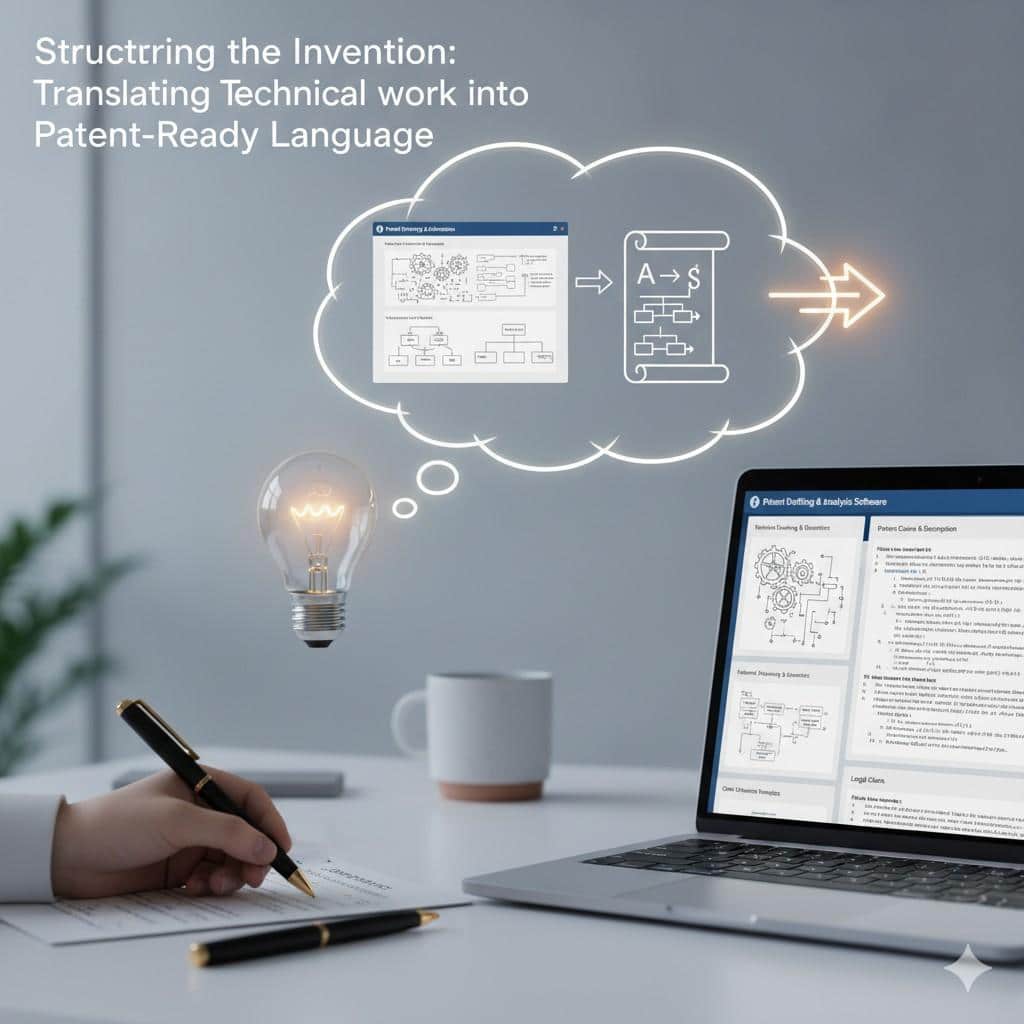
Structuring the Invention: Translating Technical Work into Patent-Ready Language
Once your idea is clearly captured, the next step is shaping it into something strong enough to protect. This is where many startups lose momentum. They have the raw material, but they do not know how to organize it in a way that supports a solid patent.
Structuring the invention is not about adding fluff or complexity. It is about arranging your technical thinking so an attorney can turn it into broad, defensible protection without guessing what you meant.
This stage is strategic. The way your invention is structured now will affect how wide your protection can be later. Small choices here can lead to big differences in outcome.
Moving From Builder Thinking to Protection Thinking
When you build, you focus on what works. When you protect, you focus on what matters.
There is a difference.
Builders often describe the most recent version of a system. But patent strategy requires stepping back. You need to ask what is essential and what is optional. What part of the system must exist for the invention to function? What parts are improvements but not required?
This shift changes how the invention is framed. Instead of tying protection to one exact setup, you anchor it to the underlying mechanism. That makes it harder for competitors to work around.
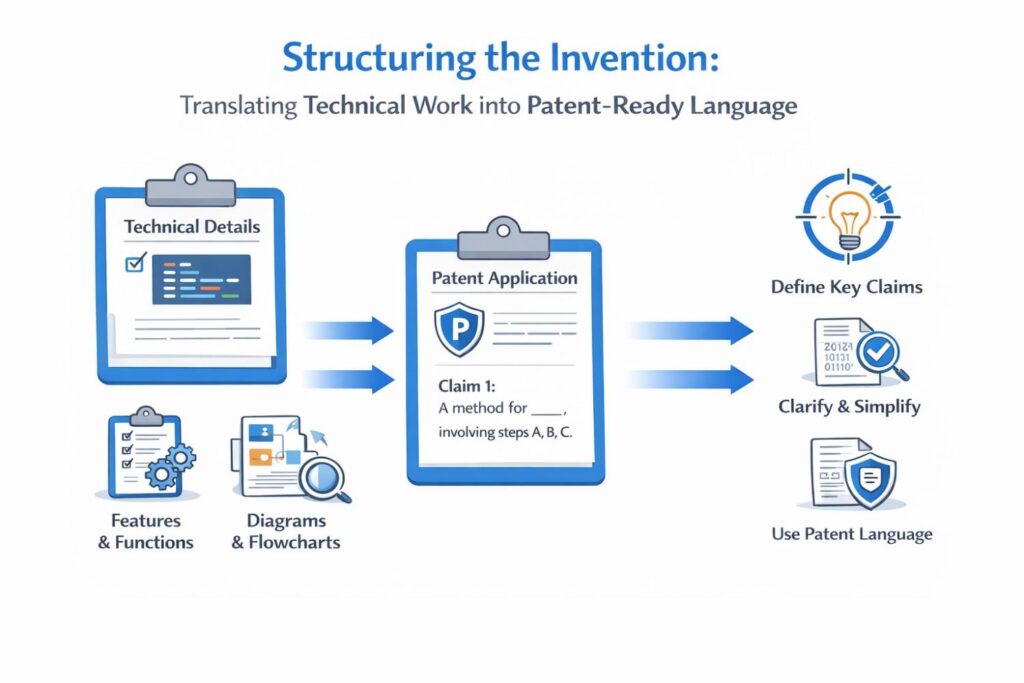
A structured workflow helps you make this shift. Instead of dumping technical notes into a document, you are guided to clarify the core structure first, then layer in detail.
If you want to see how structured guidance works in practice, you can explore it here: https://powerpatent.com/how-it-works
Defining the System Boundaries
Every invention lives inside a system. The question is where to draw the boundaries.
If your boundaries are too narrow, your patent protects only a small slice. If they are too wide without support, you risk rejection. The intake workflow at this stage forces a careful decision: what exactly is “the system” you are claiming?
For example, is your invention the model itself? Or is it the way data is prepared before reaching the model? Or is it the orchestration layer that manages multiple models?
Each choice creates a different protection strategy.
You should describe the invention in layers. Start with a high-level system view. Then zoom in to the internal components. Then zoom in again to key operations.
This layered structure gives attorneys flexibility when drafting claims.
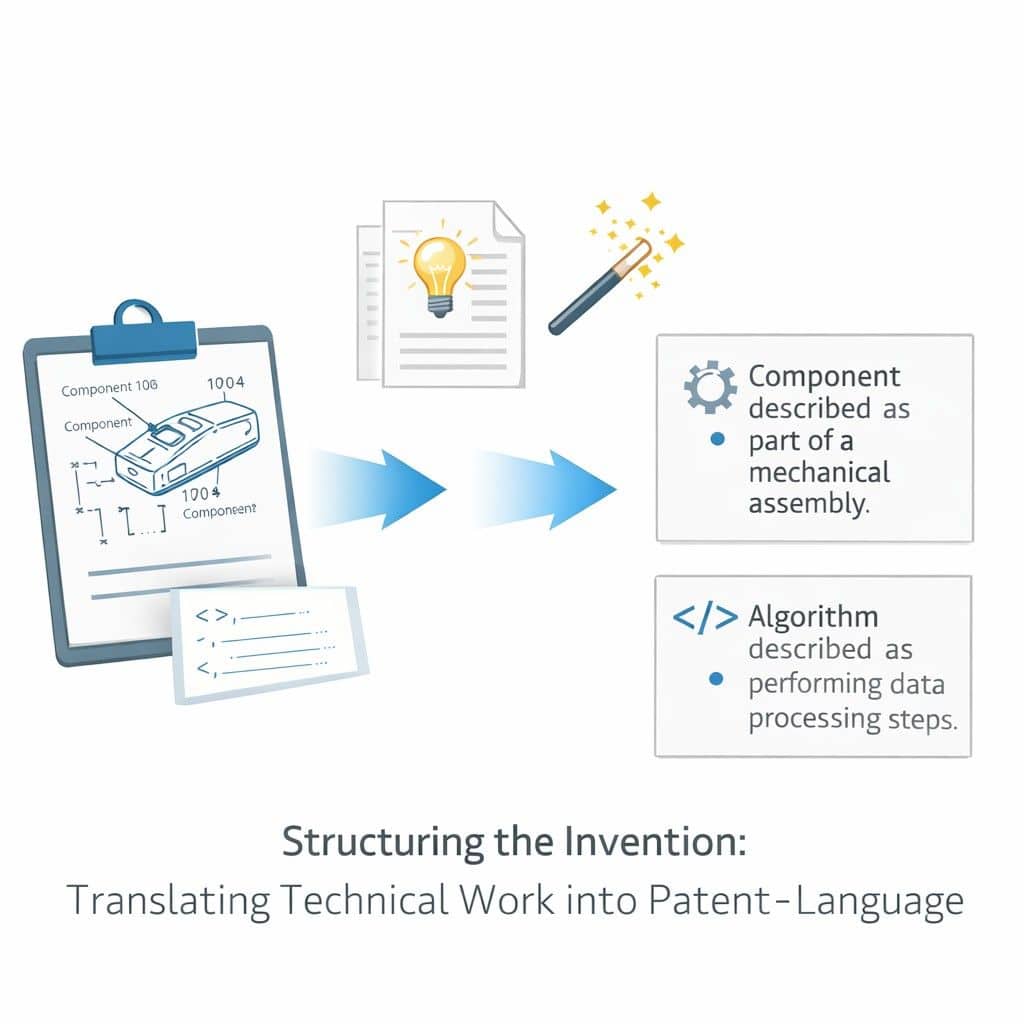
Turning Code Into Functional Language
Code is precise. Patents are functional.
That means you need to translate what your code does into what the system achieves. The goal is not to rewrite your repository. It is to explain the function behind it.
For instance, instead of describing a specific library call, describe the operation it performs. Instead of referencing a single API, describe the data exchange happening between components.
This approach widens your protection. Libraries change. Frameworks change. But core functions remain valuable.
During structuring, ask yourself: if we rewrote this in a different language, would the invention still exist? If yes, describe it at that level.
This makes your patent more durable over time.
Identifying the Novel Engine
Inside every strong patent is a novel engine. It may be small. It may be one specific decision rule. It may be a unique sequence of steps. But it is there.
The structuring phase is about isolating that engine clearly.
You should describe what makes this engine different from common approaches. Not in a vague way. In a concrete way. What are others doing? What is your system doing instead?
This comparison sharpens the story. It helps the attorney draft claims that highlight contrast, which is critical during examination.

Without this clarity, your patent risks blending into existing technology. With it, your invention stands out.
Mapping Technical Detail to Business Value
Patents are legal tools, but they are also business assets.
During structuring, connect technical details to business impact. Does your system reduce compute costs? Improve speed? Increase accuracy? Enable a new feature others cannot offer?
Explain that link.
This does not mean adding marketing language. It means showing why the invention matters in real terms.
Attorneys use this information to shape arguments later. It also helps you decide which inventions deserve priority filing.
When your intake workflow connects technical structure with business value, you build a stronger IP strategy, not just a filing pipeline.
Supporting Broad Protection With Specific Examples
Here is a key principle: broad protection must be supported by specific examples.
During structuring, include at least one detailed example of how the invention works. Walk through a real scenario. Show inputs, internal steps, and outputs.
This anchors the invention in reality.
At the same time, describe alternative ways the system could be implemented. Different data types. Different hardware. Different configurations.
This combination allows attorneys to draft broad claims supported by real detail. It strengthens the application and reduces the chance of rejection.
Platforms like PowerPatent are designed to guide you through this balance. The software prompts you to expand where needed while real attorneys review and refine the structure.
That blend keeps things both practical and powerful.
You can see how that hybrid model works here: https://powerpatent.com/how-it-works
Anticipating Edge Cases and Workarounds
Strong structuring also means thinking defensively.
Ask yourself how someone might try to copy your idea while changing small details. Would they swap out one step? Change the order? Replace a component?
Document these possibilities.
By describing variations and equivalents, you make it harder for competitors to design around your patent. You also give attorneys more material to craft protective language.
This does not require paranoia. It requires foresight.
Your goal is to think one move ahead.
Cleaning Up Ambiguity Before Attorney Review
One of the most valuable things you can do before attorney review is remove ambiguity.
Ambiguity slows everything down. It leads to extra calls, more revisions, and higher costs.
Read your structured submission as if you were new to the project. Are there undefined terms? Are there jumps in logic? Are there assumptions that only your team understands?
Clarify them now.
This does not mean perfect writing. It means clear thinking.
When attorneys receive a well-structured, clear explanation, their time is spent strengthening and expanding protection, not decoding unclear notes. That efficiency saves both time and money.
Building a Clean Handoff to the Attorney
The final step in structuring is preparing the handoff.
At this point, your invention should be clearly described, layered logically, supported with examples, and connected to real value.
The attorney should be able to read it and immediately understand three things. What problem is being solved. How the system solves it in a unique way. Why that difference matters.
A clean handoff leads to faster drafting. Faster drafting leads to earlier filing. Earlier filing reduces risk.
This is why the intake workflow matters so much. It shapes everything that follows.
PowerPatent was built to make this handoff seamless. Smart software helps founders structure their ideas properly, and real patent attorneys step in to review, refine, and draft. You get the speed of technology with the safety of human expertise.
If you are building serious technology and want a process that matches your pace, take a look at how it works: https://powerpatent.com/how-it-works
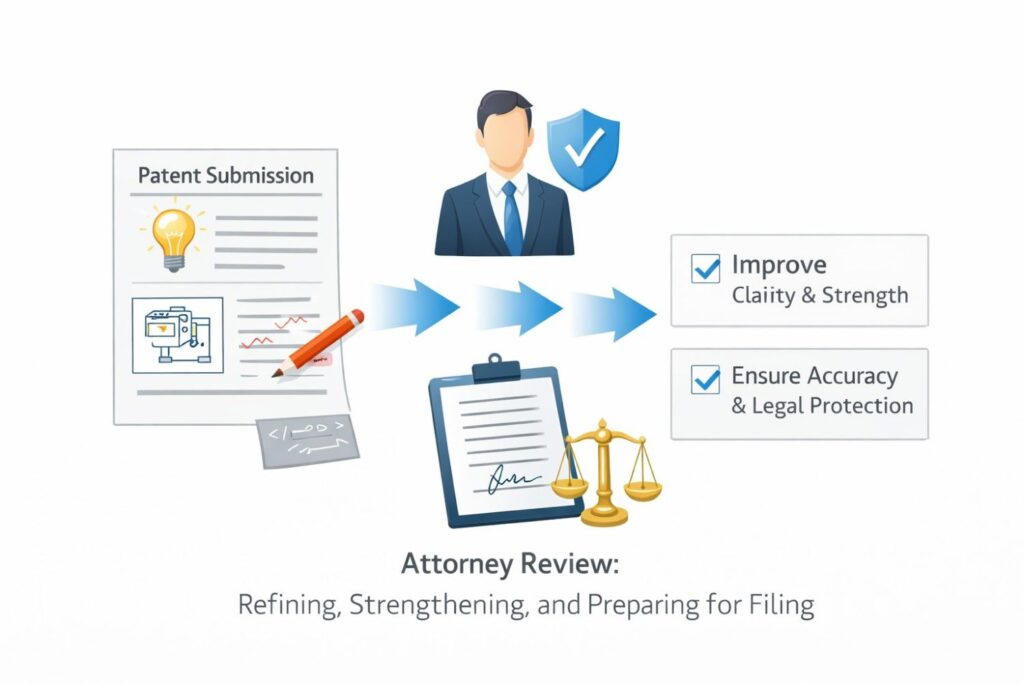
Attorney Review: Refining, Strengthening, and Preparing for Filing
This is the moment where many founders feel nervous. An attorney is about to review your invention. You might wonder if you explained it well enough. You might worry that it is not “patent-worthy.” You might fear delays.
But if the intake and structuring steps were done right, attorney review is not a roadblock. It is an upgrade.
This stage is not about rewriting your work from scratch. It is about pressure-testing it. It is about finding weak spots before the patent office or a competitor does. It is about turning a clear technical story into a strong legal shield.
When done well, attorney review does not slow you down. It gives you confidence.
Shifting From Description to Protection Strategy
Up to this point, you have focused on explaining what you built. Now the focus shifts to how to protect it in the smartest way possible.
An experienced patent attorney does not just read your submission and translate it into formal language. They look for leverage.
They ask questions like: Where is the broadest defensible position? What elements are essential?
What can be generalized? What should be claimed narrowly to ensure approval and what should be claimed broadly to protect future growth?
This is strategic work.
A strong review identifies the heart of the invention and makes sure the claims are built around that heart. If your intake was clear, this becomes a collaborative refinement instead of a long discovery process.
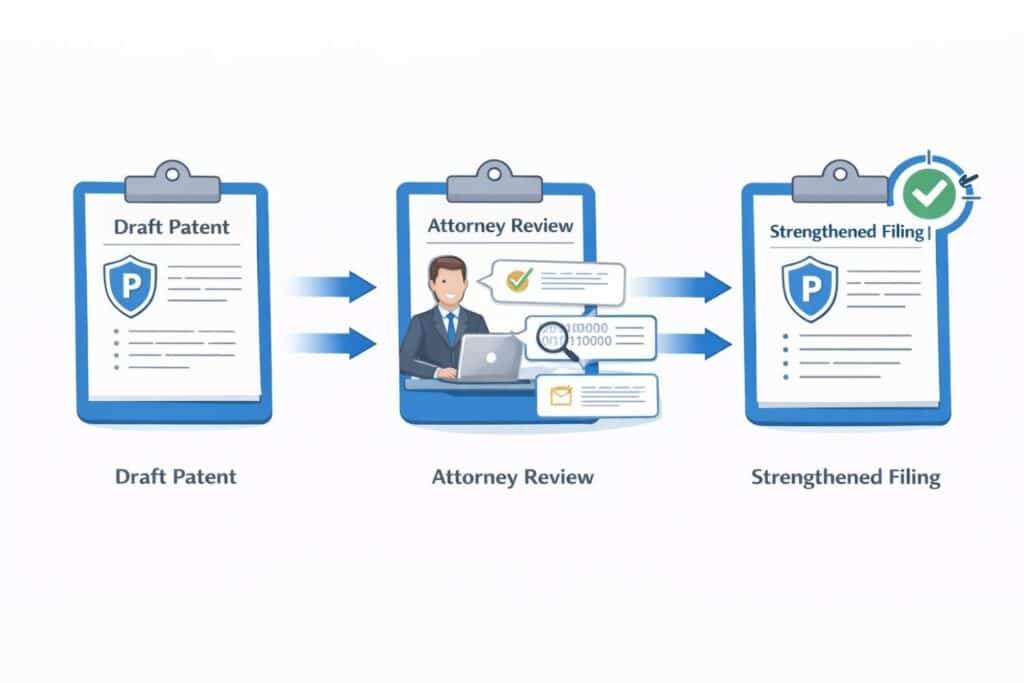
That is why the workflow matters so much. Clean input leads to powerful output.
Spotting Gaps Before They Become Problems
No submission is perfect. That is normal. Attorney review is where hidden gaps surface.
Maybe a step in the process was implied but not explained. Maybe an alternative version was not described clearly. Maybe the problem statement needs to be framed in a broader way.
Catching these issues now is far better than facing them during examination.
During review, attorneys often ask focused questions. These are not random. They are designed to strengthen the foundation. When you respond quickly and clearly, the application becomes more resilient.
This is also where working with a platform that keeps everything organized makes a difference. Instead of scattered emails and lost attachments, feedback stays tied to the invention itself.
PowerPatent combines structured software with real attorney oversight so this back-and-forth is efficient, not chaotic. You can see how that process works here: https://powerpatent.com/how-it-works
Strengthening the Claims Without Overcomplicating Them
Claims are the core of a patent. They define what you own.
During review, the attorney drafts claims that capture your invention in layers. There are broader claims that aim to cover the main concept. There are narrower claims that add specific features.
The art is balance.
If claims are too broad without support, they get rejected. If they are too narrow, competitors can design around them. A skilled review process shapes claims that are ambitious but grounded in your description.
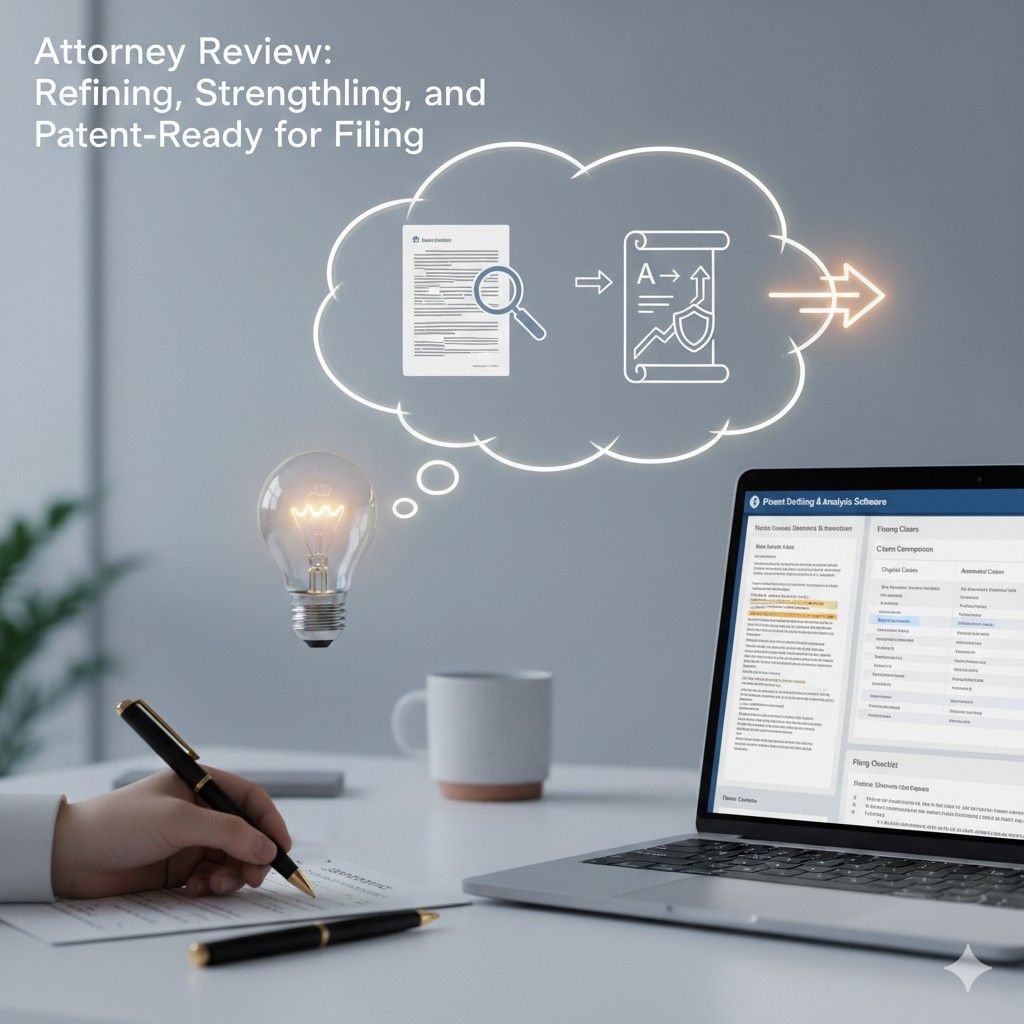
This is where your earlier work on variations pays off. If you described different configurations and examples, the attorney has room to draft strong claims that still stand on solid ground.
The goal is not to make the document complicated. The goal is to make it precise.
Aligning the Patent With Your Business Roadmap
Attorney review is also a strategic checkpoint.
Your startup is not static. You have a roadmap. You have features coming. You have markets you plan to enter.
A smart attorney will ask how this patent fits into that future. Should the claims cover only the current version? Or should they anticipate where you are heading?
This conversation matters.
Filing a patent is not just about protecting what exists today. It is about securing space for where you plan to grow.
If your workflow allows easy updates and clear communication, you can adjust the draft before filing. That flexibility prevents regret later.
This is one of the biggest advantages of a modern patent process. You stay in control instead of feeling locked into a rigid system.
Preparing for Examination From Day One
Many founders think about approval only after filing. Strong teams think about it during drafting.
Attorney review includes anticipating what an examiner might say. Are there known technologies that look similar? How can the differences be highlighted clearly? Is the problem framed in a way that shows real improvement?
By thinking ahead, the application is written in a way that supports future arguments.
This does not guarantee instant approval. But it improves your position.
It reduces the chance of major rewrites later. It saves time. It saves money. It increases confidence.

When software organizes your invention cleanly and attorneys refine it with foresight, the end result is not just a filed patent. It is a prepared one.
Final Review and Founder Sign-Off
Before filing, you should review the draft carefully.
This is your invention. You understand it deeply. Read the document slowly. Make sure the technical description is accurate. Make sure nothing important was left out.
This is also your chance to ensure the tone matches the reality of your system. If something feels off, raise it.
A collaborative review leads to stronger filings.
At PowerPatent, founders are not sidelined during this stage. The platform keeps you involved while real attorneys handle the heavy lifting. You see the draft. You give feedback. You stay informed.
That balance between control and expert support is what modern patent workflows should look like.
If you want a process that keeps you moving fast while protecting what you build, explore how it works here: https://powerpatent.com/how-it-works
Filing With Confidence, Not Guesswork
When the intake was clear, the structuring was strategic, and the attorney review was thorough, filing feels different.
It does not feel rushed. It does not feel confusing. It feels intentional.
You know what is being protected. You understand the scope. You see how it fits your business.
That confidence is powerful.
A patent should not be a mystery document sitting in a folder. It should be a clear asset that supports fundraising, partnerships, and long-term defensibility.
The full intake workflow, from idea submission to attorney review, exists to create that clarity.
Startups move fast. Your IP process should move with you, not against you.
If you are ready to turn your technical work into real protection without slowing down, take the first step here: https://powerpatent.com/how-it-works
Wrapping It Up
A strong patent does not start with legal language. It starts with a clear moment. You build something new. You see the difference. You decide to capture it before the world catches up. From that first signal to final attorney review, the intake workflow is what protects your edge. When you capture the idea early, you stop value from slipping through the cracks. When you structure it with care, you turn raw engineering into a clear system that can be defended. When an attorney reviews it with strategy in mind, your invention becomes more than a description. It becomes an asset.