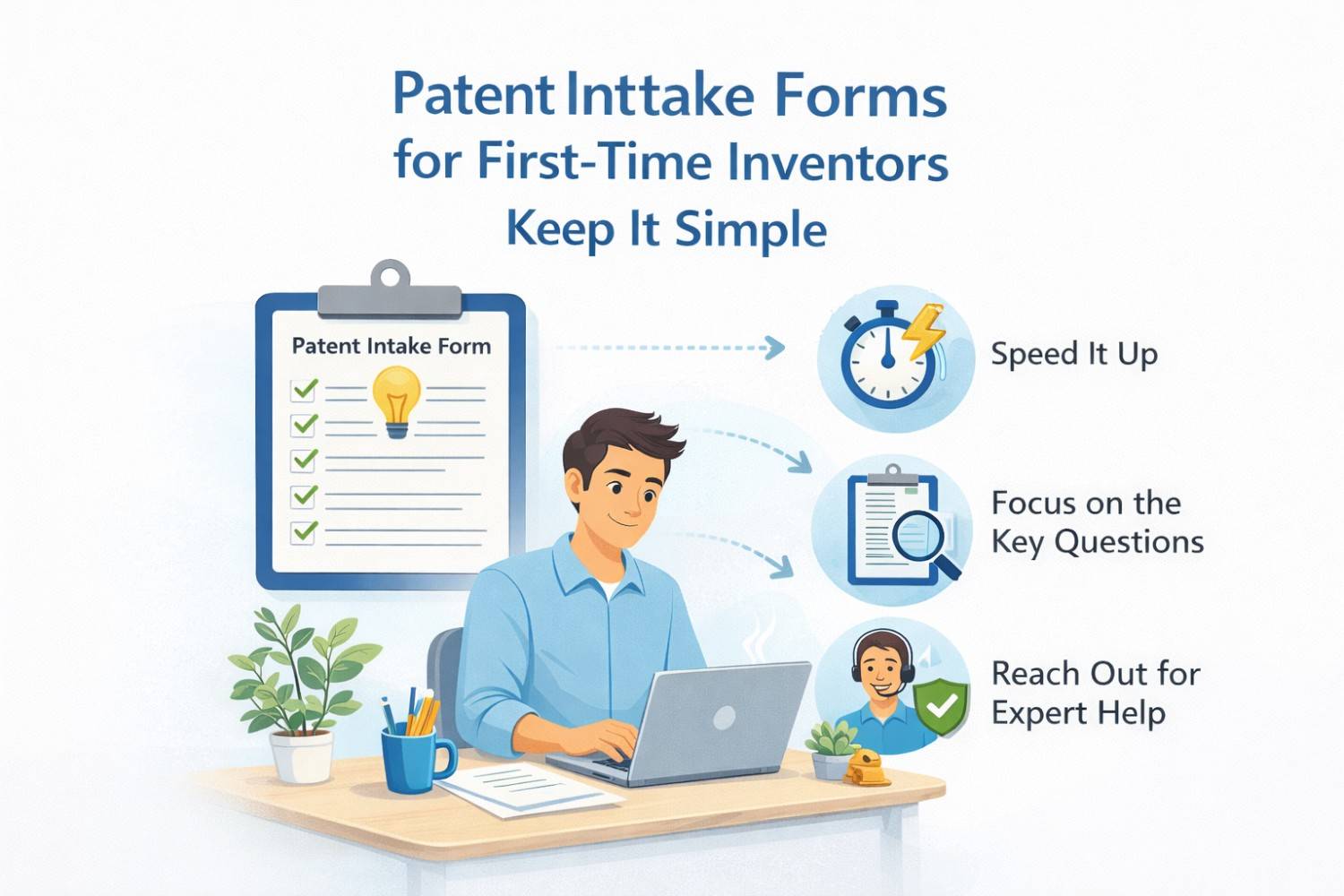
Most first-time inventors do not fail because their idea is weak. They fail because they cannot clearly explain what they built. A patent intake form is not just paperwork. It is the moment you turn your invention into something real and protectable. If you keep it simple, you move faster. If you make it messy, you slow yourself down. This guide will show you how to approach patent intake forms in a clear, calm, and smart way—so you can protect what you are building without losing momentum.
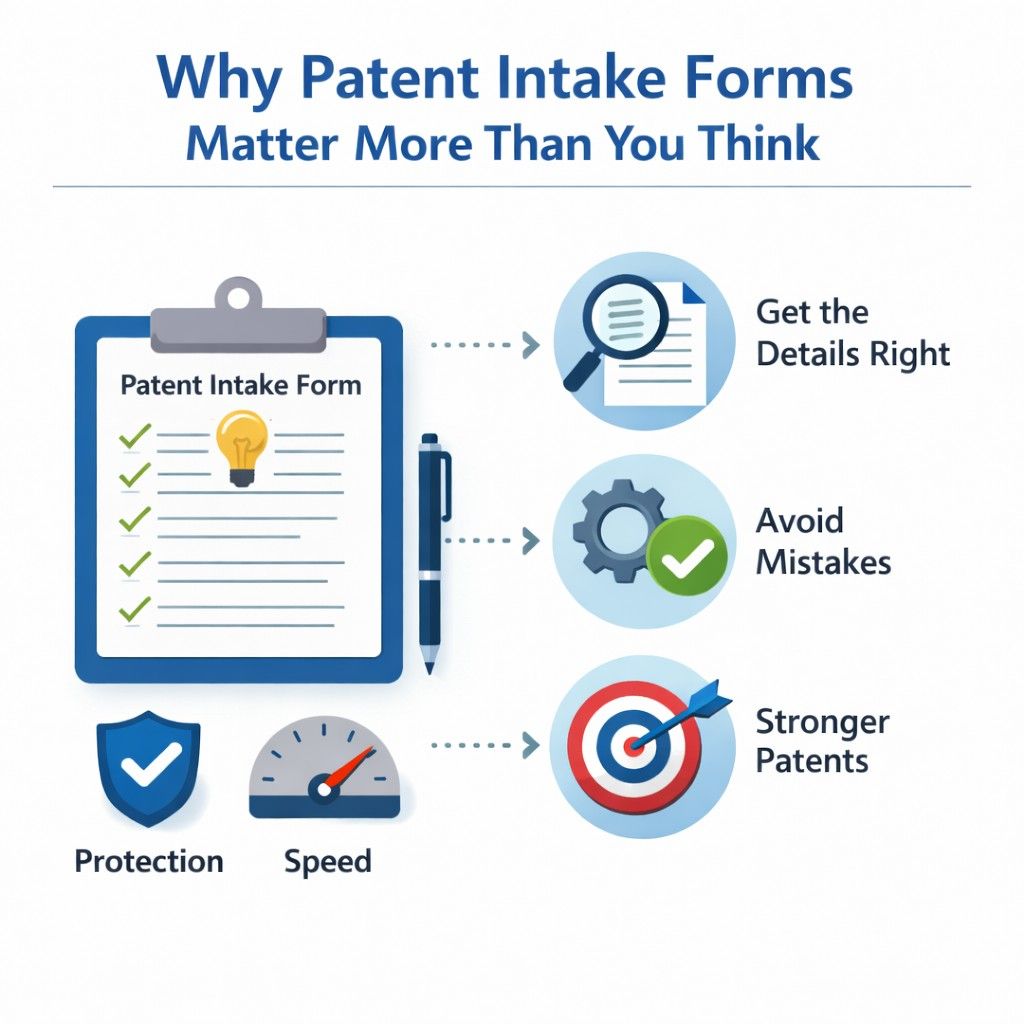
Why Patent Intake Forms Matter More Than You Think
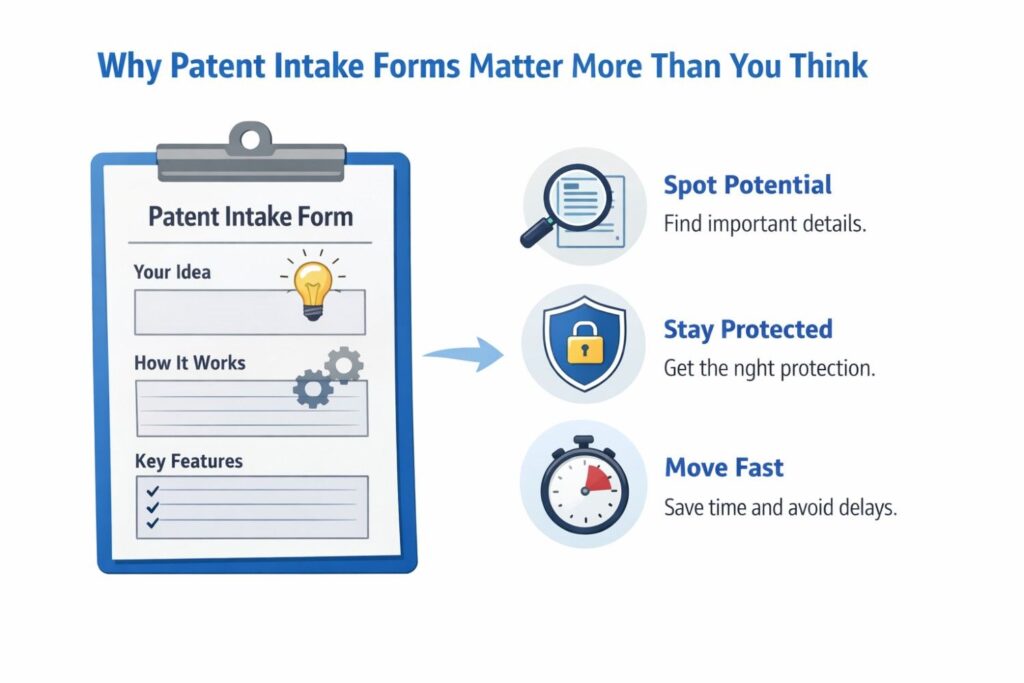
Most founders treat the patent intake form like admin work. It feels like something you rush through so you can “get to the real stuff.” That is a mistake.
This form is not a side task. It is the foundation of your entire patent strategy. If you take it seriously, it sharpens your thinking, strengthens your protection, and saves you time and money later.
If you treat it lightly, you create confusion that can follow you for years.
Let’s break down why this simple document matters so much to your business.
It Forces You to Think Clearly About What You Built
Before you can protect something, you must understand it at a deep level. Many founders say, “We built an AI system that does X.” That is not enough. The intake form pushes you to explain how it works, what makes it different, and why it matters.
This is powerful. When you sit down to answer the questions, you often discover gaps in your own thinking. Maybe your edge is not the model itself, but the way you clean the data.
Maybe the real innovation is how your system runs faster on low-cost hardware. The form makes you slow down and define the true core of your invention.
Here is something practical you can do. Before you fill out the form, open a blank document and explain your invention as if you are teaching a smart high school student.
Do not use buzzwords. Do not hide behind technical terms. If you cannot explain it in plain language, your patent will likely be weak. This exercise alone can raise the quality of your filing.
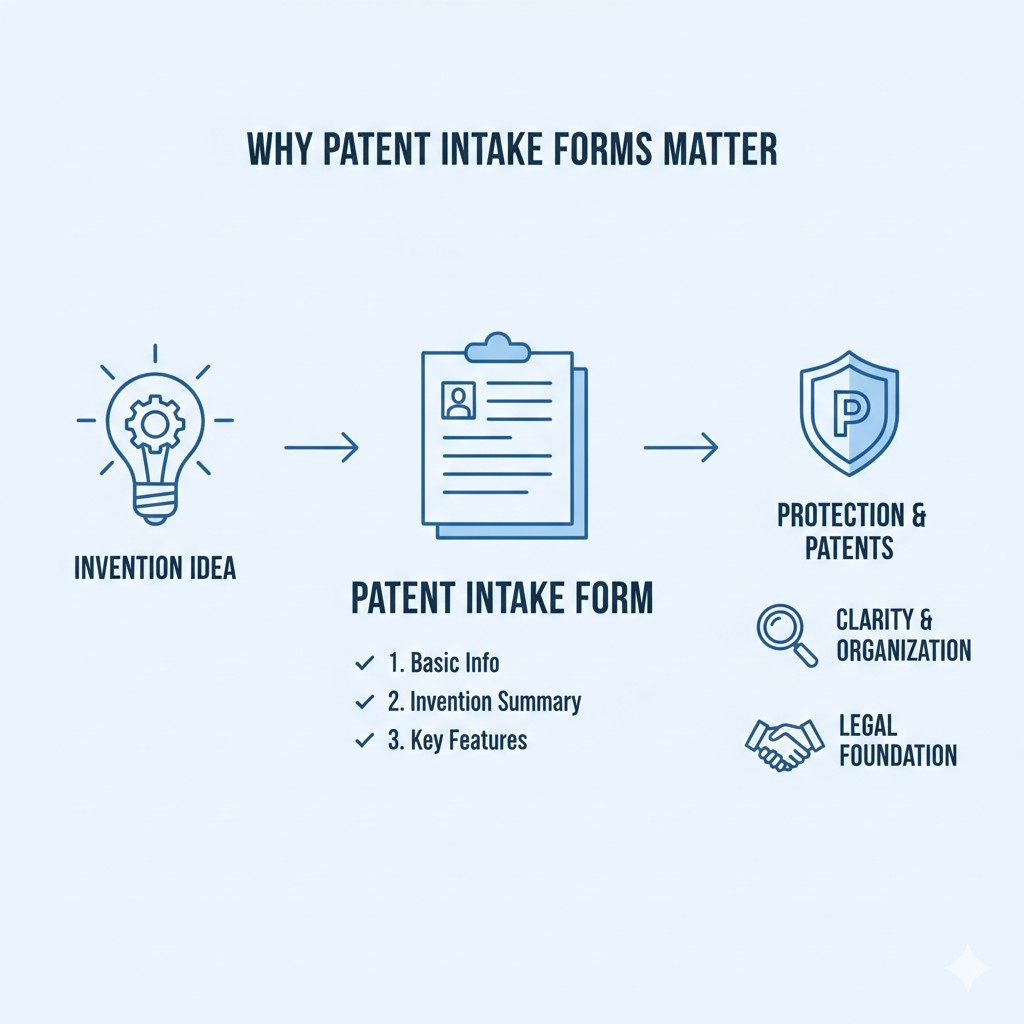
When you use a structured intake form like the one inside PowerPatent, the system guides you step by step. It asks the right questions so you do not miss key details. That structure is not red tape. It is clarity.
If you want to see how that works in practice, you can explore the process here: https://powerpatent.com/how-it-works
It Protects You From Costly Omissions
The biggest risk for first-time inventors is not filing too late. It is leaving out the most important details when they file. Once your patent application is submitted, adding new material later is hard and often impossible without filing again.
A rushed intake form leads to a rushed application. A rushed application leaves holes. Those holes are where competitors step in.
For example, imagine you built a new sensor system.
You describe the hardware in detail, but you barely mention the software that processes the data.
A competitor can copy your processing method, change the hardware slightly, and avoid your patent. That is not because your idea was weak. It is because the intake stage was incomplete.
To avoid this, treat the intake form like a strategy session, not a survey. Block off real time on your calendar. Turn off Slack. Close your inbox. Walk through your product from start to finish.
Think about every moving part. Think about edge cases. Think about future versions.
One smart move is to review your Git commits or product roadmap before filling out the form. This reminds you of design decisions you may have forgotten. Those decisions often contain the real innovation.
PowerPatent’s software helps you capture this detail in a clean, guided way, and real patent attorneys review it to catch blind spots before filing.
That combination of software plus human oversight reduces the chance of expensive mistakes. You can see how that review layer works here: https://powerpatent.com/how-it-works
It Aligns Your Patent With Your Business Goals
A patent is not just a technical document. It is a business asset. If your intake form is disconnected from your strategy, your patent may protect the wrong thing.
Maybe your company makes money through licensing. Maybe your real value is in a core algorithm that no one else can replicate. Maybe you plan to raise venture capital in six months.
Each of these paths changes what should be emphasized in your patent.
The intake form is where you connect your invention to your business model. When you describe your product, also think about how it creates value. Is it speed, accuracy, cost savings, or a new user experience? Make that clear.
Here is a tactical approach.
As you complete the form, ask yourself one simple question: if a competitor copied this exact feature, would it hurt us badly? If the answer is yes, then that feature deserves strong coverage in your application.
Make sure it is described in detail. Show variations. Show alternative ways it could be implemented.
This is not about writing legal language. It is about thinking like a founder who wants leverage. A strong intake form helps your attorney draft claims that match your real advantage, not just your surface-level features.
When you use a platform built for startups, the intake process is designed around speed and clarity. You are not buried in legal terms. You are guided to focus on what actually matters for growth and defense.
That is the difference between old-school firms and modern tools built for builders. If you want to see how this is structured for founders, visit https://powerpatent.com/how-it-works
It Speeds Up the Entire Patent Process
Many founders think the intake form slows things down. In truth, it does the opposite. A detailed, thoughtful intake form reduces back-and-forth with attorneys. It prevents long email threads asking for missing details. It shortens drafting time.
When you provide clear diagrams, code snippets, and step-by-step explanations upfront, your patent draft can be prepared faster and with fewer revisions.
That means you file sooner. Filing sooner means you lock in your priority date earlier. In fast-moving fields like AI, robotics, biotech, or fintech, that timing matters.
Here is an actionable tip. As you fill out the form, attach screenshots of your system, flowcharts of your process, and short comments explaining what each part does.
Even rough sketches are useful. Do not wait to “polish” them. The goal is clarity, not beauty.
Inside PowerPatent, you can upload these materials directly and organize them in one place. That central hub makes collaboration easier and keeps everything tied to your invention story. It turns a chaotic process into a clean workflow.
You can explore that streamlined approach here: https://powerpatent.com/how-it-works
It Builds Confidence With Investors and Partners
When investors ask about your intellectual property, they are not just checking a box.
They want to know you are serious about protecting your edge. If you can say that you have gone through a structured intake process, worked with real attorneys, and filed a well-prepared application, that builds trust.
The intake form is the first step in that signal. It shows that you took the time to document your innovation properly. It shows discipline. It shows foresight.
If you are preparing for a fundraise, consider aligning your intake completion with your pitch timeline.
File before major demos or announcements. That way, when you present your product publicly, you already have protection in motion.
This is not about fear. It is about positioning. A strong patent process, starting with a simple but powerful intake form, gives you leverage in conversations that shape your company’s future.
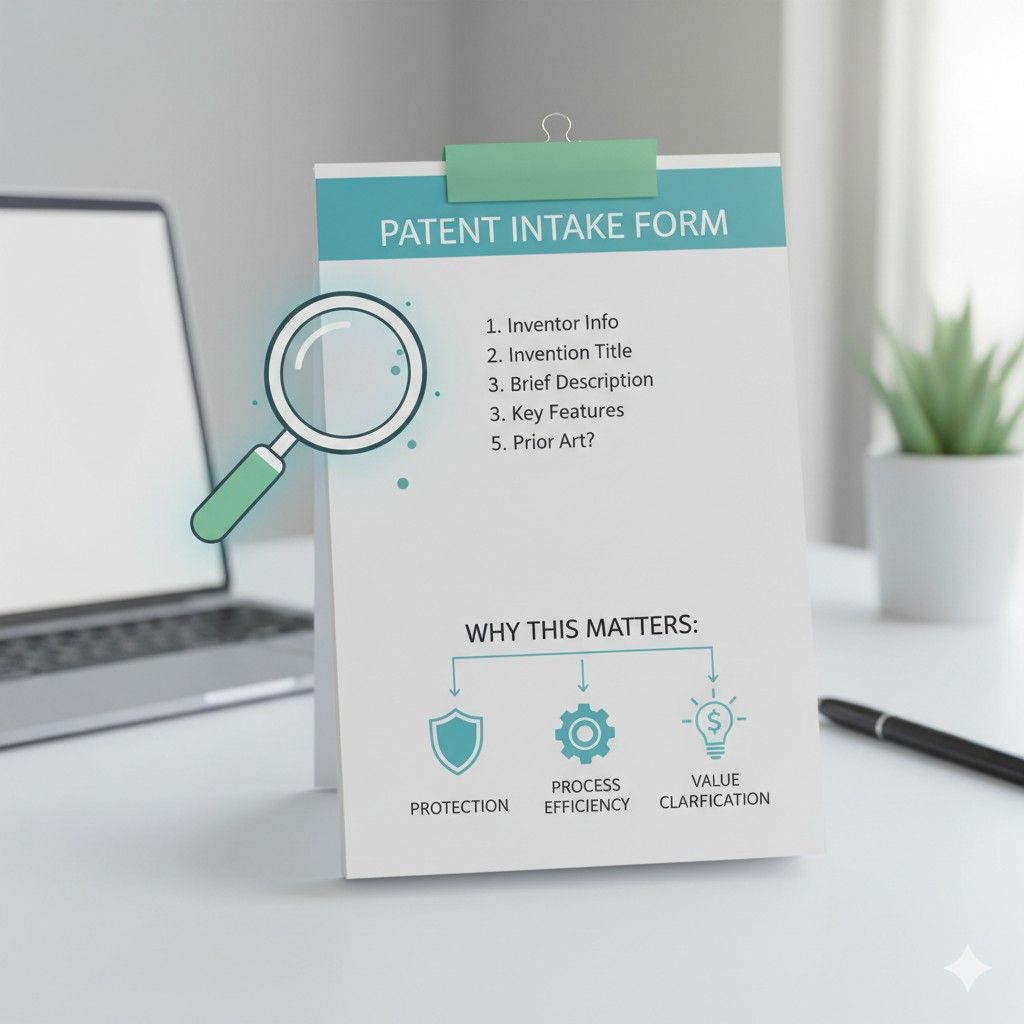
When you combine structured software with attorney review, you get speed without sacrificing quality. That balance is what modern startups need.
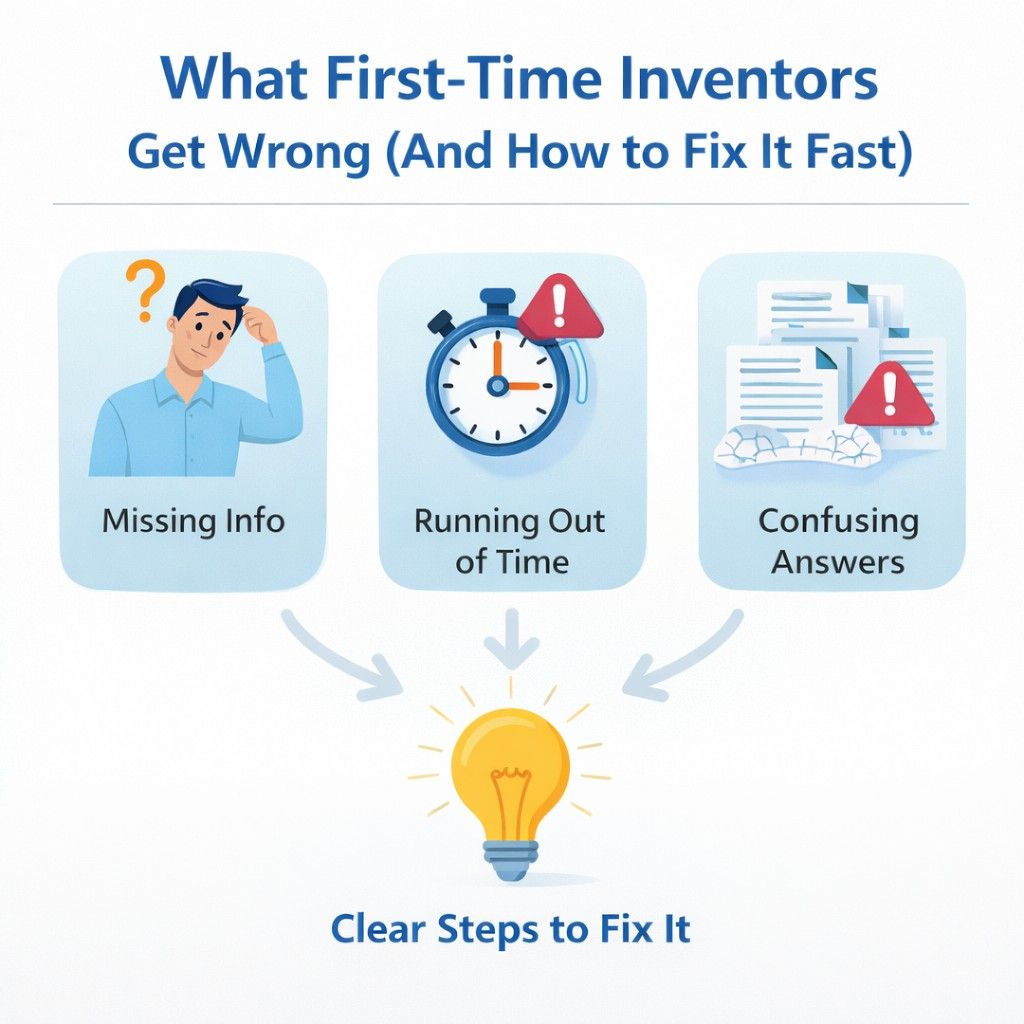
What First-Time Inventors Get Wrong (And How to Fix It Fast)
Most first-time inventors are smart. Many are engineers. Some are PhDs. Yet when it comes to patents, they often make simple mistakes that weaken their protection. Not because they lack skill, but because no one showed them how the process really works.
The good news is this: these mistakes are easy to fix once you see them clearly. And the fix often starts at the intake form stage.
They Describe the Product, Not the Invention
Many founders use the intake form to describe what their product does. They talk about features, user screens, and benefits. They explain how customers use it. That is helpful, but it is not enough.
A patent does not protect your marketing story. It protects how something works under the hood.
For example, you might say your platform “automates fraud detection using AI.” That is a product statement. The real invention might be the way your model selects features in real time, or how it reduces false positives through a new training loop.
If you do not explain that deeper layer in the intake form, it may never make it into your patent.
To fix this, shift your mindset. Ask yourself how your system works step by step. What happens first?
What data flows where? What decisions are made? What logic runs in the background? Write it out like you are walking someone through your codebase.
If you are unsure whether you are going deep enough, imagine a skilled competitor trying to copy you. Would they be able to rebuild your core system from what you wrote? If the answer is yes, you are on the right track.
Inside a structured process like PowerPatent, the intake flow guides you to describe mechanisms, not just outcomes.
That makes a major difference in the final strength of your application. You can see how that guided flow works here: https://powerpatent.com/how-it-works
They Wait Too Long to Document the Details
Another common mistake is delay. Founders focus on shipping, hiring, and fundraising. They tell themselves they will “deal with patents later.” Months pass. Code changes. Early design decisions fade from memory.
When they finally sit down to fill out the intake form, they struggle to remember why certain choices were made. They leave out key variations. They forget early experiments that might have been patent-worthy on their own.
This creates risk. Patents are strongest when they capture the evolution of your thinking, not just the current version of your product.
The fix is simple but powerful. Document as you build. When you ship a major technical improvement, block off thirty minutes to write down what changed and why. Save diagrams.
Keep notes about trade-offs you considered. These notes can later feed directly into your intake form.
Even better, make patent review part of your sprint cycle. After a major release, ask your team one question: did we create something here that is hard to replicate? If yes, capture it early.
With a platform that is built for speed, you do not need to wait until everything is perfect. You can start the intake process while your product is still evolving, then refine it with attorney input.
That keeps protection aligned with innovation instead of lagging behind it. Learn how that works here: https://powerpatent.com/how-it-works
They Underestimate Edge Cases and Variations
First-time inventors often describe only the exact version of the system they built. They focus on one path, one configuration, one implementation. That feels safe because it is concrete.
But competitors look for narrow patents. If your application covers only a single setup, someone can tweak one parameter or swap one component and move outside your claims.
The intake form is your chance to think broadly. Not in vague terms, but in thoughtful alternatives.
If your model runs on a cloud server, could it also run on edge devices? If your system uses one type of sensor, could it use another? If your algorithm relies on a specific threshold, could that threshold adapt dynamically?
You do not need to build all these versions today. You just need to describe that they are possible and part of your inventive concept.
A practical way to do this is to take each core component of your system and ask, what is another way this could be implemented? Write down those variations in plain language.
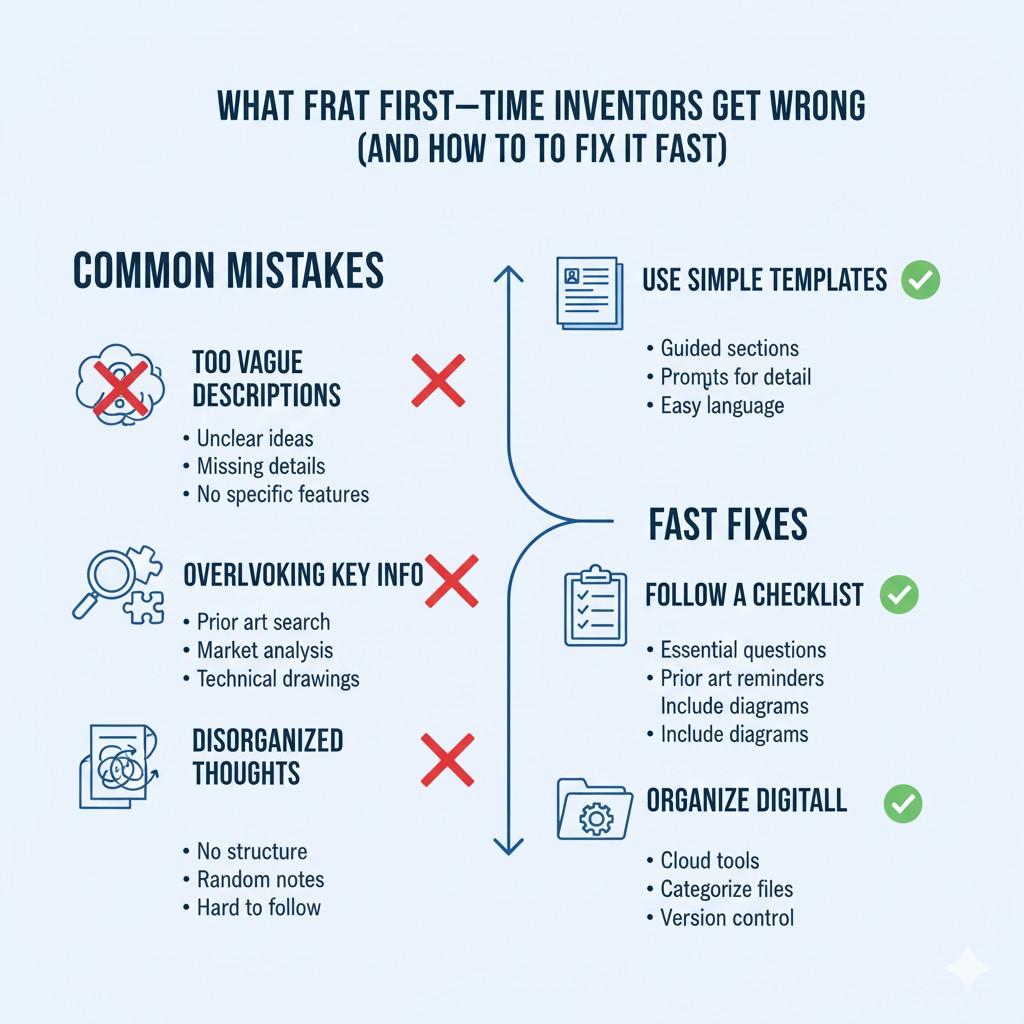
Even short paragraphs can expand your protection significantly.
When you work with software that prompts you to think through these variations, and real attorneys who know where competitors tend to design around patents, your intake becomes a strategic exercise rather than a static description.
That is how you avoid narrow protection that looks good on paper but fails in practice.
They Treat the Intake Form Like a Legal Test
Some founders freeze when they see a patent intake form. They worry about using the wrong words. They fear sounding “not technical enough.” They overthink every sentence.
This slows everything down and often leads to vague answers.
Here is the truth: you are not being graded. The intake form is not a legal exam. It is a knowledge capture tool. Your job is not to write like a lawyer. Your job is to explain your invention clearly and honestly.
The fix is to write in simple language. Short sentences. Direct explanations. If you built a system that ranks images based on similarity, say exactly that. Then explain how you compute similarity. Do not try to make it sound fancy.
When you use a modern platform that combines software with attorney review, the heavy legal lifting is handled for you. You provide the raw material. The attorneys shape it into formal language later. That division of labor saves time and reduces stress.
You can focus on building while still knowing your ideas are being translated into strong legal protection. That balance is what founders need.

If you want to see how PowerPatent blends simple intake tools with real attorney oversight, take a look here: https://powerpatent.com/how-it-works
They Ignore the Business Context
Another quiet mistake is treating patents as separate from the company’s goals. Founders fill out the intake form as a technical exercise without connecting it to revenue, partnerships, or market position.
This leads to patents that exist, but do not drive leverage.
When you complete your intake, think about where your company will be in two years. Will you license your technology? Will you enter regulated markets? Will you compete with large incumbents?
If your plan includes enterprise sales, strong patents can reduce procurement friction. If you aim to be acquired, a clean IP portfolio increases valuation. If you operate in a crowded field, well-drafted patents can discourage copycats.
Use the intake form to highlight the parts of your system that create defensibility. Explain why they matter. Share your roadmap with your patent team so the application can align with future versions, not just today’s release.
When software and attorneys work together in one streamlined system, it becomes easier to connect your invention to your growth strategy. You are not just filing paperwork. You are building an asset.
They Think One Patent Is Enough
Many first-time inventors assume that filing a single patent covers everything. They pour all details into one intake form and then mentally check the box.
In reality, strong companies often build a portfolio over time. Each meaningful technical leap can justify its own filing. Your first intake form is the start of a process, not the end.
To fix this mindset, view your intake as part of a long-term IP plan. Capture your core invention now. Then stay alert for future improvements that deserve protection.
With tools designed for startups, adding new filings does not feel like starting from scratch each time. Your prior information is organized and accessible. That makes ongoing protection much easier to manage.

If you are building in a fast-moving field, this continuous approach can become a serious competitive advantage.
How to Fill Out a Patent Intake Form Without Slowing Down Your Startup
Speed matters. You are shipping code, talking to users, raising money, and fixing bugs. The last thing you want is a long legal task that pulls you away from momentum.
But here is the truth: if done right, filling out a patent intake form should not slow you down. It should sharpen your focus and protect your speed.
The key is not to treat it like a heavy legal project. Treat it like a product exercise. When you approach it the right way, it becomes part of building, not a distraction from it.
Start With What You Already Have
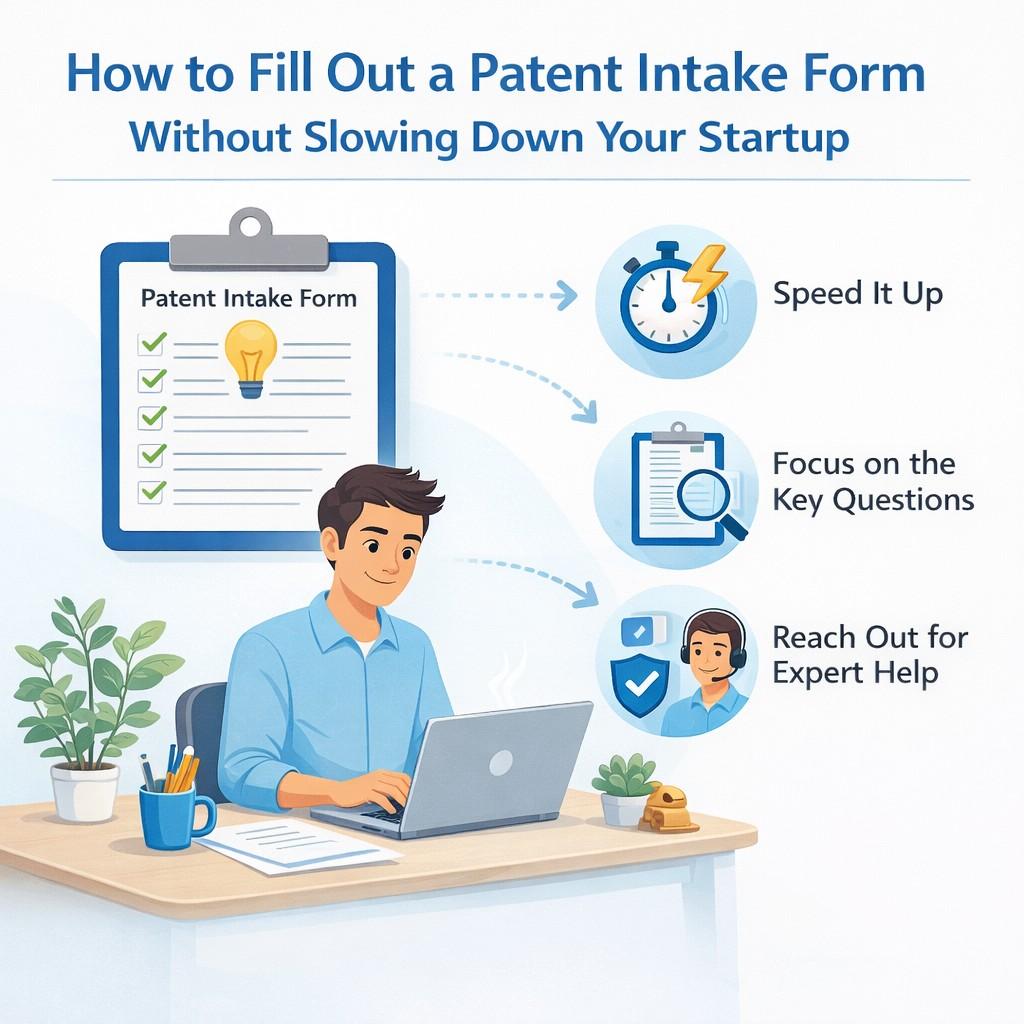
You do not need to create new material from scratch. Most of what you need is already inside your company. It is in your code comments, system design docs, whiteboard photos, and sprint notes.
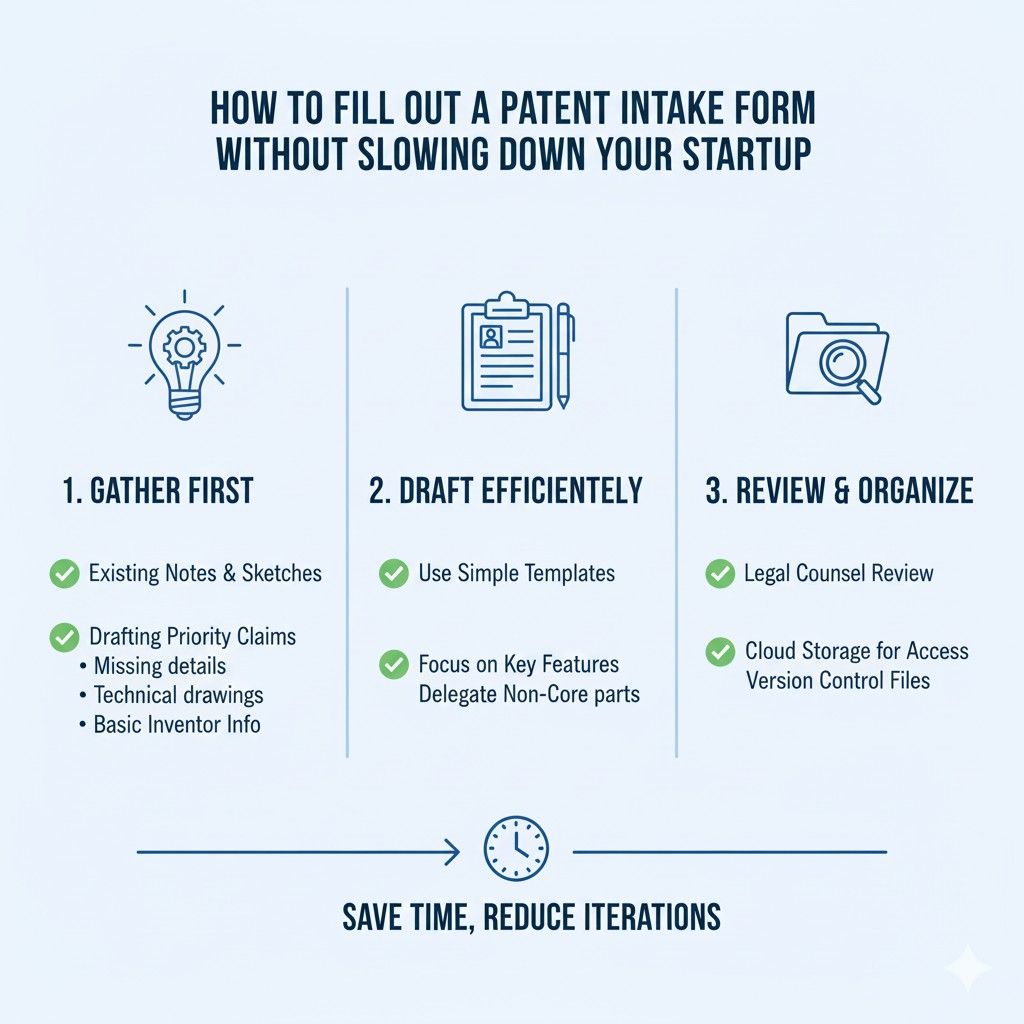
Before you open the intake form, gather what exists. Pull your architecture diagrams.
Export key parts of your code that show the core logic. Grab internal memos where you explained the system to your team. This saves time because you are not inventing explanations. You are organizing what is already there.
A simple tactic is to create a folder called “Patent Draft Assets.” Drop everything relevant into that folder. When you sit down to fill out the form, you will move faster because your thinking is grounded in real material.
If you use a platform built for founders, you can upload these files directly into the intake system and keep everything in one place. That alone removes hours of back-and-forth email.
You can see how that streamlined workflow works here: https://powerpatent.com/how-it-works
Block One Focused Session, Not Ten Small Ones
Context switching kills speed. If you try to fill out your patent intake form in five-minute gaps between meetings, it will drag on for weeks.
Instead, block one solid session on your calendar. Ninety minutes of focused time is often enough to complete a strong first draft. Close your inbox. Silence notifications. Think deeply about your invention from start to finish.
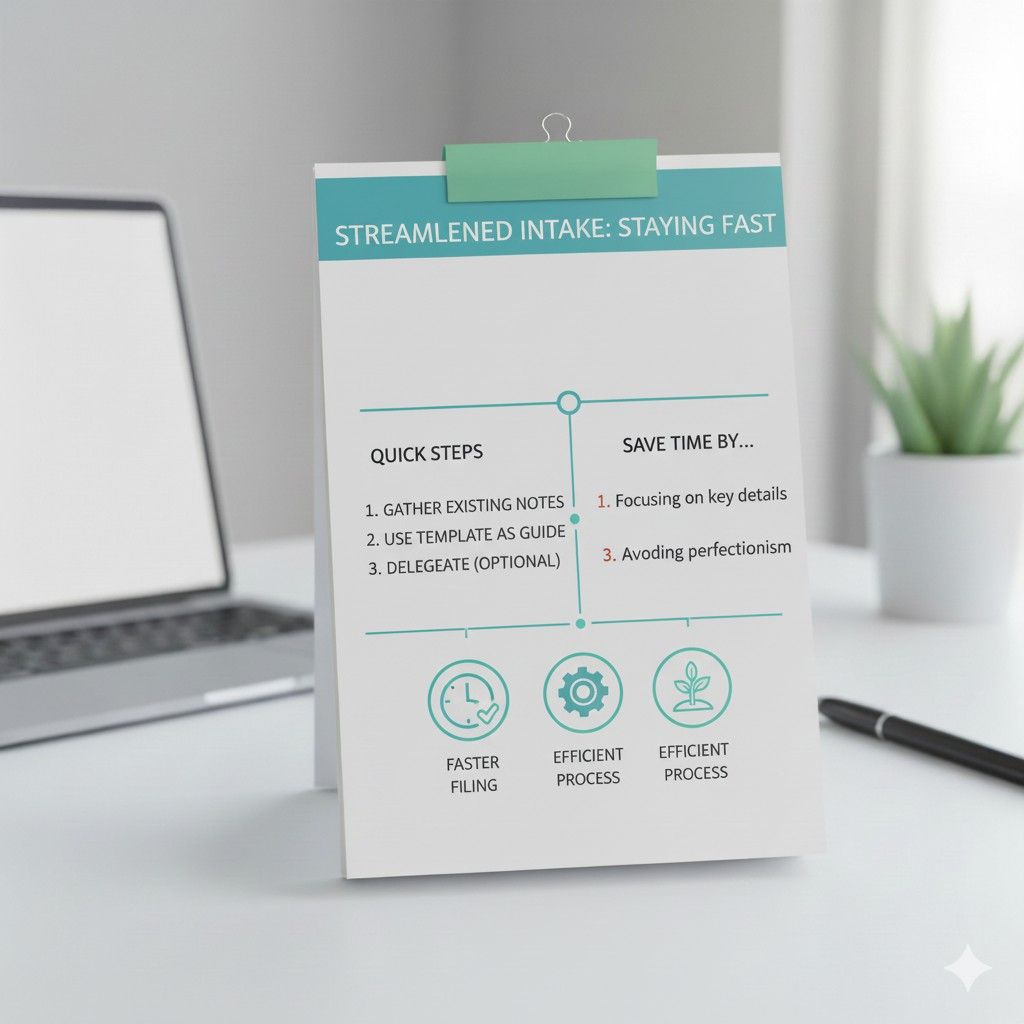
During this session, do not aim for perfection. Aim for clarity. Write in plain language. Capture the core idea. You can refine details later with attorney guidance.
This approach prevents the intake form from becoming a lingering task in the back of your mind. You handle it in one deliberate push and move forward.
Think in Systems, Not Screens
Many startup founders focus on user experience because that is what customers see. But a patent is about the engine behind the interface.
When filling out the form, step back from the screen. Think about the system as a whole. Where does data enter? How is it processed? What decisions are made? What outputs are generated?
Imagine your system as a flow. If it helps, sketch it quickly on paper. Boxes and arrows are enough. This mental model makes your answers sharper and faster.
If you try to describe features without understanding the flow, you will hesitate. When you see the system clearly, writing becomes easier.
A well-designed intake process prompts you to describe that flow step by step. That guidance keeps you focused and reduces mental strain.
Combined with review from real patent attorneys, it ensures your fast draft does not turn into a weak filing. Learn more here: https://powerpatent.com/how-it-works
Capture the Core Innovation First
Do not start with edge cases. Do not start with small tweaks. Begin with the heart of your invention.
Ask yourself one direct question: what is the one thing we built that others would struggle to copy? That is your anchor.
Write that down in simple words. Then explain how it works. Only after that should you describe supporting elements.
This order matters. When you lead with the core idea, everything else connects naturally. You avoid getting lost in minor details that slow you down.
This also helps your attorney quickly understand what truly matters. The clearer your anchor, the faster the drafting stage moves.
Use Real Examples to Speed Up Explanation
Abstract language slows thinking. Concrete examples speed it up.
If your system processes transactions, describe one real transaction and walk through what happens. If your model ranks items, take one item and show how it moves through the pipeline.
By using real scenarios, you reduce the time spent searching for the “perfect” explanation. You simply describe what actually happens.
This makes your intake form both faster to complete and stronger in substance. Examples often reveal hidden steps that you might otherwise forget.
Do Not Worry About Legal Language
One major reason founders feel slowed down is fear. They think they must sound formal or technical. They rewrite sentences again and again.
That is not your job.
Your role is to explain the invention clearly. The attorney’s role is to convert that explanation into formal patent language. When software and attorney review work together, this translation happens smoothly.
So write like you speak to your engineering team. Short sentences. Direct logic. Clear steps.

The more natural your explanation, the easier it is for the patent team to build on it without long clarification calls. That saves everyone time.
Align It With Your Product Roadmap
To avoid slowing your startup, connect the intake process with what you are already doing.
If you are planning a major release in two weeks, complete your intake before the public launch. If you are about to pitch investors, align your filing with your fundraising timeline.
This creates strategic momentum. Instead of feeling like a side task, the patent process becomes part of your growth plan.
When you use a modern system designed for speed, you can move from intake to filing much faster than traditional firms allow. That keeps you in control of timing.
You can explore how this faster, founder-friendly process works here: https://powerpatent.com/how-it-works
Treat It as an Investment in Focus
There is one more mindset shift that changes everything. Filling out a patent intake form is not time lost. It is time invested in clarity.
When you explain your invention in full detail, you often see new strengths. You may identify features worth highlighting in sales calls. You may notice technical advantages that were not obvious before.
In that sense, the intake process strengthens both your protection and your strategy.
And when you combine smart software with real attorney oversight, you avoid the endless delays and confusion that made patents feel slow in the past.
You stay focused on building. You move fast. And you lock in protection that grows with your company.
Wrapping it up
If you remember one thing from this guide, let it be this: a patent intake form is not a legal chore. It is a clarity tool. It forces you to slow down just enough to see what you have really built. Most first-time inventors overthink it. They wait too long. They try to sound formal. They rush through key details. Or they treat it like something separate from the company they are building. That is where mistakes happen.