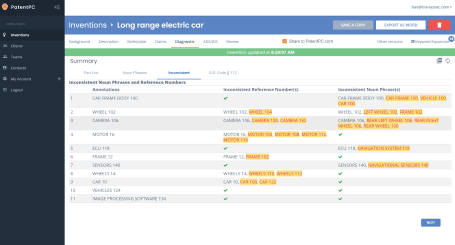
Reference numbers seem small until they start breaking everything.
One missing number in a drawing can confuse a reader. One reused label can slow down a patent draft. One messy numbering system can turn a simple update into a long cleanup job. That is why smart teams do not treat reference numbers like an afterthought. They build a system for them early.
If you want a faster way to create clean, strong patent work without the usual chaos, PowerPatent helps founders and technical teams move from invention details to attorney-backed filings with much less friction: https://powerpatent.com/how-it-works
Why this matters more than most people think
In patent work, reference numbers do a simple job. They connect the words in the written description to the parts shown in the figures. That sounds basic. It is basic. But when the numbers are messy, the whole draft starts to feel harder to trust.
A reader should never have to stop and guess whether reference number 120 in one figure is the same thing as 120 in another figure. A patent examiner should not have to hunt around to figure out whether “data processing module 214” is the same item later called “analysis engine 214” or whether those are different things. Your own team should not lose time fixing number conflicts each time a figure changes.
This is why consistent reference numbering matters so much. It is not just about neatness. It is about speed, clarity, and confidence.
A clean numbering system makes the whole patent package easier to draft, easier to review, easier to revise, and easier to understand. It also makes your internal workflow much calmer. That matters a lot when you are moving quickly and trying to protect a real invention while still building your startup.
Founders often think the hard part of patent work is the big idea. Sometimes it is. But a surprising amount of pain comes from tiny drafting details that were never systemized. Reference numbers are one of the clearest examples.
What reference numbers actually do
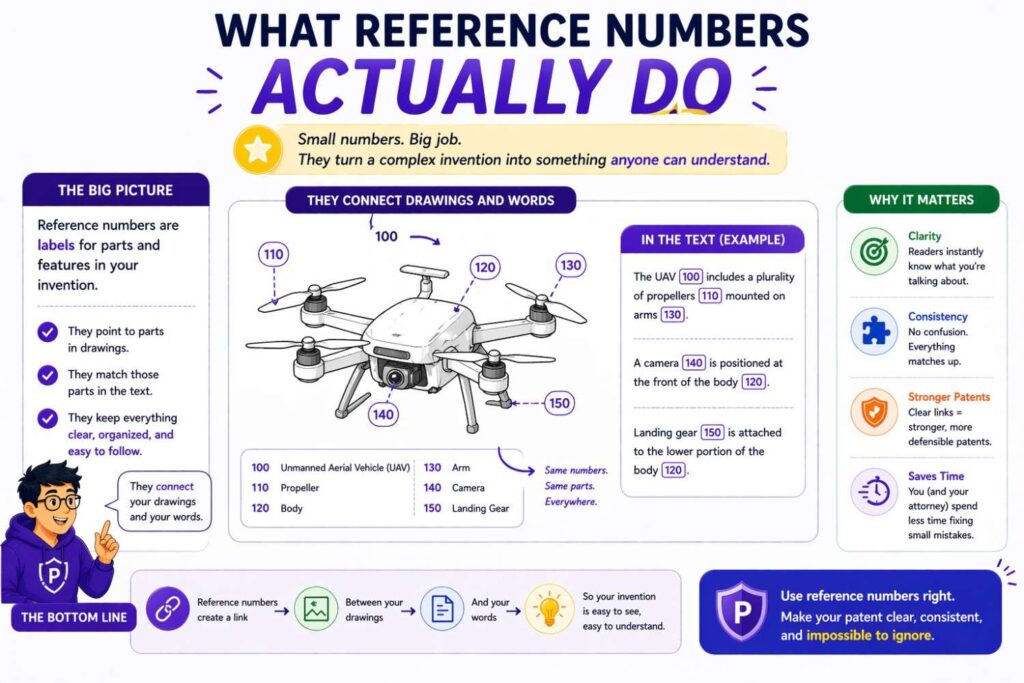
Reference numbers act like anchors.
They tie together three things at once.
They tie the figures to the written spec.
They tie one section of the description to another.
They tie the reader’s attention to the right part of the invention at the right time.
When a patent spec says “the system may include a processor 102, a memory 104, and a network interface 106,” the reader can go to the figure and see those same numbers attached to the right parts. That creates a simple bridge between text and image.
The bridge matters because patent documents often explain complex systems. You may be describing software components, training pipelines, hardware modules, user devices, sensors, interfaces, control paths, or data flows. Without reference numbers, the writing can become vague fast. With them, the reader has clear signposts.
That is the ideal.
But the ideal only works if the numbers are consistent.
If the same component gets different numbers in different places, the bridge breaks.
If one figure uses a numbering style that clashes with another figure, the reader slows down.
If a late-stage revision inserts three new components and forces manual renumbering everywhere, the drafting process becomes fragile.
That is why automatic consistency is so useful. It turns something that is easy to mess up into something repeatable and dependable.
The hidden cost of doing this by hand
A lot of teams still handle reference numbers manually.
At first, that seems fine.
The first figure has six parts. The second has ten. Someone puts numbers in the drawing. Someone else adds the same numbers to the written description. It looks manageable.
Then the invention evolves.
A new embodiment gets added.
A block diagram turns into three figures.
A system component is renamed.
A sub-part needs its own number.
A method flow now includes two more decision points.
A processor becomes a “compute engine,” but only in half the draft.
A late change moves one component from Figure 2 into Figure 1.
Now the pain starts.
Manual numbering systems usually fail in slow ways before they fail in obvious ways. The numbers may still look mostly correct, but they stop being reliable. One section of text refers to old numbers. Another section uses new numbers. A reviewer spots a conflict and fixes one instance but misses five others. Someone duplicates a number because they did not know it was already used in another figure. The draft starts to feel brittle.
That brittleness is expensive.
It wastes review time.
It causes avoidable revision cycles.
It increases the chance that important details get missed because everyone is busy cleaning numbering errors instead of improving substance.
And it creates stress for founders who already have enough going on.
This is one reason modern patent workflows are so much better than old patchwork processes. When the system around the drafting is smarter, fewer hours get burned on avoidable cleanup. PowerPatent is built around that kind of workflow efficiency, so startups can spend less time fighting document mess and more time protecting what they built: https://powerpatent.com/how-it-works
What “consistent” really means
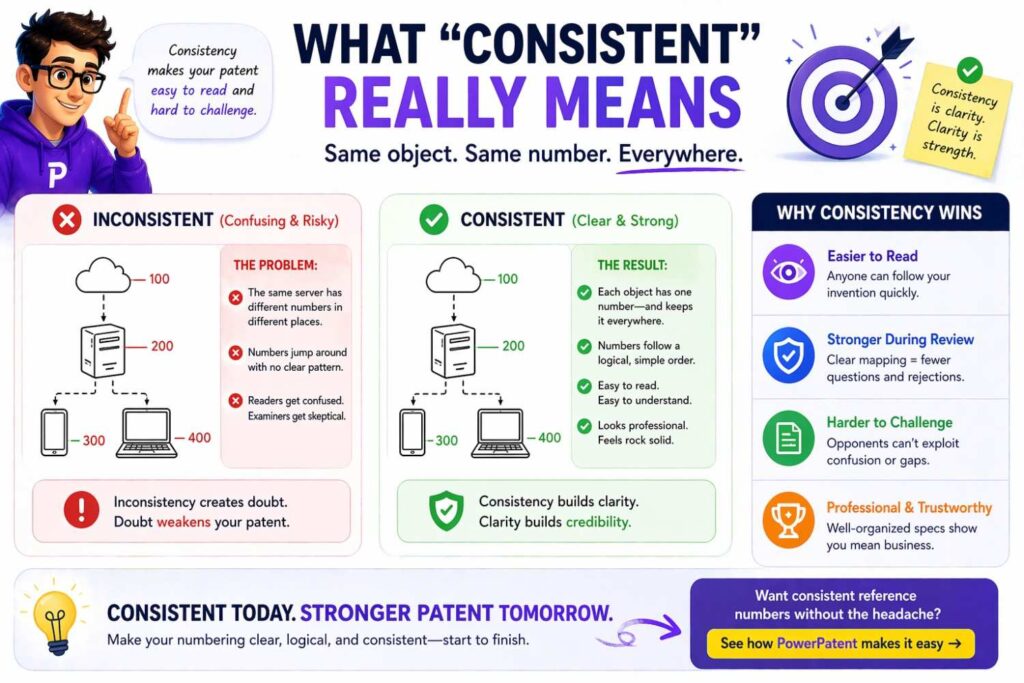
Consistency is not just “every part has a number.”
That is too shallow.
In good patent drafting, consistency usually means several things at once.
A given element keeps the same number whenever it is the same element.
A new element gets a new number when it is meaningfully different.
Related elements follow a numbering pattern that is easy to read.
The numbers fit the figure structure instead of fighting it.
The written spec uses the same labels and numbers the figures use.
Changes do not force chaotic renumbering.
That last point matters more than most people realize. A numbering system is not good just because it looks neat on day one. It is good if it remains stable after real edits.
That means the best numbering systems are not just orderly. They are resilient.
You want a system that can absorb change.
That is where automation becomes powerful. A good automated system does not just assign numbers. It helps preserve order when the document grows and shifts.
The core problem: drawings change, but numbering often does not scale
Patent drafts rarely stay still.
Even when the invention itself is stable, the way it is explained changes during drafting. A broad system figure may split into two focused figures. A workflow chart may add optional paths. A training pipeline may need its own diagram. A general “module” may break into submodules once the team sees that those internal parts matter.
All of that is normal.
The problem is that many numbering methods are too fragile for this kind of movement.
If the numbering depends on hand placement and memory, the document becomes hard to maintain. Each new change can cause ripple effects through the figures and the text. The longer the draft gets, the worse that ripple becomes.
This is why reference numbers should be treated like structured data, not decorative labels.
That idea changes everything.
When you treat numbers as structured data, you stop asking, “what number should I put here?” and start asking, “what rule should govern this element and all related elements?”
That shift is the beginning of automatic consistency.
Start with a naming system before you start with numbers
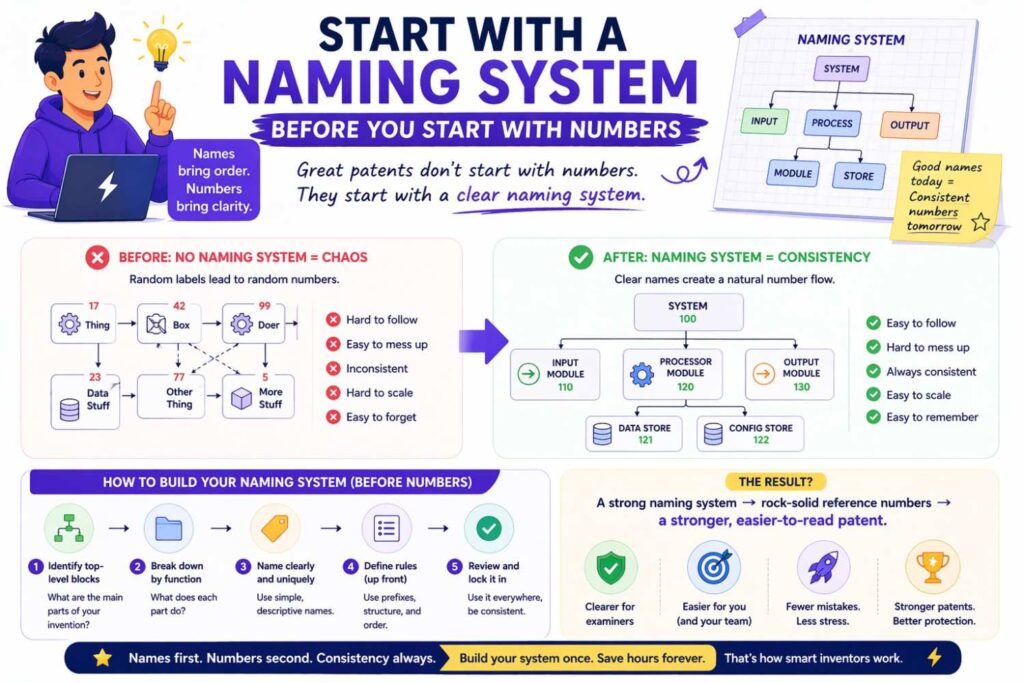
This is the first tactical lesson that saves real time.
Do not begin with numbers.
Begin with names.
Every numbered item in a patent drawing should first have a stable internal name. That name does not have to be the final polished phrase used in the filing. But it should clearly identify the thing.
For example, imagine a system with a mobile app, an API server, a scoring engine, a user profile store, and an alert module.
Before assigning any numbers, define those items clearly.
mobile_app
api_server
scoring_engine
user_profile_store
alert_module
Now you have a base layer.
If you skip this step and jump straight to numbers, you create risk. People start thinking in terms of “102” and “106,” but they do not have a clean internal model of what each item actually is. That is when duplicates, renames, and drift begin.
Names give you identity. Numbers should sit on top of identity, not replace it.
This simple change makes automation much easier. Once each element has a stable internal label, an automated system can assign numbers consistently, reuse them when needed, and avoid collisions.
In plain terms, names are the truth. Numbers are just the visible tags.
Think in objects, not in figure labels
A good automatic numbering system works best when it tracks objects, not just placements in a drawing.
That means the system should know that the “scoring_engine” in Figure 1 is the same object as the “scoring_engine” mentioned in the written description and perhaps shown again in Figure 4.
Once you think this way, consistency becomes easier.
Instead of asking whether Figure 4 needs a new number because it is a new figure, you ask whether the thing shown there is truly the same underlying object. If it is, the same number may be reused. If it is a different object, it gets a different number.
This helps avoid two common mistakes.
The first mistake is giving the same component a different number each time it appears. That makes the filing harder to read.
The second mistake is forcing the same number onto different things just because they sound similar. That creates confusion of a different kind.
Automation works best when it tracks identity well enough to split those two cases correctly.
The easiest way to build automatic consistency
At a simple level, automatic numbering can be built with a register.
A register is just a master table of elements.
Each row includes an internal name, a final display label, a reference number, and optional notes about where it appears.
That may sound plain, but it is powerful.
For example:
mobile_app → mobile application → 102
api_server → application server → 104
scoring_engine → scoring engine → 106
user_profile_store → profile data store → 108
alert_module → alert module → 110
Now the figures and the written description do not invent numbers on the fly. They pull from the register.
This single move solves a large share of numbering mistakes.
It also sets up later automation. Once the register exists, software can use it to populate templates, validate consistency, flag conflicts, and preserve numbering through revisions.
The register becomes the source of truth.
This is one of those simple ideas that feels obvious after you see it. But many teams still skip it, and then they pay for that choice later with manual cleanup.
Why a source of truth matters so much

In any technical workflow, the source of truth is the place you trust most.
For patent reference numbers, the source of truth should not be scattered across drawing files, word processor notes, email comments, and a reviewer’s memory. It should live in one structured place.
That structured place can be as simple as a spreadsheet in an early-stage process. It can be a database in a more advanced system. It can be part of a patent drafting platform. The specific tool matters less than the principle.
There should be one place that decides:
what each element is called
what number it has
whether that number is already in use
where the element appears
whether the label changed
whether a new number is required
Once you have that, automation becomes realistic.
Without it, “automatic consistency” is mostly wishful thinking.
The difference between static numbering and rule-based numbering
Many people think automatic numbering just means “the tool adds numbers.”
That is only half the story.
The better idea is rule-based numbering.
Static numbering means a number gets assigned once and then everyone tries to remember it.
Rule-based numbering means the assignment follows a logic that the system can apply again and again.
For example, one rule may say that top-level system components in the main architecture figure get numbers in the 100 series.
Another rule may say that subcomponents of the scoring engine get numbers in the 160 series.
Another rule may say that method steps use the 300 series.
Another rule may say that training pipeline elements use the 400 series.
Now the numbers carry structure.
A reader can often tell where an element lives conceptually by looking at its number range. More important, the drafting team can add new parts without breaking the whole scheme.
This is where automatic consistency gets much stronger. The system is no longer just generating labels. It is preserving a pattern.
A practical example of a number architecture
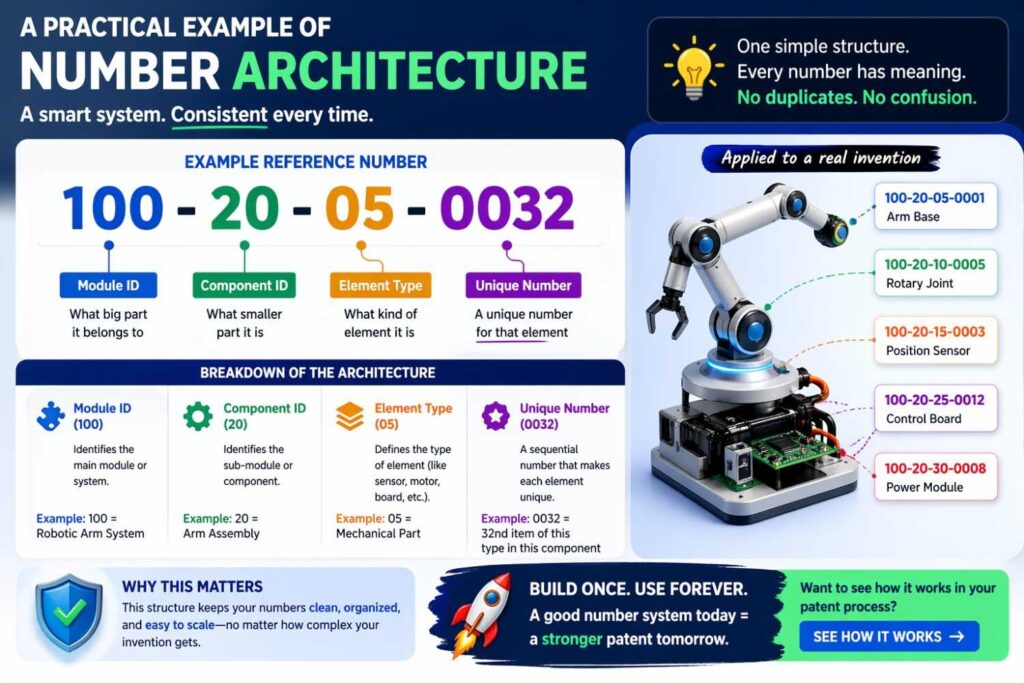
Let us say your invention includes four major figure types.
One figure shows the system architecture.
One figure shows a runtime method.
One figure shows a training pipeline.
One figure shows a user interface flow.
You could assign a simple number architecture like this.
100 series for main system components.
200 series for subcomponents and supporting modules.
300 series for runtime method steps.
400 series for training and model update elements.
500 series for interface and user interaction elements.
Now the patent package has shape.
The processor, memory, scoring engine, data store, and network interface might live in the 100 and 200 ranges.
The method flow might use 302, 304, 306, 308.
The training pipeline might use 402, 404, 406.
The UI path might use 502, 504, 506.
This is not the only valid approach, but it shows the core idea. The numbering scheme itself helps create order. It reduces the chance of collision and makes later additions easier.
Automation fits naturally here. The system can assign the next available number inside the right series based on the element type or figure class.
Why you should leave gaps on purpose
One of the smartest tricks in reference numbering is to leave room.
Do not number things 101, 102, 103, 104 just because they happen to be listed in that order today.
Leave gaps.
Use 102, 104, 106, 108.
Or 110, 120, 130, 140.
That extra space gives you freedom later.
If a new component needs to be inserted between two existing components, you can place it cleanly without renumbering everything that follows.
This small decision can save a huge amount of work.
It also makes automation easier because the system has room to assign future numbers without causing ripple effects.
People sometimes resist this because they want the figures to look “tight” or “efficient.” But efficient numbering is not about packing numbers close together. It is about reducing revision pain.
Space is useful.
The real goal is stable numbering under change
This is the heart of the whole problem.
A numbering system should not be judged only by how it looks in the first finished draft. It should be judged by how well it survives edits.
That means good automatic numbering systems aim for stability.
If a figure gets updated, unchanged elements should usually keep their numbers.
If one new element gets added, the system should avoid renumbering twenty old elements.
If an element gets renamed but remains the same underlying part, the number should usually stay stable.
If one large module gets split into two real new modules, the system should assign new numbers carefully without breaking unrelated sections.
This is why naive “auto-number everything fresh each time” systems are dangerous. They look automated, but they destroy continuity. Every update creates a new numbering map, and now the text, drawings, and review comments all drift apart.
Good automation preserves identity first and numbers second.
That is a huge difference.
When to reuse a reference number
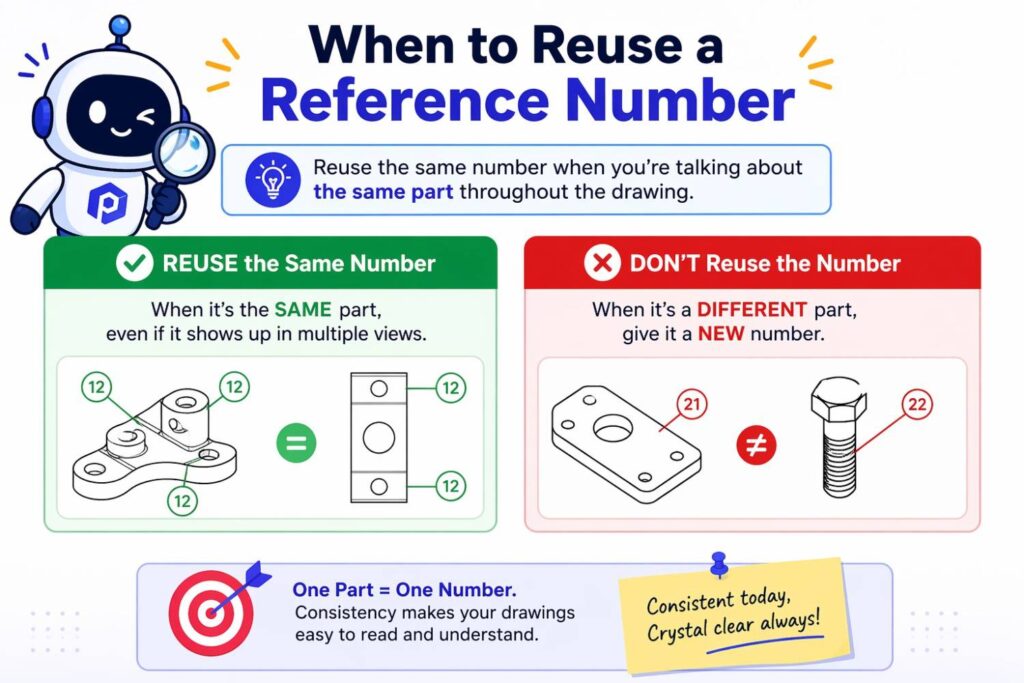
This question sounds small, but it causes a lot of confusion.
In general, reuse the same reference number when the same element appears again and is being referred to as the same thing.
If the processor in Figure 1 appears again in Figure 3, and it is still the same processor conceptually, keeping the same number often helps.
If the scoring engine is shown in the architecture figure and later highlighted in a detailed subfigure, many drafters will keep the same top-level number for the engine and then add new numbers for internal subparts.
That feels natural to the reader.
What you want to avoid is reusing a number just because two things seem similar. For example, “first user device” and “second user device” may both be user devices, but if they are different actors in the invention, they may deserve different numbers.
A good automatic system can apply this logic if the identity rules are clear.
That is another reason the internal naming model matters so much. When the system knows whether two items are instances of the same object or genuinely separate objects, reuse becomes safer.
When to assign a new reference number
A new reference number is usually needed when the element is meaningfully distinct.
That might happen when:
a new component is introduced
a subcomponent is called out separately for the first time
one module is split into multiple modules
a new embodiment includes a different element rather than the same one
a figure shows a separate instance that should be distinguished
The hard cases are not the obvious ones. The hard cases are the borderline ones, such as when a broad “decision engine” in one figure becomes “ranking engine” and “policy engine” in another figure.
Is that the same thing described in more detail, or is it now two distinct things?
The answer depends on the invention and the drafting strategy.
That is why automation alone is not enough. Good systems still need drafting judgment. The best workflows combine structured tools with expert review so the numbers stay aligned with the real invention story. That is one reason founders work with PowerPatent. The process is faster and cleaner, but real patent attorneys are still there to catch the important judgment calls: https://powerpatent.com/how-it-works
A clean workflow for automatic numbering
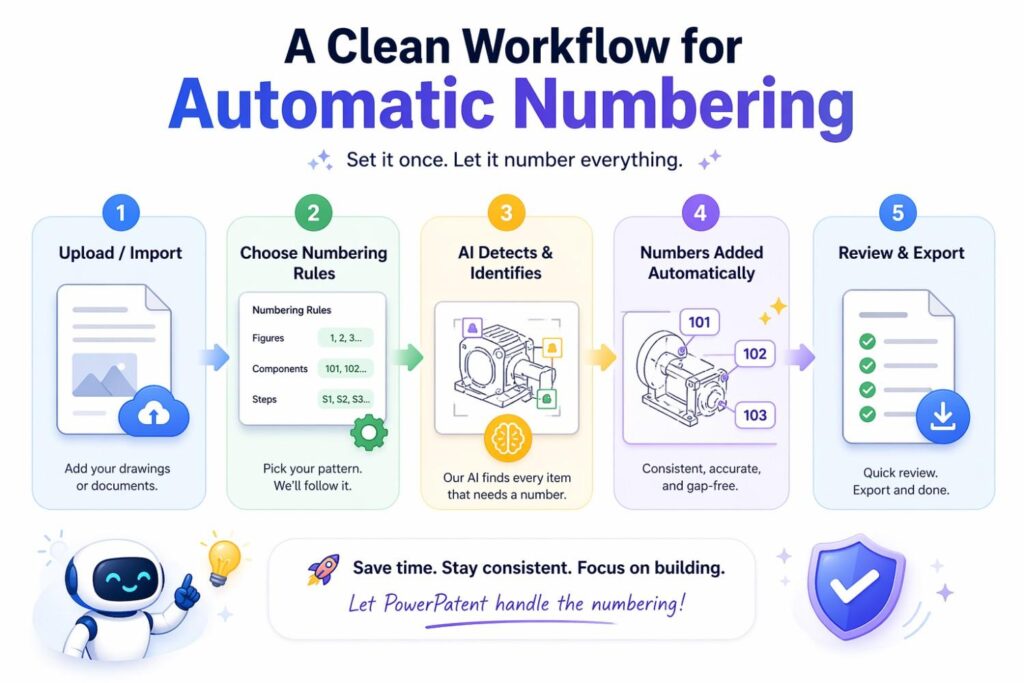
If you want this to work well, the workflow matters as much as the numbering scheme.
A strong process often looks like this.
First, define the invention elements with stable internal names.
Second, place those elements in a central register.
Third, assign number ranges by figure type or component class.
Fourth, let the system assign the next appropriate number when a new element is approved.
Fifth, use that same register to drive both figure labels and text references.
Sixth, validate the final draft for duplicates, missing numbers, and mismatched names.
Seventh, review the result with a human eye for strategy, clarity, and scope.
That sequence is practical because it stops numbers from being invented in random places. The system stays centralized.
The beauty of this workflow is that it scales. It works for a simple application with a few figures, and it works much better than ad hoc drafting when the invention becomes larger and more detailed.
Why figure-first numbering often creates problems
A lot of teams number inside the figure file first and only later try to sync the written description.
That approach seems natural because the numbers are visible in the drawings. But it often causes trouble.
When numbering starts inside the figure, the drawing becomes the first source of truth, even though figure files are not always the best place to manage structured identity. Someone may duplicate a shape, move a label, or create a variation without updating the text. The word processor draft then catches up imperfectly. Soon the figure and the text are drifting.
A better approach is to treat the figure labels as outputs, not origins.
The figure should display the approved numbers from the central register. It should not silently invent them.
That does not mean drawings are unimportant. It means the logic behind the labels should live somewhere more structured.
This is the same reason strong software teams do not want business rules hidden in a random front-end component. Hidden rules are fragile. Visible rules in a central system are maintainable.
How to connect automatic numbering to your written description
Reference numbers become truly useful only when they stay aligned with the written description.
That means the text should pull from the same naming and numbering model as the figures.
There are a few ways to do this.
At a simple level, writers can use the central register manually while drafting.
At a stronger level, templates can insert approved labels and numbers from the source table.
At an even stronger level, a system can suggest or auto-fill the correct number when a known element name is used.
The key point is that the written description should not be guessing.
If the text says “scoring engine 106” in one place and “decision engine 106” in another place, someone needs to decide whether that is a rename, a mistake, or two separate elements. Automation can flag the mismatch, but the drafting workflow should prevent it from appearing unnoticed in the first place.
The cleaner the link between text and register, the easier the whole draft becomes to manage.
The case for standardized labels
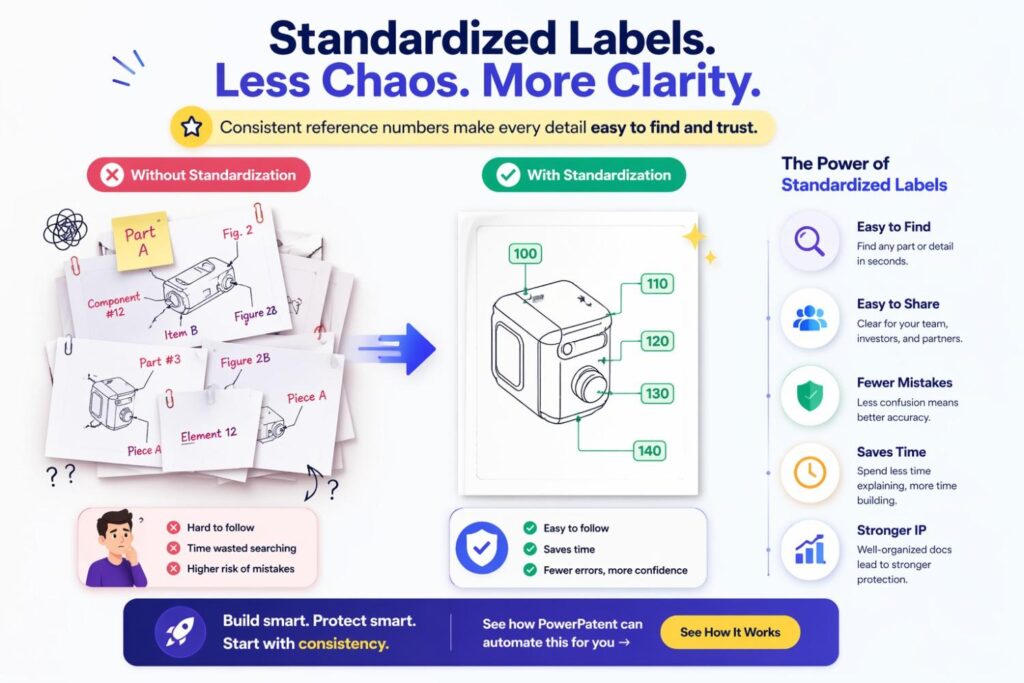
Automatic consistency gets much easier when the team uses standard labels.
That does not mean the writing must sound robotic. It means the element names should be controlled enough that the system can recognize them reliably.
For example, if one person writes “mobile application,” another writes “client app,” and another writes “user-side software module,” the automation layer may struggle to tell whether these are the same thing.
A standardized label resolves that.
Internally, the team may decide the approved label is “mobile application.”
Now that label pairs with one internal name and one number.
This does not stop the surrounding prose from sounding natural. The sentence can still read well. But the actual element reference remains stable.
This is a small discipline that has a large payoff.
Why synonyms are dangerous in patent drafting
In general writing, synonyms can make prose feel lively.
In reference numbering, synonyms can create problems.
If the same element is called by several names, reviewers may miss that they are actually the same thing. An automated system may treat them as different items unless it has very strong normalization rules. Even worse, inconsistent naming can create accidental ambiguity about whether the elements really are identical.
This is why reference-linked terms should be more controlled than ordinary prose.
You do not need dull writing. You need stable identifiers.
A well-written patent can still be readable and human while using precise reference labels consistently.
That balance matters.
The best place to automate is before the draft gets crowded

A lot of teams wait too long.
They start with a few figures and a few labels, manage the numbers by hand, and only look for automation after the draft becomes messy. By then, the cleanup work is harder because existing inconsistencies have already spread.
The better moment to automate is early.
As soon as the invention has enough structure that multiple figures or repeated components are likely, build the register.
Set the naming rules.
Choose number ranges.
Create the workflow.
Once those foundations exist, later drafting becomes much smoother.
This is true in patent work and in many other technical systems. Good structure is cheapest when added early and most painful when postponed.
How automatic numbering helps during revisions
Revisions are where automation proves its value.
In a manual system, revisions often trigger fear. Will adding this new module force renumbering the whole figure? Did anyone update the written description? Did the old label survive in some hidden paragraph? Did the same number get assigned twice during last night’s rush?
In a structured automatic system, those problems become manageable.
A new element gets added to the register.
The system assigns a valid number in the right range.
Existing unchanged elements keep their numbers.
The figure updates from the register.
The validator flags any missing or mismatched references in the text.
Now the team can focus on whether the invention is being explained well, not on whether label 214 secretly conflicts with label 214 in another section.
That shift is a huge quality-of-life improvement.
How to handle subcomponents without making the drawing ugly
Subcomponents can create real numbering stress.
Let us say Figure 1 shows a “scoring engine 106.”
Later, Figure 3 zooms in and shows internal parts of that engine, such as a feature extractor, a model evaluator, a threshold comparator, and an action selector.
You have choices.
One approach is to keep “scoring engine 106” as the top-level number and assign new subcomponent numbers such as 162, 164, 166, and 168.
That works well because the high-level identity stays stable while the detailed figure gets its own internal structure.
Another approach is to assign subcomponents as 106a, 106b, 106c, and 106d if that fits your drafting style and rules.
Either way, the goal is the same: preserve the relationship between the large part and the internal parts without creating confusion.
Automation helps by linking those subcomponents to the parent object. The system can understand that they belong under “scoring_engine,” which makes reuse and validation cleaner.
The value of parent-child relationships
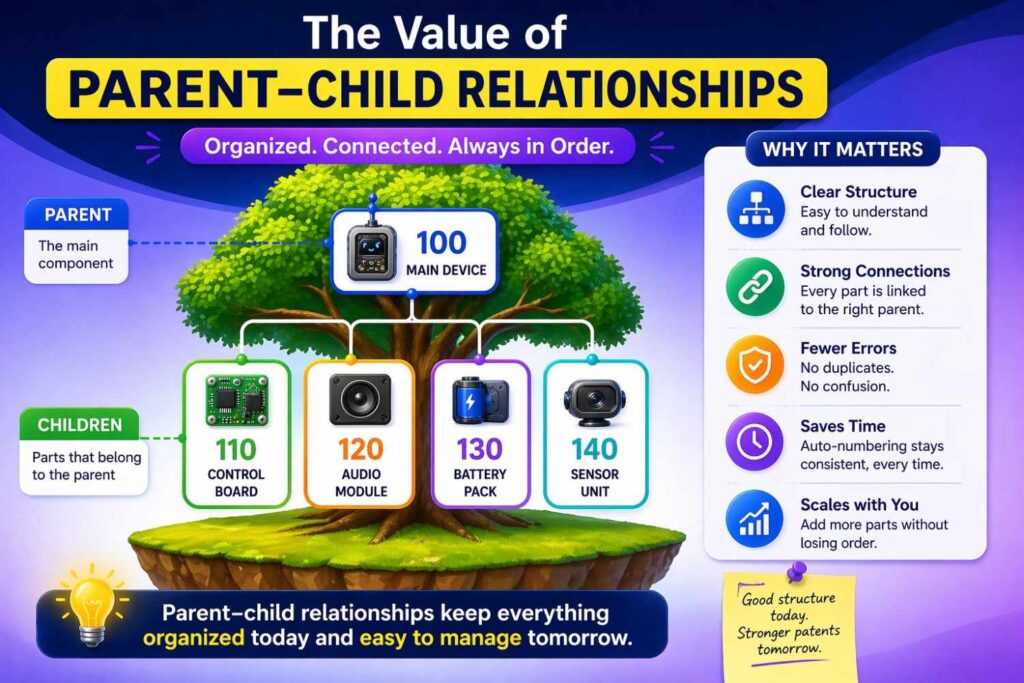
This is where automatic systems can become much smarter than manual ones.
Instead of treating each reference number as isolated, the system can model relationships.
The scoring engine is a parent.
The feature extractor is its child.
The model evaluator is its child.
The threshold comparator is its child.
Now the numbers can reflect both identity and structure.
This helps in at least three ways.
It makes figure organization cleaner.
It makes text drafting easier because the relationships are clear.
It helps later updates because new child elements can be placed in the right conceptual area without disturbing unrelated parts.
This is one of the reasons advanced drafting platforms outperform plain word processor workflows. Structure matters.
Method steps need consistency too
A lot of people think reference numbers only matter for system components.
Not true.
Method flowcharts can become just as messy.
If your process figure shows steps like receiving data, extracting features, determining a score, comparing the score to a threshold, and outputting an action, those steps often benefit from reference numbering as well.
For example, a method may include steps 302, 304, 306, 308, and 310.
The written description can then walk through those same steps by number.
This helps readers follow the process and helps the drafting team keep the narrative aligned with the figure.
Automatic numbering matters here too because method flows change often. Steps get split. Decision points get added. An optional branch appears. A feedback loop gets inserted. Without a structured system, those updates create confusion quickly.
With a structured system, the method flow can evolve while staying readable.
One quiet benefit: better review comments

Consistent reference numbers make review comments much easier.
When a founder, engineer, attorney, or reviewer says “the comparator 166 should probably happen before the rule filter 168” or “Figure 4 needs a label for data store 108,” everyone knows exactly what is being discussed.
That precision speeds up collaboration.
It also reduces the risk of review comments being misunderstood or applied in the wrong place.
Small drafting details like this do not sound glamorous, but they have real business value. Faster review means faster filing and fewer avoidable errors.
How to validate a numbering system automatically
Once you have structured reference numbers, validation becomes possible.
A validator can check for duplicate numbers.
It can check for numbers used in the text but missing from figures.
It can check for numbers appearing in figures but never described in text.
It can check whether an internal element name maps to more than one display label.
It can check whether a figure uses a number outside its assigned range.
It can check whether known parent-child relationships are broken.
This is powerful because it turns silent drafting problems into visible flags.
Validation does not replace human judgment, but it catches a large class of mechanical errors before they become filing issues.
That is exactly the kind of support modern workflows should provide.
Why founders should care about this even if they never touch the numbers

A founder may think this is all internal drafting detail.
In one sense, yes.
But the quality of these details affects the quality of the filing. And the quality of the filing affects the value of the IP asset.
If the patent process is disorganized, things take longer, cost more attention, and create more risk of missed details. If the process is clean, the team can spend more time on what actually matters: the invention, the claim strategy, the embodiments, the growth path, and the competitive moat.
That is why founders should care.
Not because they want to micromanage number labels, but because clean systems upstream create stronger outcomes downstream.
A founder mistake: assuming the lawyer will clean it all up later
Many startup teams assume the old model still works. They think they can hand over rough materials and trust that someone downstream will sort out the details.
Sometimes that happens, after enough back and forth.
But that workflow is slower, more expensive in attention, and more likely to lose nuance. When numbering, naming, and structure are messy from the start, the cleanup process can flatten invention detail or turn review into a long series of clarifications.
A better workflow captures clean structure early.
That includes clean reference numbering.
The point is not to make founders do paralegal work. The point is to use a system that keeps the draft organized from the moment invention details are captured. That is one reason PowerPatent is so useful for startups. It helps structure patent work in a way that reduces drag while still keeping real attorney oversight where it matters most: https://powerpatent.com/how-it-works
How to generate numbers automatically in a simple spreadsheet workflow
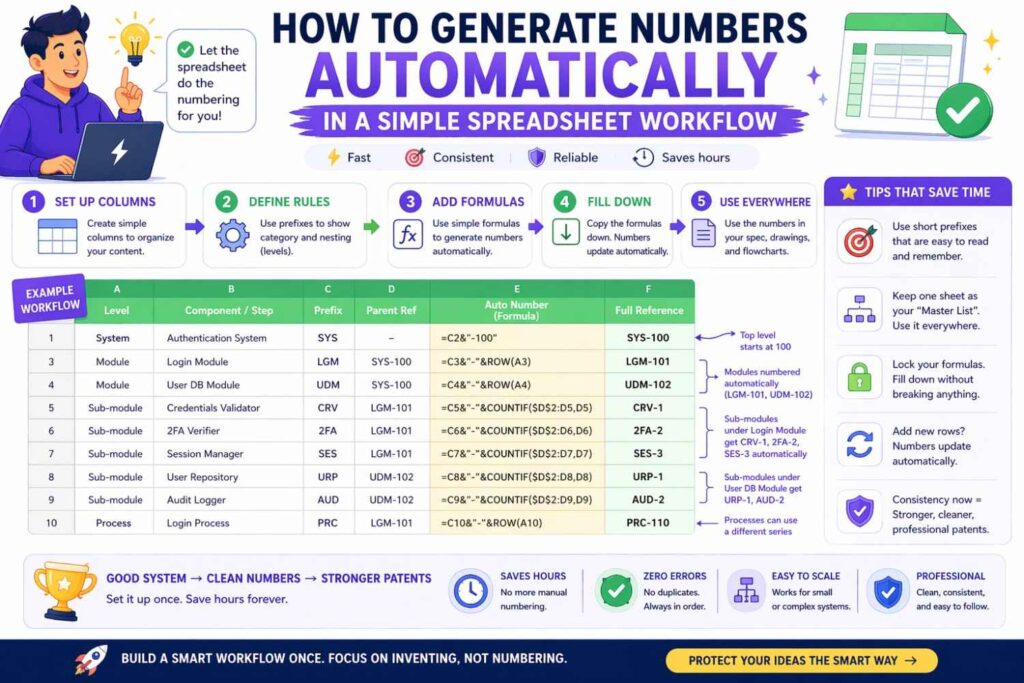
Not every team needs a custom database on day one.
A spreadsheet can do a lot if used well.
Create columns for internal name, display label, reference number, figure group, parent element, and status.
Use one sheet as the master register.
Each time a new element is approved, add it there first.
Assign the next valid number based on the figure group or type.
Use filtering or formulas to flag duplicate numbers or duplicate names.
Use that sheet during text drafting and drawing updates.
This approach is still partly manual, but it introduces structure. More important, it creates a clean migration path later. If the team moves into a more advanced platform, the logic is already established.
The spreadsheet is not the magic. The structured source of truth is the magic.
How software can make this even better
A more advanced system can go much further.
It can create elements from invention capture inputs.
It can suggest labels based on prior approved terms.
It can assign numbers from configured ranges.
It can preserve existing numbers during revisions.
It can update templates for figure legends and text references.
It can flag conflicts instantly.
It can maintain cross-links between parent and child elements.
It can keep figure and text references in sync.
That is where automatic numbering stops being a clerical aid and becomes a real workflow tool.
This is especially valuable for startups filing around software, AI, or evolving technical systems, where changes happen fast and documentation can drift if the workflow is weak.
A practical model for numbering ranges
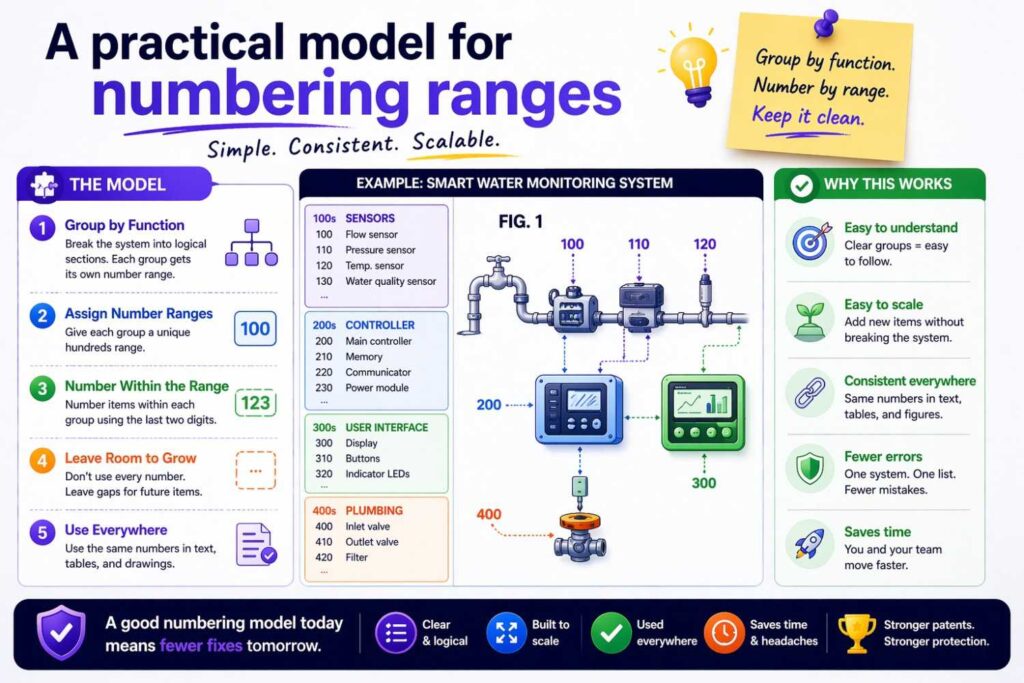
Here is a simple model many teams can use effectively.
Use 100-series numbers for major system blocks.
Use 200-series numbers for detailed modules inside those blocks.
Use 300-series numbers for method steps.
Use 400-series numbers for training or setup pipelines.
Use 500-series numbers for interfaces or outputs.
Use 600-series numbers for alternate embodiments or specialized extensions.
The exact ranges do not matter as much as the discipline behind them. Choose a system that matches the invention and stick with it.
Leaving gaps inside each range gives you more room later.
Once the ranges are set, automation becomes easy. The system knows where new numbers belong.
Why you should not overengineer the scheme
There is a trap here too.
Some teams build numbering systems so elaborate that nobody can use them without a manual.
That is not helpful.
A good automatic numbering scheme should be simple enough to understand and strong enough to scale.
If the rules are too clever, people stop following them. Then the system breaks in a different way.
The best schemes usually have a few clear principles, not dozens of nested rules.
Simple beats fancy here.
How to handle alternate embodiments
Alternate embodiments can complicate reference numbering because they often include related but not identical structures.
One good approach is to reuse numbers for truly shared elements and assign new numbers for new or changed elements.
For example, if Figures 1 and 5 both show a mobile application, that part may keep the same number. But if Figure 5 introduces a new policy engine used only in an alternate embodiment, that engine should get its own new number.
This keeps continuity where it helps and distinction where it matters.
A good automatic system can support this by marking embodiment membership. The system then knows which elements are shared and which belong only to a certain figure set or variation.
How to handle labels when the invention language evolves
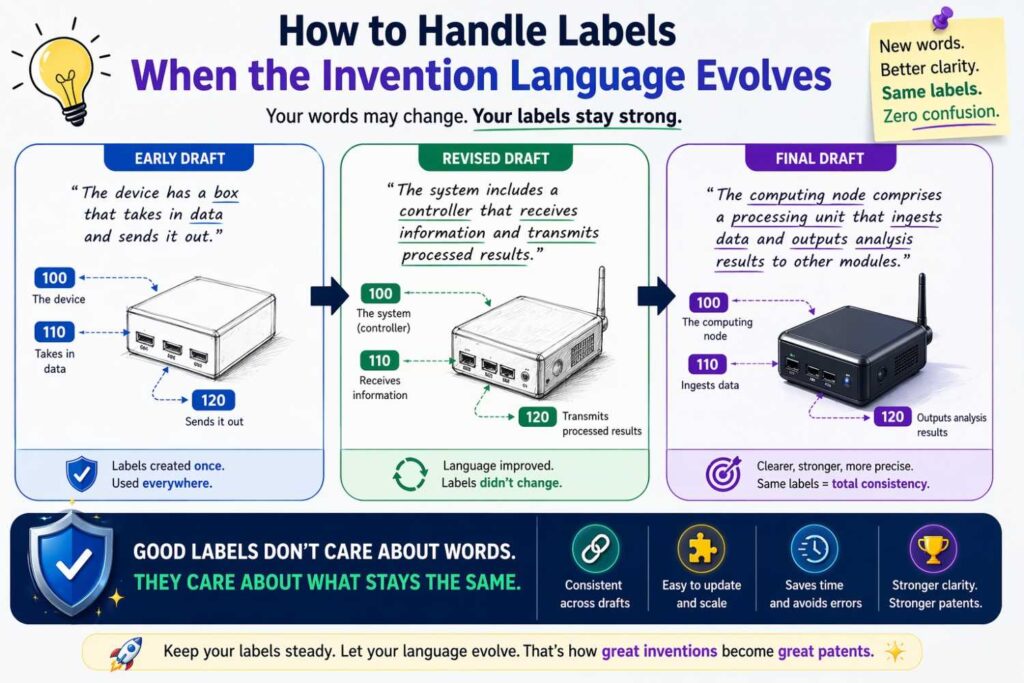
Patent drafts often improve over time.
An early draft may say “classification module.” Later, after review, the better label may be “prediction engine.” Or “data cache” may become “feature store.”
What should happen to the reference number?
Usually, if the underlying element is the same and only the wording improves, the number should stay.
This is another reason identity-based systems are so strong. The internal name can remain stable while the display label changes. The number stays tied to identity, not to the temporary wording.
This preserves continuity across revisions.
Without a structured system, label updates often break reference consistency because people confuse name changes with object changes.
Consistent numbers also improve training for your team
As your startup grows, more people may touch patent materials. A new engineer may review a draft. A product lead may help explain a workflow. An outside illustrator or contractor may format figures. A co-founder may join revision comments late.
Consistent reference numbering lowers the learning curve for everyone.
The document becomes easier to enter.
That is not a small thing. Any time you reduce friction in a collaborative process, quality tends to rise.
How to build a numbering policy your team can actually follow
If you want consistency, write down the rules.
Not a giant playbook. Just a short internal policy.
It should say how elements are named.
It should say which number ranges are used for which figure types.
It should say whether numbers are reused across figures for shared elements.
It should say how subcomponents are handled.
It should say who approves new elements in the register.
It should say how validation happens before a draft is finalized.
This document does not need to be formal or complicated. It just needs to exist.
The point is to make the system teachable and repeatable.
Why old-school document workflows struggle here
Traditional patent workflows often rely on many disconnected tools. One person edits drawings. Another edits text. Another manages comments. Another sends PDFs back and forth. Reference numbers live wherever they happened to be placed last.
That environment makes automatic consistency much harder.
Modern workflows do better because they treat the patent package as one structured system instead of a stack of loosely related files.
That is where startups gain a real advantage. When the workflow is modern, even the small drafting details become easier to manage. And when the small details are managed well, the big strategic work gets more attention.
The business case for getting this right

It is easy to dismiss reference numbering as formatting.
It is not.
It affects drafting speed.
It affects review accuracy.
It affects how quickly new embodiments can be added.
It affects how smoothly the team can collaborate.
It affects how polished and coherent the final filing feels.
All of that adds up.
For a startup, especially one filing while moving quickly, clean systems are leverage. They let a small team do stronger work with less drag.
That is the real business case.
A concrete founder example
Imagine two companies filing around a fraud detection platform.
The first company manages figures and numbers loosely. Their architecture figure uses one set of numbers. Their flowchart uses overlapping numbers by accident. The written description refers to a “risk engine 114” in one place and a “scoring module 114” in another. Late edits create silent mismatches. Review gets bogged down in cleanup.
The second company uses a structured register from the start. Their major components live in the 100 range. Their detailed internal modules live in the 200 range. Their method steps live in the 300 range. Shared elements keep stable numbers across figures. Validation catches duplicates before review. The team spends its energy refining the invention story, not cleaning labels.
Which company gets a cleaner filing with less stress?
The answer is obvious.
Small systems shape big outcomes.
A note on automation and human judgment
Automatic numbering is powerful, but it should not be blind.
Software can assign, preserve, validate, and synchronize numbers very well. But some choices still require thought.
Is this really the same element as before?
Should this detailed figure reuse the parent number or introduce a new one?
Does this rename reflect a wording improvement or a new concept?
Does this alternate embodiment share enough structure to keep the same reference?
These are drafting calls.
The strongest approach is not all-manual and not all-automatic. It is smart automation paired with informed human review.
That balance is exactly what founders need in patent work more broadly. Speed matters. Structure matters. But so does judgment. PowerPatent combines those things so startups do not have to choose between moving fast and filing carefully: https://powerpatent.com/how-it-works
A simple step-by-step plan you can use
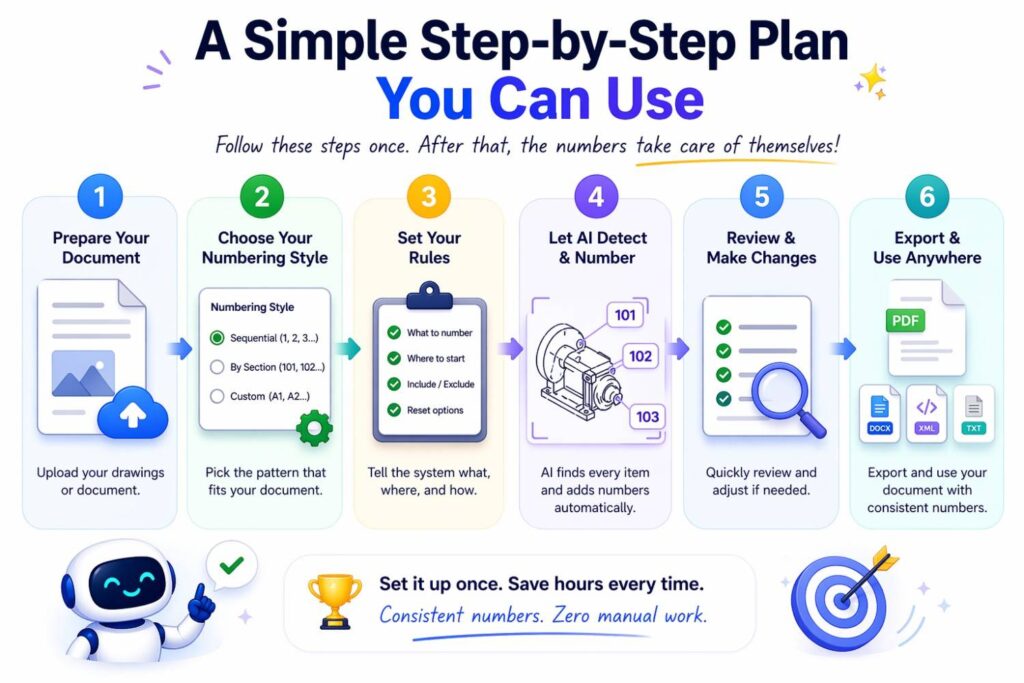
If you want to start improving reference numbering now, begin with a simple plan.
Create a master register for all patent elements.
Give each element a stable internal name.
Choose a small set of number ranges for figure types or component classes.
Leave gaps between assigned numbers.
Use the register as the source for both text and figures.
Keep numbers stable for unchanged elements through revisions.
Validate for duplicates and mismatches before final review.
That alone will put you far ahead of the usual messy workflow.
The biggest mistakes to avoid
The first big mistake is assigning numbers directly in the figure without a central register.
The second is using different names for the same element.
The third is renumbering everything after each change.
The fourth is packing numbers too tightly with no room for inserts.
The fifth is failing to preserve identity when labels improve.
The sixth is assuming reviewers will catch every mismatch manually.
The seventh is treating numbering as a late formatting step instead of part of document structure.
Avoid those mistakes and the whole patent package becomes easier to manage.
Getting reference numbers right is not just about avoiding messy drafts. It is about protecting speed, accuracy, and trust inside the patent process. When the numbering system breaks, the team starts spending time on repairs instead of making the filing stronger. That shift hurts more than most businesses realize.
The deeper risk is not one wrong number by itself. The deeper risk is building a workflow where small errors spread quietly. Once that happens, the draft becomes harder to update, harder to review, and harder to rely on during important moments.
Mistaking cleanup for progress
One of the most common business mistakes is confusing cleanup work with real forward motion.
A team may spend hours fixing figure labels, adjusting references in the text, and comparing one section against another. At the end of the day, it feels like work got done. In a narrow sense, it did. But that time did not improve claim quality. It did not deepen the invention story. It did not expand protection. It only repaired avoidable damage.
That is a costly pattern for any business, especially a startup.
The smarter move is to measure process quality by how little cleanup is needed later. That means the team should treat repeated renumbering pain as a signal that the workflow is broken, not as a normal part of patent drafting.
A useful action step is to ask one question after each major draft round: how much time did we spend fixing numbering and label drift instead of improving substance? If that number feels too high, the system needs to change.
Letting one person become the “number memory” for the whole team

Some companies fall into a fragile habit without noticing it.
One person becomes the only one who really knows the numbering logic. It might be a founder, a patent professional, a contractor, or a team member who has worked on the draft the longest. Everyone else depends on that person’s memory to know whether a label is right, whether a number was already used, or whether a figure change will create conflicts.
That may seem efficient for a short time. It is not scalable.
The moment that person gets busy, leaves the project, or simply forgets one detail, the system starts to wobble. Now the business has an invisible single point of failure sitting inside its patent workflow.
The better approach is to make the numbering system independent of any one person’s memory. Put the logic in a shared structure. Make the rules visible. Make the register accessible. Make it possible for a second reviewer to understand the system quickly.
For businesses, this is basic operational resilience. If a process only works because one person remembers everything, it is not really a process yet.
Treating late-stage drafting like the right time to get organized
Another mistake is waiting until the filing is almost done before trying to bring order to the numbers.
This happens when teams focus on “getting the ideas down first” and assume structure can always be added later. In theory, that sounds reasonable. In practice, late-stage organization is expensive. By that point, the same element may already appear across multiple figures, paragraphs, revisions, and comments. Cleaning the system after all of that is much harder than setting it up early.
From a business view, this is the same mistake companies make when they postpone operational discipline in other areas. It always feels easier to delay structure until the work becomes heavy. But once the work becomes heavy, the cost of structure rises.
A simple action step is to set a rule that once a draft reaches more than one figure or more than one repeated technical element, the numbering source of truth must be created immediately. That threshold is low on purpose. Early control prevents late confusion.
Building a system that works only for the current filing

Some teams make the mistake of treating each patent draft like an isolated event.
They build a numbering approach that works for the application in front of them, but they do not think about how similar components, naming patterns, or drafting habits may show up again in later filings. That leads to repeated reinvention. It also makes portfolio growth harder because each filing uses its own private logic.
A business that plans to file more than once should think one level higher.
The better question is not only “what numbering scheme works for this draft?” It is also “what structure can become part of our repeatable IP process?”
That does not mean every application must use the exact same ranges. It means the company should begin building internal discipline around how technical elements are named, how figures are organized, and how drafting structure is maintained.
This is highly strategic because portfolio quality compounds. A business that creates repeatable internal order gets faster and cleaner over time. A business that treats every filing as a fresh scramble keeps paying the same organizational tax again and again.
Ignoring how numbering affects investor and diligence readiness
A lot of founders think reference numbers matter only inside the filing process. But document quality has a second life.
When investors, acquirers, partners, or diligence teams review patent materials, they often form fast impressions about the company’s technical discipline. A filing that feels organized, coherent, and clearly structured gives a very different signal from one that feels patched together.
Reference numbering alone will not make or break a deal. But it contributes to the overall sense of quality. And in diligence settings, small signals matter. A draft full of inconsistencies can make the whole package feel less mature, even if the underlying invention is strong.
The strategic advice here is simple: do not think of numbering as hidden back-office detail. Think of it as part of how your company presents technical credibility under scrutiny.
One useful step is to review your patent drafts the way an outside diligence reader would. Ask whether the figures and the written description feel easy to trust. If the answer is not clearly yes, that is a business problem, not just a drafting problem.
Failing to plan for product changes that are very likely coming
A startup product rarely stands still. Features evolve. System boundaries move. Some modules get replaced. Others split into more specialized parts. If the numbering system is built as if the current product map will never change, the business is setting itself up for friction.
This is especially dangerous in fast-moving technical companies. The patent filing may begin when the architecture is still simple, but by the time later review happens, the system may already be more detailed. If the numbering scheme cannot absorb that change gracefully, every new technical insight creates drafting pain.
A smart business treats probable product evolution as a design input from the start.
That means asking practical questions early. Which modules are likely to gain subparts later? Which workflows are still expanding? Which areas of the system may produce future embodiments or continuation filings? Where do we need room in the structure?
That kind of thinking is strategic because it aligns IP process with product reality. Good businesses do not draft as if change is rare. They draft knowing change is normal.
Letting drawing vendors or outside contributors invent their own logic

As businesses grow, more outside hands may touch patent materials. An illustrator may prepare figures. A contractor may reformat drawings. A service provider may help with drafts. This creates a hidden risk: outside contributors may start making numbering choices on their own simply to get the work done.
That can create drift fast.
The problem is not that outside contributors are careless. The problem is that if they are not working from the company’s source of truth, they will naturally create local fixes. Those local fixes often look reasonable in the moment, but they weaken consistency across the whole draft.
The action step here is practical and important: outside contributors should never be asked to “figure out the numbering.” They should be given the numbering map, the naming rules, and the approved labels before work begins. Their role should be execution, not silent policy making.
For businesses, this is really a governance issue. If the company does not control its own document logic, someone else will fill the gap.
Overfocusing on visual neatness and underfocusing on legal usefulness
Sometimes a team chooses numbering decisions mainly because they look tidy in the figure.
That can backfire.
A number may be shortened, shifted, or repacked to make a drawing feel cleaner, but the choice may reduce flexibility later or weaken continuity with the text. A visually neat figure is good. But visual neatness should not be the main driver.
The stronger principle is usefulness across the whole patent package. The number has to work in the figure, in the description, in revisions, and in later review. It has to support the life of the document, not just the look of one page.
The strategic lesson for businesses is that local optimization is dangerous. A decision that improves one moment of the workflow can still hurt the full process. The right choice is the one that keeps the overall system stable.
Failing to define who has final authority over numbering decisions

In some teams, nobody clearly owns the final call on numbering logic. One person edits figures. Another edits text. Another leaves comments. Another adjusts labels during review. The result is a soft ownership problem where everyone can make changes, but nobody is clearly responsible for consistency.
That is a management issue as much as a drafting issue.
Every business process that matters needs clear decision rights. Patent numbering is no different. Someone should own the final structure, even if the work is collaborative. That person or role should approve new elements, settle naming conflicts, and make sure the source of truth stays current.
This does not need to become bureaucratic. It just needs to be clear.
A highly actionable step is to decide, before the next major draft round, who approves three things: new element creation, label changes, and cross-figure number reuse. Once those decisions have an owner, drift becomes much easier to control.
Not using numbering mistakes as signals about bigger workflow problems
A numbering error is rarely just a numbering error.
Often it points to a deeper issue. Maybe invention capture was too loose. Maybe the team is not aligned on the architecture. Maybe naming is unstable because the product story itself is still blurry. Maybe too many people are editing in disconnected files. Maybe there is no real source of truth at all.
Smart businesses do not just fix the visible mistake. They ask what allowed it to happen.
That mindset changes everything. It turns numbering issues into diagnostic tools.
If duplicate numbers keep appearing, maybe the system has no central register. If the same component keeps changing labels, maybe the company has not standardized its core technical language. If review comments repeatedly catch figure-text mismatches, maybe the workflow is split across too many disconnected steps.
The best businesses use small failures to improve the full process. That is where lasting efficiency comes from.
Assuming speed and structure are in conflict

This is one of the biggest mindset mistakes.
Some teams assume they have to choose. Either they move quickly and accept some document mess, or they slow down and build strong structure. That is the wrong tradeoff.
In reality, strong structure is what allows real speed.
A messy process feels fast only at the beginning. Later, it slows everything down through confusion, correction, and extra review cycles. A structured process may require a little more discipline early, but it creates smoother drafting later.
That is the same pattern businesses see in product development, sales operations, and engineering systems. Good process does not kill speed. Bad process does.
The actionable lesson is to stop asking, “do we have time to build structure?” and start asking, “how much time are we losing because we did not?”
A smarter business standard
The businesses that handle patent drafting well usually do one thing differently. They do not treat small document systems as small problems.
They understand that reference numbering, naming discipline, workflow ownership, and revision control all shape how strong and efficient the final result will be.
That is why the smartest standard is not perfection. It is reliability.
A reliable numbering process should make the next update easier, not harder. It should reduce dependence on memory. It should stay steady as the product evolves. It should support scale across filings. It should help the business present itself as technically disciplined when outside eyes review the work.
That is the real target.
And once a company starts thinking that way, reference numbers stop looking like tiny draft details. They start looking like what they really are: one small but powerful part of a mature IP operation.
How this fits into a stronger patent process overall
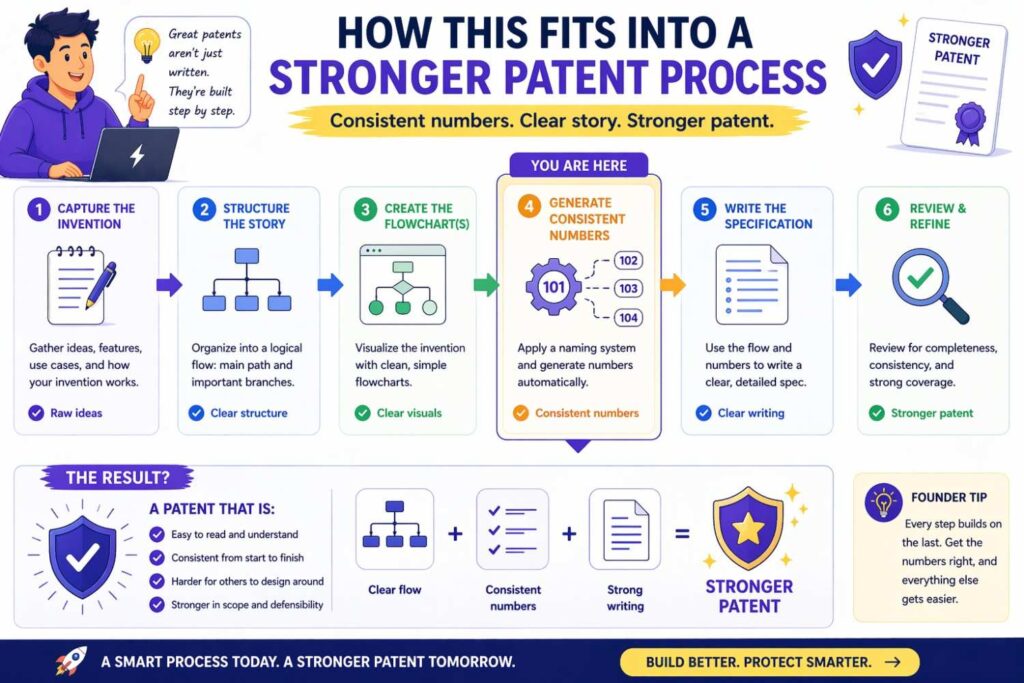
Reference numbers are one piece of a bigger truth.
Patent quality is not only about claims. It is also about process.
A strong process captures the invention clearly, structures the draft early, keeps figures and text aligned, and reduces avoidable friction throughout the workflow.
When that process is in place, even something as small as numbering becomes smoother. And when small details are smooth, the team can think more clearly about embodiments, scope, business strategy, and what truly deserves protection.
That is how good systems compound.
Reference number consistency is easy to treat like a drafting detail. In reality, it is a signal.
It tells you whether your patent process is built on structure or on cleanup.
That difference matters for businesses because strong patent work is not only about what gets filed. It is also about how well the company can repeat the process as the product grows, the roadmap changes, and new inventions appear. A clean numbering system supports something bigger than one document. It supports repeatable IP operations.
Strong patent process means less decision fatigue
One of the quiet costs in patent work is decision fatigue.
When every draft forces the team to rethink small things from scratch, energy gets wasted. People spend attention on avoidable questions instead of important ones. They argue over terms that should already be settled. They fix formatting issues that should have been prevented upstream. They burn time tracing references that should have been stable from the start.
For a business, that is not just annoying. It is expensive.
The more patent work depends on fresh manual choices each time, the more fragile the process becomes. That is especially painful for startups, where the same few people are often handling product, fundraising, hiring, customer work, and IP all at once.
A stronger patent process reduces those repeated choices.
Reference number consistency is part of that. It creates one less area where the team has to stop, question, and repair. That means more focus stays on the high-value work, like identifying what is truly new, what deserves broader support, and what future versions of the product should be protected now.
A clean process helps businesses file closer to the pace of product development
Many companies do not lose patent opportunities because they lack innovation. They lose them because their filing process moves too slowly and too loosely compared to product development.
The product team ships new logic.
The engineering team adds a new pipeline.
The model behavior changes.
The system architecture matures.
But the patent workflow is still operating like a slow document assembly line.
That gap creates risk.
If the process for capturing invention details is messy, patent filings start lagging behind the real business. Then the filed material may reflect old versions, shallow explanations, or only part of the company’s technical edge.
A stronger patent process narrows that gap.
This is where details like structured reference numbering matter more than they seem to. They make the drafting process easier to scale. They make updates smoother. They let a team revise faster without turning every change into a cleanup project.
For businesses, the real benefit is speed with control.
Not rushed filing.
Not sloppy filing.
Faster movement from invention to filing without losing order.
Better process makes your portfolio more coherent over time
A single patent application is one thing.
A growing patent portfolio is something else.
Once a company starts filing more than one application, process quality begins to matter a lot more. Weak internal structure that feels manageable in one filing becomes much more painful across many filings. Terms drift. figure logic changes. numbering approaches shift. teams describe similar systems in different ways. portfolio review becomes harder because each application feels like it was built from scratch.
That is where stronger process gives businesses a compounding advantage.
A well-run process creates consistency across applications, not just within them. That helps the company build a portfolio that looks connected, deliberate, and easier to use strategically.
This is valuable in several ways.
It helps leadership understand what has already been covered.
It helps outside counsel or internal teams draft follow-on applications more efficiently.
It helps investors or acquirers see a clearer technical protection story.
It helps the business avoid duplicate filing effort around the same system features.
Reference numbering alone does not create that portfolio discipline. But it reflects the kind of internal order that makes portfolio quality much stronger over time.
Good drafting systems make invention reviews more strategic

A lot of invention review meetings get pulled into the weeds because the materials are not organized well enough.
Instead of asking the best questions, the group gets stuck on document repair.
Is this component already defined?
Did we show this in the figure?
Is this the same module as before?
Did the description line up with the drawing?
Why do these labels keep changing?
Those are process failures disguised as review comments.
When the process is stronger, invention review can shift upward. The conversation becomes more strategic.
Now the team can ask:
Is this the part competitors will likely copy first?
Does this workflow support more than one product line?
Should this embodiment be its own application later?
What happens if the company changes model type or deployment path?
Are we protecting the real bottleneck, or just the visible feature?
Those are much better business questions.
A stronger patent process creates room for them because it removes noise from the review stage.
Patent process should support product strategy, not trail behind it
This is where many businesses leave value on the table.
They treat patent drafting as a record of what already exists. That is useful, but limited.
A stronger process does something more valuable. It helps the company protect the shape of where the product is going.
This requires the patent process to stay close to roadmap thinking.
If the business expects to move from rule-based actions to adaptive actions, that matters.
If the company expects to shift from human-in-the-loop review to partial automation, that matters.
If the same core engine will later support multiple verticals, customer types, or deployment models, that matters.
A stronger patent process should make it easier to capture those growth directions at the right time.
This is one place where process quality has real business leverage. When the workflow is organized, the team can include future-ready support more naturally. When the workflow is messy, everyone tends to focus only on patching the immediate draft.
That is why businesses should not think of patent process as a back-office detail. It is part of strategic product protection.
Build an internal patent intake rhythm
One highly actionable move for businesses is to stop treating patent work as random events.
Instead, create a simple intake rhythm tied to product development.
For example, once each month or once each quarter, review recent product, engineering, and model changes with one question in mind: what changed in the technical workflow that may deserve protection?
This is not a formal legal review. It is a business habit.
Look at new system modules.
Look at decision logic changes.
Look at fallback handling.
Look at training methods.
Look at deployment changes.
Look at performance improvements driven by new internal flows.
Then capture these with clear internal names and simple process notes before memory fades.
Why does this help the overall patent process?
Because it creates continuity. The company is no longer scrambling to reconstruct months of technical evolution at filing time. The invention story is being captured along the way.
That makes later drafting cleaner, broader, and much more strategic.
Use process maps to spot filing opportunities before competitors do

A strong patent process should not only organize what you already know. It should help you see what is emerging.
That is why businesses benefit from lightweight internal process maps.
Take a major workflow in the product and map it at a high level. Then ask where the business has made a non-obvious choice.
Maybe the company handles uncertainty in a special way.
Maybe it routes tasks differently based on trust level.
Maybe it combines user context and live system state in a way others do not.
Maybe it updates future actions based on outcome quality.
Those design choices can easily get missed if the company only looks at features on the surface.
A process map helps surface them.
This is actionable because it gives teams a repeatable method. Instead of waiting for a big invention moment, they can examine key workflows and identify where genuine protectable advantage exists.
That turns the patent process into an active business tool, not just a passive filing task.
Better process helps founders delegate without losing control
As a company grows, founders cannot personally manage every drafting detail.
But many still fear delegating patent work because they worry the real invention nuance will get lost.
That fear is understandable.
A stronger patent process solves this by making the workflow easier to trust.
When naming is structured, figures are organized, references are consistent, and invention capture happens in a repeatable way, founders can step back without feeling blind. They still guide the important decisions, but they do not need to personally untangle every document issue.
For businesses, this matters because scale requires delegation.
A company that depends on one founder remembering every invention detail and every drafting choice is building risk into its IP process. A company with a stronger system can preserve quality even as more people join the workflow.
Strong process improves diligence readiness
This point matters a lot for businesses that expect fundraising, partnerships, licensing discussions, or acquisition interest.
When outsiders review a company’s IP position, they are not only looking at whether applications exist. They are also picking up signals about how disciplined the company is in protecting its technology.
A scattered patent process can create doubt.
A clean one builds confidence.
Documents that read clearly, stay internally consistent, and reflect a repeatable structure make the portfolio easier to understand and easier to trust. That can help the business in diligence settings, because the IP story feels more intentional and better managed.
This does not mean investors are checking each reference number one by one. That is not the point.
The point is that process quality shows up in the final work product. And the final work product influences how the company’s technical maturity is perceived.
Set business goals for your patent process
Another highly actionable step is to stop measuring patent work only by filing count.
Filing count is easy to track, but it is a weak management metric by itself.
A stronger process uses better goals.
For example, a business might set goals around how quickly invention disclosures are captured after a major product milestone.
Or how often product and technical leads review new workflow changes for patent value.
Or how consistently approved system names are reused across filings.
Or how much time gets spent in late-stage cleanup versus substantive review.
These are process health signals.
They help leadership see whether the company is building a patent machine that gets stronger with use, or just pushing filings through one at a time.
That shift in measurement changes behavior. Teams start improving the system itself, not just the visible outputs.
Tie patent process to competitive risk review

A strong patent process becomes even more useful when it connects directly to competitive thinking.
During regular product or strategy reviews, businesses should ask not only what the team is building, but also what competitors are most likely to imitate once they see traction.
This is important because the most valuable patent material is not always the biggest feature. Often it is the hidden operating logic that makes the feature work better.
That may be the ranking method, the routing path, the threshold logic, the fallback system, the synchronization model, or the update loop.
When the patent process is structured well, these risks can be captured and turned into drafting targets sooner. That gives the company a better chance to protect the parts competitors may try to copy once the market opportunity becomes obvious.
Create a “protect now, protect later” framework
Not every invention detail needs to be filed right away. But businesses should make that choice deliberately.
A stronger patent process benefits from a simple framework that sorts technical ideas into two buckets.
The first bucket is “protect now.” These are the workflows or components tied closely to current product value, market differentiation, or near-term exposure.
The second bucket is “protect later.” These are valuable but less urgent ideas that may become stronger filing targets after more product maturity or business clarity.
This helps businesses avoid two problems at once.
It avoids filing too little by ignoring real invention value.
It also avoids filing too much in a scattered way with no portfolio logic.
This framework becomes much easier to use when the patent process is already structured. Teams can review process maps, component definitions, and technical changes in an organized way and decide what deserves immediate attention.
Build process memory, not just documents
One of the most useful long-term goals for any business patent process is process memory.
That means the company does not just produce documents. It preserves the logic behind how those documents were created.
Why was a certain architecture split into separate embodiments?
Why was one workflow filed first and another held for later?
Why were certain terms standardized?
Why was a given component treated as the same across multiple figures?
Why was an alternate path emphasized in one filing?
When this reasoning is lost, the next filing often starts from scratch. The team repeats old debates. It reopens settled questions. It wastes time rebuilding context.
A stronger patent process keeps more of that memory alive.
This is highly actionable because businesses can do it with simple habits. Keep short notes on key filing decisions. Capture why a certain workflow mattered. Record what future versions were expected at the time of filing. Save a clear map of major components and naming choices.
This gives future filings much better footing.
The bigger business takeaway

How this fits into a stronger patent process overall comes down to a simple truth.
Businesses get more value from patents when patent creation is treated like a system, not a one-off event.
That system should make it easier to capture invention changes, align IP work with roadmap direction, support better review, preserve internal clarity, and build a portfolio that grows with the company.
Reference number consistency is one small but revealing part of that system.
When details like that are handled well, it usually means the company is building IP process maturity. And that maturity creates leverage. It helps the business protect more of what matters, with less waste, and with better timing.
That is what strong patent process should do. It should not only produce applications. It should help the company protect innovation in a way that supports real business growth.
The deeper lesson
At first glance, automatic reference numbering sounds like a small efficiency trick.
It is more than that.
It is a way of treating patent work as a structured technical workflow rather than a pile of documents that somehow have to match at the end.
That mindset matters.
The same founder who values clean architecture, good naming, stable identifiers, and version control in product development should value similar discipline in patent drafting. The work is different, but the principle is the same. Order creates leverage.
When you generate consistent reference numbers automatically, you are not just saving time. You are building a drafting environment where the invention can be explained more clearly and revised more safely.
That is a real advantage.
Conclusion
Generating consistent reference numbers automatically starts with one simple idea: stop treating numbers like random labels.
Give each invention element a stable identity.
Track those identities in one source of truth.
Use clear ranges and leave room for change.
Let the system assign and preserve numbers according to rules.
Keep the written description and the figures tied to that same structure.
Validate before final review.
And keep human judgment in the loop when the invention story requires real decisions.
Do that well, and the result is more than neat figures. You get a stronger drafting process, faster revisions, cleaner collaboration, and a patent package that feels coherent from start to finish.
If your team is building valuable technology and wants a smarter way to turn technical work into clean, attorney-backed patent filings, PowerPatent can help. It brings modern software, structured workflows, and real patent attorney review together so founders can move faster without losing quality: https://powerpatent.com/how-it-works
And if your current patent process still feels messy, slow, or full of avoidable cleanup, that is a signal. Better systems create better filings. Reference numbers are just one example, but they reveal the bigger point clearly. When the workflow improves, the quality of the patent work improves with it.
See how PowerPatent works here: https://powerpatent.com/how-it-works