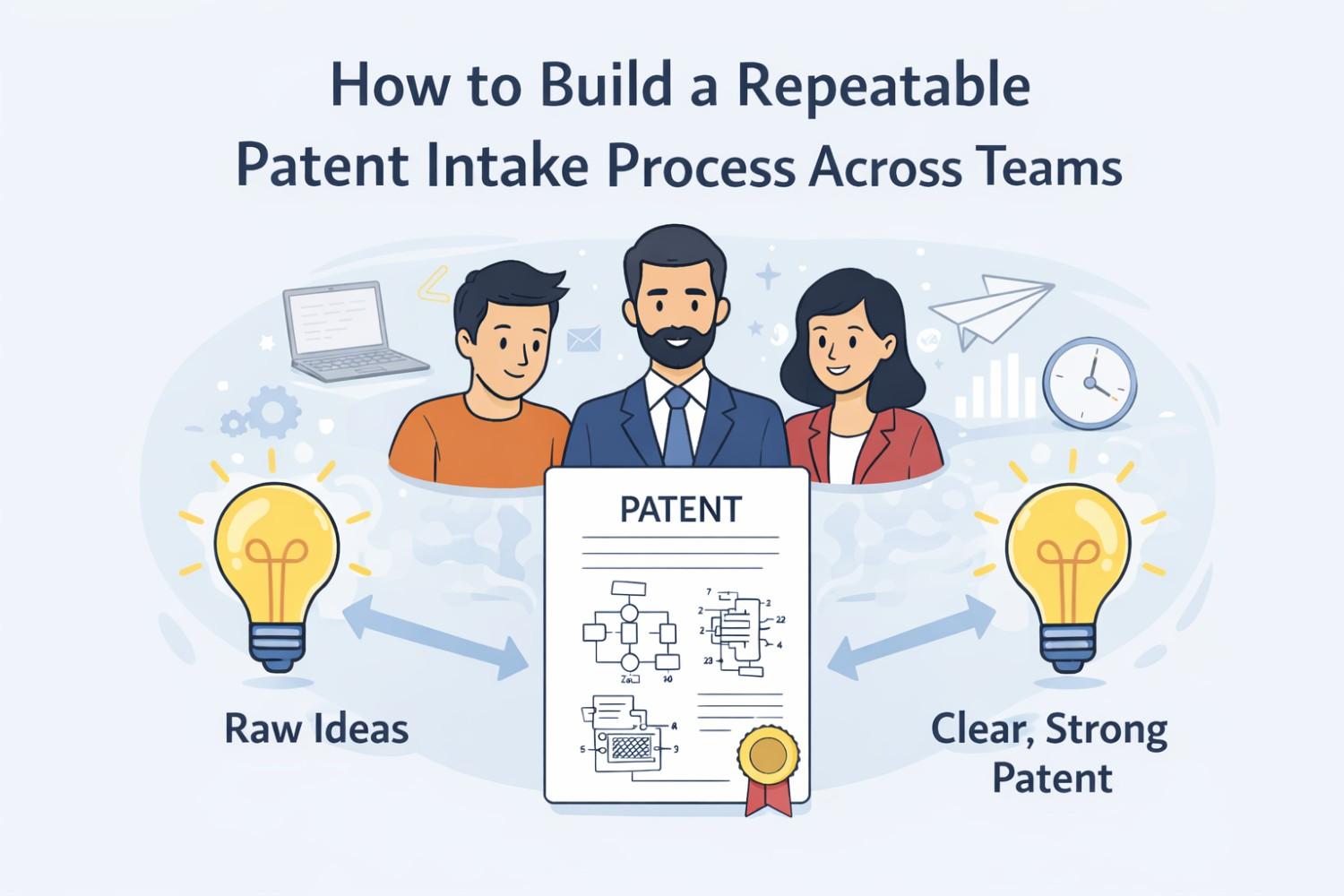
If your company builds fast but files patents slow, you have a hidden problem. Ideas are slipping through the cracks. Engineers are shipping features, models are getting trained, new systems are going live—and no one has a simple, repeatable way to catch what should be protected. A repeatable patent intake process fixes that. It turns scattered ideas into protected assets without slowing your team down. In this guide, you will learn exactly how to build that process across teams so innovation never gets lost again.
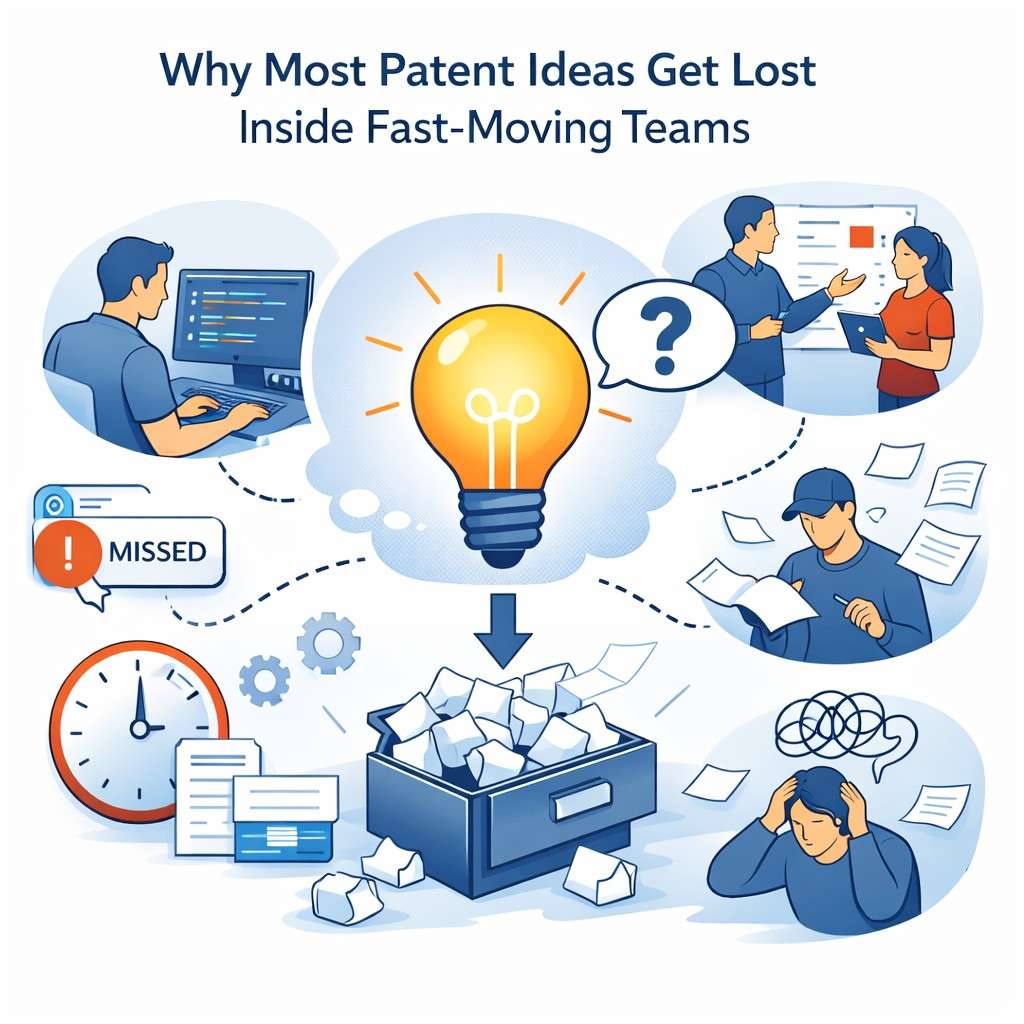
Why Most Patent Ideas Get Lost Inside Fast-Moving Teams
In fast-growing companies, innovation happens every day. New features are pushed. Systems are rebuilt.
Code is rewritten. Models improve week by week. Yet very few of these breakthroughs ever make it into a patent filing. Not because they are not valuable.
Not because the team does not care. They get lost because there is no clear, shared system to catch them. When speed is the top goal, protection often becomes an afterthought.
If you want to fix this, you first need to understand exactly where and why ideas disappear.
Speed Becomes the Only Priority
When a company is moving fast, everything revolves around shipping. Roadmaps are tight. Investors expect growth. Customers want new features now.
Engineers are focused on solving problems quickly and cleanly. In that rush, no one pauses to ask, “Is this protectable?”
The problem is not laziness. It is focus. Teams are rewarded for releases, not for documentation. Product managers track launches, not patent disclosures. Founders celebrate revenue milestones, not intellectual property milestones.
If you want to stop losing ideas, you need to align incentives. That means tying patent identification to moments that already matter.
For example, every major feature release can include a short review step that asks one simple question: did we solve a technical problem in a new way?
This does not require a meeting that lasts hours. It can be a five-minute review built into your release checklist.
When patent review becomes part of what “done” means, it stops feeling like extra work. It becomes part of how the team ships.
Innovation Feels Too Small to Be Patentable
Many engineers assume their work is not big enough for a patent. They think patents are for groundbreaking inventions, not for clever improvements inside a system. This belief causes silent loss.
In reality, many strong patents protect small but meaningful technical decisions. A new data flow. A training optimization. A resource scheduling method.
A better way to reduce latency. These are the exact types of improvements competitors often copy.
To address this, leadership must redefine what counts as innovation. Instead of asking, “Did we invent something revolutionary?” teams should ask, “Did we solve a technical problem in a way others might copy?”
You can make this practical by encouraging engineers to briefly document “problem and solution” stories during development.
Not long reports. Just a short internal note that says what problem existed and how it was solved differently than before. These small notes become seeds for future patent filings.
When you lower the mental bar for what is worth capturing, you dramatically increase the number of protectable ideas that surface.
No Clear Ownership Means No Action
In many startups, patent intake belongs to no one. Or worse, it belongs to everyone. When responsibility is unclear, nothing happens.
Engineering assumes legal will handle it. Legal assumes founders will flag important work. Founders assume engineers will speak up. The result is silence.
A repeatable intake process needs a visible owner. This does not mean one person writes every patent. It means one role ensures ideas are captured consistently.
This owner could be a product leader, a technical founder, or an innovation manager. What matters is that someone reviews new work regularly with a protection mindset.
An effective approach is to assign a “patent champion” within each major team. This person is not a lawyer. They are simply responsible for raising their hand when the team builds something novel.
They attend sprint reviews and architecture discussions with one extra lens: is this different from what others are doing?
When ownership becomes clear, ideas no longer float in the air. They have a path.
Documentation Happens Too Late
Another reason ideas get lost is timing. Teams often try to reconstruct inventions months after launch. By then, memory fades. Key engineers have moved to other projects. Details are blurry.
Strong patent filings depend on clear technical detail. If you wait too long, that detail disappears.
To fix this, capture invention data close to the moment of creation. The goal is not to draft a full patent immediately. The goal is to freeze the core idea while it is fresh.
You can embed this into existing workflows. For example, when a major technical design document is finalized, include a short “protection snapshot” section.
It can answer simple prompts like what technical challenge was addressed, what approach was taken, and why this approach is different from standard methods.
This takes minutes when the information is fresh. It takes hours or days if you try to reconstruct it later.
Meetings Do Not Surface Deep Technical Insights
Many companies rely on high-level roadmap meetings to identify patent opportunities. The problem is that these meetings rarely dive into the technical layer where the real novelty lives.
Product updates focus on user impact. Revenue projections. Feature timelines. The underlying architecture decisions that make those features possible often go unspoken.
Patent intake works best when it reaches into engineering discussions. Design reviews, architecture planning sessions, and post-mortems are rich sources of patentable material.
A strategic move is to attend these meetings periodically with a protection mindset. Not every meeting needs a legal presence. But once a month, having someone listen specifically for novel technical approaches can uncover ideas that would otherwise be invisible.
The key is to meet innovation where it happens, not where summaries are presented.
Teams Fear Slowing Down
One silent blocker is fear. Engineers worry that talking about patents will slow down development. They imagine long legal calls and complex paperwork. This fear causes avoidance.
The solution is to design intake around speed, not around formality. If the first step requires a twenty-page disclosure form, adoption will fail. If the first step is a simple conversation or short internal submission, participation rises.
You can build trust by proving that patent capture does not interrupt shipping. When teams see that protection runs in parallel, not in conflict, they engage more openly.
A strong patent process should feel like version control for ideas. Lightweight at the start. Structured later. Invisible to daily velocity.
Founders Underestimate Competitive Risk
In early stages, founders focus on building product-market fit. Competitors may feel distant. Because of that, patent protection feels optional.
But once traction appears, competitors move quickly. They study your features. They reverse engineer your workflows. They replicate your systems. By then, it is too late to protect what was publicly launched months ago.
This is why patent intake must start early, even when the company is small. It does not need to be complex. It just needs to be consistent.
A simple monthly review of major technical advances can build a protective moat over time. Each captured idea compounds into leverage. When investors later ask about defensibility, you will have a real answer.
Cross-Team Gaps Create Blind Spots
Innovation rarely lives in one team. Often, the most valuable inventions sit at the intersection of engineering, data science, and product strategy.
When teams operate in silos, no one sees the full picture. One group builds an optimization layer. Another builds a deployment pipeline. Combined, they form a unique system. Separately, they seem ordinary.
To prevent these blind spots, create periodic cross-team reviews focused only on technical differentiation. These sessions are not status updates. They are deep dives into how your system works differently from others.
When teams explain their systems to peers, novel combinations often surface. These intersections are powerful patent opportunities.
Growth Creates Chaos
As startups scale, complexity increases. New hires join. Documentation standards shift. Legacy systems mix with new architecture. In this chaos, systematic patent capture becomes harder.
The mistake many companies make is waiting until they are “big enough” to formalize processes. By then, years of innovation are scattered.
Instead, build a simple intake habit early. Even a shared internal form where engineers can drop short summaries of new technical approaches is enough to start.
Over time, this can evolve into a structured pipeline supported by tools and legal review.
The key is consistency, not perfection.
Turning Awareness Into Action
Understanding why ideas get lost is only the first step. The real shift happens when you design small, repeatable actions that catch ideas automatically.
Tie patent review to release cycles. Assign visible ownership. Capture technical detail early. Lower the barrier for submission. Encourage engineers to think in terms of problem and solution.
Hold cross-team technical conversations focused on differentiation.

When these habits become part of your operating rhythm, patent intake stops being reactive. It becomes built into how your company thinks.
Designing a Simple, Repeatable Patent Intake System That Engineers Will Actually Use
A patent intake system only works if engineers actually use it. That sounds obvious, but most systems fail because they are built for lawyers, not builders.
Engineers care about speed, clarity, and focus. They do not want extra forms, long meetings, or vague instructions. If your intake process feels heavy, it will be ignored. If it feels natural, it will become part of how your team builds.
The goal is not to create paperwork. The goal is to create a rhythm that captures innovation without slowing momentum.
Start With the Workflow Engineers Already Follow
If you try to bolt a patent process on top of daily work, adoption will be low. Instead, embed intake into steps that already exist.
Engineers already write design docs. They already open pull requests. They already join sprint reviews. These are natural checkpoints where innovation appears. Your job is to attach a small trigger to those checkpoints.
For example, when a technical design document is written for a major feature, add one short section at the end that asks a simple question: does this solve a technical problem in a way we have not seen before?
That question alone can spark awareness.
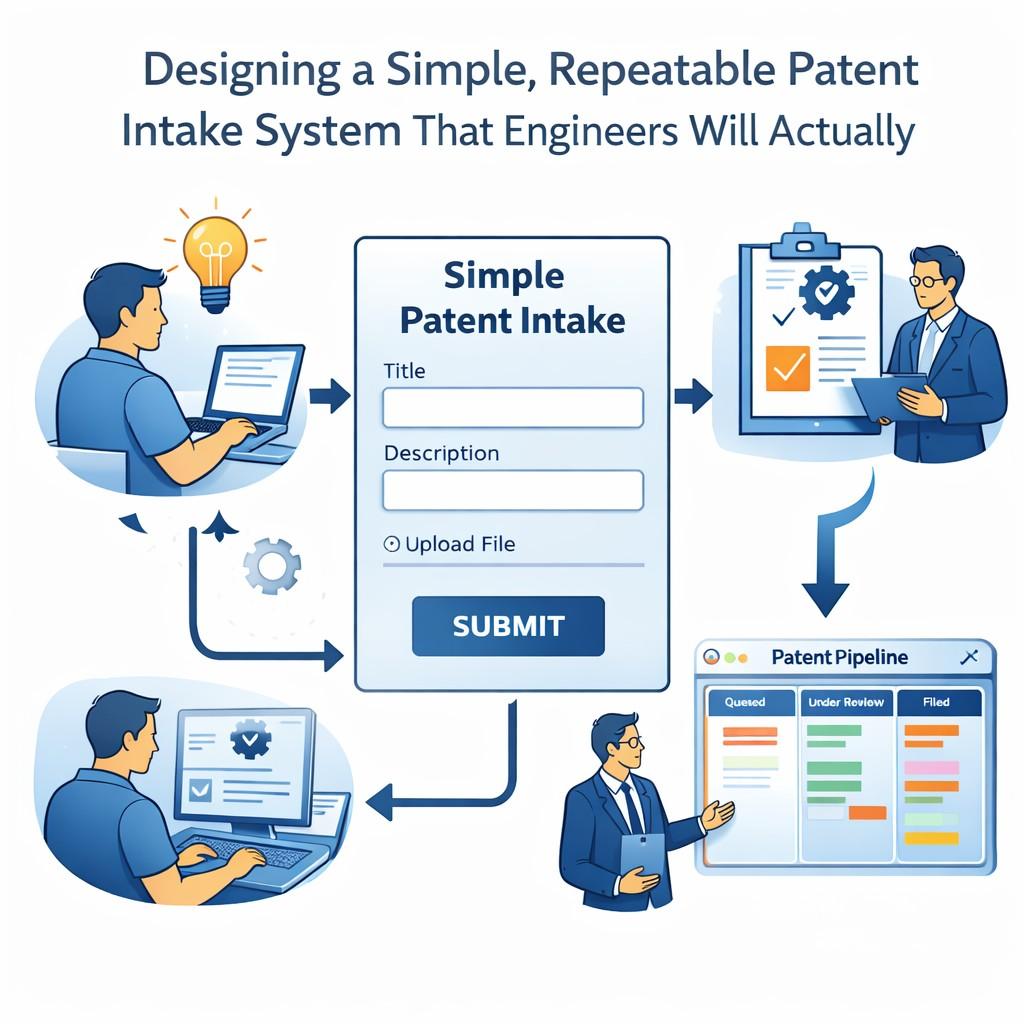
You are not asking engineers to decide if something is patentable. You are asking them to flag what feels new. That shift makes participation easier.
Make the First Step Extremely Lightweight
Most intake systems fail because the first step feels too formal. Long disclosure forms create resistance. Engineers will postpone filling them out. Eventually, the idea is forgotten.
The first step should feel almost casual. A short internal submission form with a few open questions works well. Ask what problem was solved, how it was solved, and why the approach is different.
Keep it short enough that it can be completed in minutes.
You can also allow verbal intake. Some engineers prefer talking through ideas. A short recorded explanation that someone later summarizes can be more effective than forcing written detail upfront.
The goal is to capture the signal early. Refinement can come later with attorney guidance.
Define What “New” Means for Your Company
One major blocker is confusion. Engineers often do not know what qualifies as worth submitting. Without guidance, they stay silent.
You can fix this by clearly explaining what counts as new inside your company. This is not about legal definitions. It is about practical examples from your own product.
Walk through past innovations that were strong candidates for protection. Show how a specific data pipeline, optimization method, or system architecture change could have been captured.
When engineers see real examples from their world, the process becomes real.
This internal education does not need to be complex. A short session once a quarter that reviews recent technical wins and highlights why they matter is enough to sharpen awareness.
Build a Predictable Review Rhythm
Random intake leads to inconsistent action. A repeatable system needs a schedule.
Set a recurring time each month where submitted ideas are reviewed. This meeting should be focused and structured. It is not a brainstorming session. It is a decision checkpoint.
During this review, ideas are evaluated for business value, technical depth, and competitive relevance. Some move forward to drafting. Others are parked for later. Some are declined.
What matters most is consistency. When teams know that ideas will be reviewed on a fixed schedule, they are more likely to submit them. The system feels real, not theoretical.
Separate Capture From Evaluation
A common mistake is mixing idea capture with legal judgment. When engineers think their ideas will immediately be critiqued by legal experts, they hesitate.
Separate the stages clearly. First comes capture. Then comes internal screening. Only after that does the idea move to formal legal drafting.
This layered approach reduces pressure. Engineers can share ideas freely without worrying about legal language. The system filters and refines later.
When working with a platform like PowerPatent, this becomes even smoother. Engineers can submit raw technical insight, and smart software combined with real attorney oversight helps shape it into a strong filing.
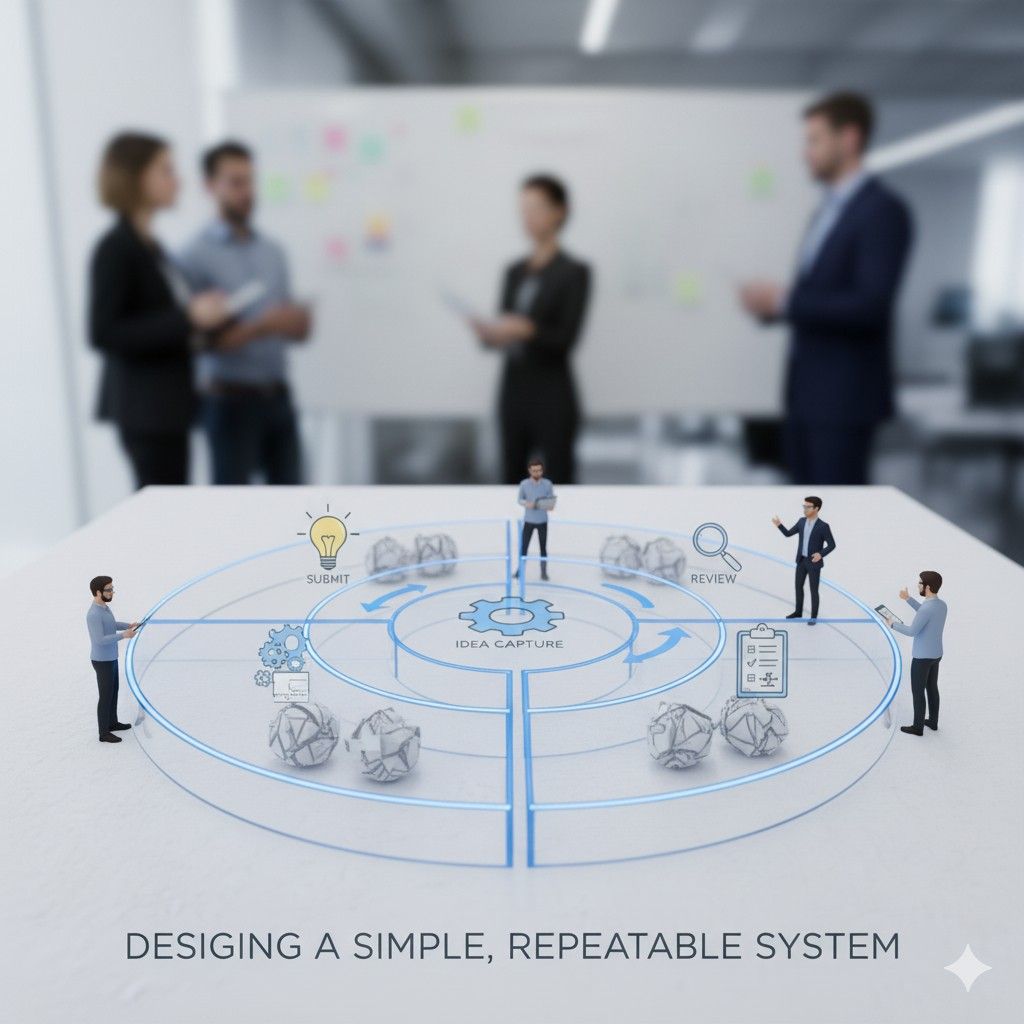
That bridge between raw idea and formal patent is where many companies struggle. With the right structure, it becomes seamless.
If you want to see how that works in practice, explore how modern patent workflows are built here: https://powerpatent.com/how-it-works
Assign Clear Internal Roles
Even a simple system needs ownership. Without defined roles, tasks drift.
You need someone responsible for intake visibility. This person ensures submissions are reviewed and followed up on.
You also need someone who connects technical depth with business strategy. Often, this is a founder or senior technical leader.
Engineers should know exactly where to submit ideas and what happens next. Transparency builds trust. If submissions disappear into a black hole, participation will drop quickly.
Clarify timelines as well. Let teams know how long it takes from submission to decision. Predictability removes doubt.
Align Patent Intake With Business Goals
Engineers care more about patents when they understand why they matter. If intake feels disconnected from company strategy, it becomes low priority.
Connect patent capture directly to competitive positioning. Explain how protecting core technology increases valuation, strengthens investor conversations, and deters competitors.
When a team sees that their technical work contributes to long-term defensibility, pride increases. Filing a patent becomes part of building the company’s moat, not just a legal exercise.
You can reinforce this by sharing updates when filings occur. Celebrate them the same way you celebrate launches. Recognition signals importance.
Reduce Friction With Smart Tools
Manual processes slow everything down. Email chains, scattered documents, and unclear version control create confusion.
A repeatable intake system benefits from centralized tools. One shared portal for submissions. Clear tracking of idea status. Structured collaboration between engineers and patent professionals.
Modern platforms combine software automation with real attorney review so founders do not have to manage the complexity themselves.
Instead of juggling outside firms and long delays, teams can move quickly from idea to filing without losing control.
If your current process feels slow or fragmented, it may be time to rethink the infrastructure behind it. See how streamlined patent intake can look in practice: https://powerpatent.com/how-it-works
Create Feedback Loops That Improve Over Time
A strong intake system evolves. After each filing, review what worked and what felt difficult. Was the original submission clear enough? Did engineers struggle to explain certain details? Did review meetings feel efficient?
Use this feedback to refine the process. Small improvements compound over time.
You may discover that certain teams generate more protectable ideas than others.
That insight can shape training and awareness efforts. You may also find that some types of projects rarely produce patentable material. That clarity saves time.
Continuous improvement turns your intake system into an asset, not an obligation.
Make It Part of Your Culture
The final step is cultural. A repeatable patent intake process is not just a workflow. It is a mindset.
When teams naturally ask, “Is this protectable?” during development, the system is working. When founders track intellectual property alongside revenue and growth metrics, protection becomes embedded in strategy.
This shift does not happen overnight. It grows from consistent habits, clear ownership, and visible leadership support.
If you want a faster, simpler way to bring structure to your patent process without slowing your team, PowerPatent was built for exactly that challenge. Smart software handles complexity. Real attorneys ensure quality. Founders stay in control.
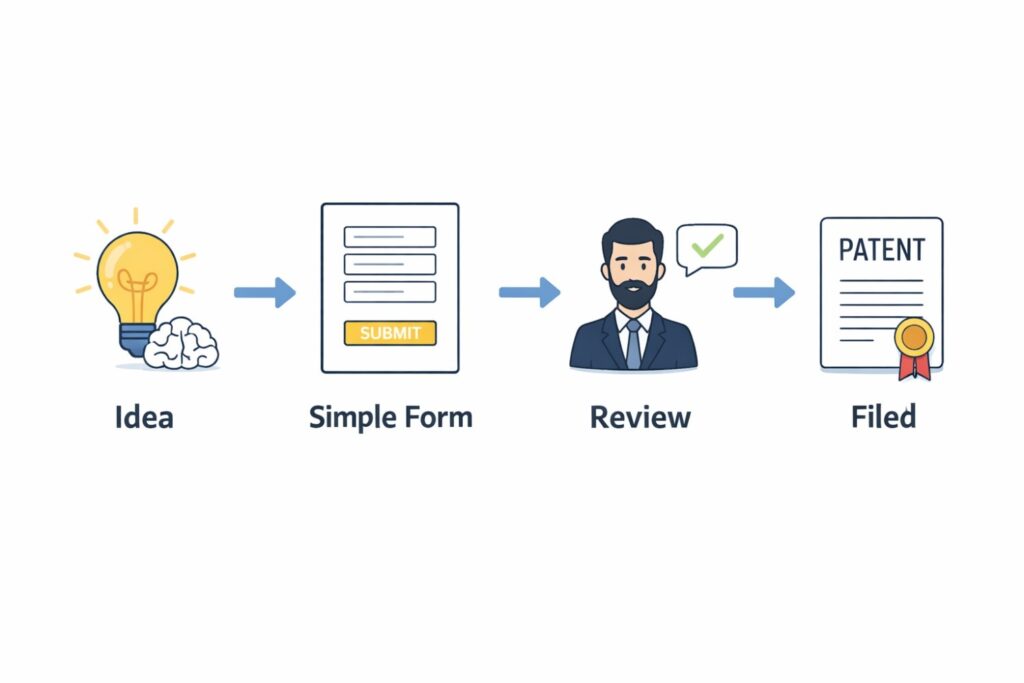
Learn how to turn your innovation into defensible protection without friction here: https://powerpatent.com/how-it-works
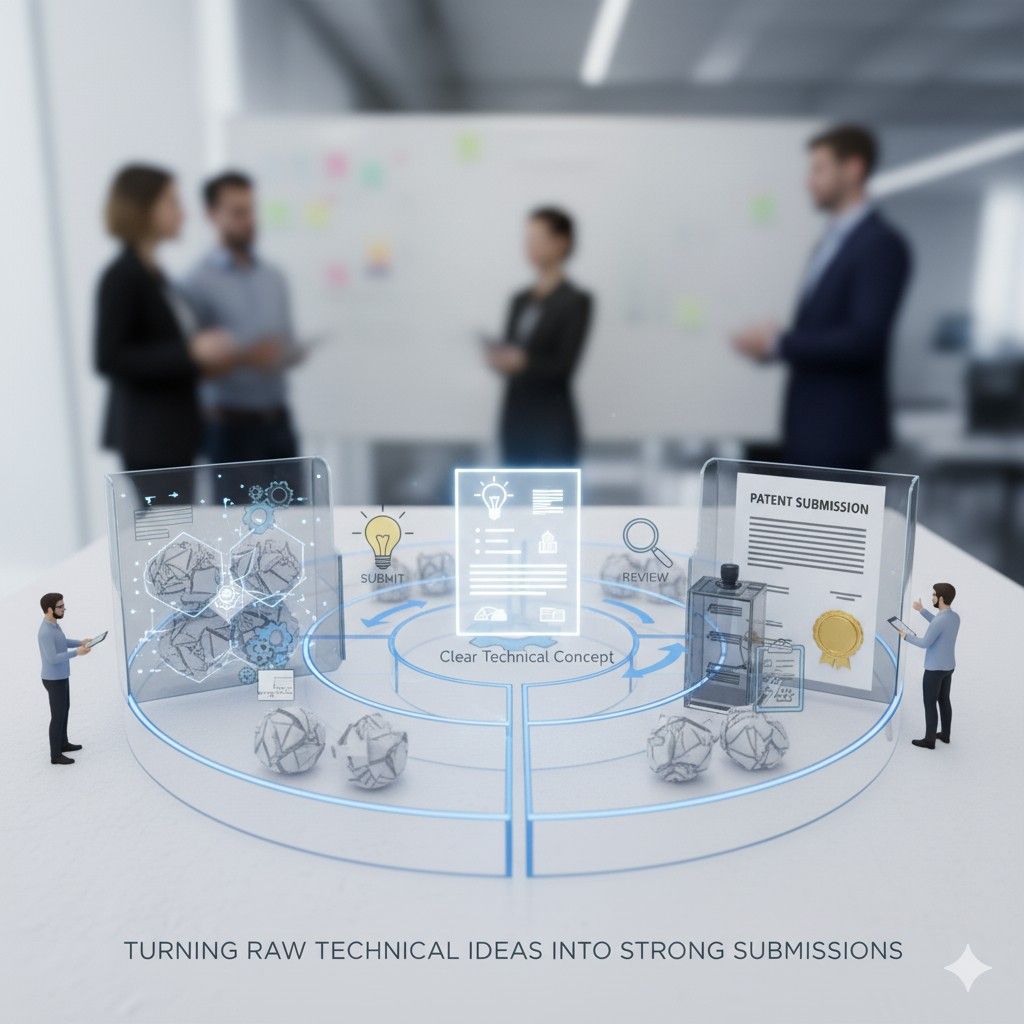
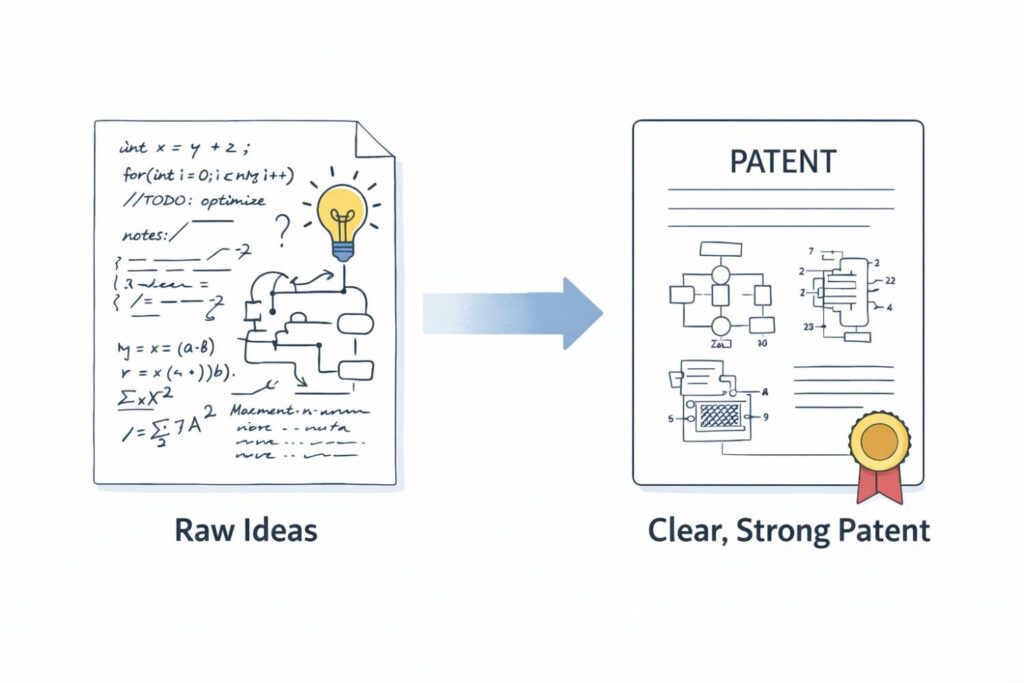
Turning Raw Technical Ideas into Clear, Strong Patent Submissions
Most patent processes break down at one critical point. The idea exists. The engineer understands it deeply. The company knows it matters. But when it is time to turn that idea into a formal submission, everything becomes unclear.
The engineer speaks in system diagrams and code logic. The patent document needs structured explanation and careful framing. Somewhere between those two worlds, the strength of the invention can get diluted.
If you want strong protection, you need a reliable way to translate raw technical insight into a clear, powerful patent submission without losing detail or slowing your team down.
Start With the Real Technical Problem
Strong patents do not begin with features. They begin with problems.
When engineers describe their work, they often start with what they built. A new pipeline. A new training method. A new scheduling system. But what makes an invention valuable is not just what it does.
It is the technical problem it solves.
Before drafting anything formal, slow down and clarify the core problem. What was not working before? What technical limitation existed? What constraint forced the team to think differently?
The sharper the problem is defined, the stronger the patent foundation becomes. This step shapes everything that follows.
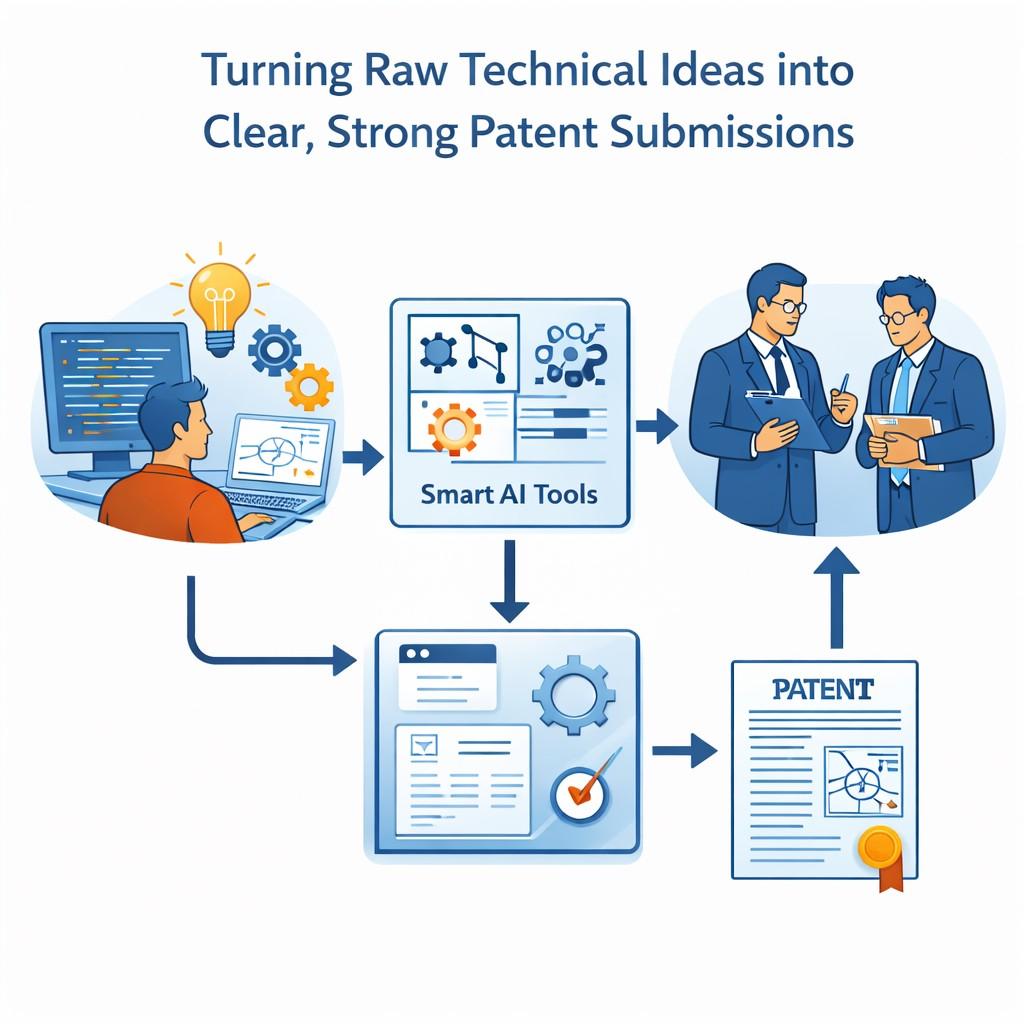
Encourage engineers to describe the situation before their solution existed. Paint a clear picture of the gap. When that gap is real and specific, the solution feels necessary, not accidental.
Capture the Architecture While It Is Fresh
Details fade quickly. That is dangerous in patent drafting.
When a technical idea is submitted, document the system architecture immediately. Even if the formal application comes later, the internal capture should include diagrams, flow explanations, and key components.
Ask the engineer to walk through the system step by step. Where does data enter? How is it transformed? What decision points exist? What makes those decisions different from common approaches?
You are not trying to create a legal document yet. You are freezing the invention in time so nothing gets lost.
This early capture prevents a common mistake where months later the team tries to reconstruct the invention from memory and misses important nuances.
Move From Code to Concepts
Engineers think in code. Patent submissions must describe concepts.
This translation step is where many filings weaken. If the description is too narrow, competitors can design around it easily. If it is too vague, it becomes weak.
The goal is to describe the logic behind the code, not just the specific implementation. Instead of saying a function performs a precise sequence of steps in one programming language, describe the broader method that could apply across implementations.
For example, if your system dynamically allocates resources based on predictive load modeling, the patent description should focus on that adaptive allocation method, not only on the exact script used.
This shift expands protection without sacrificing clarity.
Working with a system that combines smart drafting tools and real attorney oversight makes this translation far easier.
It allows engineers to stay technical while experienced professionals shape the framing correctly. If you want to see how that bridge works in practice, you can explore it here: https://powerpatent.com/how-it-works
Identify the Core Novelty Clearly
Every invention has a center of gravity. A specific element that makes it different.
In some cases, it is a new data structure. In others, it is a feedback loop between system components. Sometimes it is the sequence in which operations occur.
When drafting a submission, isolate that novelty clearly. Do not bury it in long explanations. Make sure everyone involved understands what truly sets this invention apart.
A helpful internal question is simple: if a competitor copied only one aspect of this system, what would give them the biggest advantage? That is often where your core novelty lives.
When that core is identified early, the patent strategy becomes focused and strong.
Think Beyond the First Version
Engineers often describe the invention exactly as it exists today. That is natural. But strong patent submissions think one step ahead.
Ask how this system might evolve. Could it work in slightly different environments? Could it apply to other use cases? Could the same logic extend to different industries?
You are not changing the invention. You are exploring its logical variations.
Capturing these variations early strengthens the filing. It prevents protection from being too narrow. It also anticipates future product expansion.
This is not about speculation. It is about understanding the underlying principle deeply enough to see where it could apply next.
Connect Technical Detail to Business Impact
While patents are technical, they also support business strategy.
When turning raw ideas into submissions, clarify why the invention matters commercially. Does it reduce cost significantly? Improve performance? Enable new capabilities competitors do not have?
This business context helps prioritize which ideas move forward. Not every technical improvement needs immediate filing. Focus first on innovations that drive competitive advantage.
A repeatable internal review can align technical depth with strategic value. This keeps resources focused where they matter most.
Maintain Engineer Involvement Without Overloading Them
One risk in the drafting phase is pulling engineers into long, draining review cycles. If this happens repeatedly, participation drops.
Instead, structure collaboration carefully. Capture raw input early. Let drafting professionals shape the document. Then bring engineers back for focused review on technical accuracy.
This reduces time burden while preserving quality.
Modern patent platforms streamline this flow. They reduce back and forth, keep documentation organized, and ensure clarity without endless meetings.
If your current experience with outside firms feels slow and fragmented, there is a better model available. You can learn more about it here: https://powerpatent.com/how-it-works
Avoid Overcomplicating the Language
One hidden danger is overcomplication. Some believe that complex language makes patents stronger. In reality, clarity wins.
The technical detail must be precise, but the explanation should be understandable. Confusing wording creates risk. Clear structure builds strength.
Encourage drafting that flows logically. Start with the problem. Explain the system. Highlight the novelty. Expand into variations. Keep sentences direct.
Strong submissions are not about sounding impressive. They are about protecting what matters in a way that stands up under scrutiny.
Build an Internal Knowledge Base
Over time, your company will file multiple patents. Each one becomes a learning asset.
Create an internal knowledge base that stores past submissions, diagrams, and problem statements. This resource helps future drafting move faster. Engineers can see examples of how previous ideas were framed and protected.
It also builds institutional memory. As teams grow, new hires can understand the company’s technical differentiation more quickly.
A repeatable drafting system is not just about one filing. It compounds. Each submission makes the next one easier and stronger.
Move With Speed but Not Panic
Timing matters in patents. Public launches, investor demos, and press announcements can affect protection windows. That is why intake and drafting must move with purpose.
However, rushing without structure leads to weak filings.
The key is having a system ready before urgency hits. When a big feature is about to launch, you should already know how ideas are captured, reviewed, and drafted.
That preparation removes panic. It allows speed with confidence.
When raw technical ideas flow into a clear, repeatable drafting pipeline, your company gains something powerful. Innovation no longer leaks. It compounds into real, defensible assets.
If you are building complex technology and want a faster, cleaner path from engineering insight to strong patent protection, PowerPatent was built for that exact journey. Smart software organizes the process. Real attorneys ensure strength. Founders stay in control.
See how modern patent drafting can feel simple and structured here: https://powerpatent.com/how-it-works
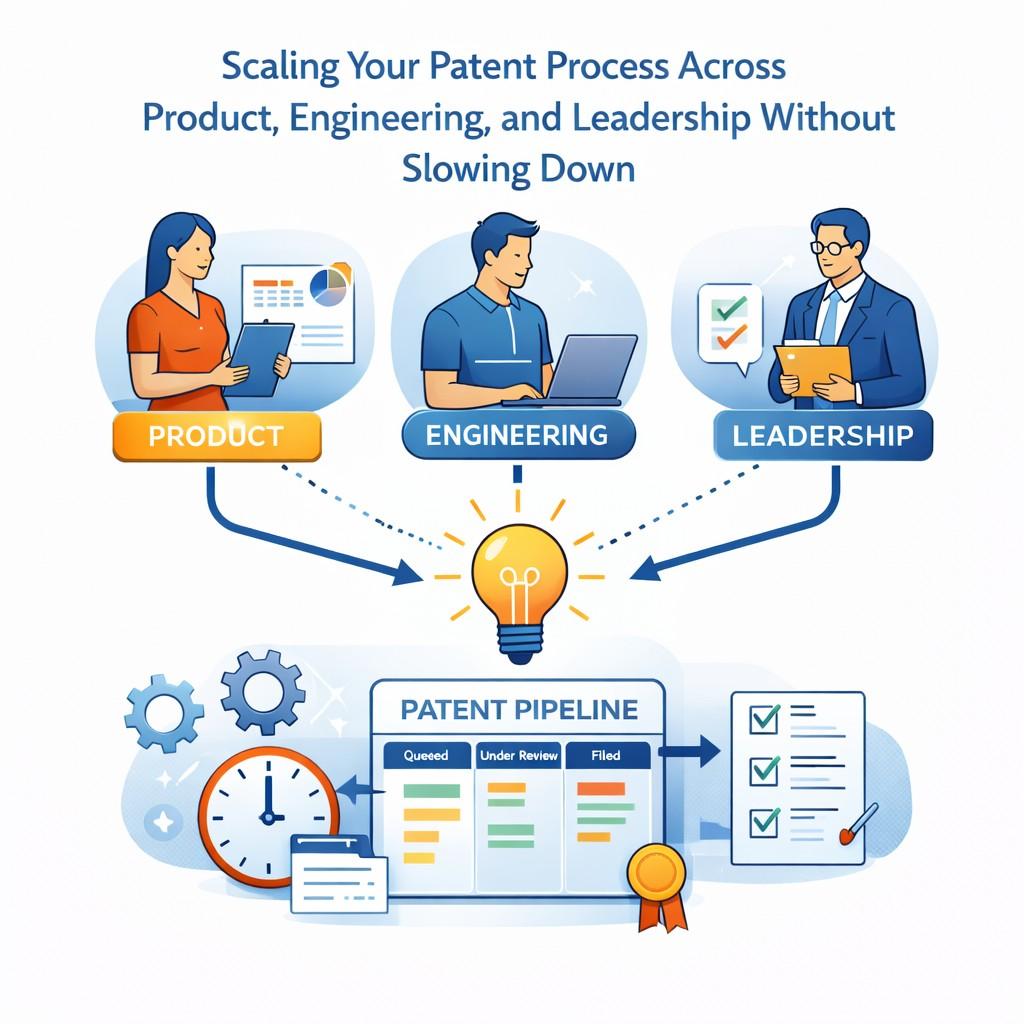
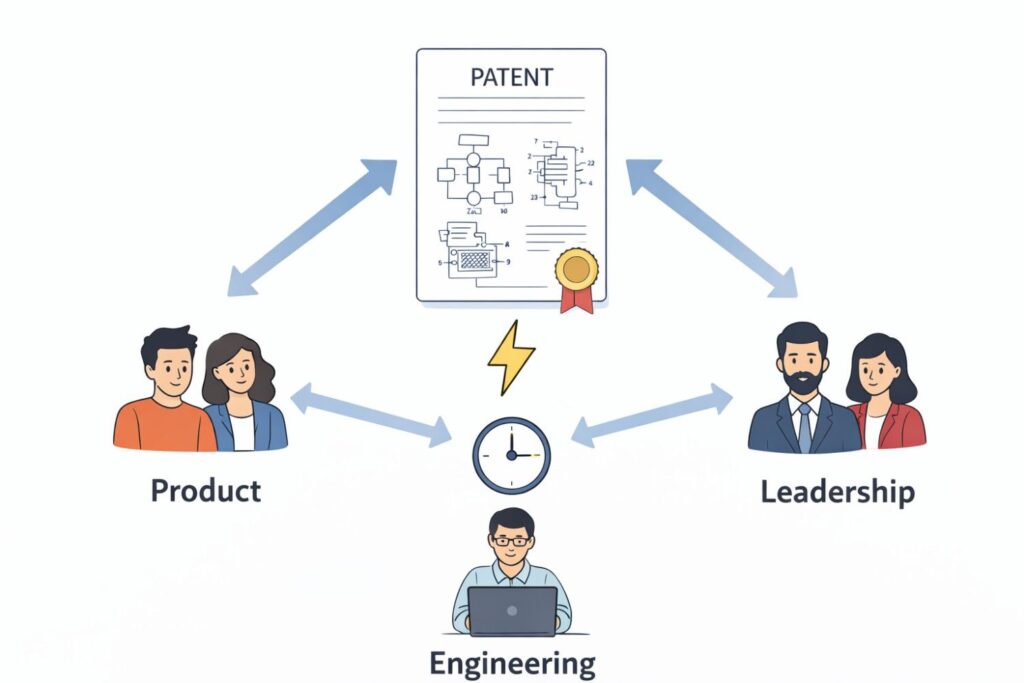
Scaling Your Patent Process Across Product, Engineering, and Leadership Without Slowing Down
It is one thing to capture a few patent ideas when your team is small. It is another thing entirely to scale that process across multiple product lines, growing engineering teams, and an expanding leadership group.
Complexity increases fast. Communication becomes layered. Priorities compete.
If you are not careful, your patent process either becomes chaotic or painfully slow. Neither is acceptable for a fast-moving company.
The real challenge is simple. How do you scale protection without slowing innovation?
The answer is not more paperwork. It is smarter structure, clear alignment, and the right infrastructure behind the scenes.
Align Patent Strategy With Company Strategy
As companies grow, product teams often move in different directions. New verticals open. Different customer segments emerge. The risk is that patent efforts become scattered.
Before scaling anything, leadership must define what areas truly matter for long-term defensibility. Which technical layers form your competitive core? Is it your model training system?
Your infrastructure orchestration? Your hardware integration? Your data pipeline design?
When this is clear, patent efforts can focus on those zones.
This clarity prevents over-filing in low-impact areas and under-filing in critical ones. It also gives product and engineering teams a clear signal about where innovation matters most from a protection standpoint.
A short quarterly alignment discussion between technical leadership and founders can keep this sharp. The conversation is not about legal detail. It is about competitive advantage.
Give Product Teams a Role in Protection
Patent processes often live only inside engineering. That is a mistake.
Product leaders understand market positioning, user impact, and competitive threats. They often see differentiation that engineers may view as routine.
As you scale, bring product managers into the intake rhythm. When defining roadmaps, include a moment to ask whether upcoming technical initiatives may create new defensible ground.
This does not turn product managers into patent experts. It simply makes them aware that protection is part of strategic planning.
When product and engineering speak the same language about differentiation, patent intake becomes proactive instead of reactive.
Build Simple Reporting That Leadership Can Understand
As filings increase, leadership needs visibility without drowning in detail.
Create a simple internal dashboard that tracks submissions, filings in progress, and granted patents. Tie each filing to the product area or technical theme it supports.
This visibility changes perception. Patents stop being abstract legal events and become strategic assets tied to growth areas.
Founders and executives should be able to answer a basic question at any time: what parts of our core technology are protected, and what parts are not yet covered?
When this clarity exists, decision-making improves.
Modern platforms make this much easier by centralizing documentation and status tracking instead of scattering information across email threads and outside firms.
If your current setup lacks visibility, it may be time to rethink the infrastructure behind your process. You can see how a more structured system works here: https://powerpatent.com/how-it-works
Prevent Process Bottlenecks as Teams Grow
Scaling introduces friction. More teams mean more submissions. More submissions mean more review work. Without structure, backlogs form.
The key is tiered review.
Not every idea needs the same level of attention immediately. Some innovations are core and urgent. Others are incremental and can wait.
Establish internal screening before formal drafting begins. This can be handled by a small technical committee or designated innovation leads. Their role is to prioritize based on strategic value and timing.
This prevents leadership and attorneys from becoming overwhelmed while still ensuring nothing important is ignored.
When prioritization becomes routine, the system scales naturally.
Maintain Speed by Standardizing Early Steps
Speed does not come from rushing. It comes from reducing variability.
If each patent submission starts from scratch with no structure, drafting will always feel slow. Instead, standardize early capture formats. Use consistent prompts. Maintain a shared template for technical descriptions.
This does not restrict creativity. It creates clarity.
When engineers know exactly what information to provide, submissions become easier to review and convert into formal filings.
Over time, this consistency dramatically reduces friction.
Platforms that combine smart templates with attorney oversight can reduce drafting time significantly because the raw material is already structured correctly.

This balance between automation and expert review is critical as you scale. Learn how this approach works here: https://powerpatent.com/how-it-works
Protect Culture as You Add Headcount
Scaling often dilutes culture. New hires may not understand the importance of intellectual property. If patent awareness is not reinforced, submission rates drop.
Include patent education in onboarding. Explain how protection supports the company’s long-term strength. Share examples of how past filings secured competitive advantage.
When engineers see patents as part of building something durable, not just as paperwork, engagement rises.
Recognition also matters. When a patent is filed or granted, acknowledge the inventors publicly. This reinforces behavior without creating unhealthy competition.
Culture is sustained through repetition and visibility.
Coordinate Across Distributed Teams
As companies expand, teams may become distributed across locations and time zones. Informal hallway conversations disappear. Without deliberate coordination, patent opportunities can be missed.
To counter this, schedule structured cross-team technical reviews focused specifically on innovation. These sessions should highlight recent breakthroughs and architectural shifts.
The purpose is not status reporting. It is knowledge sharing.
When teams hear what others are building, patterns emerge. Overlapping innovations can be combined into stronger filings. Unique approaches can be identified earlier.
Distributed scale requires intentional communication.
Keep Legal Complexity Behind the Curtain
As filings increase, legal detail grows. Deadlines, formalities, jurisdiction decisions, and compliance requirements multiply.
Engineers and product leaders should not feel this complexity.
One of the biggest scaling mistakes is exposing technical teams to too much legal administration. This creates resistance and fatigue.
The right system keeps complexity contained. Software handles tracking and document management. Experienced attorneys guide strategy quietly in the background.
From the perspective of product and engineering, the process remains simple: submit innovation, review priority, collaborate briefly, and move on.
This separation protects velocity.
PowerPatent was built around this exact principle. Founders and engineers get a clean, fast experience. Smart tools manage structure.
Real attorneys ensure strength. The heavy lifting stays behind the scenes so your team can keep building. See how that model works in practice here: https://powerpatent.com/how-it-works
Measure What Matters
As your patent process scales, measure effectiveness, not just volume.
Are filings aligned with strategic areas? Are important launches protected before public release? Are engineers participating consistently? Are review cycles fast?
Data helps refine the system.
You may find that certain teams generate high-value innovations regularly. Others may need more awareness training. You may discover that review bottlenecks occur at specific stages.
Continuous measurement allows continuous improvement.
Scaling is not a one-time event. It is an ongoing adjustment.
Keep the Process Invisible to Momentum
The ultimate goal is simple. Protection should feel natural, not disruptive.
Product teams should plan boldly. Engineers should design creatively. Leadership should make strategic bets. At the same time, innovation should be captured and protected automatically.
When your patent process reaches this stage, you gain something powerful. You move fast without leaving value behind. You scale without losing control of your intellectual property.
That is how defensibility compounds.
If your current process feels slow, fragmented, or overly dependent on outside firms that do not move at startup speed, there is a better way.
PowerPatent combines modern software with real attorney oversight to help fast-growing companies build strong, repeatable patent systems without friction.
Explore how you can scale protection without slowing down here: https://powerpatent.com/how-it-works
Wrapping It Up
Innovation moves fast. Your patent process should move with it. If you build breakthrough technology but rely on scattered emails, vague ownership, and slow outside firms to protect it, you are leaving real value on the table. Ideas slip through. Details fade. Competitors catch up. A repeatable patent intake process changes that.