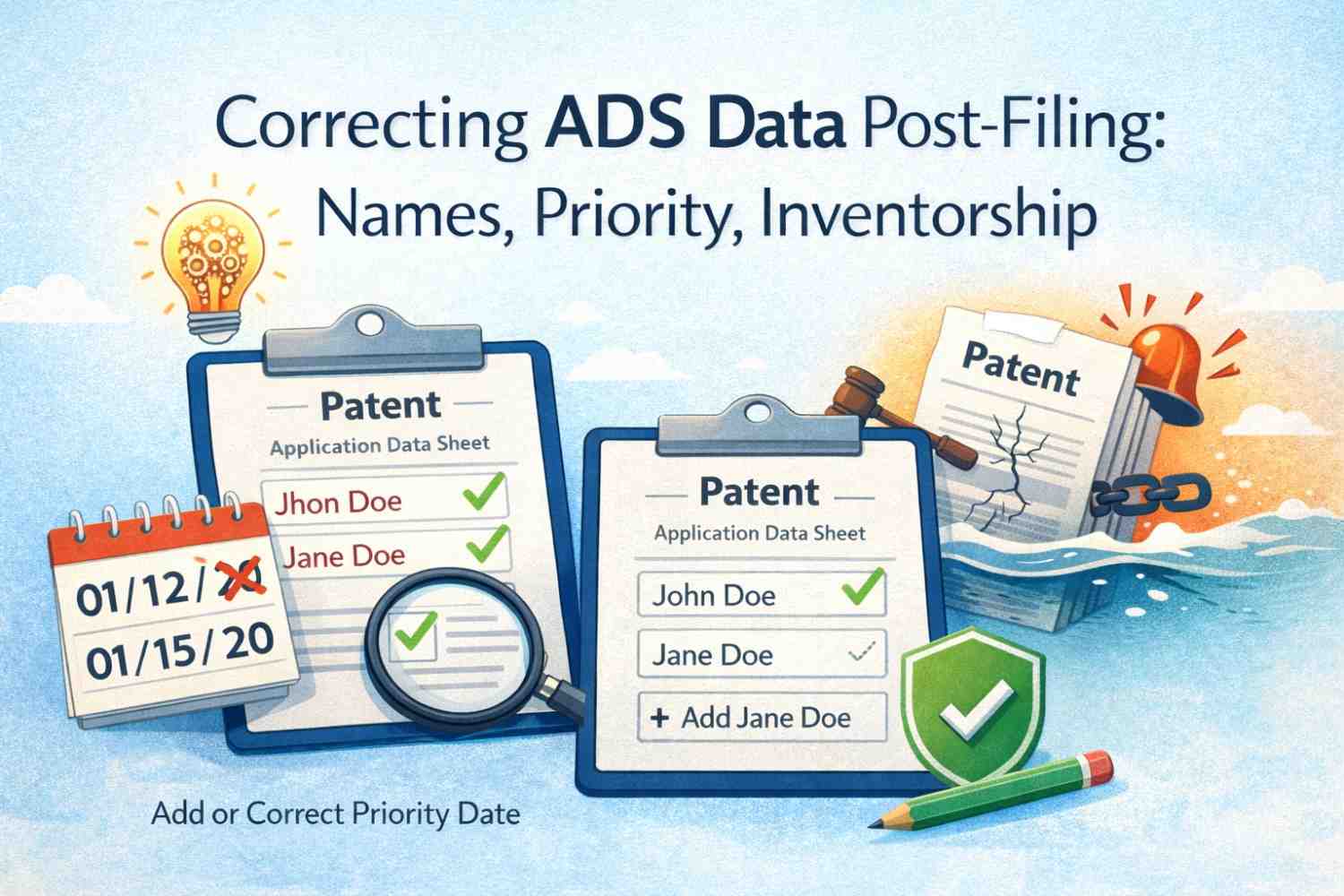
Most founders think the hard part of a patent is the invention itself, but in real life, tiny data mistakes after filing can quietly wreck an otherwise strong application. Names spelled wrong, inventors listed out of order, or priority claims missing by a single checkbox can cause delays, lost rights, or painful fixes later. This article is about one of the most misunderstood parts of patent filing: correcting ADS data after you already filed. We are going to walk through names, priority, and inventorship in plain English, explain what can be fixed, what cannot, and how smart founders stay in control without slowing down their company.
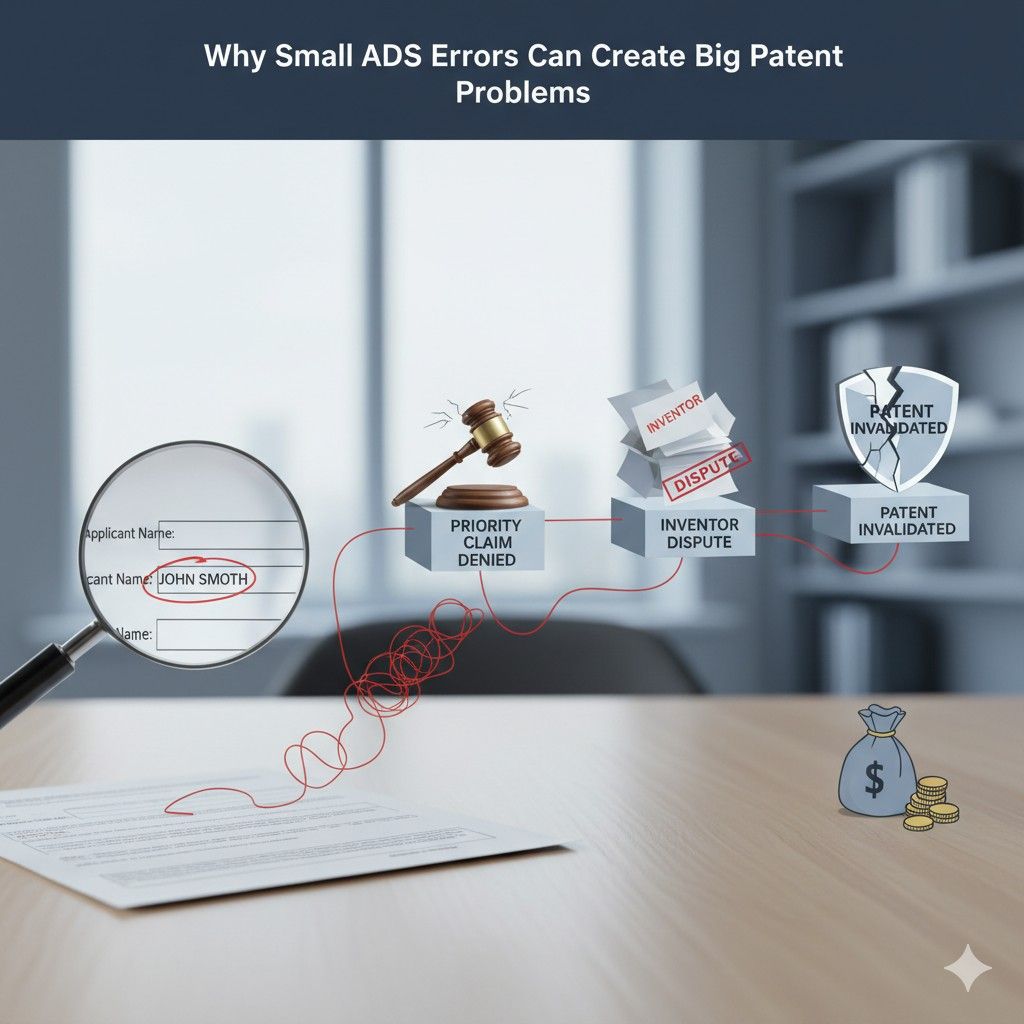
Why Small ADS Errors Can Create Big Patent Problems
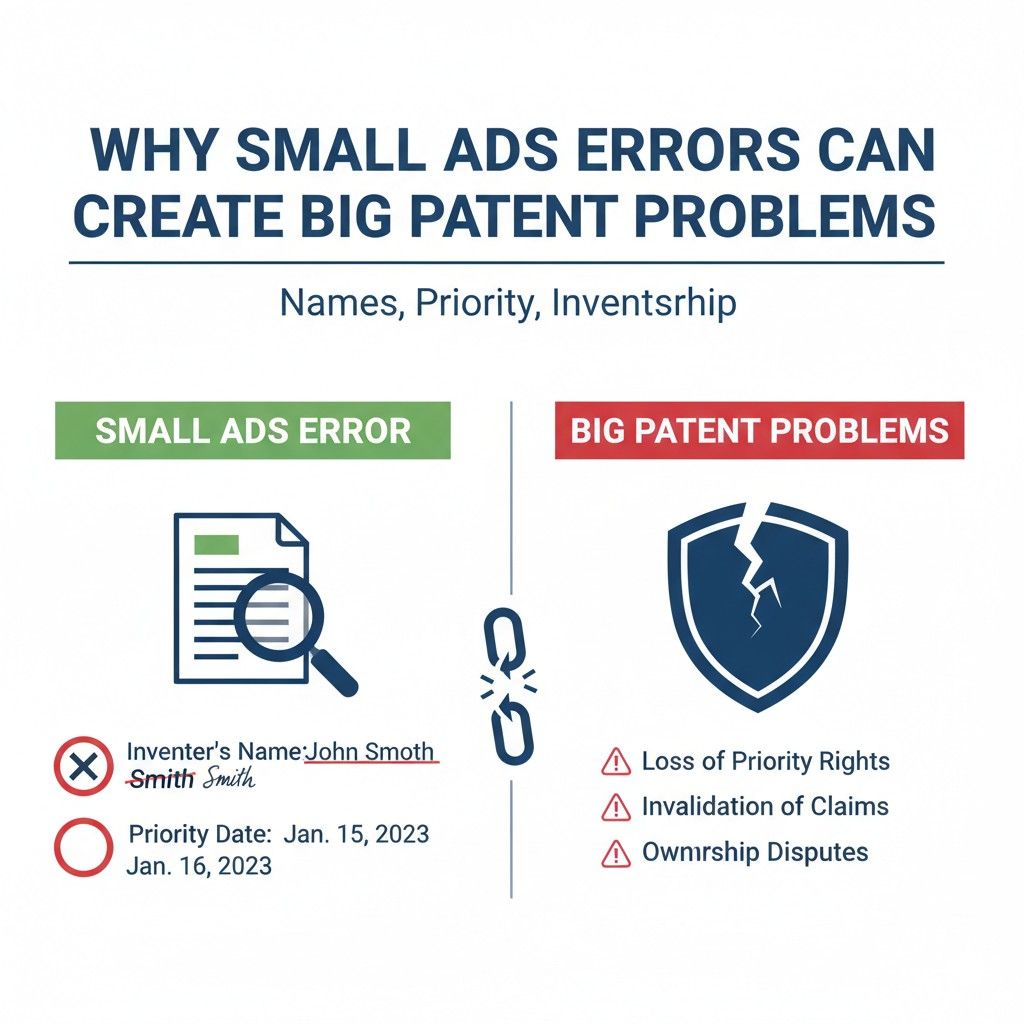
This section matters because most patent disasters do not start with bad inventions. They start with small data mistakes that feel harmless in the moment.
The Application Data Sheet, or ADS, controls who owns the patent, when the rights start, and what earlier filings you can rely on. When this data is wrong, even slightly, the system does not forgive easily.
Founders who understand this early can avoid months of delay, lost leverage, and costly fixes later.
The ADS Is the Control Panel of Your Patent
The ADS is not just a form you rush through to get a filing receipt. It is the control panel that tells the patent office who you are, what you claim, and how your application connects to earlier work.
When this panel has bad inputs, the system produces bad results.
Many startups treat the ADS like admin work. They focus on the description, the drawings, or the claims, and assume names and boxes can be fixed later. That assumption causes real damage.
The patent office uses the ADS as the source of truth. Other documents rarely override it unless corrected properly and on time.
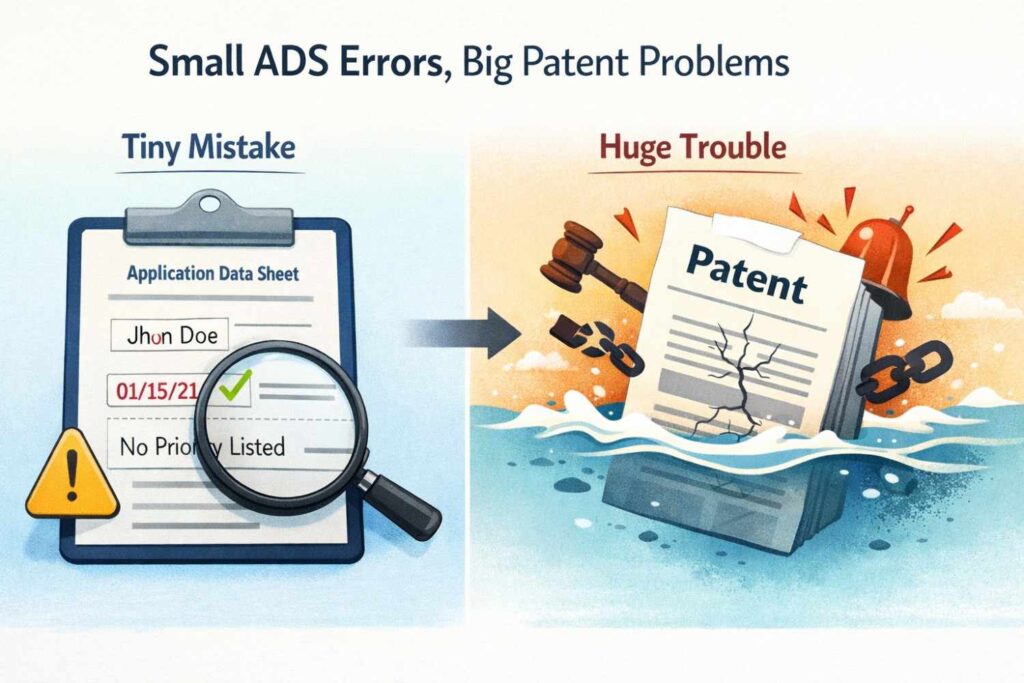
Actionable takeaway here is simple. Treat the ADS with the same care as your codebase.
Before filing, slow down just enough to verify every field. After filing, check the filing receipt line by line and compare it to your intent, not your memory.
Names Are Legal Facts, Not Labels
A name in the ADS is not a nickname or a casual identifier. It is a legal fact tied to ownership and rights.
A missing middle name, a wrong order, or a company name that does not exactly match your legal entity can cause confusion that follows the patent for years.
For businesses, this becomes a problem during fundraising or acquisition. Investors run checks.
Buyers review chains of title. A mismatch between the ADS and corporate records can raise red flags, even if the invention itself is solid.
The practical move is to align your ADS names with official records. Use the exact legal name of each inventor as shown on government ID.
Use the exact company name as registered, including punctuation and suffixes. If your company changed names recently, double check which name owns the filing.
Small Timing Errors Can Kill Priority Rights
Priority is one of the most powerful tools in patents. It lets you claim an earlier filing date, which can block competitors and protect you globally. But priority only works if it is claimed correctly and on time in the ADS.
A common mistake is assuming priority can always be added later. In reality, the window to correct priority data is limited. Miss it, and you may lose the earlier date forever. That can turn a strong patent into a weak one overnight.
Founders should treat priority claims like a countdown clock. Right after filing, review whether every earlier application you meant to claim is listed correctly. If something is missing, act fast. The longer you wait, the fewer options you have.
Inventorship Errors Create Ownership Risk
Inventorship is not about job titles or seniority. It is about who contributed to the ideas in the claims. Getting this wrong is one of the fastest ways to create legal risk.
If an inventor is left out, they may later claim ownership rights. If someone is listed who should not be there, the patent can be challenged. Both scenarios are bad for business, especially when money or partnerships are involved.
The smart approach is to decide inventorship before filing, not after. Talk through who contributed to which ideas. Document that decision. Then make sure the ADS reflects it exactly.
If the invention evolves later, update inventorship properly rather than guessing.
The Patent Office Will Not Guess Your Intent
One dangerous assumption is that the patent office will understand what you meant. It will not. Examiners and systems follow what is written, not what was intended.
If the ADS says the wrong thing, the office treats it as true until formally corrected. Emails, explanations, or later filings do not fix ADS errors unless done through the right process.
This means founders must be precise. Do not rely on common sense or context to save you. If something matters, make sure it is explicitly correct in the ADS and confirmed in the official records.
Delays Compound Faster Than You Expect
An ADS error often triggers office notices, processing delays, or requirements for correction. Each delay pushes your timeline back. For startups, time is leverage.
A delayed patent can affect fundraising, partnerships, and launch plans.
What feels like a minor fix can add months if handled slowly or incorrectly. During that time, competitors keep building, and uncertainty hangs over your IP.
The best defense is early detection. Make it a habit to review USPTO communications as soon as they arrive. Many issues can be fixed quickly if caught early, but become painful if ignored.
Fixing Later Is Always Harder Than Fixing Early
While many ADS errors can be corrected after filing, the process is rarely smooth. Some fixes require statements, fees, or attorney involvement. Others are only allowed under narrow conditions.
From a business view, prevention is cheaper than repair. Spending a bit more care up front saves real money and stress later. This is where tools and workflows matter.
PowerPatent was designed around this exact pain point. By combining software checks with real attorney review, it helps founders catch ADS issues before they turn into business problems.
You move fast without flying blind. You can see how that works at https://powerpatent.com/how-it-works.
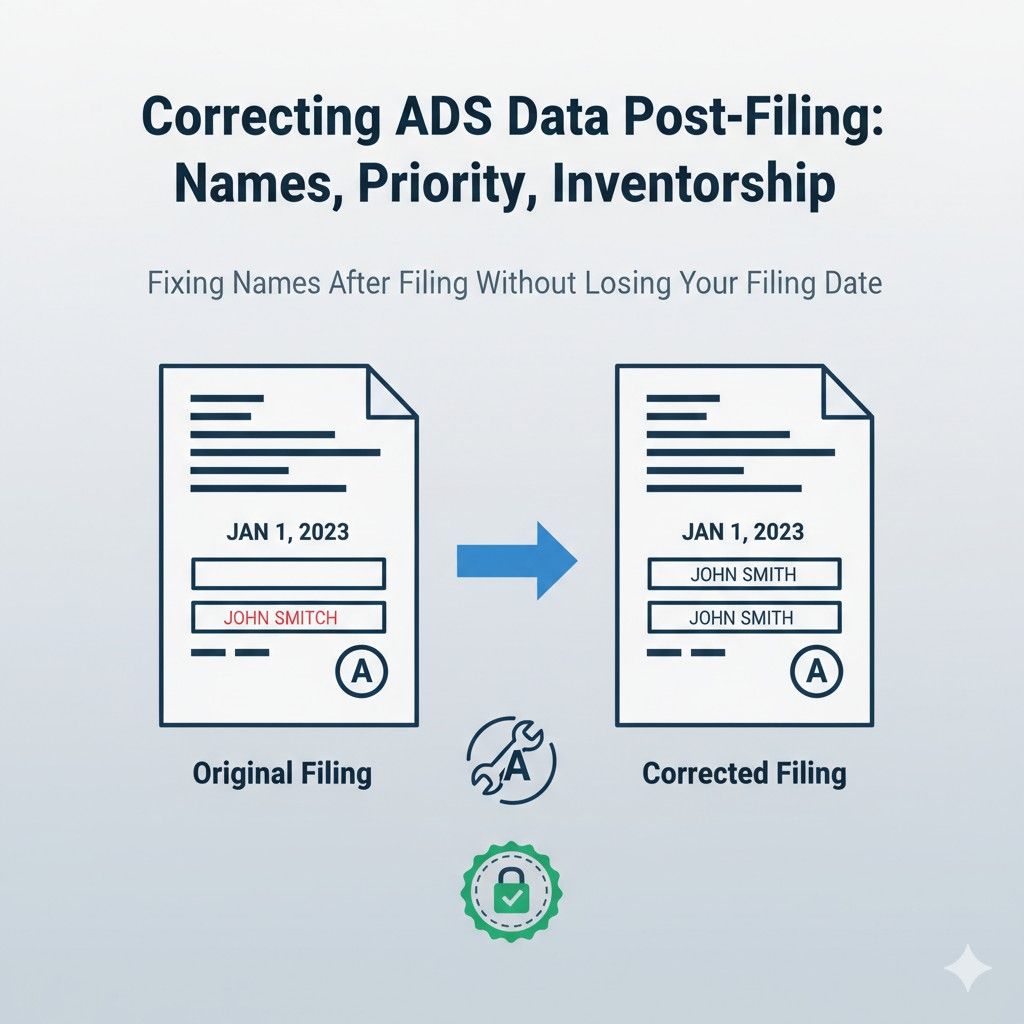
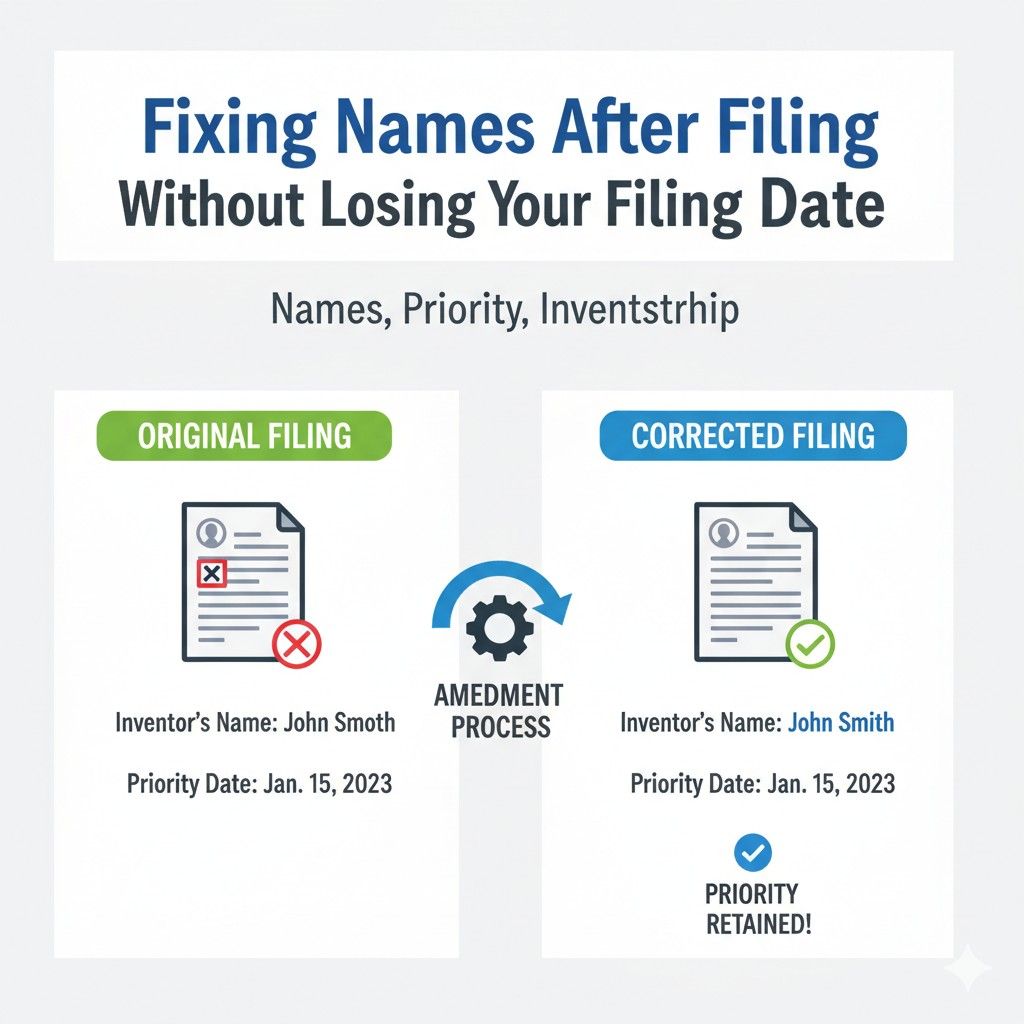
Fixing Names After Filing Without Losing Your Filing Date
Getting names right sounds simple, yet it is one of the most common places where strong patent applications quietly break.
This section goes deep into how name issues actually happen, why they matter more than founders expect, and how to fix them without putting your filing date at risk.
For growing companies, this is not paperwork. This is about ownership, leverage, and long-term control of your technology.
Why Name Errors Happen Even in Smart Teams
Most name errors do not come from carelessness. They come from speed. Startups move fast, file fast, and assume details can be cleaned up later.
Sometimes the inventor types their name the way they use it on Slack. Sometimes a company uses a short name instead of the full legal entity. Sometimes the filing is done before incorporation is finalized.
These choices feel harmless in the moment. The problem is that the patent system treats names as fixed facts, not flexible labels. Once filed, those facts flow into public records, databases, and later legal reviews.
A strong habit here is to slow down for names even when everything else is moving fast. Five extra minutes at filing can save months later.
Individual Inventor Names Are Not Flexible Identifiers
An inventor’s name must match their legal identity. This is not about style or preference. It is about traceability. Patent rights follow people and entities, and the system needs a clear, consistent identity.
Issues show up when middle names are missing, initials are used inconsistently, or names are spelled differently across filings.
These differences can create confusion when proving that the same person is tied to multiple inventions.
If you discover this after filing, correction is often possible, but it must be done the right way. The key is acting early and using formal correction paths rather than informal explanations.
Company Names Must Match Legal Reality
Company naming issues are even more dangerous. If the ADS lists the wrong company name as the applicant, ownership can become unclear. This matters a lot during fundraising or acquisition.
For example, using a brand name instead of a legal entity name can cause problems. So can filing under a parent company when the invention was actually owned by a subsidiary.
After filing, changing an applicant name is not just a spelling fix. It can raise questions about assignment and ownership. That is why founders should align the ADS with incorporation documents, not pitch decks or websites.
When a Name Fix Is Simple and When It Is Not
Not all name corrections are equal. Some are treated as clerical errors. Others are treated as substantive changes. The difference depends on whether the correction changes the identity of the person or entity, or simply clarifies it.
A small spelling correction is usually straightforward. Replacing one legal entity with another is not. The latter can trigger additional requirements and scrutiny.
The business lesson is to classify the problem correctly before acting. Rushing a correction without understanding its type can create more trouble than waiting a short time to do it right.
How Timing Protects Your Filing Date
Founders worry that fixing names will cost them their filing date. In many cases, that fear is avoidable. The patent system allows certain corrections without affecting the original date, but timing is critical.
The earlier you act, the more options you have. Delays shrink your flexibility. Some corrections are only allowed within specific windows, especially before examination begins.
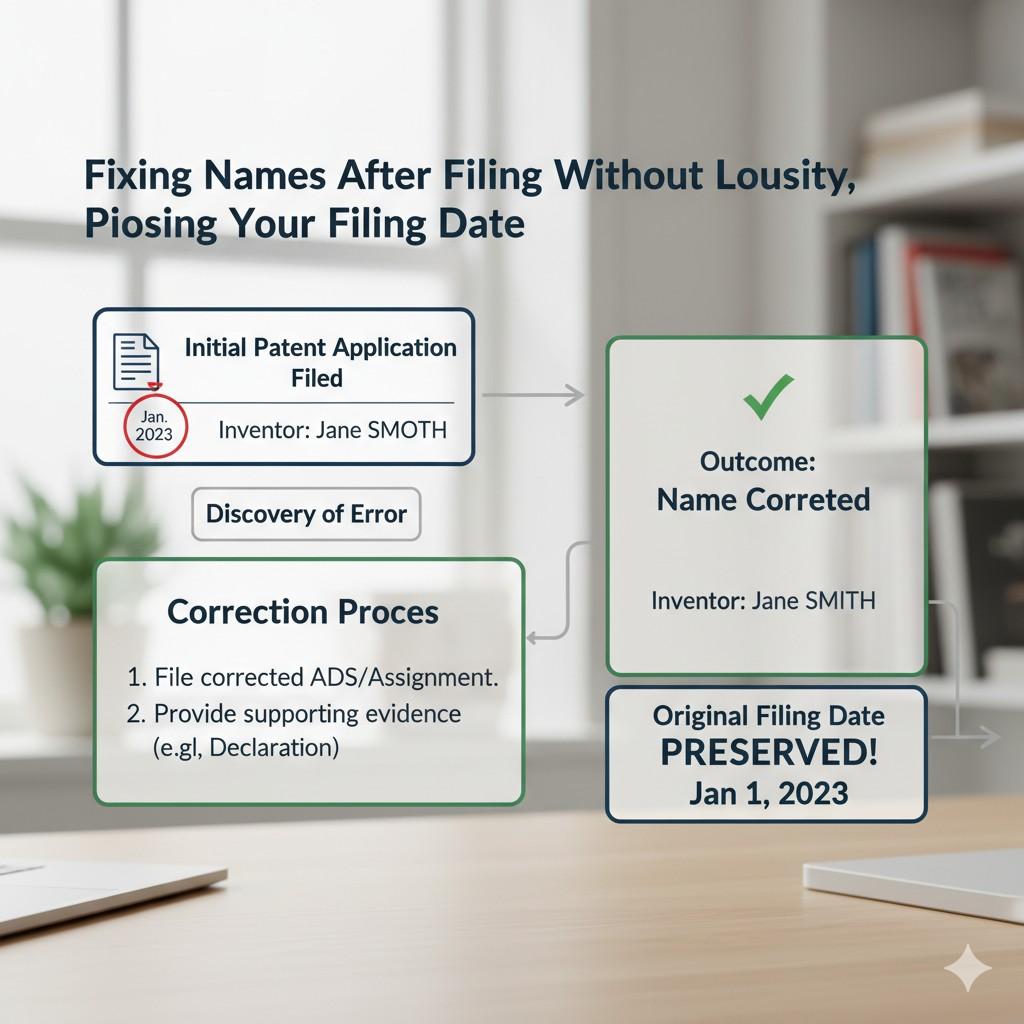
This is why post-filing review matters. Treat the filing receipt as a checklist, not a trophy. Compare every name on it to what you intended. If something is off, move immediately.
Why Informal Fixes Do Not Work
Sending an email or adding a note in a later document does not fix a name error. The patent office relies on formal submissions. Anything outside that process is ignored.
This catches many founders off guard. They assume clarity equals correction. It does not. Only specific filings update the official record.
Understanding this saves time and frustration. When you see a name issue, focus on the formal fix path right away instead of trying to explain it away.
The Hidden Cost of Waiting Too Long
Waiting to fix name issues often feels strategic. Founders think they will handle it when things slow down. In reality, waiting increases cost and risk.
Later corrections may require legal statements, fees, or attorney involvement that could have been avoided earlier. Worse, the issue may surface during due diligence, when you have less control over timing.
Smart teams clean this up early, while stakes are lower and options are wider.
Building a Process That Prevents Name Problems
The best fix is prevention. This means building a repeatable process for checking names before and after filing. It also means using tools that flag inconsistencies automatically.
PowerPatent was built with this exact problem in mind. It guides founders through name entry using real data checks and includes attorney review so issues are caught before they harden into risk.
You can see how that works at https://powerpatent.com/how-it-works.
Turning Name Accuracy Into a Business Advantage
When names are clean and consistent, everything else moves faster. Assignments are simple. Investors feel confident. Acquirers see fewer risks. Your IP looks professional and reliable.
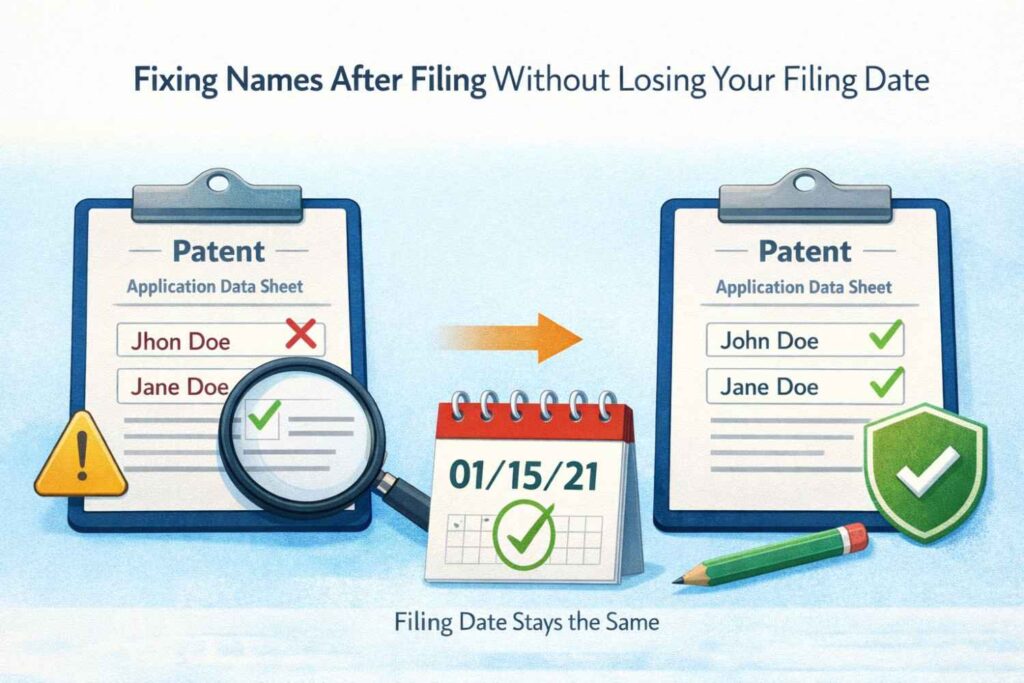
This is not about perfection. It is about control. Founders who treat name accuracy as part of strategy, not admin, gain leverage without slowing down.
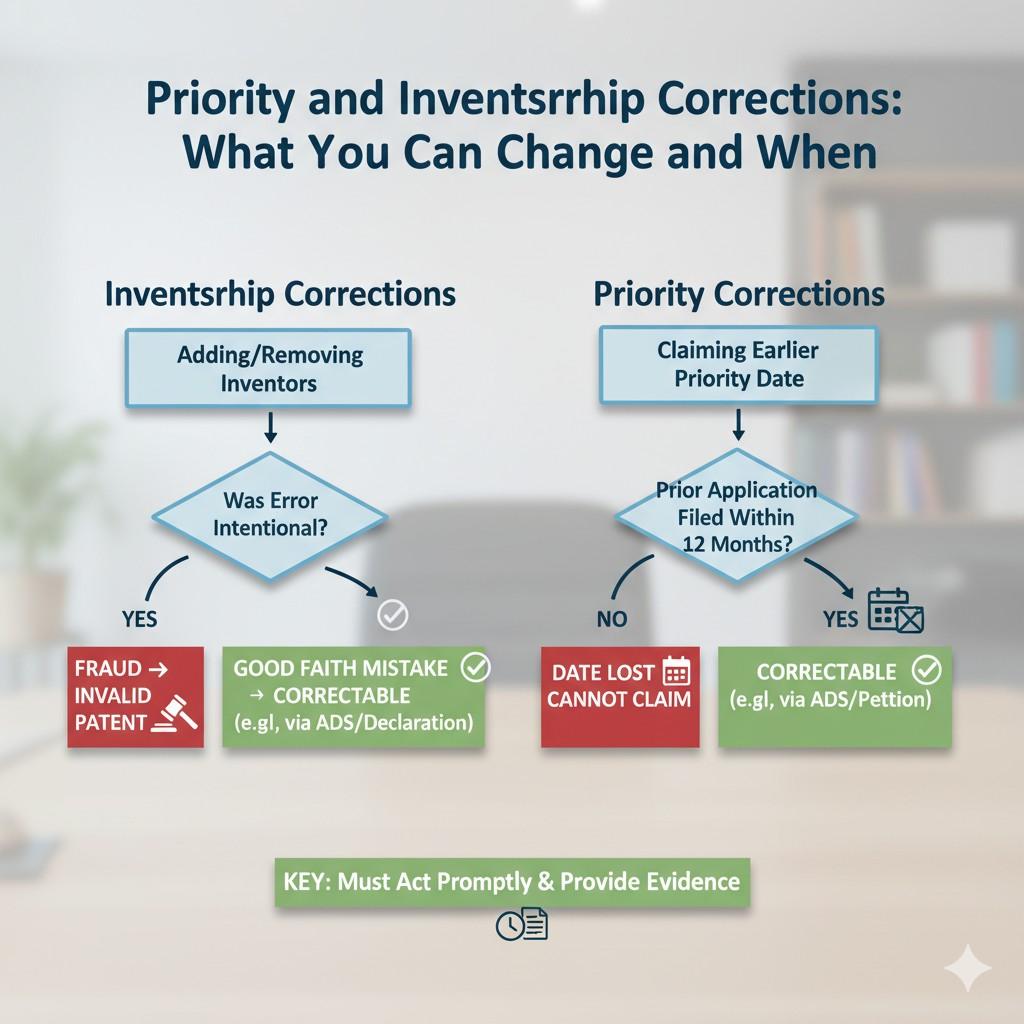
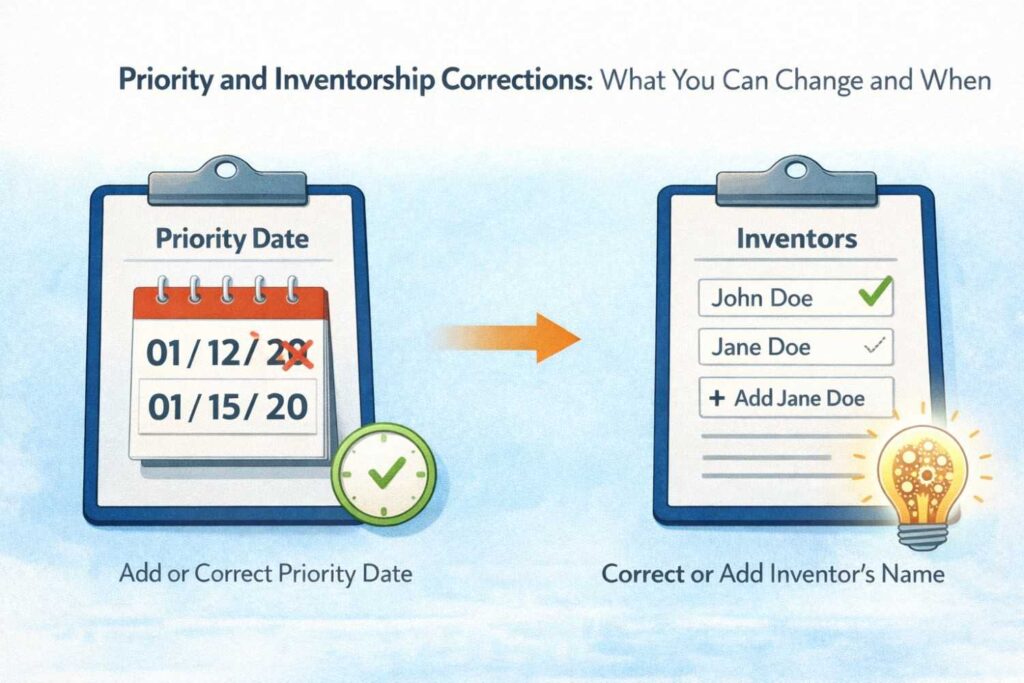
Priority and Inventorship Corrections: What You Can Change and When
This is the section where real money and real leverage are on the line. Priority and inventorship are not just technical ideas inside the patent office. They directly affect how strong your patent is, who controls it, and whether it survives challenges later.
Founders often learn about these topics too late, after a mistake has already limited their options.
This section explains how these errors happen, what can actually be corrected after filing, and how smart companies protect themselves early.
Why Priority Is the Backbone of Patent Power
Priority decides who was first. In patents, being first is everything. It sets the date that blocks competitors and protects your work from later disclosures, launches, or publications.
When priority is claimed correctly, it gives your company a shield. When it is wrong or missing, that shield has holes. The invention may still be patentable, but it becomes easier to attack and easier to design around.
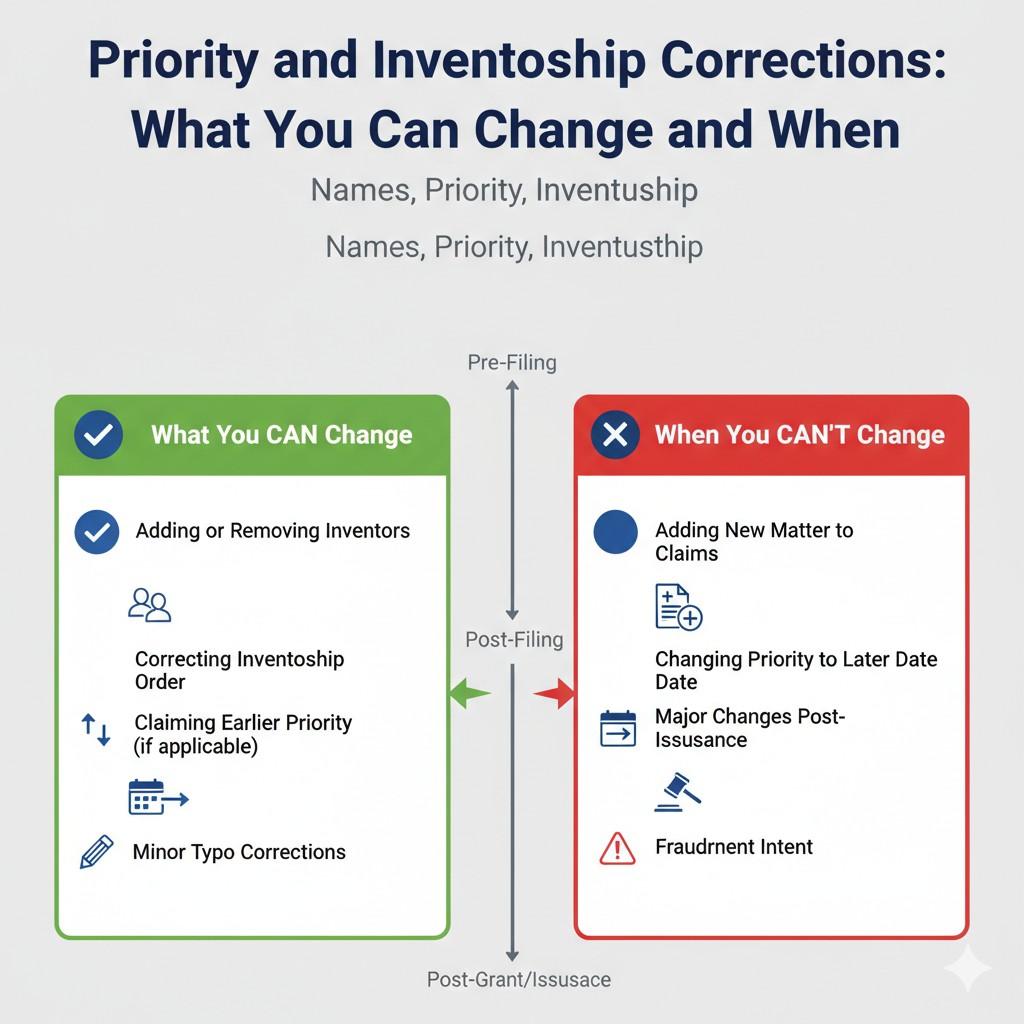
Many founders treat priority as a background detail. In reality, it is one of the most strategic parts of the filing.
How Priority Errors Usually Happen
Priority mistakes usually come from speed and assumptions. A startup files a provisional application, then months later files a full application and assumes the connection is automatic. It is not.
Sometimes the earlier filing is listed but has a small data error. Sometimes it is not listed at all. Sometimes the wrong country or application number is used. Each of these can weaken or break the priority claim.
The danger is that these errors often go unnoticed until much later, when fixing them is harder or impossible.
The Myth That Priority Can Always Be Fixed Later
One of the most harmful myths is that priority can always be corrected. This is not true. The patent system allows some corrections, but only within strict rules and time limits.
If you miss those limits, the earlier filing date may be lost forever. That can expose your invention to prior art that would not have mattered otherwise.
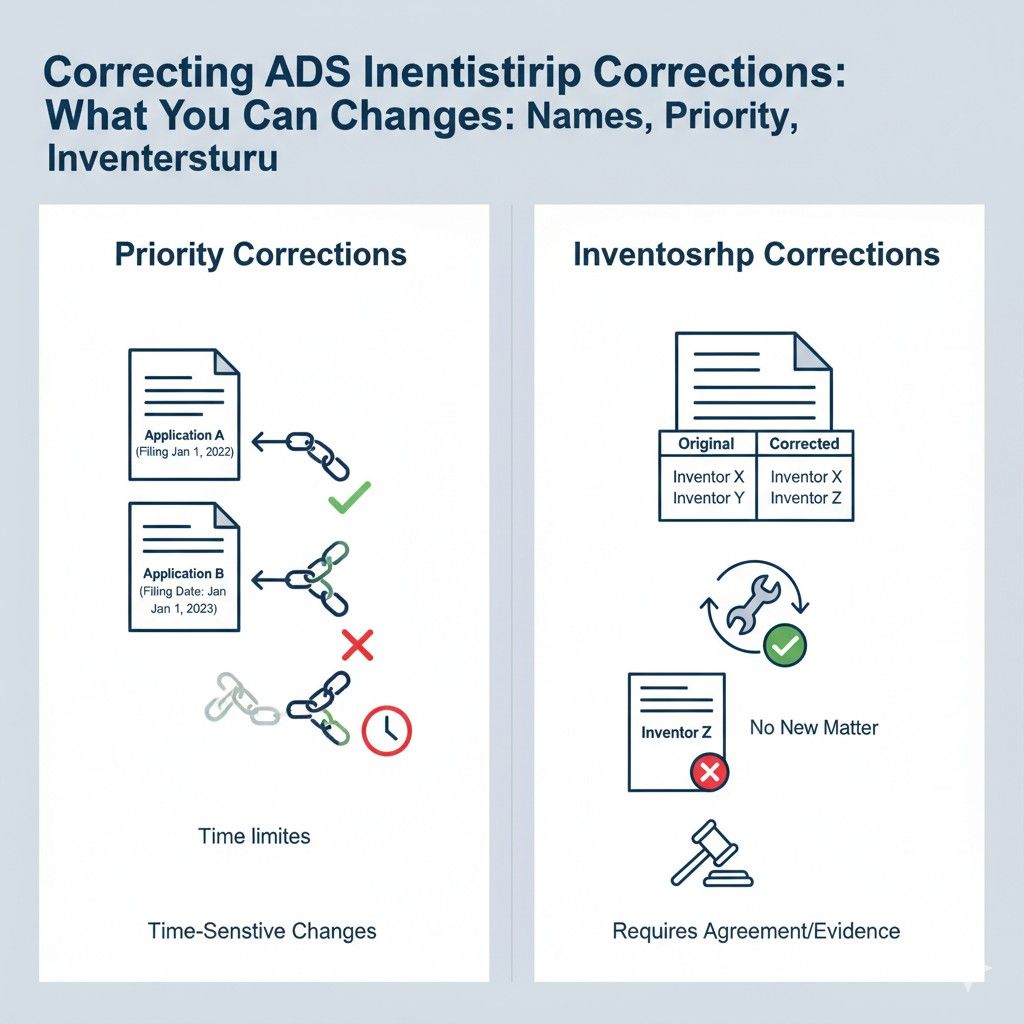
For businesses, this means priority should be treated like a deadline, not a suggestion. The moment you file, you should confirm that every intended priority claim is present and accurate.
What Happens When Priority Is Lost
Losing priority does not always kill a patent, but it almost always weakens it. Suddenly, public disclosures, demos, or investor decks that happened after your first filing but before your second can be used against you.
Competitors who filed later may now be ahead. International rights may be gone. Investors may see increased risk.
This is why priority is not just a legal concept. It is a competitive one.
How Timing Controls Your Options
Timing controls almost everything with priority corrections. The earlier an error is caught, the simpler the fix. Early corrections may be treated as clerical. Late corrections often require formal petitions and explanations.
Once examination starts, the window narrows. Once certain deadlines pass, options disappear.
The practical move is to build a habit of immediate post-filing review. Do not assume success just because you received a filing receipt. Read it closely and verify every priority reference against your intent.
Inventorship Is About Ideas, Not Effort
Inventorship creates a different kind of risk. It is not about who worked hardest or who wrote the most code. It is about who contributed to the ideas that ended up in the claims.
This is deeply misunderstood in startups. Managers, advisors, or early contributors are sometimes listed out of caution. True inventors are sometimes left out because their role feels small.
Both mistakes create problems.
Why Incorrect Inventorship Is Dangerous
Incorrect inventorship can invalidate a patent or make ownership unclear. If a true inventor is missing, they may later assert rights. If a non-inventor is listed, the patent can be challenged.
From a business view, this creates uncertainty. Uncertainty kills deals. Investors and buyers want clean ownership. Inventorship errors introduce doubt.
Unlike some ADS issues, inventorship mistakes can be fatal if not corrected properly.
How Inventorship Changes Over Time
Inventorship is tied to the claims, not the idea in your head. As claims evolve during drafting and examination, inventorship can change.
This is why inventorship should not be treated as a one-time decision. It should be reviewed whenever claims change in a meaningful way.
Founders who lock inventorship too early and never revisit it take on unnecessary risk.
Correcting Inventorship After Filing
Inventorship can often be corrected after filing, but only if done carefully. The patent office expects formal statements and confirmations from all parties involved.
This process can be smooth or painful depending on how early it is done and how clean the facts are. Delays increase friction. Disputes make things worse.
The key insight is that inventorship corrections are normal, but ignoring inventorship is dangerous.
The Business Cost of Getting This Wrong
Priority and inventorship errors tend to surface at the worst possible time. During fundraising. During acquisition. During enforcement.
At that stage, fixes are slower, more expensive, and sometimes impossible. What could have been a simple correction becomes a negotiation point or a deal risk.
Smart founders handle these issues when stakes are lower and control is higher.
How Strong Systems Reduce These Risks
The best companies do not rely on memory or spreadsheets for this. They use systems that guide decisions and flag risks early.
PowerPatent was built for exactly this reason. It helps founders capture priority correctly, revisit inventorship as claims evolve, and catch issues before they turn into business problems.
All of this happens with real attorney oversight, so speed does not come at the cost of accuracy. You can see how it works at https://powerpatent.com/how-it-works.
Turning Priority and Inventorship Into Strategy
When handled well, priority and inventorship become strengths. Your filing dates are solid. Your ownership is clean. Your patents inspire confidence.
This is not about perfection. It is about intention and timing. Founders who treat these topics as strategy, not admin, protect their future without slowing down their present.
Wrapping It Up
By the time a patent application is filed, most founders feel relief. The idea is protected. The date is locked. It feels like the risky part is over. In reality, filing is not the finish line. It is the moment where details start to matter even more. The Application Data Sheet quietly controls ownership, timing, and rights. Names decide who owns the invention. Priority decides how strong your protection really is. Inventorship decides whether your patent stands firm or cracks under pressure. None of these feel exciting, but all of them shape your future leverage.