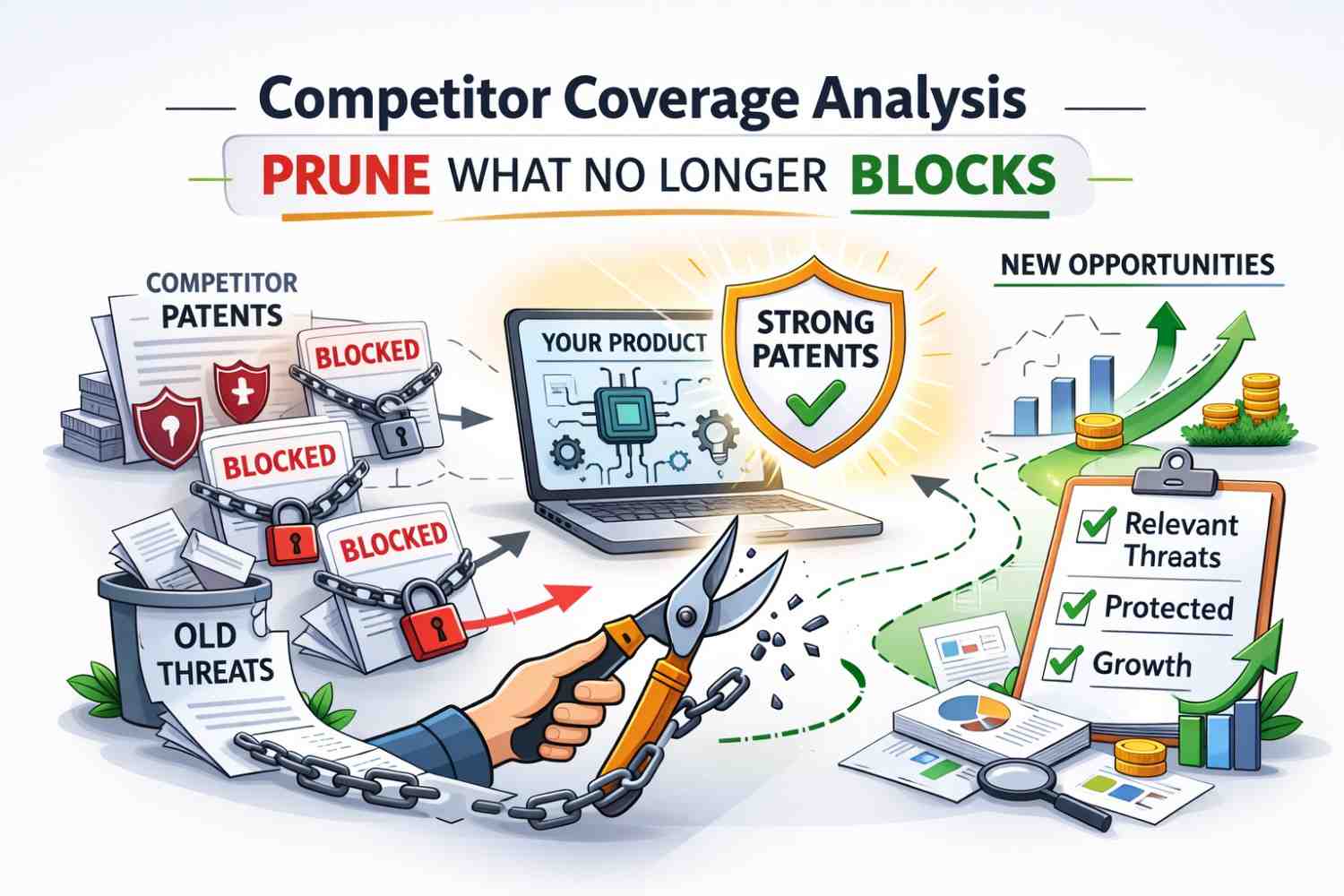
Most startups don’t lose because they build the wrong thing. They lose because they protect the wrong thing. If you are building real tech, you cannot afford to guess what your competitors have locked down. You also cannot afford to waste time protecting ideas that no longer matter. That is where competitor coverage analysis comes in. It helps you see what is actually blocking you, what is not, and what you can safely prune. This is not about fear. It is about clarity. It is about knowing where you stand and making smart moves before someone else does. In this guide, I will show you how to look at competitor patents the right way, how to decide what still blocks you, and how to cut what no longer matters. And if you want help turning that clarity into strong protection of your own, you can see how PowerPatent works here: https://powerpatent.com/how-it-works
What Competitor Coverage Really Means (And Why Most Founders Get It Wrong)
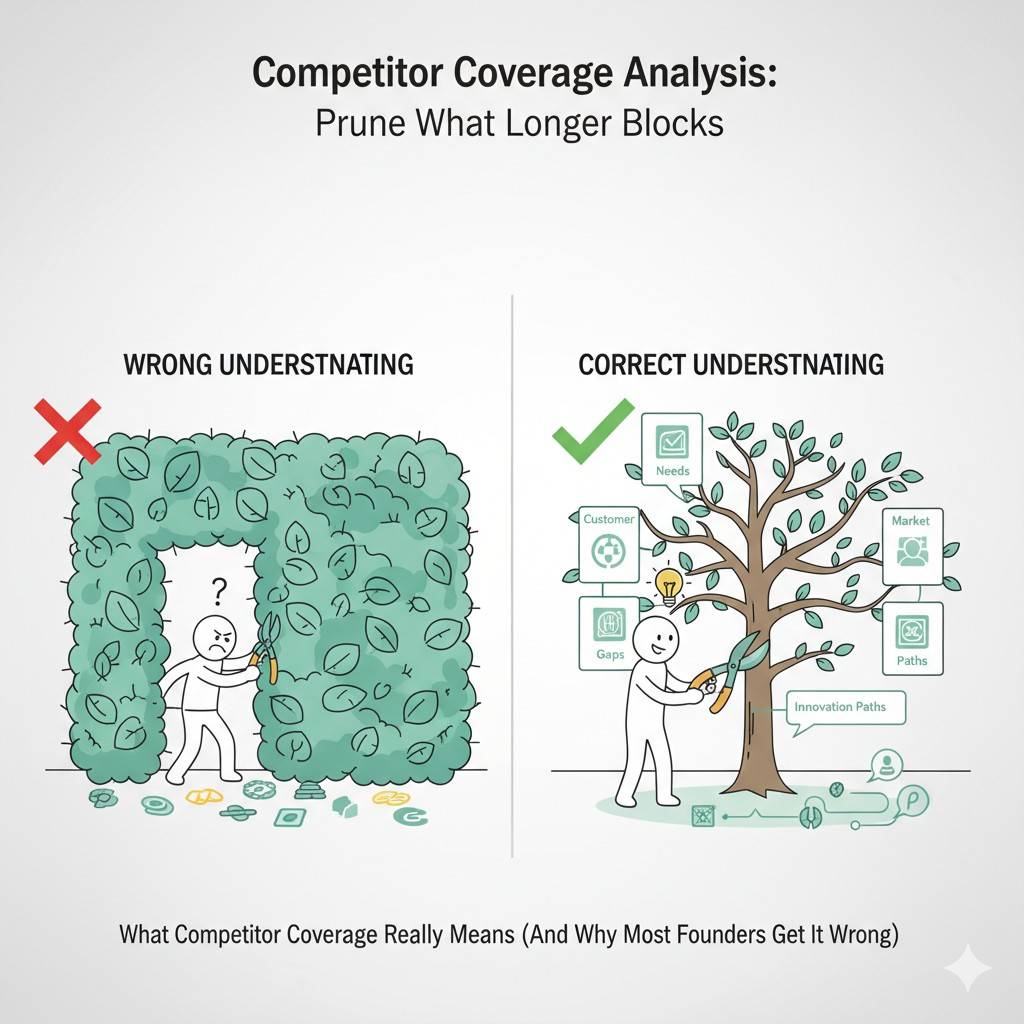
Most founders think competitor coverage means reading a few patents and checking if their product sounds similar. That is not coverage analysis. That is surface scanning.
Real competitor coverage means understanding where someone else has legal control over a solution space, how wide that control is, and whether your current or future product paths fall inside that space.
This is not about copying or avoiding ideas. It is about seeing the invisible fences in your market.
If you do not map those fences correctly, you will either build in fear when you do not need to, or move forward with confidence when you should not.
Coverage Is About Claims, Not Concepts
Many founders read patent summaries or abstracts and panic. They see a familiar phrase and assume they are blocked. That reaction is common and almost always wrong.
A patent does not protect a general idea. It protects very specific claims. The claims are the true boundary lines. They define what the patent owner can actually stop others from doing.
If your product does not meet every part of at least one claim, you are not blocked.
The mistake most teams make is reacting to broad language without studying the structure of the claims. For example, a competitor might claim a system that uses a specific sequence of steps or a certain architecture.
If your system works differently, even if the outcome is similar, you may not fall inside that claim.
The actionable move here is simple. When reviewing a competitor patent, rewrite the main claim in plain English. Break it into parts. Then compare each part to your system.
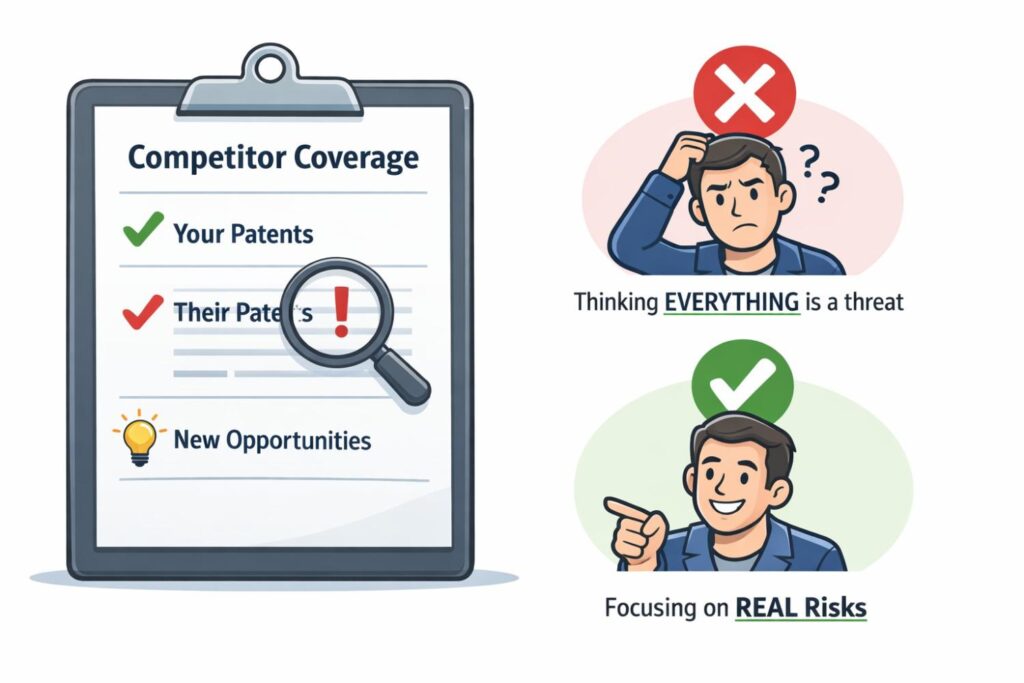
Do not ask, “Is this similar?” Ask, “Do we do each required part in the same way?” That shift alone can save months of fear-based redesign.
Broad Does Not Always Mean Dangerous
Another common mistake is assuming that longer claims mean stronger protection. Founders see a wall of text and assume it blocks everything.
In reality, long claims often include many required elements. The more elements required, the easier it is to design around them. If even one required element is missing from your system, you may be outside the coverage.
True competitor coverage analysis looks at how narrow or wide the claims really are. A short claim with fewer required elements can sometimes be more powerful than a long, detailed one.
A strategic move here is to look for the independent claims first. These are the top-level claims that do not depend on others. They define the broadest protection.
If your product clearly avoids key elements in those independent claims, the risk may be much lower than you think.
This is where real attorney oversight matters. Software can surface patents. AI can summarize them. But understanding how wide a claim truly stretches requires experience.
That is why at PowerPatent, smart software works alongside real patent attorneys who review and guide the analysis. You get speed without guessing.
If you want to see how that works in practice, you can explore it here: https://powerpatent.com/how-it-works
Coverage Is About Product Direction, Not Just Today’s Build
Most founders only check competitor patents against what they have already built. That is short-term thinking.
Competitor coverage should be tested against your roadmap. Where are you going in six months? In two years? If you pivot slightly, will you enter a protected zone?
This is where many teams get blindsided. They are safe today. Then they add a feature that seems small. Suddenly, they overlap with a competitor’s claim.
A smarter approach is to run coverage analysis against your planned features before you build them.
Map your roadmap to key competitor claim elements. If you see potential overlap, you can design around it early when changes are cheap and easy.
You do not want to discover a problem after you ship and gain traction. By then, leverage shifts away from you.
The Illusion of “We Are Too Small to Matter”
Another mistake is assuming competitors will ignore you because you are small. That is not how protection works.
Large companies often monitor markets for growth signals. If your product starts gaining attention, you become visible. If your solution overlaps with a claim they care about, size will not protect you.
Coverage analysis is not just about avoiding lawsuits. It is about negotiation power. If you understand where you stand, you can make confident decisions. If you know you are clearly outside their claims, you can scale without hesitation.
If you are close, you can adjust early.
The actionable step here is to treat coverage as part of your growth planning. Every major release, funding round, or expansion into a new vertical should trigger a fresh look at competitor claims.
This keeps you ahead instead of reacting under pressure.
Competitor Coverage Is Also About Offensive Strategy
Founders often think competitor coverage analysis is defensive. In reality, it is also offensive.
When you deeply understand what your competitors have claimed, you see the gaps. You see what they did not protect. Those gaps are opportunities.
If a competitor’s claims focus on one method, but ignore another approach to the same problem, that is a space you can own. You can file patents around those open paths and create your own fences.
This is where many startups miss a huge advantage. They look at competitor patents and feel blocked. Instead, you should ask, “What did they leave open?” That question turns fear into leverage.
At PowerPatent, this is a core part of the process. We help founders not only avoid what is taken, but identify what can be claimed in a way that builds real defensive value. It is not just about filing something. It is about filing what matters.
You can see how that blend of AI speed and attorney insight works here: https://powerpatent.com/how-it-works
Most Founders Confuse Coverage With Search
A quick search on a patent database is not coverage analysis. It is a starting point at best.
Coverage analysis requires interpretation. It requires reading claims carefully, understanding how courts might read them, and evaluating technical differences.
Many teams outsource this entirely and receive a thick report they barely read. Others skip it because they think it is too complex or too expensive.
There is a better path. Use smart tools to surface relevant patents quickly. Then have real legal expertise guide what actually matters. The goal is not paperwork. The goal is strategic clarity.
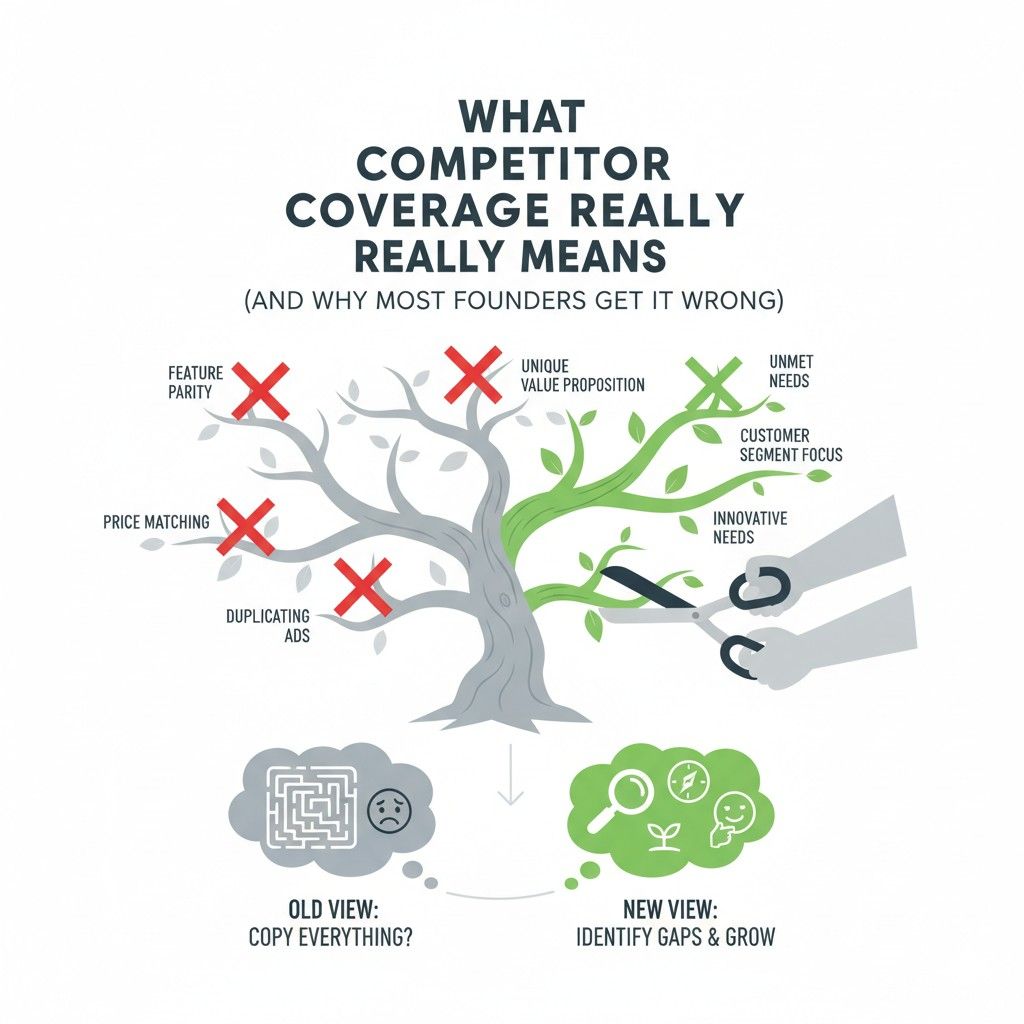
When you understand competitor coverage properly, you make better product decisions. You design smarter. You file stronger patents of your own. And you stop wasting energy worrying about threats that are not real.
Competitor coverage analysis is not about fear or bureaucracy. It is about pruning what no longer blocks you and focusing on what truly does.
How to Spot What Actually Blocks Your Product
Most teams either overreact to competitor patents or ignore them. Both reactions are dangerous. The real skill is learning how to see what truly blocks you and what only looks scary on paper.
This section is about precision. Not fear. Not guesswork. You need a clean way to test whether your product walks into someone else’s protected space.
When you do this right, you stop wasting energy redesigning safe features. You also stop walking blindly into risk.
Let’s break down how to do that in a way that is practical and usable for a fast-moving startup.
Start With Your Product, Not Their Patent
Most founders begin by reading a competitor patent and asking, “Are we similar?” That is backward. You start with your own system.
Write down how your product actually works at a technical level. Not the marketing version. Not the pitch deck version. The real architecture. The flow of data. The sequence of steps. The core logic.
Once you have that clear, then compare it to competitor claims.
If you start from their patent, your brain will look for overlap. If you start from your own design, you stay grounded in facts. This keeps you from stretching similarities that are not real.
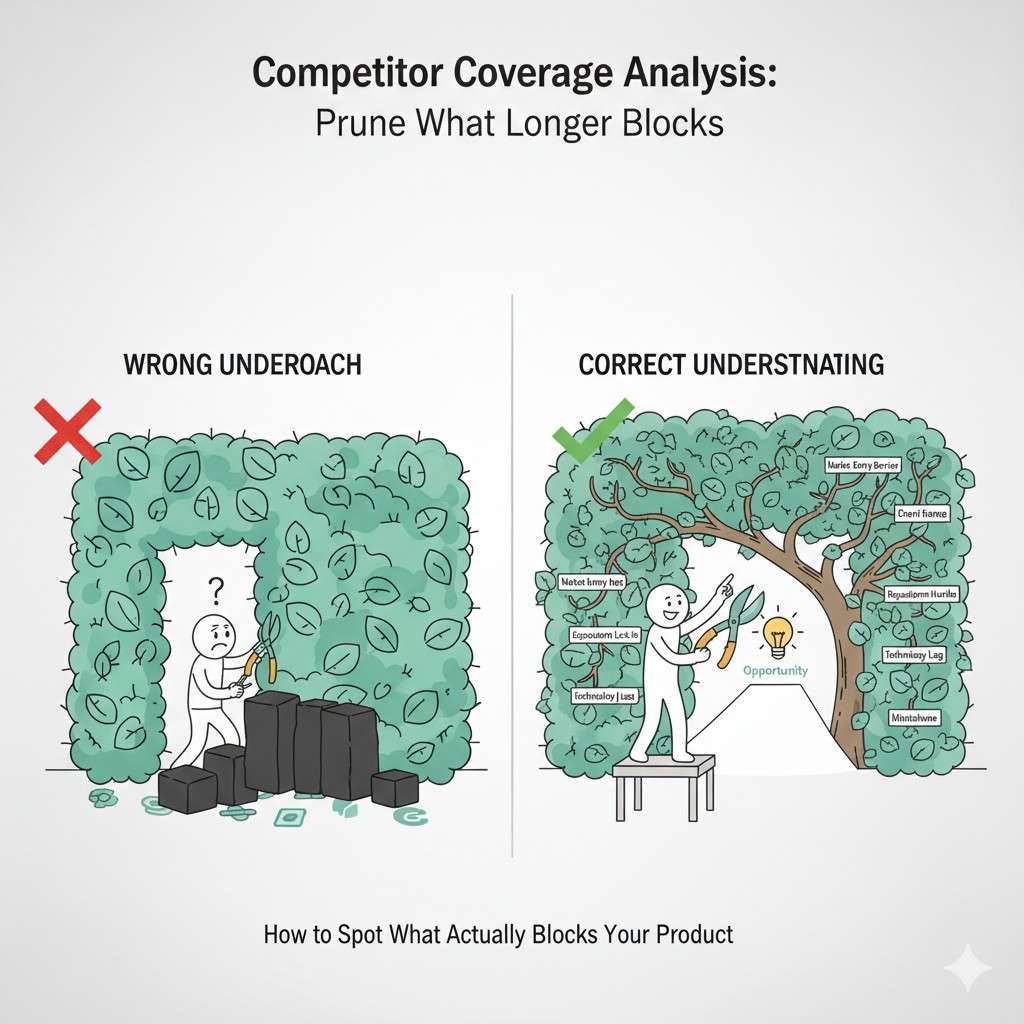
A simple but powerful move is to create a side-by-side comparison. On one side, break the competitor’s main claim into individual elements. On the other side, describe how your system handles each function. Be honest.
Do not twist language to feel safe. If you differ, write how. If you match, write how.
This process forces clarity.
Understand the Power of “All Elements”
Here is a concept most founders never learn early enough. For a patent claim to block you, your product must include every required element of that claim.
If even one required element is missing or done in a clearly different way, you may not infringe.
This changes everything.
Many claims are structured with multiple technical steps or components. When you read them carefully, you often realize that your system does not use the same structure. The outcome may be similar, but the method is not.
The key is to identify which parts of the claim are mandatory and which are optional or dependent. Independent claims matter most. Dependent claims narrow things further.
The actionable move here is to highlight every required element in an independent claim. Then circle which ones your product truly includes. If you cannot confidently match all of them, the block may not exist.
This is where having experienced patent review makes a difference. Software can flag overlaps, but judgment matters when interpreting technical details.
That blend of AI tools and real attorney oversight is exactly what PowerPatent provides, so you get speed without blind spots. You can see how it works here: https://powerpatent.com/how-it-works
Look for Structural Differences, Not Surface Similarities
Two systems can solve the same problem and still be legally very different.
Competitors often claim specific architectures, data flows, or hardware-software interactions. If your approach uses a different structure, even if the end result is similar, you may be outside their coverage.
This is where engineers have an advantage. You understand how systems are built. Use that strength.
Ask yourself where your system makes different technical choices. Different ordering of steps. Different data storage. Different model training process. Different communication layer.
Those differences are not just product decisions. They can be legal distinctions.
Many founders panic because they see shared buzzwords. Ignore the buzzwords. Focus on mechanics. How does it actually work under the hood?
When you train yourself to think in terms of structure instead of labels, competitor patents become less intimidating and more manageable.
Study Their Filing Date
Timing matters more than most founders realize.
A patent only covers what was disclosed at the time of filing. If your approach uses a method or technology that emerged later, their protection may not stretch to cover it.
Always check the earliest priority date.
Then ask what was known at that time. If their claim is trying to stretch into newer methods that were not described clearly in their filing, their coverage may be narrower than it appears.
This does not mean you assume safety. It means you analyze the timeline carefully.
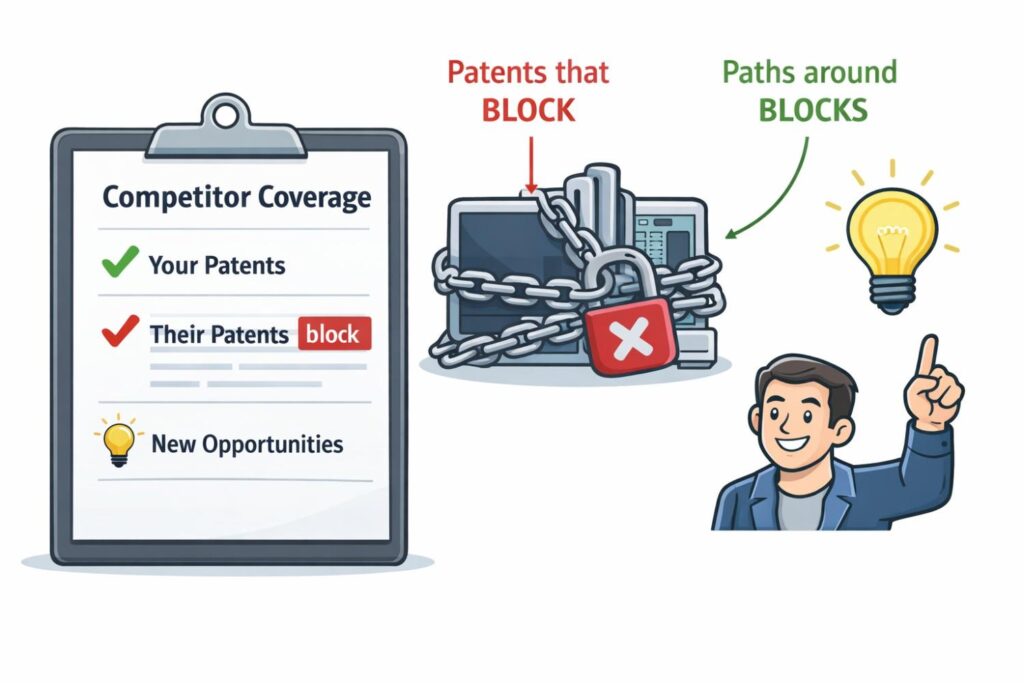
For fast-moving fields like AI, blockchain, biotech, and deep tech systems, timing can change the scope of what a claim realistically protects.
This is why competitor coverage should not be a one-time exercise. As your product evolves and the market shifts, your exposure may change.
Separate Market Competition From Patent Risk
Just because someone competes with you does not mean their patents block you.
Market overlap and patent overlap are different things.
A company may operate in the same space but protect only a narrow slice of technical implementation. Another company may not compete directly but hold broad protection around a key process you rely on.
Do not confuse business rivalry with legal exposure.
One practical move is to categorize competitor patents by technical domain. Which ones relate to core engine logic? Which relate to user interface? Which relate to data pipelines?
This helps you see which parts of your stack are more sensitive.
You may find that your core innovation is clean, while peripheral features overlap. That gives you room to adjust small components instead of overhauling your entire system.
Clarity reduces fear. Precision reduces waste.
Watch for Overlapping Roadmaps
Even if your current product avoids a claim, future versions might not.
Look at your product roadmap and compare it to competitor filings. If they have claimed areas you plan to move into, that is a signal to either design around early or strengthen your own filings now.
The smartest founders use competitor coverage analysis to guide their own patent strategy. If a competitor claims a certain approach, you can focus on protecting alternative methods.
That way, if the market shifts, you are not cornered.
At PowerPatent, this is where the real value shows up. You are not just filing documents. You are building a strategic layer of protection aligned with where your product is going.
AI speeds up drafting and analysis, and real attorneys make sure what you file is strong and meaningful. If you are serious about protecting your roadmap, take a look here: https://powerpatent.com/how-it-works
Treat Coverage as a Living Map
Competitor coverage is not static. Patents expire. Claims get narrowed. Companies abandon filings. Laws change.
If you treat coverage analysis as a one-time checkbox, you will either miss new threats or cling to old ones that no longer matter.
Make it part of your regular strategic review. When a competitor raises funding, launches a new product, or enters a new vertical, check their filings again. When you pivot or expand, re-evaluate.
The goal is not constant anxiety. The goal is steady awareness.
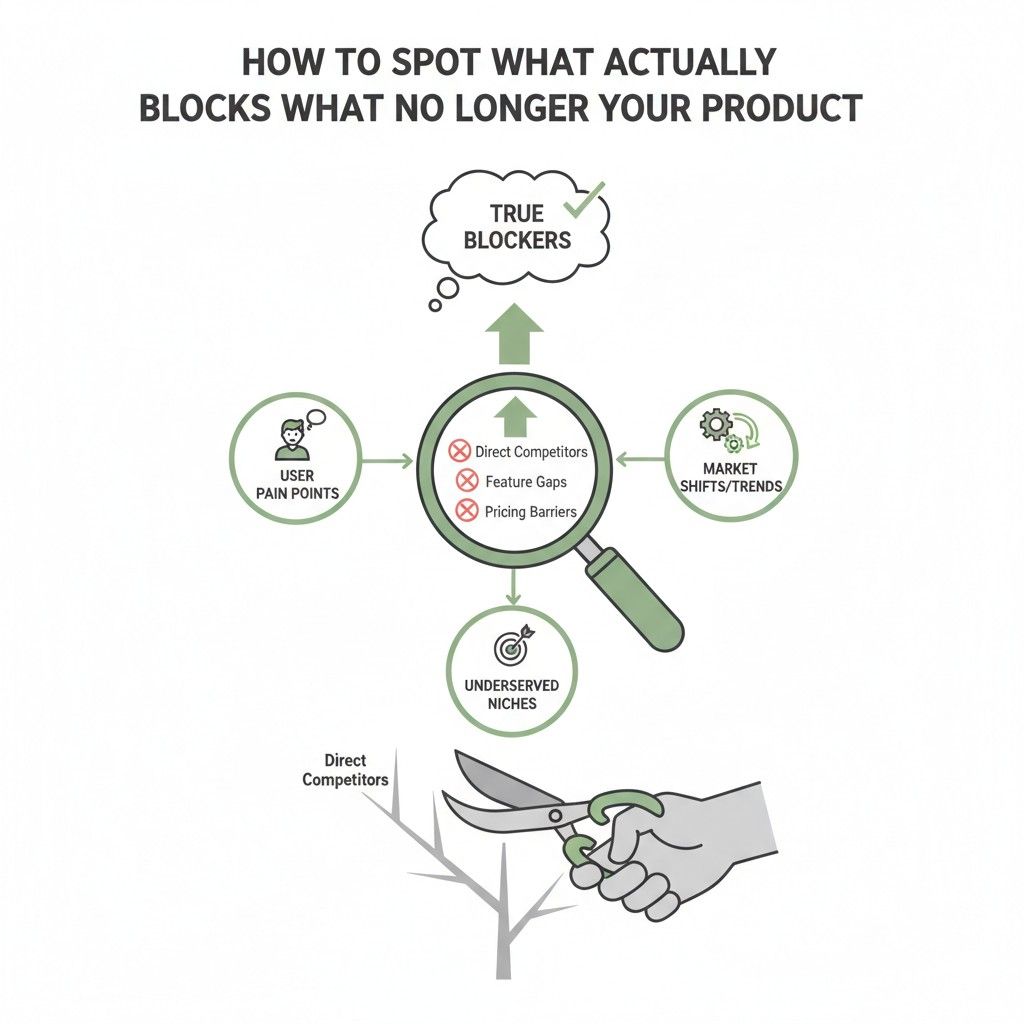
When you know what truly blocks you, you can move with confidence. When you see that something no longer blocks you, you can prune it from your mental load and focus on building.
That is how smart founders operate. They do not guess. They do not freeze. They analyze, adjust, and move forward.
The Art of Pruning: Removing Dead Threats From Your Strategy
Most startups never prune. They collect fears and never clear them.
A competitor files a patent. The team hears about it. Someone says, “We need to be careful.”
That sentence lingers for years. No one re-checks the claims. No one verifies if the product even overlaps anymore. The threat becomes permanent in people’s minds, even if it no longer exists in reality.
Pruning is the discipline of removing risks that no longer block you. It is how you free up focus, speed up decisions, and stop designing around ghosts.
This is not reckless behavior. It is structured clarity.
Not Every Threat Ages Well
Patents expire. Some are abandoned before they are granted. Others get narrowed during examination. Some are written so tightly that they never had real breadth in the first place.
If you are still reacting to a competitor filing from five years ago without checking its current status, you are operating on outdated data.
One of the first pruning steps is checking whether the patent is even enforceable today.
Has it been granted? Was it rejected? Did the owner stop paying maintenance fees? Is it limited to certain regions that do not affect your market?
These are not small details. They change your entire exposure.
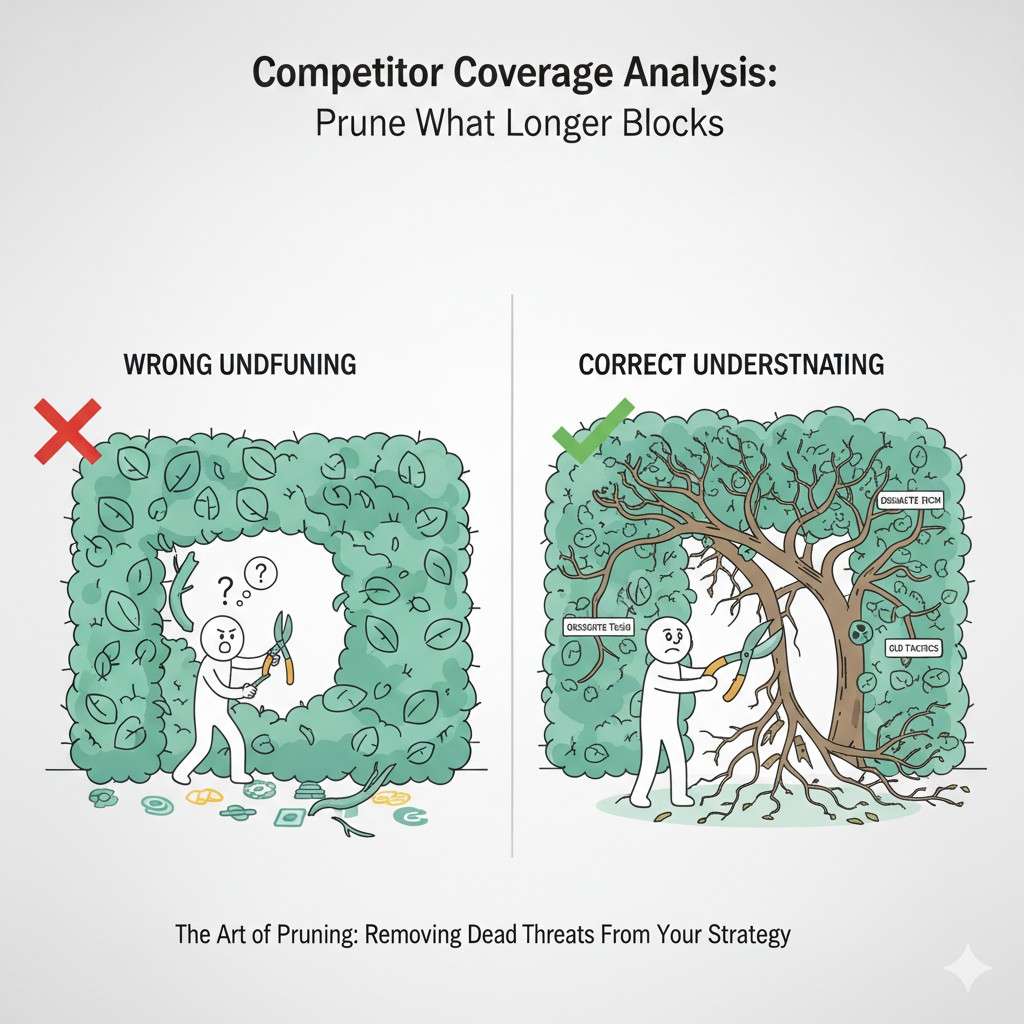
A smart move is to schedule periodic reviews of the top competitor patents you worry about most. Not once. Not when panic hits. On a fixed cadence. Twice a year is often enough for fast-moving industries.
When you re-check status and scope, you will often find that some threats quietly faded away.
Re-Test Against Your Current Architecture
Your product today is not your product from two years ago.
Teams evolve. Systems are refactored. Models are retrained. Infrastructure changes. Many companies continue to design around a competitor claim long after their architecture has shifted far enough away that the overlap is gone.
That is wasted constraint.
Pruning requires you to re-run coverage analysis against your current implementation. Not your old documentation. Not your original design. The real system running today.
You may discover that a design choice you made for performance reasons also created legal distance. That is a win.
When you identify that a once-feared claim no longer maps to your product, remove it from your internal risk list. Communicate that clearly to your team. Replace vague caution with confirmed clarity.
Engineers move faster when they know where they are safe.
Separate Emotional Memory From Legal Reality
Founders remember moments of fear. A competitor launch. A legal rumor. An aggressive press release. Those moments shape behavior long after the facts change.
Pruning requires emotional discipline. You must be willing to challenge old assumptions.
Ask direct questions. What exactly were we worried about? Which claim? Which element? Does that element still exist in our system? Has the patent scope changed?
If no one can answer clearly, the fear is probably outdated.
Document your findings. Write a short internal memo that explains why a specific competitor patent no longer blocks your path. This builds shared confidence and prevents the same fear from resurfacing every quarter.
Clarity compounds.
Watch for Narrowed Claims
During patent examination, claims often get narrowed. Broad language gets restricted. Additional technical details get added. This process can reduce the scope significantly.
If you only looked at the original application and never reviewed the final granted claims, you may be overestimating risk.
Always analyze the issued claims, not just the initial filing. The difference can be dramatic.
Sometimes a competitor tries to claim a wide method at first. After review, they are forced to limit it to a very specific implementation. If your system does not follow that specific implementation, the practical block may be gone.
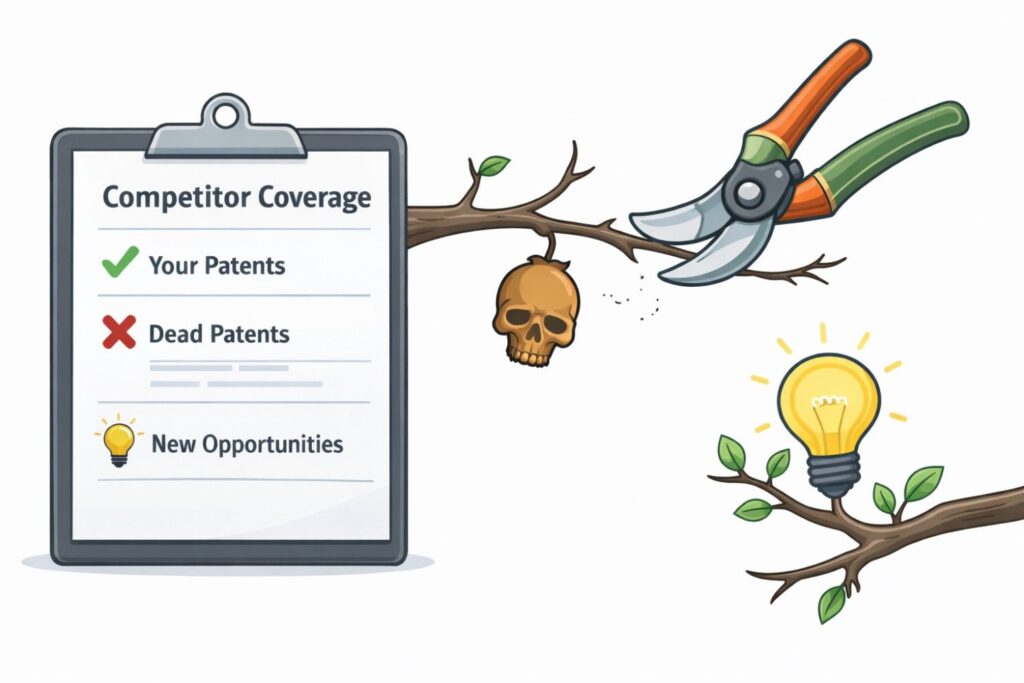
This is where experienced review matters. Understanding how claim amendments change real-world coverage is not something most founders are trained to interpret.
At PowerPatent, attorney oversight ensures you are not reacting to outdated or overly broad assumptions. You get a clean read on what actually stands today.
If you want to see how that process works, you can explore it here: https://powerpatent.com/how-it-works
Prune to Unlock Speed
Holding onto outdated threats slows product decisions. Teams hesitate. Roadmaps get softened. Features get cut without clear reason.
When you formally prune a threat, you unlock speed.
If you confirm that a certain method is safe, you can invest deeper into it. If you confirm that a competitor patent expired or never covered your approach, you can scale without looking over your shoulder.
Pruning is not about ignoring risk. It is about narrowing risk to what truly matters.
This also sharpens your patent strategy. When you remove false constraints, you see open territory more clearly. You can file stronger patents in areas you once avoided.
That is leverage.
Replace Dead Threats With Active Monitoring
Pruning does not mean forgetting. It means shifting from fear to structured monitoring.
Instead of constantly worrying about a competitor’s portfolio, set up a system to track new filings in your technical area. Monitor meaningful changes, not every small submission.
This keeps your awareness high without draining focus.
Many startups either obsess daily or ignore completely. Neither works. The right approach is steady, informed review supported by smart tools.
With modern AI-assisted systems, you can surface relevant filings faster than ever. When combined with real attorney review, you get signal without noise. That is the foundation of smart pruning and smart protection.
PowerPatent was built around this idea. Speed from software. Strength from real legal insight.
No heavy firm delays. No guesswork. Just clarity you can act on. You can learn more about how it works here: https://powerpatent.com/how-it-works
Pruning Is a Leadership Decision
At the end of the day, pruning competitor threats is not just a legal task. It is a leadership move.
You are deciding what deserves attention and what does not. You are choosing to operate on current facts, not old fear.
When you build a culture that revisits assumptions and updates risk maps, your team becomes sharper. Decisions become cleaner. Momentum builds.
Competitor coverage analysis is powerful. But without pruning, it becomes clutter.
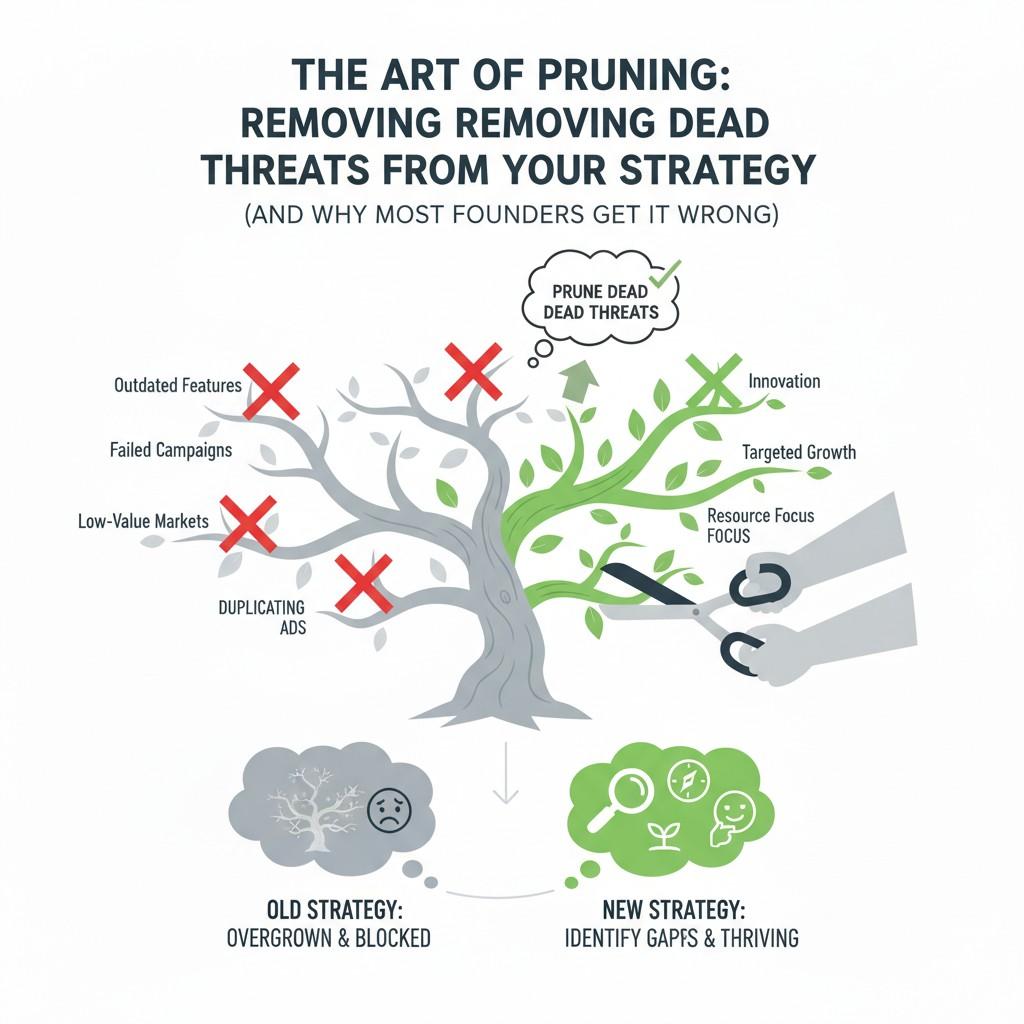
Prune what no longer blocks. Protect what truly matters. Then move forward with confidence.
Turning Clarity Into Leverage: Build Patents That Protect What Matters
Once you know what truly blocks you and what does not, everything changes.
You stop playing defense all the time. You stop designing in reaction to others. Instead, you start building a position of strength. Competitor coverage analysis is not the end goal. It is the starting point for smarter protection.
Clarity gives you leverage. Now you use it.
Use Gaps as Strategic Entry Points
When you study competitor claims closely, you begin to see patterns. You see where they focused their protection and where they stayed silent. Those silent areas are not accidents. They are opportunities.
Maybe they claimed one training method but ignored another. Maybe they protected a system built around a central server, but said nothing about edge deployment.
Maybe they focused on one workflow and overlooked adjacent use cases.
Those spaces are where you plant your flag.
Instead of filing broad, vague patents that try to cover everything, focus on protecting the technical paths competitors left open. Build claims around your unique architecture choices. Anchor them in real implementation details.
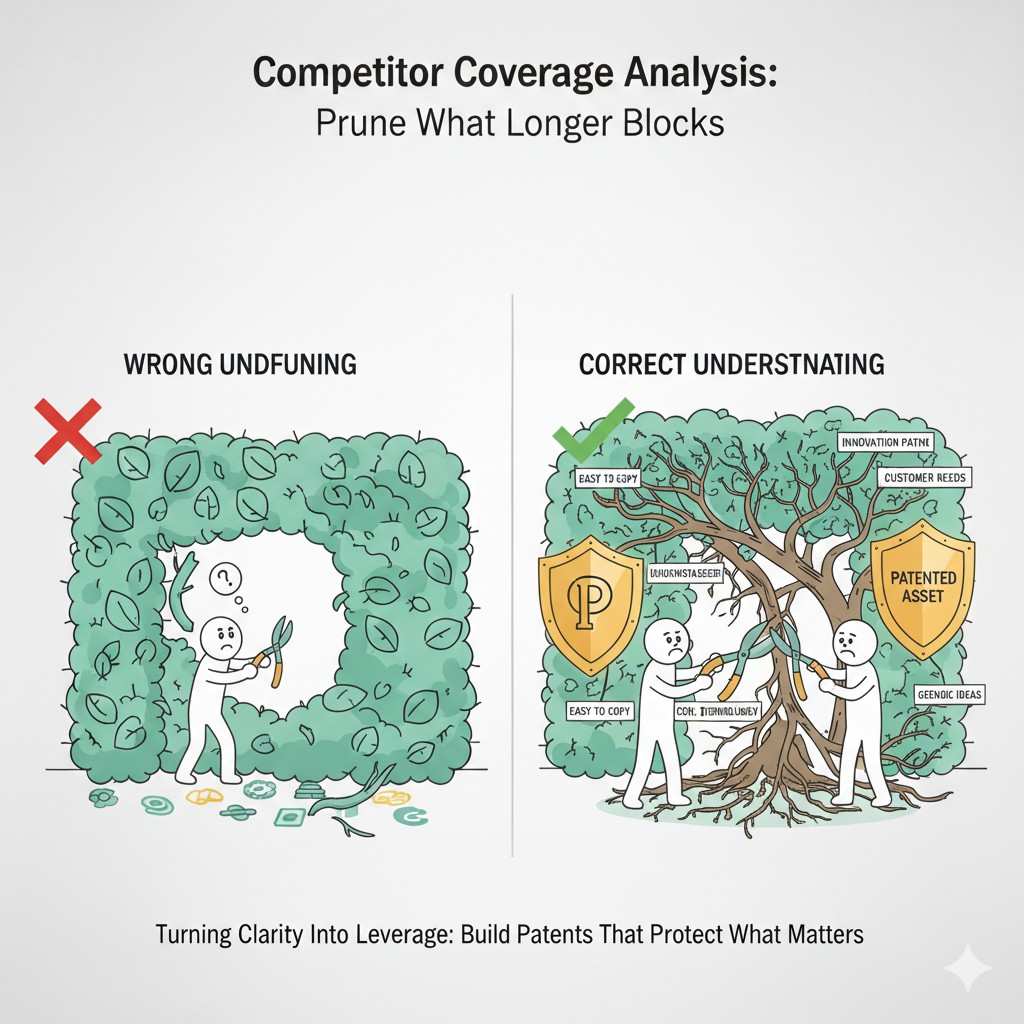
This is how you create defensible ground. You are not just filing to have a patent number. You are shaping territory.
The smartest founders treat competitor coverage analysis as a map. Not a warning sign, but a layout of the battlefield. When you see open land, you move first.
Protect the Core, Not the Noise
Many startups waste time protecting features that do not drive long-term value. They file patents around user interface tweaks or minor improvements while leaving the core engine exposed.
Clarity from competitor analysis helps you focus.
Ask yourself what truly makes your system hard to replicate. Is it the model training pipeline? The way data is cleaned and structured? The hardware-software interaction? The feedback loop that improves performance over time?
That is what deserves protection.
If a competitor’s claims circle around one area of the stack, you may want to reinforce adjacent layers. If they dominate one method, you protect the alternative method that you execute better.
This creates depth.
At PowerPatent, this is exactly how filings are approached. The software helps extract technical detail directly from your code and architecture.
Then real patent attorneys shape those details into strong claims that match your business goals.
You move fast, but you protect what actually matters. If you want to see how that works in practice, visit https://powerpatent.com/how-it-works
Align Patents With Product Direction
Your patent strategy should mirror your roadmap.
If you plan to expand into enterprise, protect the enterprise-grade architecture. If you plan to scale globally, protect the infrastructure choices that make that possible.
If you plan to add automation layers, protect the logic behind them.
Too many companies file patents disconnected from where they are going. That creates paper assets with little real leverage.
When you understand competitor coverage, you can design filings that both avoid conflict and strengthen your next moves.
For example, if a competitor controls a narrow approach to a problem, and you choose a different path, that different path should be documented and protected early. Do not wait until revenue proves it works. By then, someone else may file around you.
Leverage comes from being early and precise.
Build Negotiation Power Before You Need It
Strong patents are not just shields. They are bargaining tools.
If your competitor ever challenges you, your own patent portfolio becomes part of the conversation. If you both hold meaningful protection, the dynamic changes. Cross-licensing becomes possible. Risk becomes shared.
But that only works if your patents are real and aligned with your actual technology.
Competitor coverage analysis shows you where conflict could arise. Your filings ensure that if it does, you are not standing empty-handed.
This is why speed matters. Startups cannot afford year-long delays waiting for traditional law firms to draft something. You need fast, high-quality filings that evolve with your product.
PowerPatent was built for this exact need. Smart AI tools accelerate drafting by pulling directly from your technical materials. Real attorneys review and refine every claim.
You get strength without slowing down. If protecting leverage matters to you, learn more here: https://powerpatent.com/how-it-works
Turn Protection Into Confidence
When you know you are not blocked and you know your core is protected, you build differently.
You make bold roadmap decisions. You invest deeper in innovation. You speak with investors from a position of strength.
Investors care about defensibility. They want to know that your edge is not easy to copy. When you can clearly explain how competitor coverage was analyzed and how your patents reinforce your position, you signal maturity.
It shows that you are not just building features. You are building durable advantage.
This confidence spreads internally as well. Engineers focus on solving problems, not worrying about hidden legal traps. Leadership teams plan expansions without second-guessing every move.
That is the real return on strong IP strategy.
Make It a Continuous Cycle
Competitor coverage analysis is not a one-time task. Nor is filing a patent.
As your product grows, you repeat the cycle. Analyze competitor claims. Prune what no longer blocks. Identify gaps. File strategically. Reassess.
Each loop sharpens your position.
Over time, you shift from reacting to competitors to shaping the space yourself. Others start analyzing your coverage. Others start designing around you.
That is when you know you built real leverage.
And you do not have to navigate that alone. With the right combination of intelligent software and experienced patent attorneys, you can move fast and protect deeply at the same time.
If you are serious about protecting what you are building without slowing down your startup, explore how PowerPatent works here: https://powerpatent.com/how-it-works
This is how you prune what no longer blocks and build protection that truly matters.
Wrapping It Up
Most founders treat patents like a side task. Something to handle later. Something to outsource and forget. That is a mistake. Competitor coverage analysis is not about paperwork. It is about control. When you know exactly what blocks you, what does not, and where the open space lives, you stop operating in the dark. You stop over-designing around threats that are not real. You stop underestimating risks that actually matter.
You stop wasting time.