Most CFOs think about patents only when a deal is on the table or a lawsuit shows up. By then, it’s late and expensive. The truth is simple: your patent claims, your product roadmap, and your revenue plan are tightly linked. If they are not aligned, you are taking hidden risk. If they are aligned, you are building a real asset that protects growth and increases company value. In this guide, we will break down how claims, products, and revenue connect in plain terms—so you can make smart decisions with confidence.
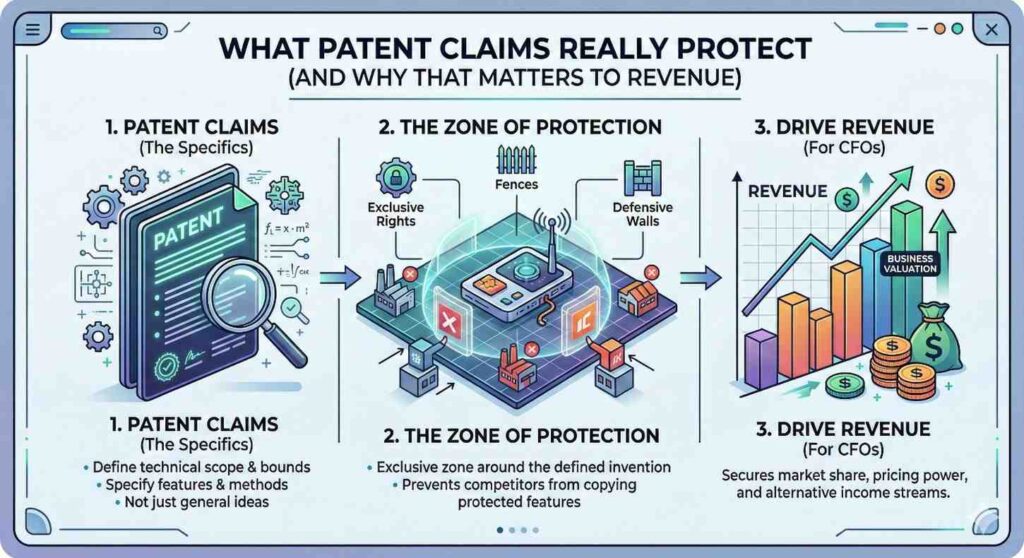
What Patent Claims Really Protect (And Why That Matters to Revenue)
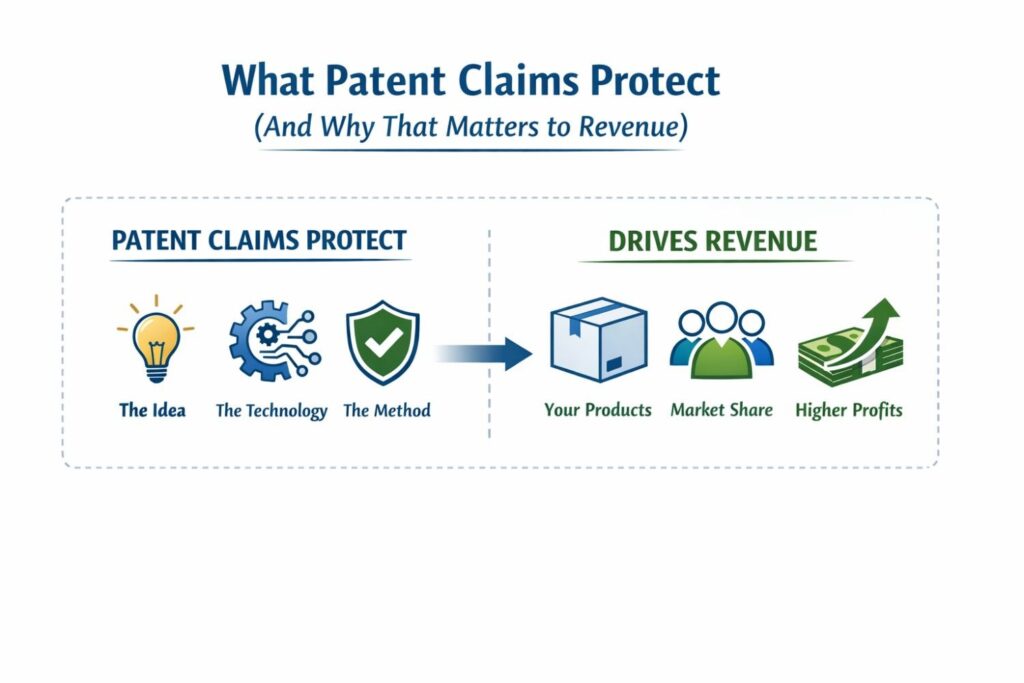
Most people inside a company think a patent protects a product. It does not. A patent protects the words written in the claims. Those words define the fence around your invention.
If the fence is drawn in the right place, it protects your core revenue engine. If it is drawn in the wrong place, you may have a framed certificate on the wall but no real business protection.
For a CFO, this is not a legal detail. It is a revenue control issue. Claims decide what competitors cannot copy.
Claims decide how strong your pricing power is. Claims decide how safe your future cash flow will be. If claims are written without understanding where revenue comes from, the company carries silent risk on its balance sheet.
Let’s unpack this in practical terms.
Claims Are Not Descriptions. They Are Boundaries.
Many teams confuse the technical description of an invention with the legal claims.
The description explains how something works. The claims define what others are not allowed to do. Only the claims matter when it comes to enforcement.
As a CFO, you should care less about how long the patent document is and more about what the claims actually cover. If the claims are too narrow, a competitor can change a small detail and legally avoid infringement.
If the claims are too broad without support, they may be rejected or invalidated later.
This is where revenue risk begins. If your main product feature drives eighty percent of your revenue, but the claims only protect a minor version of it, you are exposed. You are betting growth on something you do not fully own.
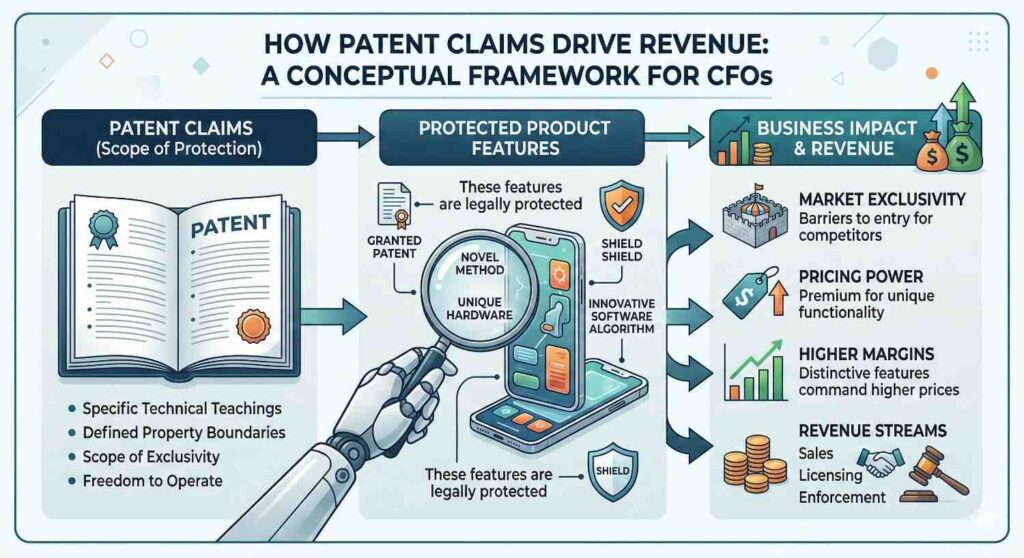
A smart move is to map your top revenue drivers to specific claim language. Sit down with your product lead and patent counsel.
Ask a simple question: which exact claim covers our highest margin feature? If no one can answer clearly, that is a red flag.
Revenue Lives in Features, Not in the Entire Product
Revenue rarely comes from the whole product equally. It often comes from one core capability. That capability may be a model, a process, a system architecture, or a specific workflow that customers cannot get elsewhere.
Claims should wrap tightly around that core capability.
If your pricing premium is based on speed, accuracy, or automation, your claims should focus on the mechanism that enables that edge.
If your sales team closes deals because of a unique integration or data processing method, that specific method must be protected.
A common mistake is filing a patent around the first version of a product rather than the feature that truly drives sales. Early-stage teams move fast, and patents are often written before the revenue model is fully clear.
By the time real traction appears, the claims may protect something that no longer matters.
From a finance perspective, this creates a mismatch between IP assets and actual cash flow. You want patents that defend the present and future revenue base, not the history of your engineering roadmap.
Claims Define Competitive Leverage
Claims are not just defensive tools. They create leverage.
When a competitor enters your market, your ability to negotiate depends on claim strength. If your claims clearly cover the core method they use, you hold power. You can license. You can cross-license. You can block.
If your claims are vague or easy to design around, you have little leverage. At that point, you are competing on speed and capital alone.
CFOs often focus on burn and runway. That is wise. But long-term leverage matters just as much.
Strong claims reduce the need for endless capital to defend market share. They create a barrier that works even when your marketing spend drops.
To make this real, review your competitive landscape. Identify the top two competitors by revenue or funding.
Then analyze whether your claims would read on their current product. If the answer is unclear, you need a strategic claim review.
The Difference Between Owning an Idea and Owning a Market
Many founders say they want to “protect their idea.” That language sounds good but means little in practice. The real goal is to protect a market position.
Claims should be written not only to cover what you built, but to cover reasonable variations others might build.
If you protect only your current implementation, competitors can launch a slightly modified version and still capture the same customers.
From a CFO’s lens, that means lost revenue without legal recourse.
Owning a market position means your claims are broad enough to cover alternate technical paths that achieve the same business outcome. This requires forward thinking.
It requires asking, “If I were a competitor with money and time, how would I copy this without copying it exactly?”
This question should be part of financial planning. It impacts long-term revenue forecasts and valuation multiples. Investors assign higher value to companies whose core markets are defensible, not just innovative.
Claims as a Revenue Insurance Policy
Think of claims as insurance for your future revenue. You hope you never need to enforce them in court. But their presence changes behavior in the market.
Competitors often conduct freedom-to-operate reviews before launching. If they see strong, well-drafted claims that cover their approach, they may pivot away.
That invisible deterrent effect protects your revenue without you spending a dollar on litigation.
However, weak claims provide no deterrent effect. They invite competition.
As a CFO, you should evaluate patents not by count but by deterrence value. Ask your legal team to explain, in simple language, how each major patent could block a competitor.
If they struggle to answer clearly, the deterrence value may be low.
This is also where timing matters. Filing early can secure priority, but filing too early without strategic scope can freeze weak protection in place. There is a balance between speed and strength.
Modern tools and structured processes can help teams capture inventions quickly while still aligning with revenue strategy.
If you want to see how a structured system connects engineering work to strong, revenue-aligned claims, you can explore how it works here: https://powerpatent.com/how-it-works
Claims Must Evolve With the Business Model
Revenue models change. What begins as a license may turn into SaaS. What starts as a platform may become a data service. Claims must evolve alongside these shifts.
A static IP strategy does not serve a dynamic business.
For example, if your company begins monetizing data insights rather than software access, your claims should cover data processing methods and output structures that competitors cannot replicate.
If your pricing shifts from per-seat to usage-based, your core differentiation might lie in efficiency or scaling architecture, which should also be claimed.
A useful internal practice is to review IP alignment during annual budgeting. When you adjust revenue projections, also review whether your patents still protect the features that justify those projections.
This turns IP from a legal afterthought into a financial planning tool.
Claim Quality Directly Impacts Valuation
During due diligence, sophisticated investors do not just check whether patents exist. They examine claim scope.
If claims are narrow, easy to design around, or misaligned with the core product, investors may discount their value. This can reduce valuation or lead to more aggressive deal terms.
On the other hand, when claims clearly cover high-growth features and are supported by strong technical disclosure, they increase confidence. They show that the company has thought beyond building and into protecting.
As a CFO, you can prepare for this early. Conduct an internal “mock diligence” review of your top patents. Pretend you are an investor. Ask how each patent supports future revenue growth.
Document the link between claim language and specific product features. This preparation pays off when real diligence begins.
Turning Claims Into a Strategic Asset
The key shift is mental. Stop viewing claims as legal paperwork. Start viewing them as strategic financial instruments.
They can defend margin. They can slow competitors. They can support licensing revenue. They can increase exit value.
But only if they are written with intention.
That means tight collaboration between engineering, product, finance, and patent counsel.
It means clarity on what truly drives revenue. It means avoiding rushed filings that capture surface-level features instead of core mechanics.
Modern platforms now make it easier to align these pieces without slowing down product development.
Instead of waiting months and paying unpredictable fees, teams can capture technical detail quickly and work with real attorneys to shape strong, business-focused claims.
If you want to understand how that process can fit into your financial planning cycle, take a close look at https://powerpatent.com/how-it-works
Strong claims do not guarantee revenue. But weak claims quietly erode it.
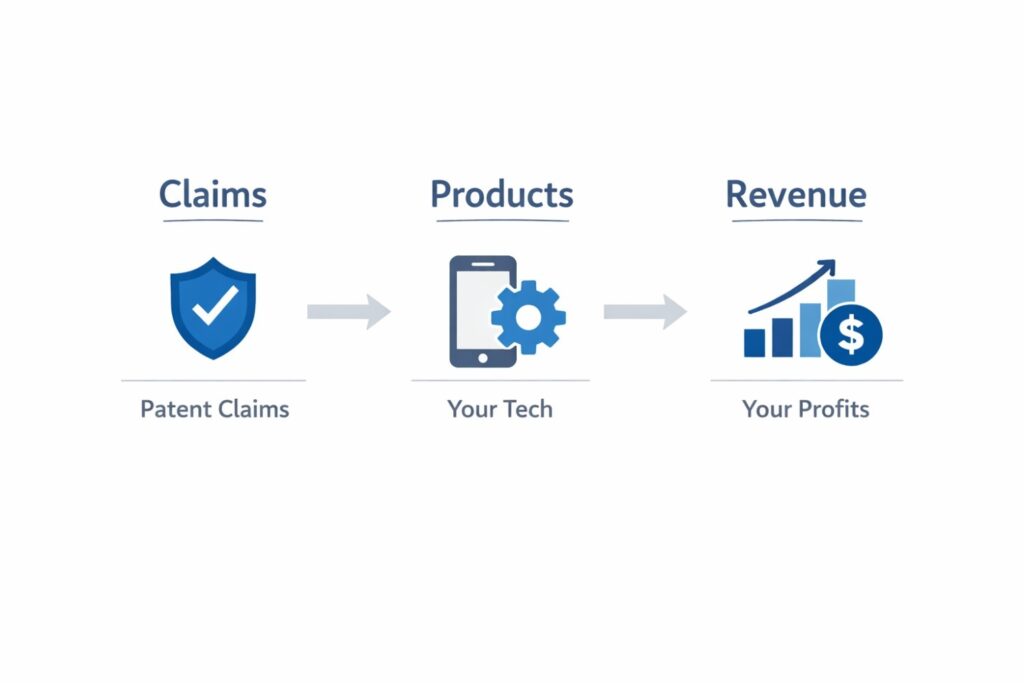
From a CFO’s perspective, that difference is not theoretical. It shows up in margins, in competitive pressure, and in valuation multiples.
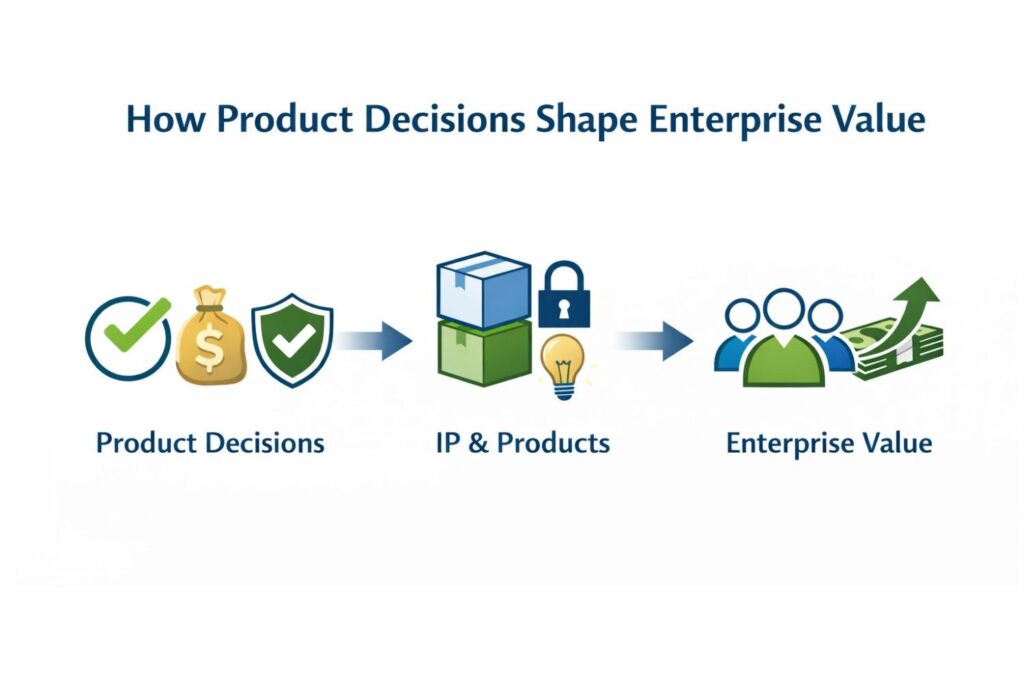
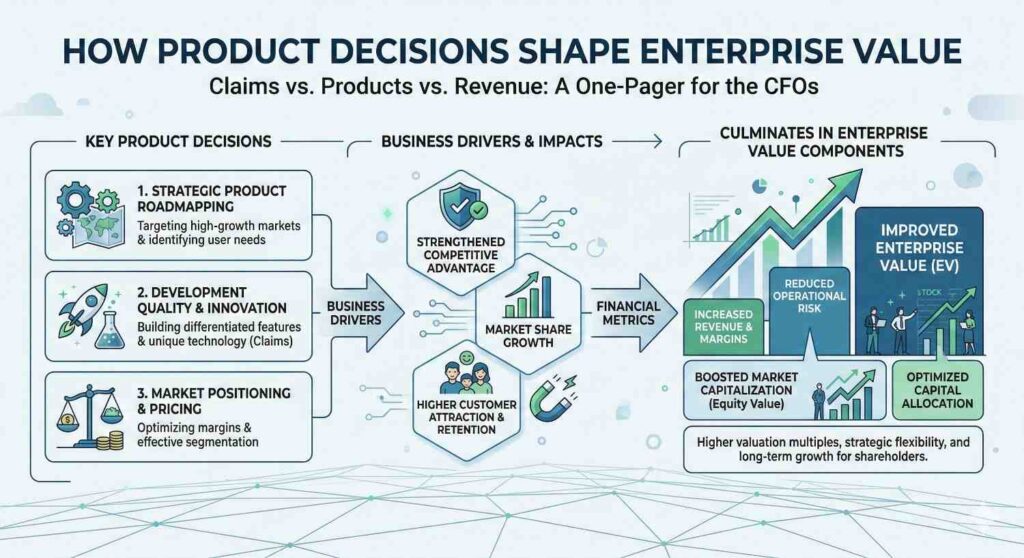
How Product Decisions Shape Enterprise Value
Every product decision carries financial weight. Some choices increase enterprise value quietly over time.
Others create hidden risk that only shows up during diligence, fundraising, or acquisition. For a CFO, product is not just a roadmap discussion. It is a balance sheet driver.
The link between product and value becomes even stronger when you consider intellectual property. What you choose to build, how you build it, and how you document it all shape the long-term worth of the company.
Enterprise value is not built only on revenue today. It is built on protected revenue tomorrow.
Product Strategy Is Financial Strategy in Disguise
When the product team prioritizes a feature, they are also making a capital allocation decision. Engineering time is expensive. Focus is limited. Each sprint is an investment.
If that investment results in a feature that is hard to copy and protected by strong claims, it compounds value. If it results in something easy to replicate, it may drive short-term sales but little long-term defensibility.
As CFO, you do not need to decide technical architecture. But you do need visibility into where durable differentiation is being created.
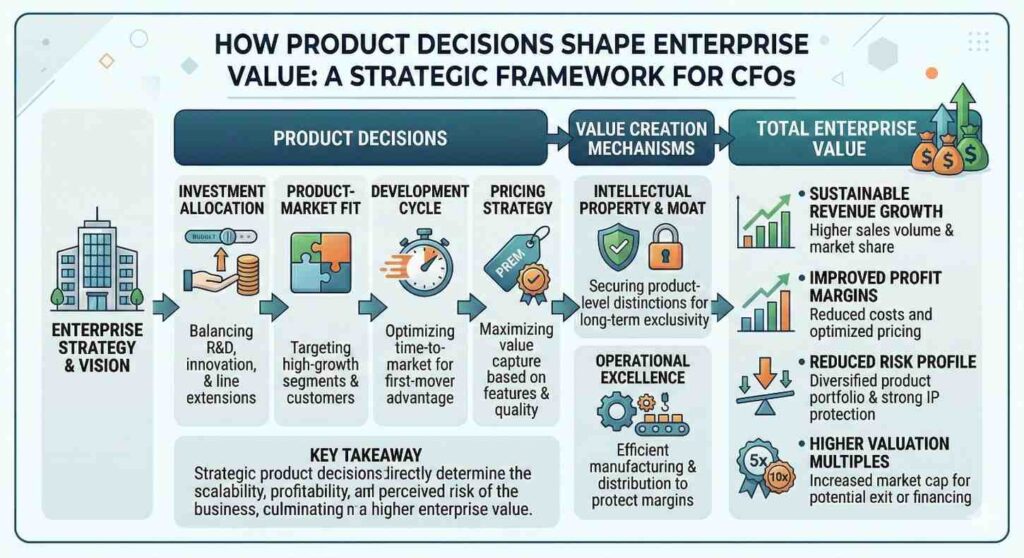
A practical move is to add one simple question to roadmap reviews: which upcoming features are defensible, and how will we protect them? This keeps IP aligned with product velocity instead of trailing behind it.
The Cost of Building Without Protection
Startups move fast. That is good. But speed without protection can create value leakage.
Imagine your team spends eighteen months building a breakthrough workflow powered by a custom model. It wins customers. Growth accelerates. Then a larger competitor launches a similar feature six months later.
They have distribution and capital. Without strong claims covering your core method, you are forced to compete on price and marketing spend.
This is not a legal failure. It is a product strategy gap.
The cost shows up in reduced margins, longer sales cycles, and pressure on CAC. In extreme cases, it can cap your valuation multiple because buyers see limited barriers to entry.
Protecting key product innovations early does not slow growth when done correctly. With structured capture processes and real attorney oversight, you can file strong patents while continuing to ship.
If you want to see how that balance works in practice, you can review the process here: https://powerpatent.com/how-it-works
Architecture Choices Can Increase or Decrease Defensibility
Not all technical designs are equal from an IP standpoint. Some architectures create clear, protectable mechanisms. Others rely heavily on open standards or common patterns that are harder to claim.
For example, a unique data processing pipeline with specific steps and interactions may offer strong claim opportunities. A feature built mostly from third-party APIs may provide less proprietary ground.
This does not mean avoiding external tools. It means being intentional about where you create proprietary value.
From a finance view, proprietary layers increase long-term enterprise value. They become assets that can be licensed, enforced, or highlighted in due diligence. Commodity layers do not.
Encourage engineering leaders to identify where the company is building true technical advantage. Then ensure those areas are documented and protected before they become public knowledge.
Revenue Concentration Should Guide Protection Focus
Many companies have uneven revenue distribution. A small set of features may drive most contracts. Or one industry vertical may produce the highest margins.
Your IP strategy should reflect this reality.
If eighty percent of revenue depends on a specific capability, that capability deserves layered protection. That may mean multiple patent filings that cover variations, improvements, and system-level implementations.
This is not about filing more patents. It is about filing with precision.
As CFO, review revenue concentration data alongside patent coverage. Overlay the two. If there is a gap between where revenue is generated and where claims exist, that is an exposure point.
Addressing it early is far less expensive than defending market share later.
Product Pivots Can Create IP Orphans
Startups pivot. It is normal. But pivots can leave behind patents that no longer align with the active business model.
These IP orphans may have little connection to current revenue. They consume maintenance fees and offer minimal strategic benefit.
At the same time, new revenue-driving features may remain unprotected because the company is focused on growth metrics.
A disciplined approach is to conduct an annual IP alignment review during financial planning. Identify which patents support current and projected revenue streams. Identify which do not.
Consider whether to continue investing in maintenance or redirect budget toward new filings that better match the present strategy.
This keeps the IP portfolio lean, relevant, and financially justified.
Product Documentation Impacts Future Optionality
Enterprise value often depends on optionality. Can you expand into new markets? Can you license technology? Can you spin off a division?
These options depend on how well product innovations were documented and protected at the time they were created.
If engineering work is not captured clearly, it becomes difficult to reconstruct later for patent filings. Public disclosures, conference talks, and open-source contributions can limit what is protectable.
This is why timing matters. Capturing inventions while they are fresh ensures broader protection. It also creates strategic flexibility down the road.
From a CFO’s angle, this is about preserving options. Well-documented and protected product innovations provide more strategic paths during fundraising or exit discussions.
Defensible Products Support Pricing Power
Pricing power is one of the strongest drivers of enterprise value. Companies that can sustain premium pricing often have something competitors cannot easily replicate.
Strong patent claims reinforce this position. They reduce the likelihood of price-based competition because rivals face legal risk if they copy key mechanisms.
Without that protection, even the best product may eventually face margin compression.
When modeling long-term financial forecasts, consider how defensibility supports pricing assumptions.
If your five-year model assumes stable or increasing margins, ensure that product differentiation is legally protected. Otherwise, those projections may be optimistic.
IP Strategy Should Be Embedded in Product Culture
The most valuable companies do not treat IP as a separate function. They embed it into product culture.
Engineers understand that novel solutions should be captured. Product managers recognize when a feature creates unique value. Leadership aligns filing decisions with long-term revenue goals.
This does not require turning engineers into lawyers. It requires simple processes and clear communication.
Modern platforms make it easier to translate technical work into strong patent applications without disrupting sprint cycles. Real attorneys still oversee the process, but software reduces friction and delays. That combination protects innovation without slowing it down.
You can explore how that integrated approach works here: https://powerpatent.com/how-it-works
Enterprise Value Is Built on Protected Growth
Growth alone does not guarantee high valuation. Protected growth does.
Investors and acquirers look for durable advantages. They assess whether revenue is likely to persist under competitive pressure. Strong alignment between product decisions and patent claims signals durability.
As CFO, you are the steward of enterprise value. You oversee capital allocation, forecast risk, and prepare for external scrutiny.
By ensuring that product strategy and IP strategy move together, you reduce hidden exposure and increase strategic leverage.
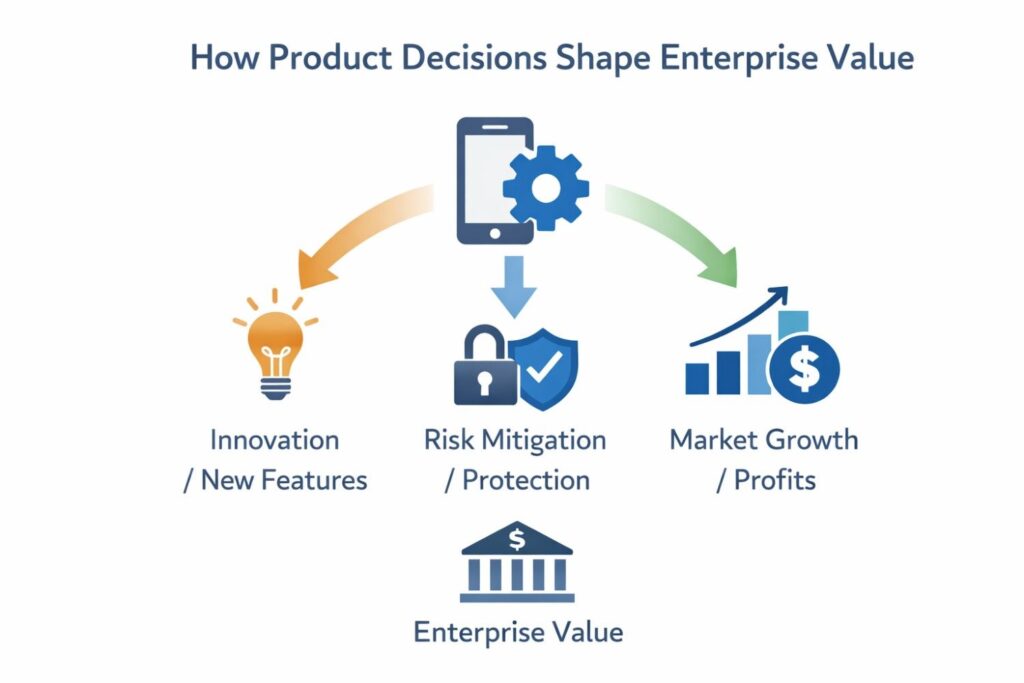
Product decisions are not just about shipping features. They are about shaping the long-term financial future of the company.
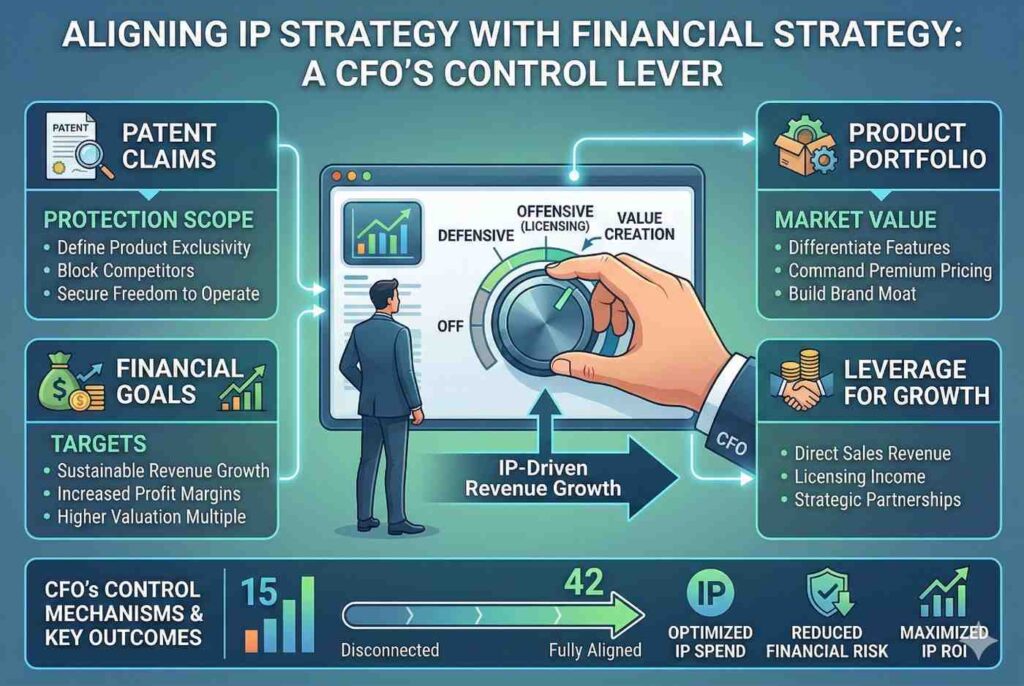
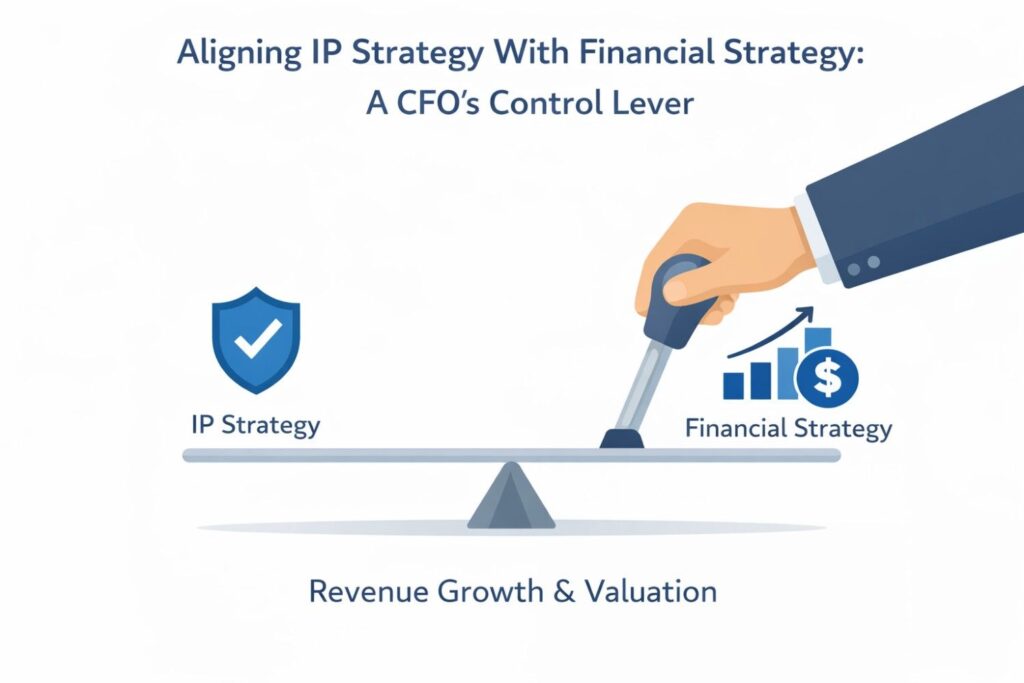
Aligning IP Strategy With Financial Strategy: A CFO’s Control Lever
Most companies treat patents as a legal cost center. The bills come in. The applications get filed. The board gets an update once a year. Then everyone goes back to focusing on growth.
That approach leaves money on the table.
When IP strategy is aligned with financial strategy, patents become a control lever. They reduce risk. They increase negotiating power. They protect margins. They support valuation.
For a CFO, this alignment is not abstract. It directly shapes enterprise value.
The key is to stop thinking of patents as paperwork and start treating them as capital assets that must earn their place on the balance sheet.
IP Budgeting Should Follow Revenue Logic
Most IP budgets are set based on last year’s spend plus some buffer. That is reactive. A better approach ties IP investment to revenue priorities.
If a new product line is expected to drive a large share of future revenue, IP budget should be allocated early to protect that line.
If an existing feature is losing strategic importance, continuing to invest heavily in related filings may not make sense.
This requires collaboration during financial planning. When you build the annual model, include a structured review of upcoming launches, expansion plans, and high-margin offerings.
Then ask a simple question: are we protecting the engines that will drive next year’s numbers?
This shifts IP from being a fixed overhead expense to being a targeted investment aligned with growth strategy.
Forecast Risk Should Include IP Exposure
CFOs spend significant time modeling financial risk. Market downturns. Customer churn. Pricing pressure. But IP exposure is often ignored in risk forecasts.
Consider a scenario where your top feature has no meaningful patent protection. A well-funded competitor enters the market with a similar offering.
Your forecast may assume steady growth, but competitive duplication could alter that trajectory quickly.
IP exposure is a form of revenue concentration risk.
A disciplined practice is to incorporate IP strength into scenario planning. For each major revenue stream, assess how easily a competitor could replicate it without infringing your claims.
If replication is easy, revenue forecasts should reflect that vulnerability.
This approach creates more realistic projections and highlights where protective action is needed.
Claims Should Support Long-Term Margin Assumptions
Many financial models assume stable or improving gross margins over time. That assumption often depends on maintaining product differentiation.
Without strong claims, differentiation may erode as the market matures. Competitors learn. Features become standard. Prices fall.
If your model projects expanding margins, ensure the technical mechanisms that justify those margins are protected.
This is where detailed alignment matters. Claims should cover the processes, architectures, or methods that create efficiency or superior outcomes. If those core mechanisms are shielded, margin assumptions are more defensible.
If not, the company may face pressure that was not reflected in the original financial plan.
Due Diligence Favors Clear IP-Revenue Mapping
When investors or acquirers conduct diligence, they look for coherence. They want to see that patents are not random filings but are tightly connected to the business model.
A scattered portfolio signals lack of strategy. A focused portfolio that maps clearly to revenue drivers signals discipline.
As CFO, you can prepare by creating an internal document that connects key patents to specific products and revenue streams. This does not need legal complexity. It needs clarity.
Explain how each major patent supports pricing power, customer retention, or expansion opportunities. Show how claims cover current and planned features.
This preparation shortens diligence cycles and increases confidence during negotiations.
IP Can Unlock Strategic Financing Options
Strong patent portfolios can support more than valuation narratives. They can enable alternative financing structures.
In some cases, patents can back debt facilities or structured financing arrangements. They can also create licensing opportunities that generate non-dilutive revenue.
However, these options are only viable when claims are meaningful and aligned with commercially valuable technology.
If IP is treated casually, these strategic paths remain closed. If IP is built intentionally, new financial flexibility emerges.
For growth-stage companies especially, having multiple financing levers reduces dependence on equity markets and protects ownership.
Timing of Filings Affects Cash Flow Strategy
Patent filings involve timing decisions that impact cash flow. Filing too aggressively without focus can strain budgets. Filing too slowly can risk losing rights.
The solution is not to file less or more blindly. The solution is to file smarter.
Capture inventions early when they are core to future revenue. Stage international filings based on traction and geographic expansion plans. Avoid over-investing in areas that no longer align with product direction.
Modern systems help manage this timing more efficiently. They reduce drafting delays and provide visibility into pipeline costs. When software tools are combined with real attorney oversight, companies gain both speed and quality control.
If you want to see how a structured, efficient approach can align filing timing with financial planning, you can review the framework here: https://powerpatent.com/how-it-works
Board Communication Should Reflect Strategic IP Value
Board members care about risk and upside. IP sits at the intersection of both.
Yet many board updates mention patents only in passing, focusing on counts rather than impact.
A more effective approach is to communicate how IP supports growth strategy.
Explain how recent filings protect a new product launch. Highlight how claims strengthen competitive positioning. Clarify how protection supports pricing assumptions.
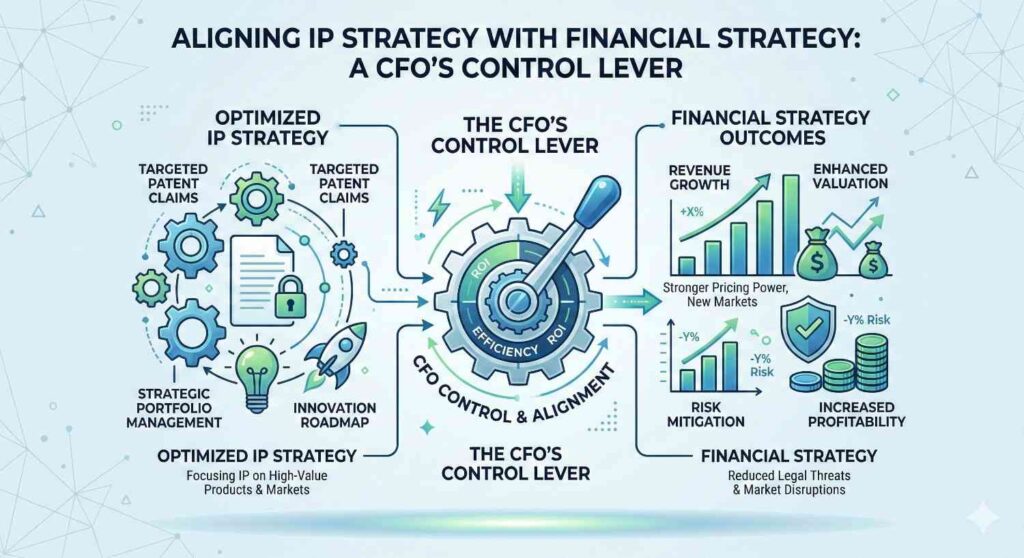
This reframes patents as strategic assets rather than legal footnotes.
For CFOs, this also builds credibility. It shows that financial leadership understands not only numbers but also structural value drivers.
Operationalizing Alignment Across Teams
Alignment does not happen automatically. It requires process.
Engineering teams must have a clear path to disclose inventions. Product leaders must flag features that create differentiation. Finance must allocate budget based on strategic importance.
Legal must draft claims that reflect real business value.
When these functions operate in silos, opportunities are missed.
An integrated platform can centralize invention capture, streamline drafting, and maintain attorney oversight without the slow cycles of traditional firms.
This allows teams to protect innovation in parallel with product development rather than after the fact.
The result is tighter alignment between what is built, what is protected, and what is monetized.
You can explore how this integrated model works in practice here: https://powerpatent.com/how-it-works
The CFO’s Role in Building Durable Value
CFOs are guardians of long-term value. You manage capital, oversee risk, and prepare the company for scrutiny from investors, lenders, and acquirers.
IP strategy should be part of that mandate.
When claims align with product and revenue, they reduce uncertainty. They strengthen negotiation positions. They support premium valuation. They create optionality.
When misaligned, they create false comfort.
The companies that win over the long run are not only innovative. They are deliberate about protecting what drives their financial engine.
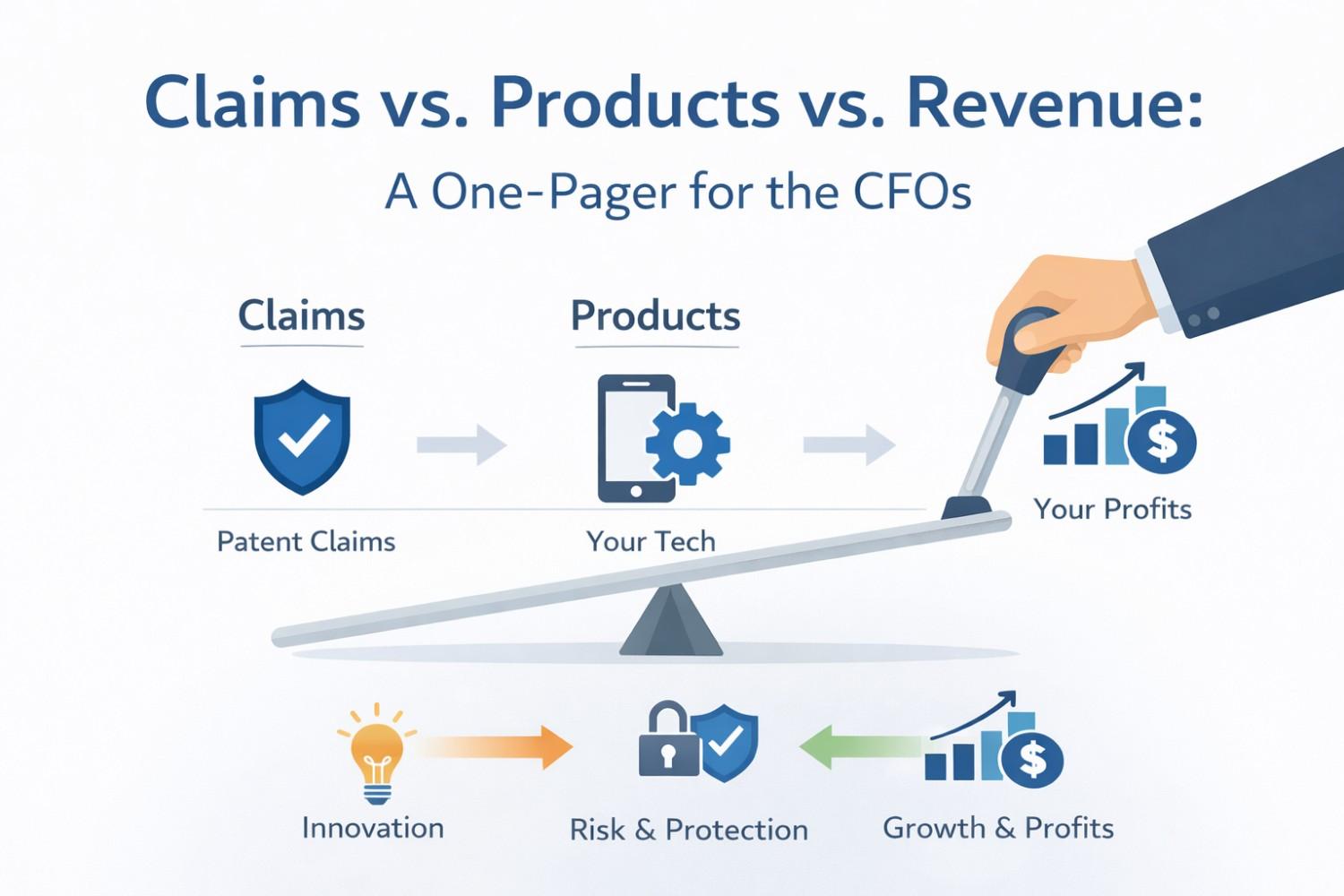
Claims define legal boundaries. Products generate customer value. Revenue reflects market acceptance.
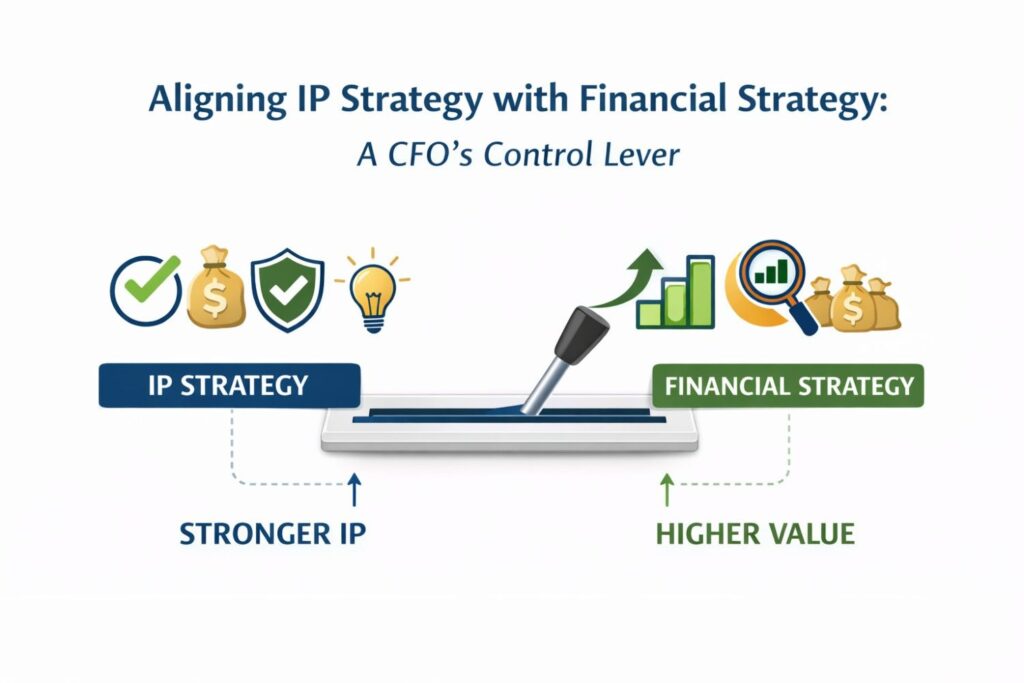
When these three elements move together, enterprise value grows with stability and confidence.
Wrapping It Up
At the end of the day, this is not about patents. It is about control. Claims are the legal boundary lines around what truly makes your business valuable. Products are the vehicles that deliver that value to customers. Revenue is the proof that the market cares. When those three are aligned, you are not just growing. You are building something durable.