Most patent problems do not start with bad ideas. They start with messy paperwork. One missed step, one unclear owner, or one late filing can turn a strong invention into a weak asset overnight. Assignments and e-recordation are where this usually breaks. They sound boring, but they decide who truly owns the invention and whether the Patent Office sees your records as clean or confused. In this article, we will walk through how assignments really work, how e-recordation links everything inside Patent Center, and how to do it the right way from day one—without slowing down your startup or risking your future value.
Why Assignments Matter More Than Most Founders Think
Assignments sit quietly in the background of patent work, but they control everything that happens later. They decide who owns the invention in the eyes of the Patent Office, buyers, investors, and courts.
Many founders treat assignments like routine paperwork.
That is a mistake. This section explains why assignments carry so much weight, how small errors turn into big risks, and how to handle ownership the right way while your company is still moving fast.
Assignments Are the Proof of Ownership, Not the Idea Itself
Having the idea is not what gives your company rights. Writing the code, building the model, or designing the system is not enough either.
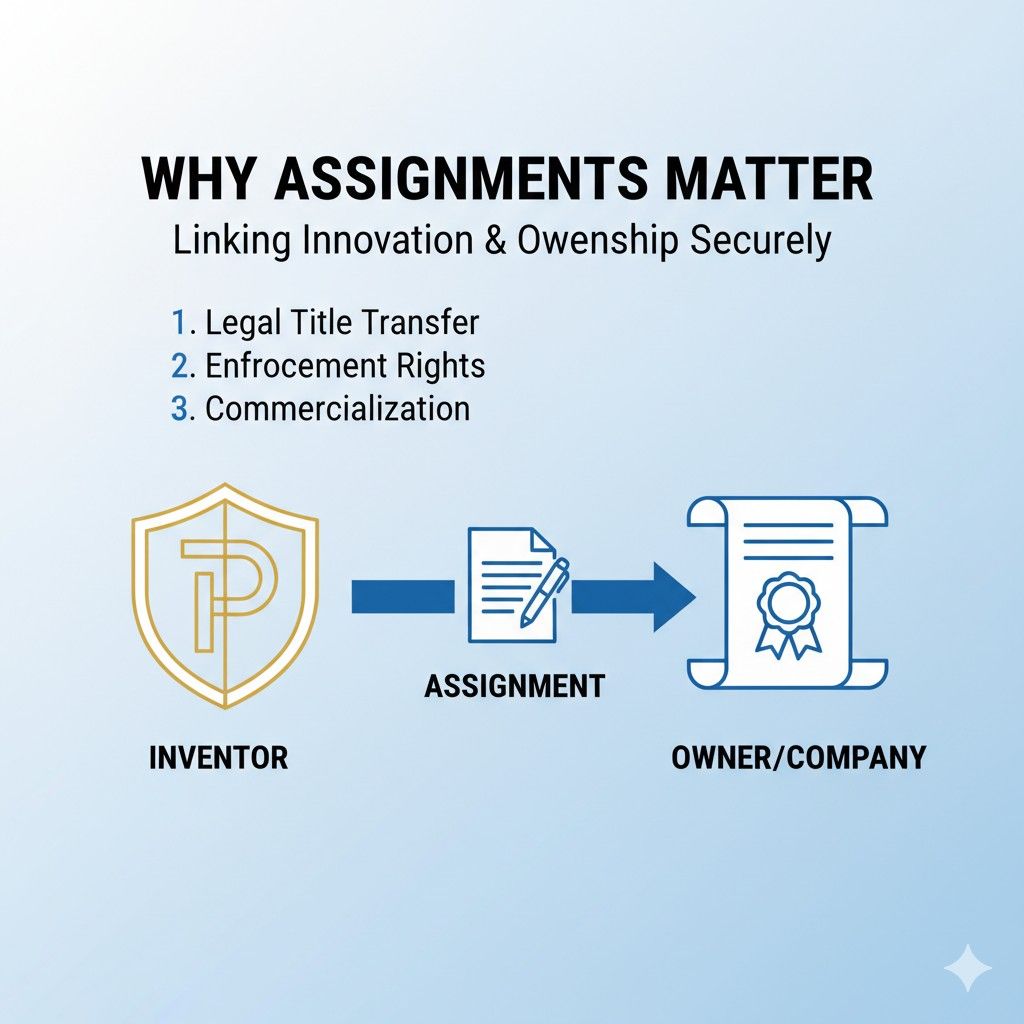
Ownership only becomes real when it is documented correctly. Assignments are the written proof that the invention belongs to the company and not to an individual person.
If your name is on the patent application but your company is supposed to own the invention, the Patent Office does not assume that transfer happened. It must be written, signed, and recorded.
Without that, the law treats the inventor as the owner, even if the company paid for everything.
This is where many startups slip without knowing it. They think incorporation papers or employment agreements are enough. They help, but they do not replace a clean patent assignment.
The Patent Office wants to see the chain of ownership clearly tied to the patent itself.
Early Assignments Prevent Late-Stage Fire Drills
The worst time to fix assignments is during fundraising, acquisition talks, or due diligence. That is usually when the problem shows up. An investor asks who owns the patents.
A buyer wants proof that the company controls the IP. Suddenly, everyone is scrambling to chase signatures from former co-founders or early engineers who are no longer around.
Fixing assignments late is possible, but it is slow, stressful, and risky. If someone refuses to sign or cannot be found, the value of the patent drops fast. In some cases, deals fall apart completely.
The smartest move is to lock assignments in as soon as the invention is filed. When ownership is clear from the start, every future conversation becomes easier. You are not proving control. You are simply showing it.
Founders Often Assume Employment Covers Everything
Many founders believe that hiring someone automatically means the company owns what they create. That is not always true. Employment agreements help, but patent law still looks for a clear assignment tied to the specific invention.
If an engineer invents something and leaves before signing a proper assignment, ownership can become unclear. Even worse, if a contractor or advisor contributes without assigning rights, they may legally own part of the invention.
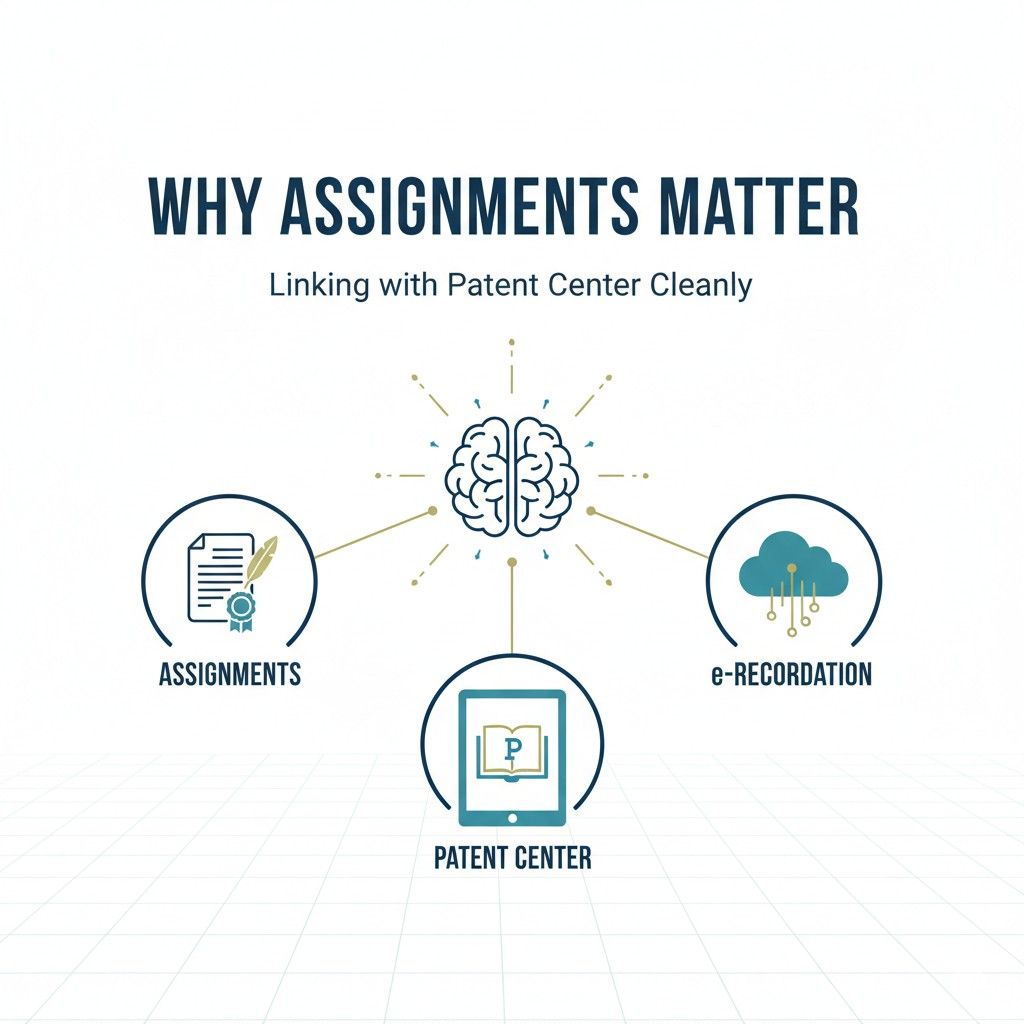
Assignments close this gap. They turn assumptions into facts. They make sure every person who touched the invention transferred their rights properly.
This is especially important for startups that move fast and bring people in and out during early growth.
Assignments Protect You From Your Own Success
Success increases scrutiny. The more valuable your company becomes, the more closely people look at your IP records. What seemed fine at seed stage can raise red flags later.
Assignments protect you from that attention. They make your patents boring in a good way. Clean ownership means fewer questions, faster reviews, and stronger confidence from outsiders.
Strong assignments also give you leverage. If someone challenges your patent or questions ownership, you are not arguing based on memory or intent. You are pointing to recorded facts.
Patent Center Relies on Assignments to Tell a Clear Story
Patent Center is not just a filing system. It is the official story of your patent. Assignments are part of that story. When ownership is recorded properly, Patent Center reflects the correct owner, making everything downstream smoother.
If assignments are missing or unclear, Patent Center may show outdated or incorrect information.
That can cause confusion when filing follow-on applications, continuations, or foreign filings. It can also slow down prosecution if ownership questions arise.
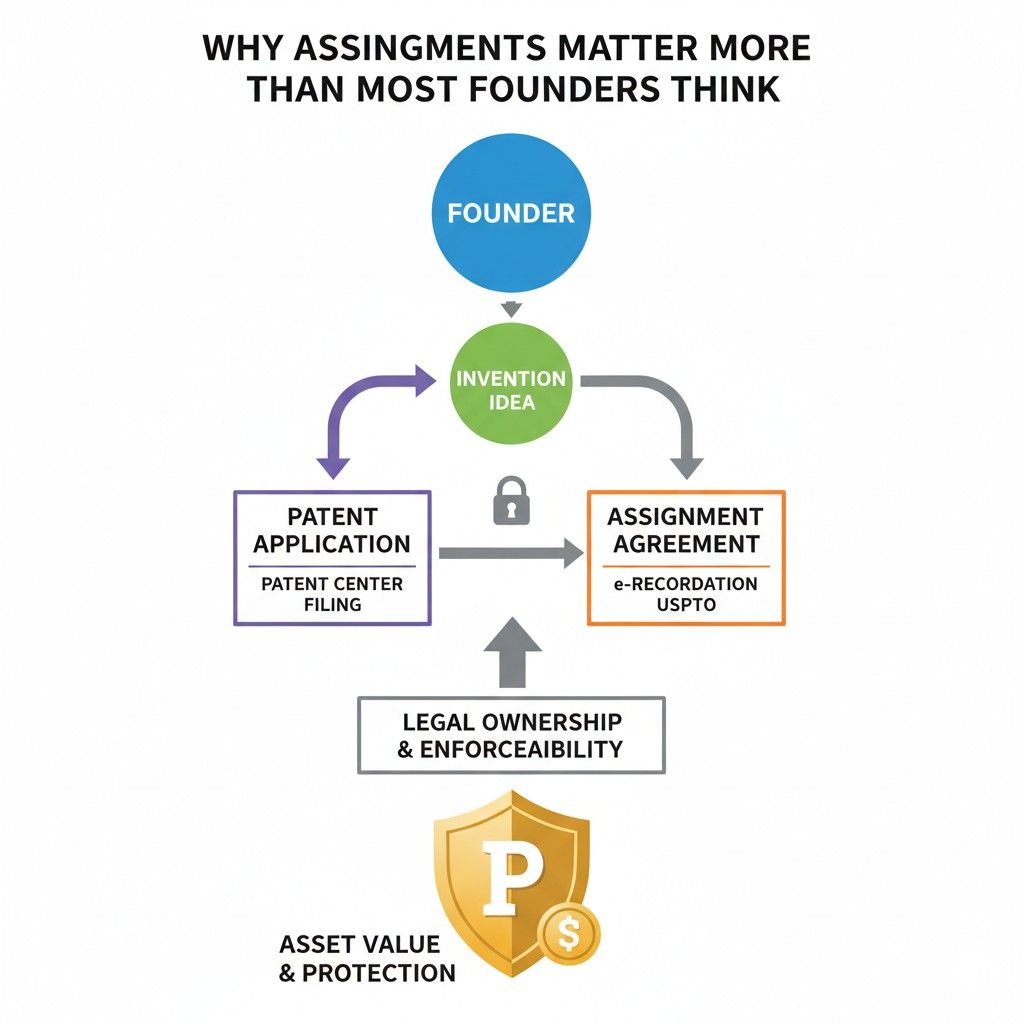
Clean assignments keep Patent Center aligned with reality. That alignment saves time and avoids unnecessary back-and-forth with the Patent Office.
Small Errors Create Big Confusion Later
Assignment problems are rarely dramatic at first. They usually start with small mistakes. A name spelled slightly wrong. An entity listed incorrectly. A document signed but never recorded. Each one seems minor until they stack up.
Over time, these errors blur the chain of ownership. Fixing them later often requires extra filings, explanations, and legal work. That means more cost and more delay.
Doing assignments carefully at the beginning avoids this slow decay. Accuracy matters more here than speed, but with the right tools, you can have both.
Strategic Timing Makes Assignments Easier
Assignments work best when they are tied directly to the filing process. When the invention is fresh and everyone involved is still engaged, signatures are easy to get. Details are clear. There is no debate about who did what.
Waiting creates friction. People forget. Priorities change. Leverage shifts. Strategic founders treat assignments as part of building the invention, not as an afterthought.
This is where modern tools help. Platforms like PowerPatent are designed to capture ownership cleanly while the patent is being built, not months later when cleanup becomes painful.
You can see how that flow works here: https://powerpatent.com/how-it-works
Clean Assignments Increase Real Company Value
Patents are not just legal documents. They are assets. Like any asset, their value depends on clarity and control. A patent with messy ownership is discounted. A patent with clean assignments is trusted.
When ownership is clear, your patents become easier to license, sell, or enforce. They also strengthen your position in negotiations, even if you never plan to litigate.
Assignments do not just protect you. They amplify the value of what you have already built.
The Quiet Advantage of Doing This Right
Most founders never think deeply about assignments until something goes wrong. That is why doing this right gives you a quiet advantage. While others scramble, you move forward without friction.
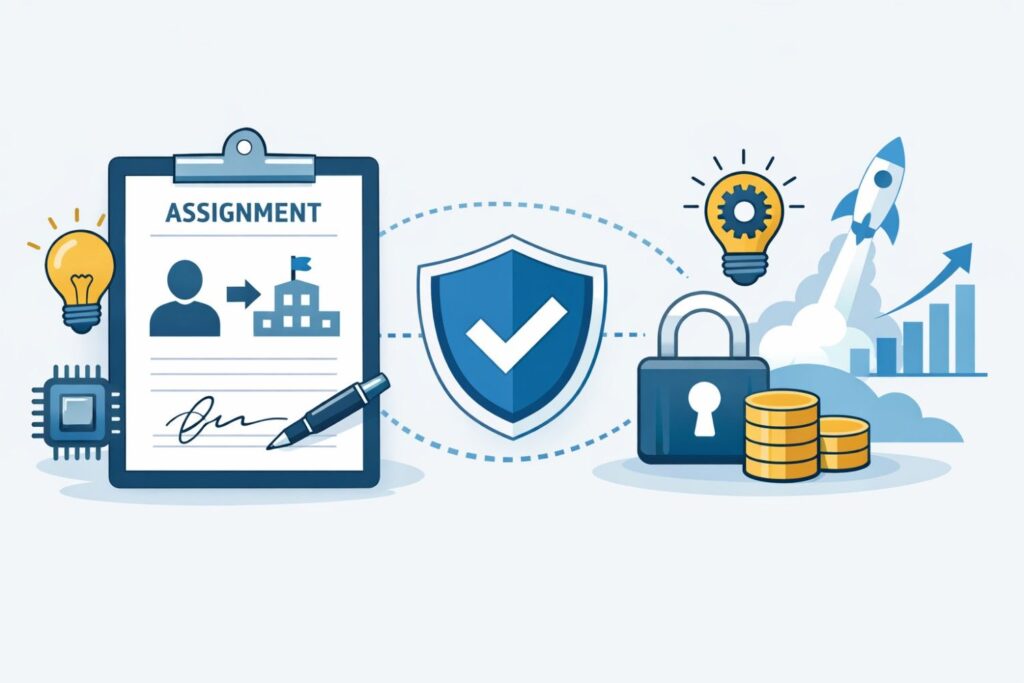
Clean assignments do not make headlines. They do not feel exciting. But they are one of the strongest foundations you can build under your IP. They keep your company stable as it grows and make every future step easier.
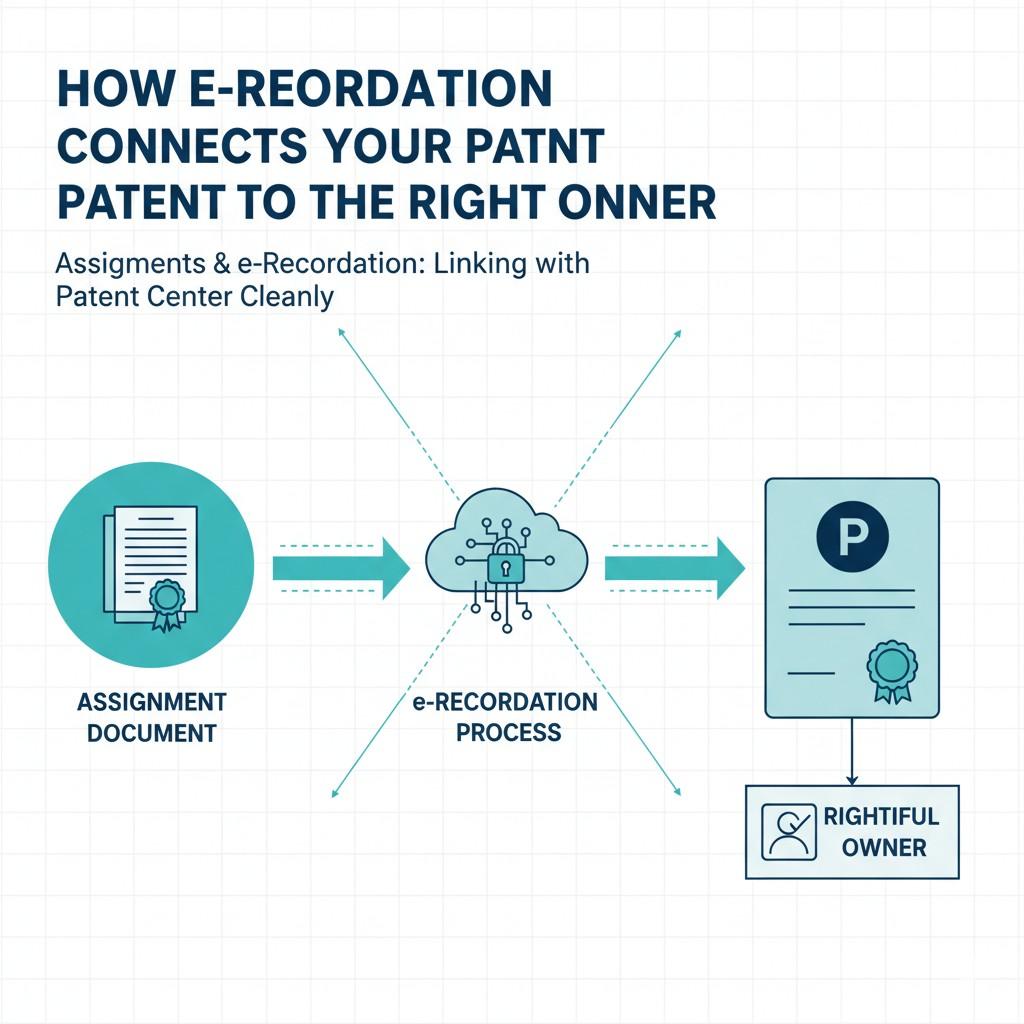
How e-Recordation Connects Your Patent to the Right Owner
Assignments are often treated like background noise in patent work, but in reality, they are one of the loudest signals of quality in your entire IP stack.
This section goes deeper into how assignments shape control, reduce risk, and quietly decide whether your patent becomes a true business asset or a fragile document that breaks under pressure.
Ownership Is a Business Question Before It Is a Legal One
At its core, an assignment answers a simple business question: who controls this invention today.
Control is what lets a company raise money, block competitors, license technology, or sell the business. Without control, the patent is just paper.
Many founders think ownership is obvious because the company paid for development or because the invention was built during work hours.
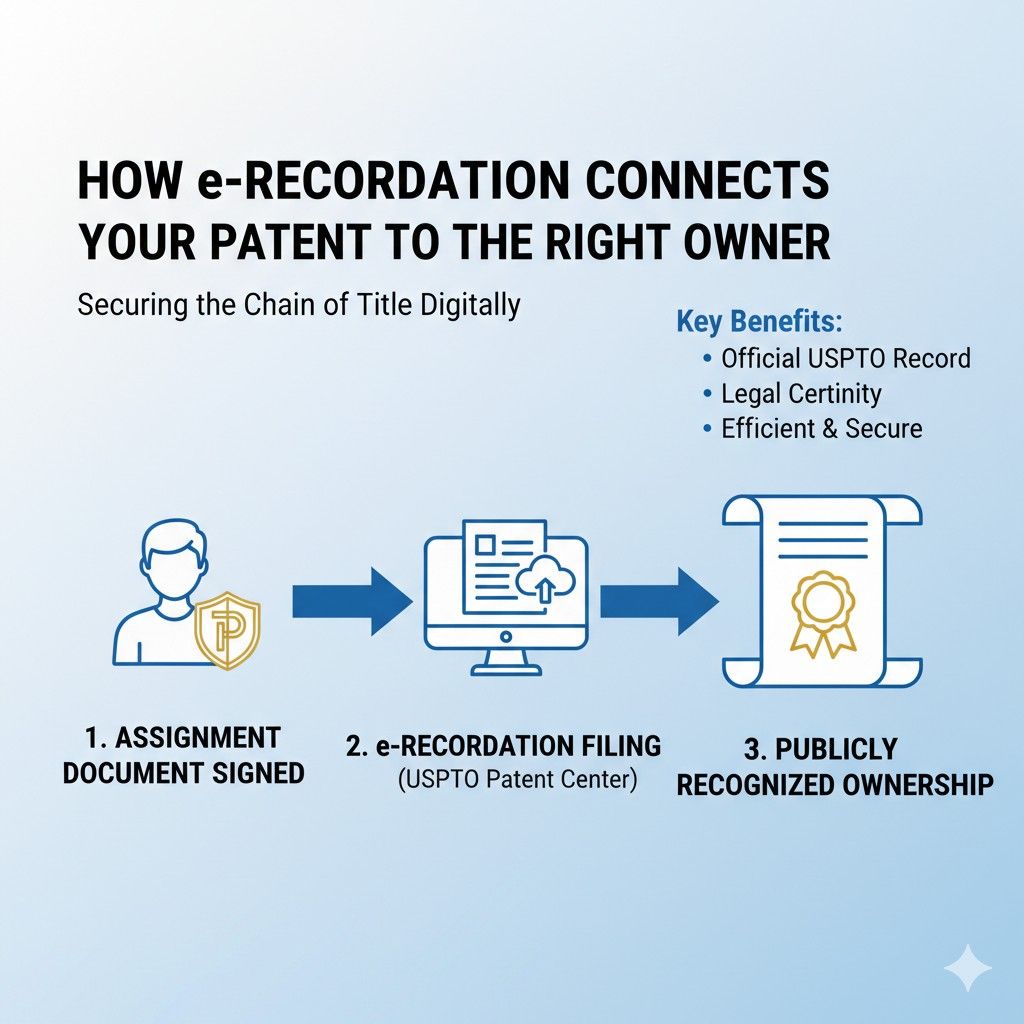
The Patent Office does not work on assumptions. It works on recorded facts. If the assignment does not exist or is unclear, control is unclear.
Smart founders treat assignments as part of company building, not just compliance. The moment you see ownership as a business lever instead of a legal form, priorities change fast.
Investors Read Assignments as a Signal of Maturity
Investors rarely say this out loud, but they absolutely notice how a company handles IP ownership. Clean assignments signal discipline, foresight, and operational maturity. Messy or missing assignments signal risk.
When an investor reviews a patent, they are not just reading claims. They are asking whether the company truly owns what it says it owns. If ownership looks sloppy, confidence drops, even if the technology is strong.
Founders who get assignments right early make investor conversations smoother. There are fewer follow-up questions, fewer delays, and fewer doubts. That calm confidence is hard to fake later.
Assignments Reduce Founder-to-Founder Risk
Early teams change. Co-founders leave. Equity splits shift. Disagreements happen. Assignments protect the company from these human realities.
Without a clean assignment, a departing founder may still own rights to the invention. That can give them leverage long after they stop contributing. Even if they never intend to cause trouble, the risk exists.
Assignments move ownership out of individuals and into the company. That shift protects everyone involved. It keeps the invention tied to the mission, not to personal relationships.
Contractors and Advisors Are a Hidden Risk Zone
One of the most common assignment failures happens with contractors and advisors. Startups often bring in outside help quickly. A designer sketches a system. A consultant helps shape architecture. An advisor gives technical input.
If those contributions touch the invention and no assignment is signed, ownership becomes cloudy. The company may unknowingly share rights with someone outside the core team.
Founders can avoid this by treating assignments as standard whenever someone contributes to invention work.
It does not need to be awkward. It needs to be clear. Clear expectations early prevent uncomfortable conversations later.
Assignments Support Faster Patent Prosecution
Clean assignments do more than protect ownership. They also make the patent process itself smoother. When ownership is clear, filings move faster. Updates are simpler. Communications with the Patent Office are cleaner.
If ownership is unclear, extra steps appear. Corrections are requested. Questions slow things down. Each delay costs time and focus.
Founders who care about speed should care about assignments. They remove friction from the system that processes your patent.
The Cost of Fixing Assignments Grows Over Time
Assignment mistakes compound. What could have been a simple signature early can turn into weeks of effort later. People move. Companies dissolve. Memories fade.
Fixing assignments after the fact often requires legal help, extra filings, and careful explanations. In some cases, it is not fully fixable at all.
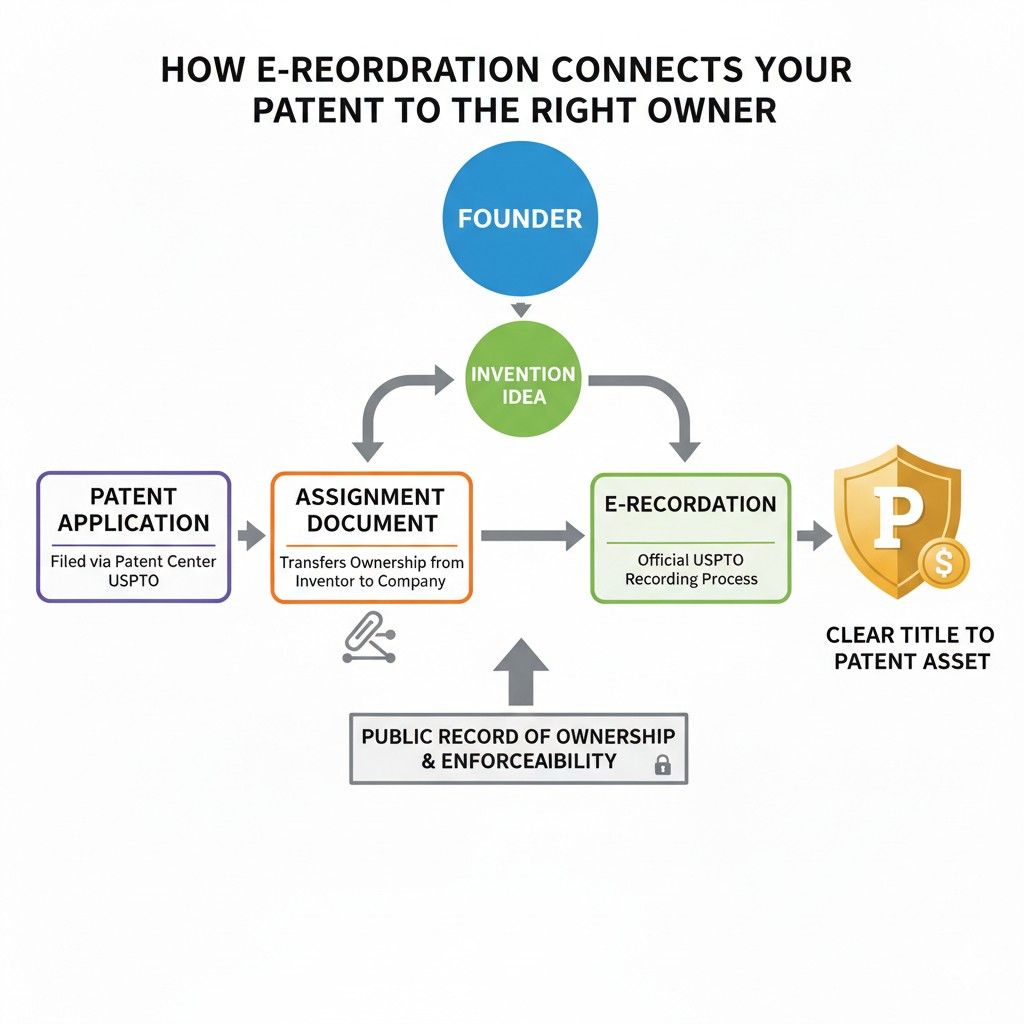
The most cost-effective moment to handle assignments is when the invention is fresh and everyone is aligned. That moment passes quickly in a startup environment.
Assignments Anchor the Chain of Title
Every patent has a chain of title, which is the history of ownership from inventor to current owner. Assignments are the links in that chain. If a link is missing or weak, the chain breaks.
A broken chain makes patents hard to trust. Buyers discount them. Partners hesitate. Courts question them.
Strong assignments create a clean, unbroken story of ownership. That story is what turns a patent into something others are willing to rely on.
Strategic Founders Think About the End Early
Founders who build valuable companies often think about exits early, even if they plan to grow for years. Assignments play a big role in exits.
During acquisitions, IP review is intense. Buyers want certainty. They do not want to fix problems you created years earlier. Clean assignments reduce deal risk and speed up closing.
Thinking about assignments early is not pessimistic. It is strategic. It keeps future options open.
Assignments Should Match How Your Company Actually Operates
One subtle mistake founders make is copying assignment templates that do not match reality. Names are wrong. Entities are outdated. Roles are unclear.
Assignments should reflect how your company actually works today. If your company changed its name, the assignment should reflect that. If ownership moved between entities, that should be recorded properly.
Accuracy matters more than formality. A simple, correct assignment is better than a fancy, wrong one.
Why Tools Matter More Than Templates
Many founders rely on static documents to handle assignments. That works until it does not. Templates do not adapt as your company grows. They do not connect to your patent filings automatically.
Modern tools tie assignments directly to the patent process. They reduce manual errors and ensure ownership stays aligned with filings in Patent Center.
This is where PowerPatent fits naturally. It connects invention creation, attorney review, filing, and ownership into one clean flow.
That integration helps founders avoid assignment mistakes without slowing down. You can explore that process here: https://powerpatent.com/how-it-works
Assignments Create Peace of Mind You Do Not Notice Until It Is Missing
When assignments are done right, you rarely think about them again. That is the point. They quietly support everything else you do.
When they are done wrong, they surface at the worst possible time. During fundraising. During acquisition talks. During conflict.
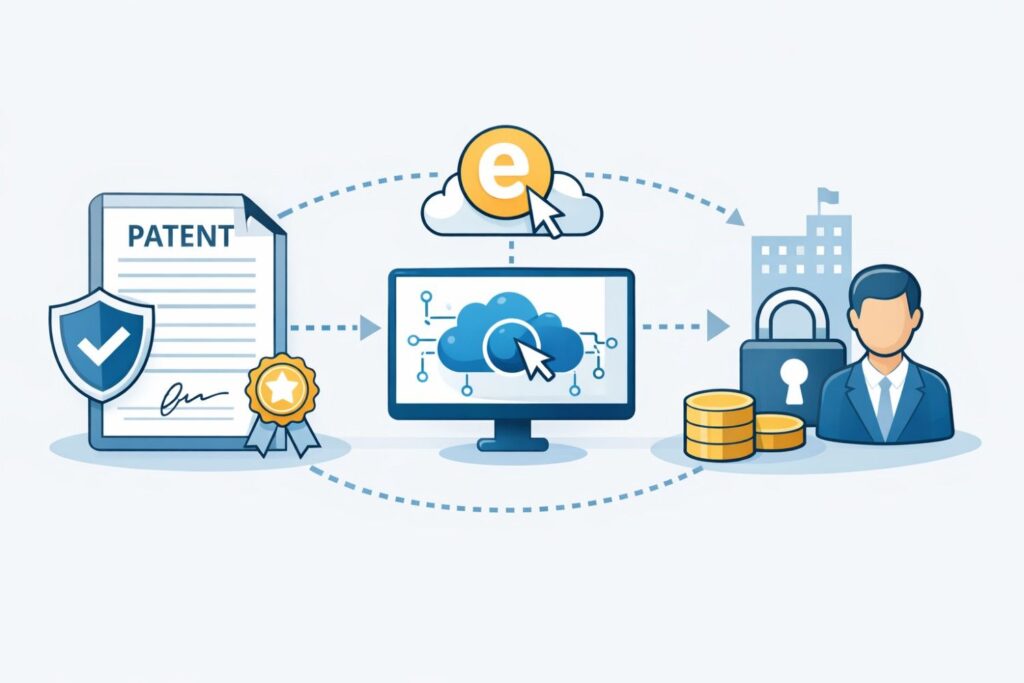
Founders who handle assignments early buy peace of mind. They free up mental space to focus on building, not fixing.
This quiet stability is one of the most underrated advantages in startup life.
Keeping Patent Center Clean, Clear, and Investor-Ready from Day One
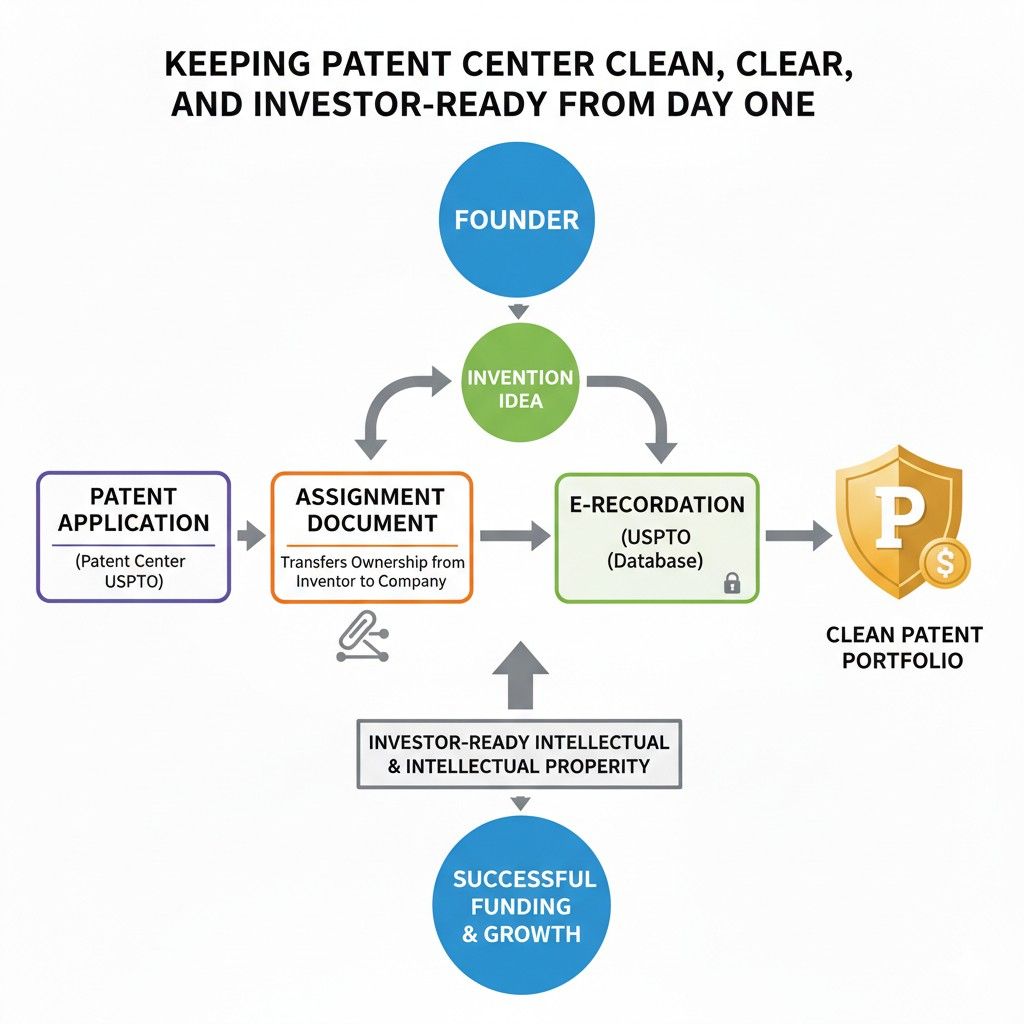
e-Recordation is where assignments stop being private paperwork and start becoming public truth. It is the step that tells the Patent Office, and everyone who relies on its records, who actually owns the invention.
Many founders think signing an assignment is the finish line. It is not. Until that assignment is recorded properly, ownership is still floating in limbo.
Signing Is Only Half the Job
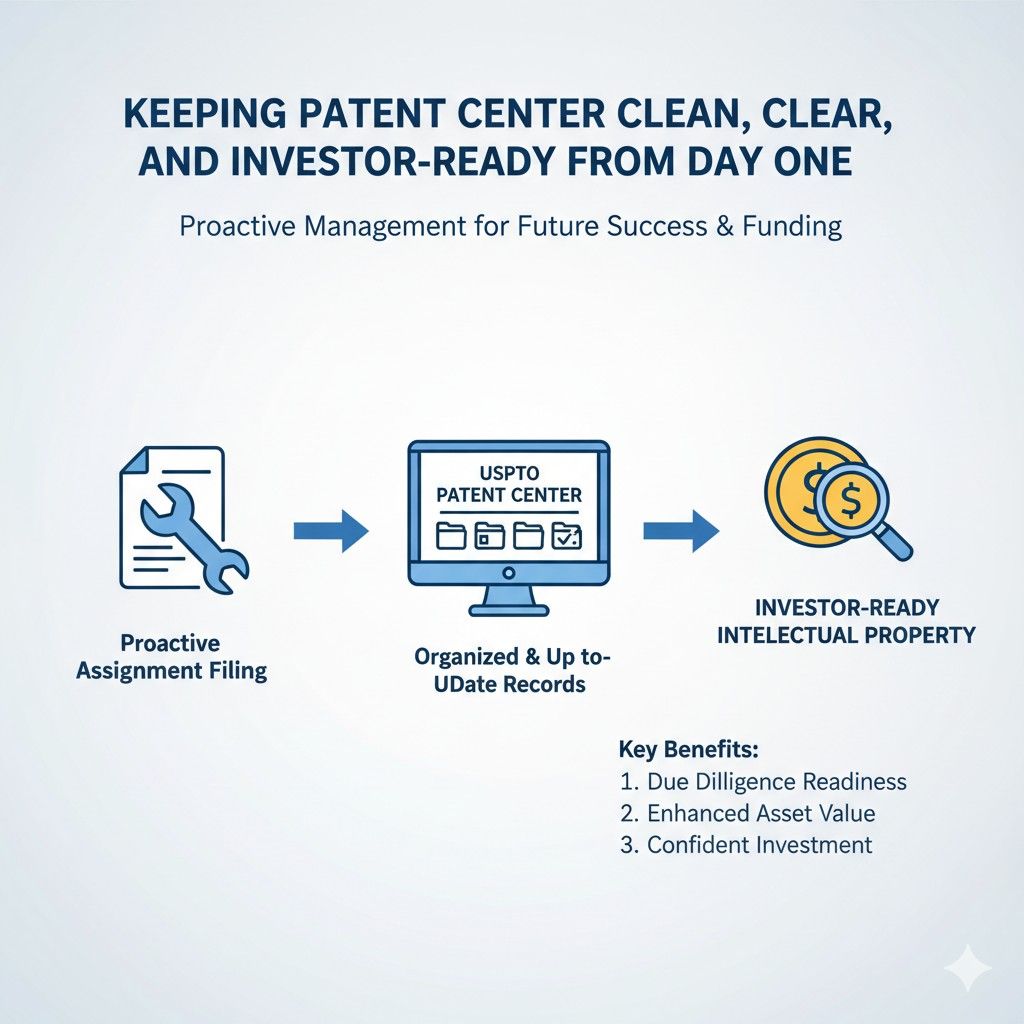
An assignment sitting in a folder does not fully protect you. The Patent Office does not see private files. It only trusts what has been officially recorded. e-Recordation is the act of submitting that assignment so it becomes part of the public patent record.
If this step is skipped or delayed, Patent Center may still show the inventor as the owner even though the company believes it owns the patent. That mismatch creates confusion and risk.
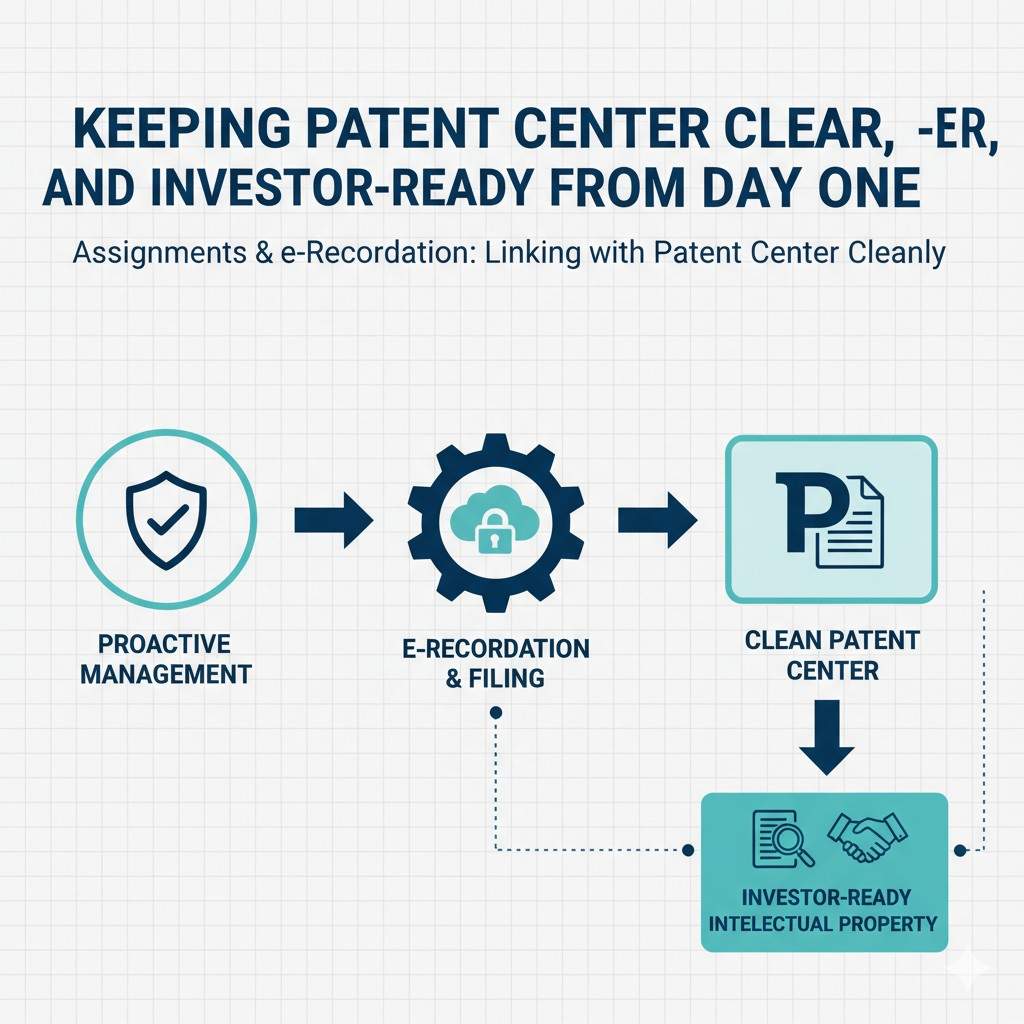
Founders often discover this gap months or years later when they log into Patent Center and see the wrong name listed. By then, the fix is no longer automatic. It requires explanation and extra work.
Patent Center Is the Source of Truth Others Trust
Patent Center is not just for filing documents. It is the system investors, buyers, partners, and attorneys check when they want to verify ownership. If Patent Center shows unclear or outdated ownership, people assume the IP is risky.
Even if you have perfect internal records, external trust depends on what Patent Center displays. That is why e-recordation is so important. It aligns your internal reality with the public record.
When Patent Center clearly shows your company as the owner, conversations move faster. When it does not, conversations slow down.
Timing of e-Recordation Matters More Than Most Think
Recording assignments early has real benefits. When e-recordation happens close to filing, the Patent Office processes everything in context. Ownership updates flow smoothly into the application record.
Delaying e-recordation increases the chance of mismatches. Applications move forward. Filings stack up. Ownership changes lag behind. Eventually, reconciling everything becomes harder than it should be.
Strategic founders treat e-recordation as part of filing, not a separate task to get around to later. That mindset alone avoids many common problems.
Clean e-Recordation Reduces Questions From Examiners
Patent examiners focus on technical merit, but ownership issues can still cause delays. If records are unclear, examiners may raise questions or require corrections before moving forward.
Each question pauses progress. Each correction takes time. Clean e-recordation reduces these interruptions.
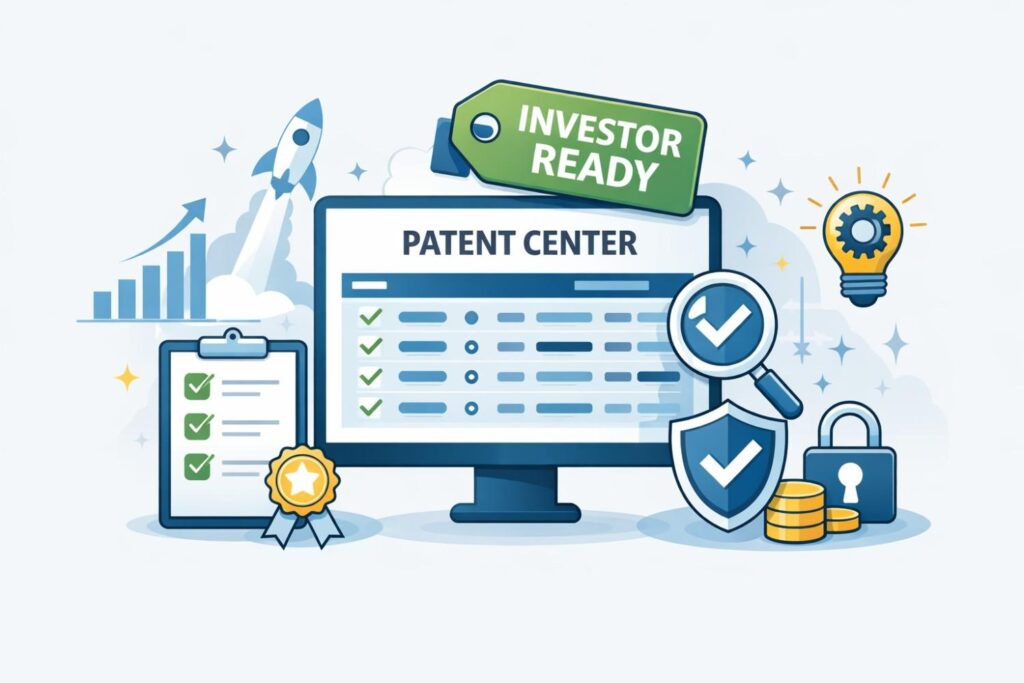
Speed in patent prosecution is not just about writing good claims. It is also about keeping records simple and accurate.
Errors in e-Recordation Are More Common Than You Think
Many founders assume e-recordation is foolproof. It is not. Simple mistakes happen often. Wrong entity names. Missing pages. Incorrect application numbers.
These errors may not cause immediate rejection, but they weaken the record. Fixing them later requires additional filings and careful explanations.
Using tools that guide e-recordation and connect it directly to the correct application reduces this risk. Manual uploads increase it.
Ownership Changes Over Time, Records Must Follow
Startups evolve. Companies restructure. Subsidiaries form. Assets move. When ownership changes, assignments and e-recordation must follow.
Failing to record changes creates gaps in the chain of title. Those gaps raise questions later about who had the right to file, enforce, or license the patent at different points in time.
Keeping e-recordation up to date ensures Patent Center tells a continuous, believable story from invention to present day.
Public Record Is a Defensive Tool
Public ownership records do more than inform. They protect. If a dispute arises, recorded assignments show that ownership was transferred openly and properly.
Courts and counterparties give more weight to recorded documents than private agreements. e-Recordation strengthens your position without requiring confrontation.
This defensive value often goes unnoticed until it is needed.
Founders Underestimate How Often Others Check
It is easy to assume no one is looking at Patent Center. In reality, many people check it quietly. Investors. Competitors. Potential partners.
They may never mention what they see, but it shapes their perception. Clean records build trust silently. Messy records create silent doubt.
Founders who understand this treat e-recordation as part of reputation management, not just compliance.
Linking Assignments Correctly Avoids Fragmented Records
One common problem is recording assignments without properly linking them to the right application or patent. This creates fragmented records where ownership exists, but is hard to trace.
Patent Center works best when assignments are clearly tied to specific filings. That clarity depends on accurate data at the time of e-recordation.
Getting this right once is far easier than untangling it later.
Why Manual Processes Fail at Scale
Early on, manual e-recordation may feel manageable. As filings increase, complexity grows. More inventors. More applications. More ownership events.
Manual tracking breaks down under this weight. Missed recordings become more likely. Errors slip through.
Modern platforms reduce this risk by embedding e-recordation into the patent workflow itself. That integration is what keeps records clean as volume grows.
PowerPatent was built with this exact problem in mind.
By connecting invention creation, attorney review, filing, and ownership updates, it helps ensure assignments and e-recordation stay aligned with Patent Center automatically.
You can see how that works here: https://powerpatent.com/how-it-works
Clean Records Save Time You Never Notice
When e-recordation is done right, nothing happens. No alerts. No questions. No delays. That silence is a success.
Founders often underestimate how much time is saved by avoiding cleanup. Every avoided fix is time spent building instead.
This is one of those areas where doing less later requires doing things right now.
e-Recordation Is a One-Time Effort With Long-Term Impact
Recording an assignment takes minutes. The benefits last for the life of the patent. Few actions in startup life offer that kind of leverage.
Once recorded, ownership clarity compounds. Each future filing builds on a clean base. Each review becomes easier.
Founders who understand this see e-recordation not as admin work, but as leverage.
Wrapping It Up
Assignments and e-recordation are not exciting, but they are decisive. They determine whether your patent is a real asset or a fragile promise. Founders who take ownership seriously, record it properly, and keep Patent Center aligned set themselves up for smoother growth and stronger outcomes. Doing this right once saves you from doing it painfully later.