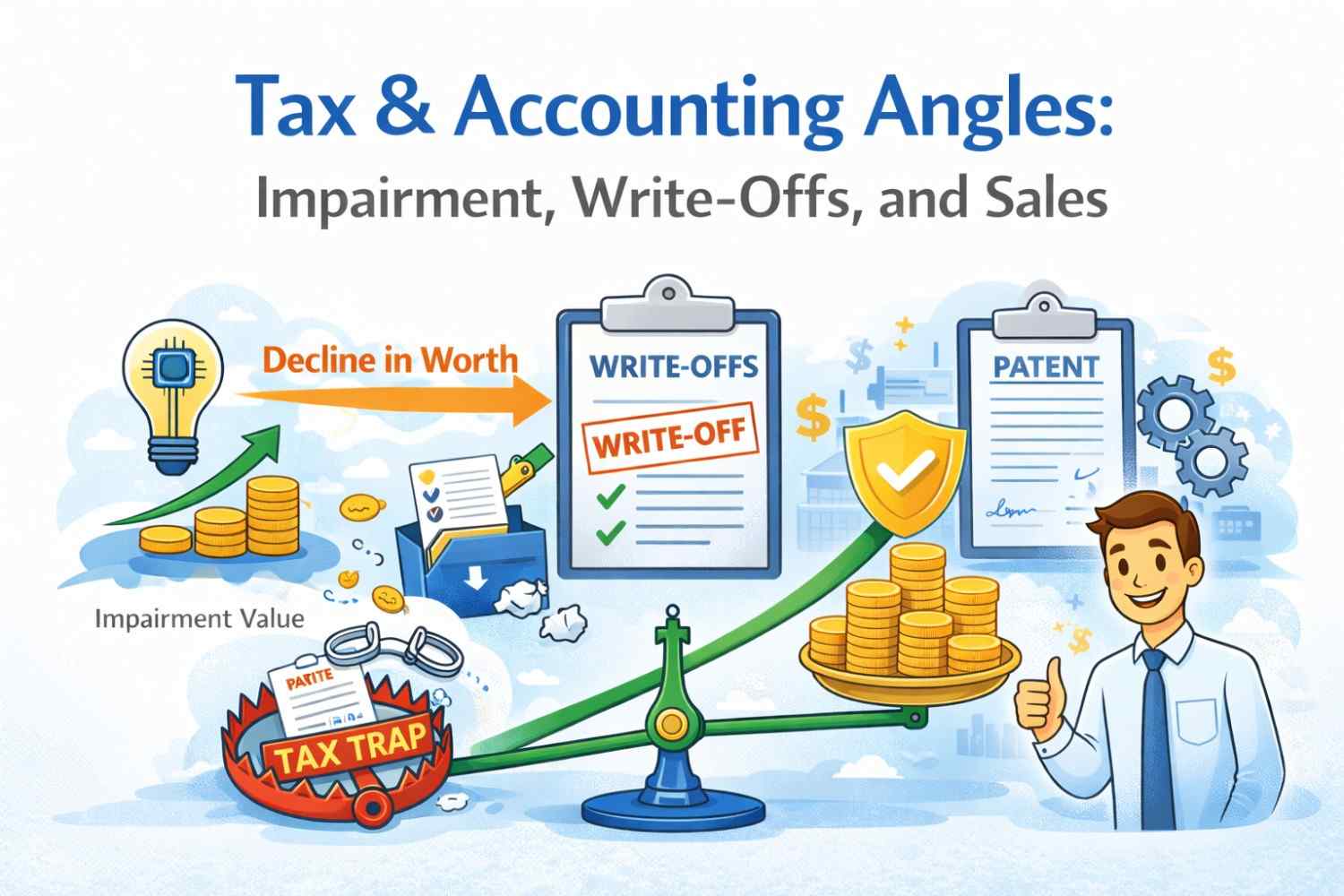
If you are building real tech, your ideas are not just code on a screen. They are assets. And assets affect your taxes, your books, your runway, and even your exit. Most founders ignore this until a crisis hits. That is a mistake. When you understand how impairment, write-offs, and sales work, you gain control. You protect cash. You avoid ugly surprises. And you make smarter moves with your IP. In this guide, we will break it down in plain English so you can use it right away. Before we go deeper, if you want to see how to turn your inventions into strong, defensible patents that actually support your financial strategy, take a quick look at how PowerPatent works here: https://powerpatent.com/how-it-works
What “Impairment” Really Means for Your Startup’s IP
Impairment sounds like an accounting word that belongs in a dusty textbook. It is not. It is a real signal about whether the value of your intellectual property still matches reality.
If your startup owns patents or patent applications, those are assets on your books. And when the market shifts, your product pivots, or a competitor moves faster, the value of those assets can change.
When the value drops in a serious way, that is impairment. Understanding this early helps you protect your runway and avoid painful surprises later.
Impairment Is About Reality Catching Up
Every asset on your books has a number attached to it. That number is supposed to reflect what the asset is worth to your business.
For patents, that value may come from development costs, legal fees, and filing expenses. It may also reflect the price you paid to acquire IP from someone else.
The problem is simple. The market does not care what you paid. The market only cares what the asset can do today.
If your patent covers a feature you no longer use, or if your main product changed direction, that patent may not be worth what it once was. If a new regulation makes your technology harder to sell, the value may drop.
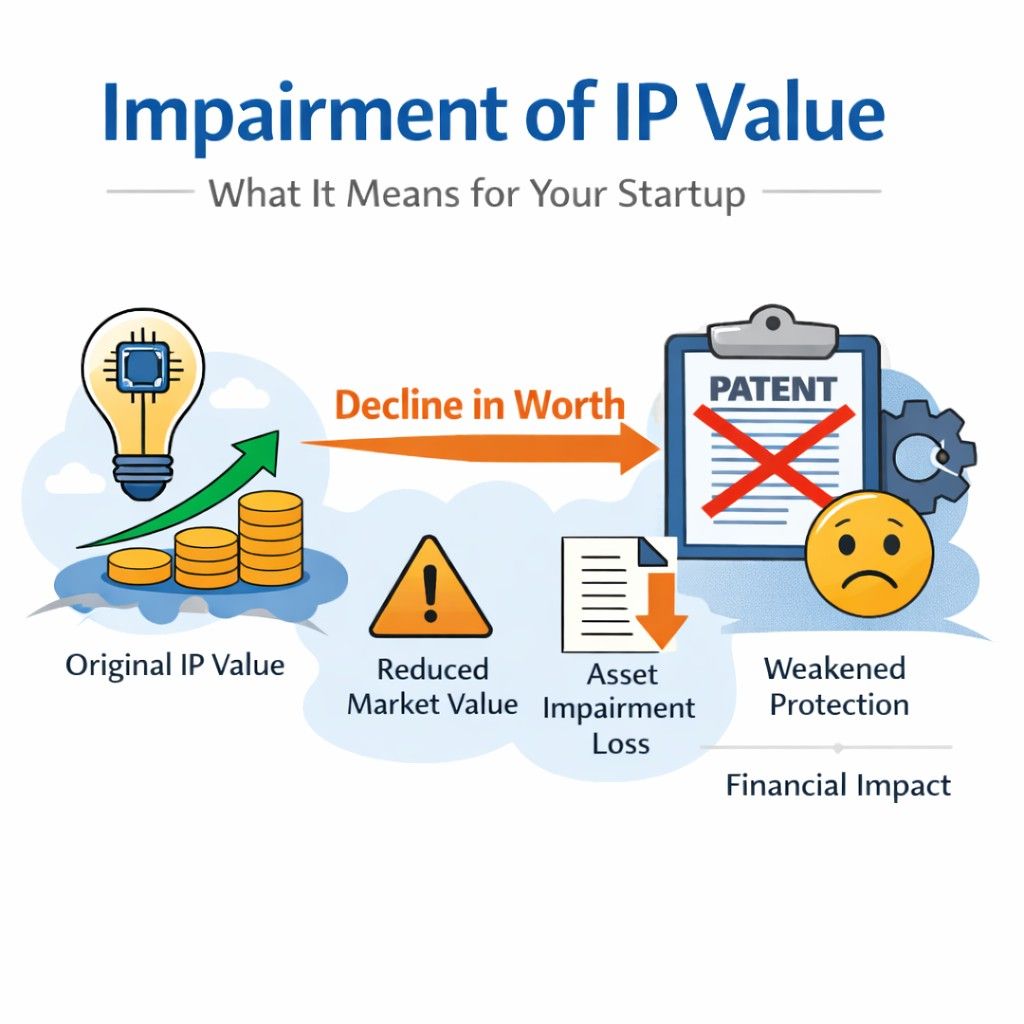
When the book value is higher than the real value, accounting rules require you to recognize impairment.
Founders often ignore this. That is risky. Investors do not ignore it. Acquirers definitely do not ignore it.
How Impairment Hits the Financial Statements
When impairment happens, you record a loss. This does not mean cash leaves your bank account. It means your asset value on the balance sheet goes down, and your expenses go up for that period.
This can shrink your reported profit. It can even create a loss on paper. That matters when you are raising money, negotiating with lenders, or preparing for an exit.
But here is the deeper strategy. Impairment is not just about compliance. It is about clarity.
If your books show inflated IP value, you are lying to yourself about your real position. When you correct that number, you get a clean view of what truly drives value in your company. That clarity leads to better decisions.
Signs Your IP Might Be Impaired
Impairment does not happen randomly. It usually follows business events.
If you pivoted away from a core product that your patent was built around, that is a warning sign. If you stopped investing in a certain technology line, that is another signal.
If revenue linked to a specific patented feature has dropped hard and shows no path back, that is also a trigger.
Sometimes the market moves. A competitor may release a better solution that makes your patented method less important. Or a new open-source tool may reduce the need for your protected system.
When any of these things happen, you should not wait for your accountant to bring it up. You should raise the question yourself. That shows control and leadership.
The Strategic Side of Impairment
Most founders see impairment as bad news. In truth, it can be a strategic reset.
When you reduce the carrying value of outdated IP, you free yourself from defending a past decision. You can stop pouring money into legal maintenance fees for patents that no longer support your roadmap.
This is where strong IP strategy matters. If your patent portfolio was built with focus and real attorney oversight, each asset should connect to your long-term vision.
At PowerPatent, that is exactly how we guide founders. We help you file patents that align with what you are actually building, not random features that may disappear in six months.
You can see how that works here: https://powerpatent.com/how-it-works
When your patents match your roadmap, impairment risk drops. When your IP is scattered and reactive, impairment becomes more likely.
Cash Flow vs. Accounting Loss
One common fear is that impairment will hurt cash flow. It does not directly affect cash. It changes reported earnings, not your bank balance.
But it can influence how others see you.
Investors look at patterns. If you record repeated impairment on IP, they may question how you choose what to patent. They may ask if you are chasing trends instead of building durable tech.
This is why the real solution is not just handling impairment correctly. It is preventing unnecessary impairment in the first place by making smarter IP decisions early.
How to Test the Real Value of Your Patent
You do not need to be an accounting expert to think strategically. Ask yourself one core question. If you did not already own this patent, would you pay to acquire it today?
If the answer is no, you have a problem.
You can also look at revenue streams. Is this patent directly linked to a product feature that drives sales? Does it protect a key algorithm or process that competitors cannot copy easily?
Does it increase your valuation story when you talk to investors?
If the patent does not strengthen pricing power, defend market share, or support future licensing, its value may be lower than you think.

This exercise should be done at least once a year. Not as a boring compliance task, but as a strategy session. Treat your IP like a product line. Some assets grow. Some fade. You must know which is which.
Impairment During Fundraising
Raising capital makes impairment more sensitive. Investors will review your financial statements. If they see a large impairment charge, they will ask why.
If you are prepared, this can actually build trust.
You can explain that the company pivoted, cleaned up its books, and focused on core technology. You can show that your current patent portfolio is tightly aligned with your main product and long-term direction.
Transparency beats silence. Silence creates doubt.
This is another reason to build your patent strategy carefully from day one.
When you use a system that combines smart software and real patent attorney oversight, you reduce the risk of filing patents that do not survive your next pivot.
That is the kind of discipline serious investors respect. If you are curious how to do that without slowing down your build cycle, take a look at https://powerpatent.com/how-it-works
Mergers, Acquisitions, and Impairment Risk
If you plan to sell your company one day, impairment becomes even more important.
During due diligence, buyers review your assets closely. If your IP has been impaired heavily in the past, they may discount its value further. They may argue that your technology moat is weaker than claimed.
On the other hand, if you have a clean record and your patents clearly protect active revenue streams, buyers may see them as strategic assets worth paying for.
Think ahead. Do not treat impairment as an afterthought. It is part of the story you will tell when someone asks, “Why is your company worth this price?”
Using Impairment as a Portfolio Filter
There is a practical tactic here. If you suspect certain patents are weak or no longer useful, consider whether to maintain them at all.
Maintenance fees add up over time. If an asset no longer supports your core business, letting it expire may be smarter than carrying it at a reduced value year after year.
But make this decision with guidance. Dropping a patent too soon can expose you to competition. Keeping a useless patent drains cash. The key is alignment with strategy.
A strong IP partner can help you review each asset in context, not in isolation. That is why working with real patent attorneys who understand startups makes a difference.
At PowerPatent, the goal is not just to file. It is to build a portfolio that stands up in the market and on your balance sheet.
The Hidden Cost of Ignoring Impairment
When founders ignore impairment, they often overestimate company value. That leads to unrealistic fundraising targets. It leads to tension in negotiations. It can even delay deals.
Worse, it creates internal confusion. Teams may keep investing in features tied to old patents simply because they believe those assets are valuable.
When you face impairment head-on, you force a strategic conversation. What technology truly matters? What should we double down on? What should we phase out?
That clarity saves money and time.
Building an IP Strategy That Reduces Future Impairment
The best way to deal with impairment is to reduce the chance it happens.
Start by filing patents that protect core systems, not surface-level features. Focus on the engine of your product, the data flows, the architecture, and the processes competitors would struggle to replicate.
Align each filing with a real business goal. If you cannot explain how a patent supports revenue, pricing power, or market position, pause before filing.
Use tools that help you document your invention clearly while still moving fast. Combine that with real attorney oversight to avoid gaps and mistakes. That blend of speed and quality is what keeps your IP strong over time.

If you want to see how to turn your technical work into patents that support both your legal and financial strategy, explore how PowerPatent works here: https://powerpatent.com/how-it-works
Impairment is not just an accounting rule. It is a signal. When you understand it, you stop reacting and start leading.
When and How to Use Write-Offs Without Hurting Your Company
Write-offs sound scary. Many founders think they mean failure. They do not. A write-off is simply a way to admit that money already spent will not create future value.
When used wisely, write-offs can clean up your books, reduce taxes, and sharpen your strategy. When used poorly, they can raise red flags and damage trust. The key is knowing when to act and how to frame it.
What a Write-Off Really Means
A write-off happens when you remove an asset from your books because it no longer has value.
With intellectual property, this can mean abandoning a patent application, deciding not to pursue a filing in certain countries, or walking away from acquired IP that no longer fits your roadmap.

The money is already spent. The legal fees are paid. The filing costs are done. A write-off does not bring that cash back. What it does is stop pretending that the asset still holds economic value for your business.
That honesty is powerful.
The Difference Between a Smart Reset and a Red Flag
There is a big difference between strategic cleanup and careless decision-making.
If you built three product lines and later decided to focus on one, writing off IP tied to the other two can show discipline. It shows you are narrowing focus and cutting waste.
If you repeatedly file patents with no clear business link and then abandon them, that signals poor planning. Investors will notice patterns.
The story behind the write-off matters more than the accounting entry itself.
Timing Matters More Than Most Founders Realize
Waiting too long to write off weak IP can create larger problems. If you keep paying maintenance fees on patents that do not support your core product, you drain cash.
If you raise money based on inflated IP value and later correct it, you may lose credibility.
The better move is to review your portfolio at natural checkpoints. After a pivot. After a major product update. Before a fundraising round. Before an acquisition discussion.
At each checkpoint, ask whether every patent or application still aligns with your current direction.
This is not about cutting corners. It is about precision.
How Write-Offs Can Lower Your Tax Burden
There is a financial upside many founders overlook.
When you write off an asset, that loss may reduce taxable income, depending on your structure and local tax rules. This can lower your tax bill for that year.
For startups that are already operating at a loss, the immediate tax impact may be limited. But for companies approaching profitability or those with taxable gains from asset sales, write-offs can provide meaningful relief.
This is where coordination between your finance team and your IP strategy becomes important. Decisions about abandoning a patent should not happen in isolation. They should align with your broader financial picture.
Abandoning a Patent Application the Right Way
One of the most common write-off events in startups is abandoning a patent application before it is granted.
Sometimes the claims are too narrow. Sometimes the market shifts. Sometimes the product evolves so much that the original filing no longer protects what matters.
If you decide to abandon, make that choice based on strategy, not frustration.
Review the application with counsel. Ask whether parts of it can be repurposed into a new filing that better fits your updated technology. Sometimes the core idea still has value but needs to be reframed.

At PowerPatent, the goal is to prevent wasted filings in the first place by aligning applications tightly with your real product architecture and roadmap.
Smart drafting at the start reduces the need for later write-offs. You can see how that works here: https://powerpatent.com/how-it-works
Cleaning the Books Before Fundraising
Before raising capital, clean books create confidence.
If you know certain IP assets no longer serve your strategy, address them before investor due diligence begins. A controlled write-off looks intentional. A last-minute adjustment during diligence looks reactive.
When investors see that you actively manage your IP portfolio, they view you as disciplined. They are not looking for perfection. They are looking for awareness.
Explain clearly why you wrote off specific assets. Tie the explanation to focus and capital efficiency. Show how remaining patents directly support current revenue or growth plans.
Clarity builds trust.
Avoiding Emotional Attachment to IP
Founders often fall in love with their early ideas. That is natural. But attachment can cloud judgment.
Just because you spent months developing a feature and paid to patent it does not mean it deserves ongoing investment. If that feature no longer drives growth, holding onto the related patent may only slow you down.
Your job is to allocate resources to what moves the company forward now.
Write-offs are part of that discipline.
Write-Offs and Acquisitions
If you are preparing for an exit, write-offs require careful timing.
Buyers will review historical financials. If you recently wrote off a large portion of your IP portfolio, they may question why. Was the technology weak? Did the company overinvest in dead ends?
That does not mean you should avoid necessary write-offs. It means you should document the reasoning clearly.
If you reduced your portfolio to concentrate on a high-value core patent family that protects your main product, that can actually strengthen your position. It shows focus.
Every accounting move tells a story. Make sure yours supports your strategic narrative.
Knowing When Not to Write Off
Not every struggling asset should be written off immediately.
Some patents may not drive revenue today but could become valuable as your market matures. Some applications may look weak at first glance but protect long-term architecture that competitors have not yet targeted.
Before writing off, ask whether the asset supports optionality. Does it give you leverage in future negotiations? Does it block competitors from entering a key technical space?
If the answer is yes, short-term accounting loss may not justify abandonment.
Balance near-term tax benefits with long-term competitive advantage.
Integrating IP Reviews Into Your Operating Rhythm
The most effective startups treat IP review as part of their operating cadence.
Just as you review product metrics and cash runway, you should review your patent portfolio. Are maintenance fees justified? Are pending applications still aligned with the product? Are there gaps in protection around new features?
This habit prevents both over-filing and careless write-offs.
Using a platform that combines software efficiency with real attorney oversight makes these reviews faster and clearer. Instead of guessing, you see how each filing connects to your roadmap.
That reduces waste and strengthens your financial position.
If you want to build patents that hold up not only legally but also financially, explore how PowerPatent supports that process here: https://powerpatent.com/how-it-works
The Long-Term Impact of Disciplined Write-Offs
Over time, disciplined write-offs create a lean, focused IP portfolio. That portfolio is easier to explain to investors. It is easier to defend in negotiations. It costs less to maintain.
More importantly, it reflects strategic intent.
Your balance sheet should mirror your business priorities. When it does, decisions become clearer. Capital allocation improves. Confidence grows.
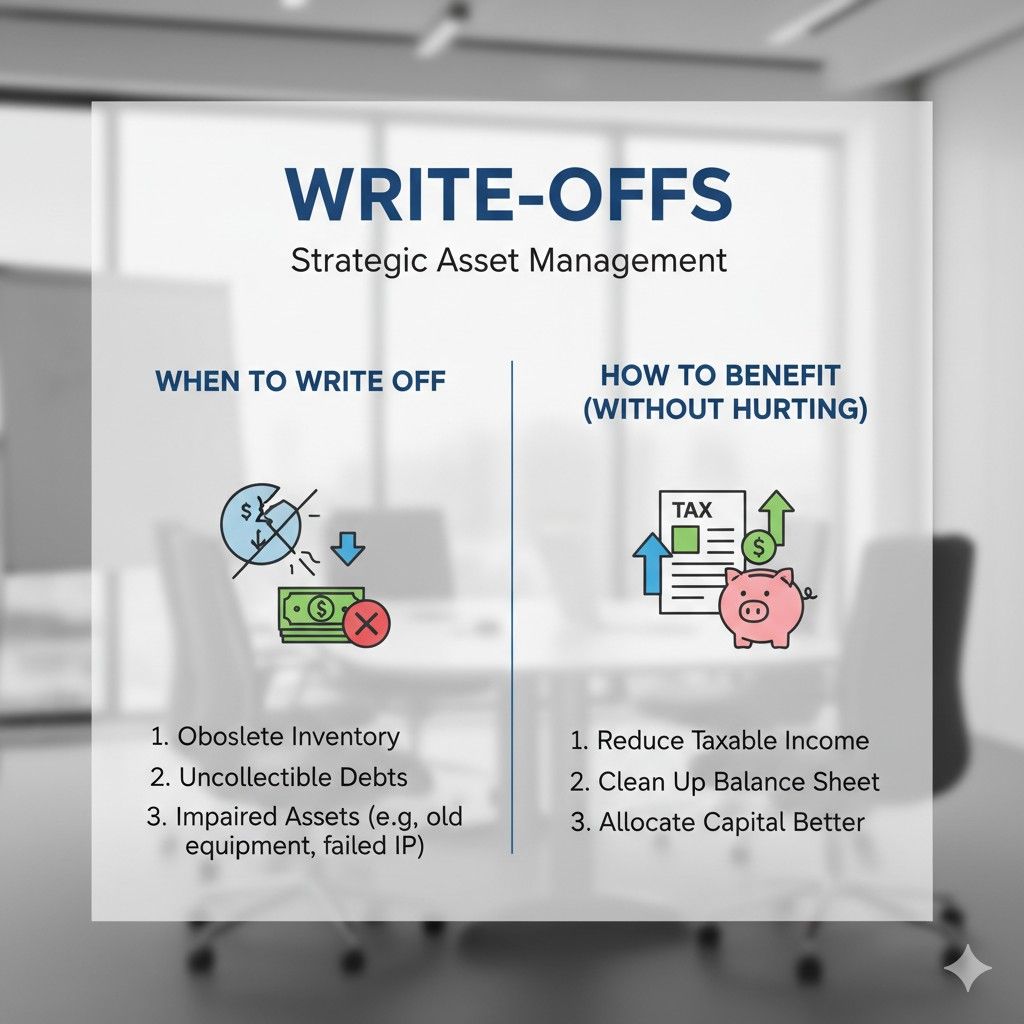
Write-offs are not signs of weakness. They are signs of management maturity when used wisely.
Selling Patents and IP: Tax Traps and Smart Moves
At some point, every founder faces this question. Should we sell this patent? Maybe you are shifting focus. Maybe you need cash. Maybe a larger company wants your technology.
Selling IP can unlock value fast. It can also create tax headaches and weaken your moat if handled poorly. This is not just a legal move. It is a financial and strategic decision that shapes your future.
Why Companies Sell IP in the First Place
IP sales happen for many reasons. Some startups sell non-core patents to fund their main product. Others sell technology after a pivot. In some cases, a patent buyer approaches you because your invention blocks their roadmap.
The key is understanding what you are really selling.
You are not just selling a document filed with a patent office. You are selling control. You are giving up exclusive rights to make, use, or license that invention.

Before you talk numbers, you need to understand the strategic cost.
Asset Sale vs. Licensing: A Big Financial Difference
Selling a patent outright is different from licensing it.
In a full sale, ownership transfers. You receive payment and give up rights. In a license, you keep ownership and grant limited rights to another party, often in exchange for ongoing payments.
From a tax point of view, this difference matters. A full sale may be treated as a capital transaction, which can mean different tax rates compared to ordinary income.
Licensing income may be treated as regular income, depending on structure and jurisdiction.
The structure affects not only taxes but also long-term leverage. Once you sell, you cannot easily reclaim control. A license keeps more options open.
This is why IP sales should never be rushed. The deal structure can shape your financial outcome for years.
Understanding Capital Gains and Ordinary Income
When you sell a patent, the way the proceeds are taxed depends on how the patent was developed, held, and structured.
If your company developed the patent internally, the gain from sale may be treated differently than if you purchased the patent from someone else. Holding period also matters.
Some tax systems reward longer holding periods with lower rates.
If you treat the sale as ordinary income instead of capital gain, you may face a higher tax bill. If you misclassify it, you risk penalties.
This is where alignment between your tax advisor and IP counsel becomes critical. The patent story and the accounting story must match.
Allocation of Sale Price
In many deals, patents are sold along with other assets. Maybe it is part of a larger acquisition. Maybe you are selling a product line.
In those cases, the total purchase price must be allocated across different asset categories. Some of it may be assigned to patents. Some to software code. Some to goodwill. Each category can carry different tax treatment.
The allocation is not random. It is negotiated.
If too little value is assigned to patents, you may miss favorable capital treatment. If too much is assigned, you may trigger higher taxes or scrutiny.
This negotiation requires strategy, not guesswork.
The Risk of Undervaluing Your IP
Founders often underestimate the value of their patents. Especially in early-stage startups, it is easy to think the real value is in the product and team.
But a strong patent that blocks competitors can be worth far more than you expect.
Before selling, evaluate how the patent fits into the buyer’s roadmap. If your patent removes a barrier for them or prevents costly litigation, its strategic value may exceed what you initially imagine.
Do not negotiate from ignorance. Understand the leverage you hold.
This is one reason building high-quality patents from the start matters so much.
When your filings are clear, technically strong, and aligned with real systems, buyers see value. Weak or poorly drafted patents rarely command strong prices.

PowerPatent helps founders build defensible patents with real attorney oversight so that when a sale opportunity arises, you are negotiating from strength.
You can see how that works here: https://powerpatent.com/how-it-works
Selling After Impairment
If you previously impaired a patent and later sell it, the accounting becomes more complex.
When you impaired the asset, you reduced its book value. If you now sell it for more than that reduced value, you may recognize a gain.
That gain can create unexpected tax liability.
This surprises many founders. They assume that because they previously wrote down the asset, any sale proceeds are pure upside. But from a tax view, the difference between sale price and current book value matters.
Planning ahead can prevent cash flow shocks.
Cross-Border Sales and Withholding Issues
If the buyer is in another country, additional tax issues may arise. Some jurisdictions impose withholding taxes on payments for IP. Tax treaties can reduce or eliminate these taxes, but paperwork and structure matter.
If your startup holds patents through a holding company in one country and operates in another, the flow of sale proceeds can trigger additional reporting and compliance steps.
These issues are manageable. They just require foresight.
Do not wait until a term sheet is signed to think about tax structure.
The Strategic Cost of Selling Core IP
The biggest trap in selling patents is not tax. It is weakening your moat.
If you sell a patent tied to your main product, you may lose protection against competitors. Even if you receive short-term cash, you may expose yourself to long-term risk.
Sometimes founders sell IP to extend runway. That can work if the patent is non-core. But selling foundational technology can hurt valuation in future rounds.
Investors want defensibility. If you sell off key patents, you may appear less protected.
Before agreeing to any sale, map the patent directly to your product roadmap. Does it protect a feature that drives pricing? Does it guard against fast followers? Does it increase switching costs?
If yes, think twice.
Structuring Payments to Manage Tax Impact
Not all IP sales need to be one-time lump sums.
Some deals can include installment payments, earn-outs, or royalty-based structures. Spreading payments across years may smooth tax impact and improve cash planning.
However, installment sales can also carry risk if the buyer’s financial health changes. Deferred payments are only valuable if they are actually paid.
Balancing tax efficiency with certainty is part of the strategy.
Preparing Your IP for Sale
If you are even considering selling patents in the future, preparation starts early.
Clean documentation matters. Clear chain of title matters. Assignment records must be complete. If contractors or early team members contributed to the invention, their rights must be properly assigned to the company.
Buyers perform deep due diligence. Missing signatures or unclear ownership can reduce deal value or kill a transaction.
This is where disciplined IP management pays off. When you build your patent portfolio through a structured system that tracks inventors, documents contributions, and involves real patent attorneys, you reduce friction later.
At PowerPatent, the goal is not just to file quickly. It is to build assets that stand up in diligence and in negotiations. If you want to see how that works in practice, visit https://powerpatent.com/how-it-works
Turning an IP Sale Into a Growth Move
Selling IP does not have to mean retreat. In some cases, it can fund expansion.
If you sell non-core patents and reinvest proceeds into strengthening your main technology, you may emerge stronger. The key is discipline. Do not let short-term cash distract you from long-term advantage.
Frame the sale as part of a focused strategy. Explain clearly to investors and team members why the move strengthens your core business.
Every transaction shapes perception.
The Bigger Picture
IP sales sit at the intersection of law, accounting, tax, and strategy. Treating them as simple transactions leaves value on the table.
When you understand tax angles, you protect cash. When you understand strategic angles, you protect your moat. When you align both, you move from reactive to intentional.

Patents are not just legal shields. They are financial assets. Handle them with the same care you apply to product design and capital allocation.
Turning Your Patents Into Financial Leverage, Not Just Legal Protection
Most founders think of patents as shields. They imagine using them only if someone copies their product. That is too small of a view. A well-built patent portfolio is not just defensive. It is financial leverage.
It can support valuation, improve deal terms, unlock funding, and strengthen negotiation power. When you see patents as assets on your balance sheet instead of framed certificates on a wall, your strategy changes.
Patents as Signals to Investors
Investors look for signals. They want proof that your startup has something hard to copy. Code alone is rarely enough. Teams change. Features evolve. But exclusive rights backed by the government send a strong message.
A granted patent shows that your idea is new and clearly defined. Even pending applications show intent and direction.
When your patents are tightly aligned with your core technology, they strengthen your fundraising story. You are not just building fast. You are building with protection.

This matters during valuation discussions. If two startups have similar revenue but one has strong patent coverage and the other does not, the protected company often commands a premium.
That premium is financial leverage created by IP.
Patents and Debt Financing
Equity is not the only way to fund growth. Some startups use venture debt or other forms of financing. In those cases, lenders assess risk carefully.
A solid patent portfolio can improve your profile. It shows you have assets that create barriers to entry. In some cases, patents can even be pledged as collateral, depending on jurisdiction and deal structure.
Even when not directly pledged, strong IP reduces perceived risk. Lower risk can translate into better loan terms or higher credit limits.
This is another reason quality matters more than quantity. Ten weak patents rarely impress lenders. A focused set of well-drafted, strategically aligned patents can.
If you want to build patents that actually support financing conversations instead of just sitting in a folder, it starts with how you draft and file them.
PowerPatent combines smart software and real patent attorney oversight to help founders create assets that stand up financially and legally. You can explore the process here: https://powerpatent.com/how-it-works
Using Patents to Strengthen Pricing Power
Financial leverage is not always about external deals. It can show up in your pricing strategy.
If customers know your technology is protected and competitors cannot legally copy it, you gain confidence in pricing. You are not racing to the bottom. You are offering something distinct.
This is especially true in deep tech, AI, biotech, hardware, and infrastructure startups. When your core process or system is patented, you can justify premium pricing.
That pricing power increases margins. Higher margins improve financial metrics. Stronger metrics improve valuation.
The chain starts with defensible IP.
Strategic Licensing as Revenue
Licensing is often ignored by early-stage startups. Many founders think licensing is only for large corporations. That is not true.
If your patent covers a technology that others need but you do not plan to commercialize directly, licensing can create revenue without heavy operating costs.
This revenue can diversify income streams. It can reduce reliance on a single product line. It can even fund further R&D.
However, licensing requires that your patents are clear, enforceable, and broad enough to matter. Poorly drafted claims rarely attract licensees.
Building licensing potential into your IP strategy from the start is far easier than trying to retrofit it later.
Patents in Acquisition Negotiations
When acquisition talks begin, patents move from background to center stage.
Buyers evaluate risk and opportunity. Strong patents reduce risk of competition and litigation. They also create opportunity for expansion into new markets.
If your IP portfolio clearly protects core architecture, data flows, or technical methods that are difficult to design around, buyers may be willing to pay more.
During negotiations, patents can justify higher multiples. They can also provide leverage if the buyer depends on your technology to block competitors.

But this only works if ownership is clean and filings are strong. Sloppy documentation weakens leverage instantly.
That is why building your portfolio through a structured system with real legal oversight matters. It ensures that when due diligence begins, you are ready.
Internal Leverage: Focus and Discipline
Financial leverage is not only external. It also works internally.
When you commit to patenting only what truly matters, you force clarity in product decisions. You ask deeper questions about what is core and what is surface-level.
This discipline improves capital allocation. Instead of scattering legal budget across minor features, you invest in protecting the heart of your system.
That focus reduces future impairment and write-offs. It also strengthens your financial narrative.
Your balance sheet becomes a reflection of your real strategy, not a record of random filings.
Building an IP Strategy That Scales With You
Startups move fast. Roadmaps change. Teams expand. Your IP strategy must scale with that growth.
Early on, you may file around foundational architecture. Later, you may expand into improvements, integrations, and new applications.
The key is cohesion. Each new filing should build on prior ones. Together, they should form a protective layer around your core technology.
When done right, this layered approach increases the overall value of the portfolio. It also makes it harder for competitors to work around your claims.
This cumulative strength becomes a real asset in financial modeling. It supports long-term projections and exit scenarios.
Avoiding the “Vanity Patent” Trap
Some startups chase patents for press releases. They count filings and post announcements. That may create short-term buzz, but it rarely creates leverage.
A patent that does not protect meaningful technical ground adds little financial value. It may even create future impairment risk.
Before filing, ask how the patent will support revenue, margin, fundraising, or negotiation power. If there is no clear link, rethink the filing.
Strong IP strategy is quiet and intentional. It is not about volume. It is about impact.
Making Patents Part of Your Financial Planning
Your finance team and your product team should not operate in separate worlds. Patent decisions affect depreciation schedules, impairment risk, write-offs, tax treatment, and valuation.
Include IP review in financial planning sessions. Model different scenarios. What happens if you license a key patent? What if you sell non-core IP? What if you expand filings into new markets?
When patents are part of forward planning, you stop reacting and start designing your financial future.
This is where a modern approach makes a difference. PowerPatent was built for founders who move fast but want real protection and real strategy behind their filings.
The platform helps you translate technical work into structured patent applications, with attorney oversight to ensure strength and clarity. That combination reduces mistakes, supports financial leverage, and saves time.
If you are serious about turning your inventions into assets that protect and empower your startup, take the next step and see how it works here: https://powerpatent.com/how-it-works
The Bigger Truth
Impairment, write-offs, and sales are not isolated accounting events. They are signals about how well your IP strategy aligns with your business reality.
When patents are filed without strategy, they create noise. When built with intention, they create leverage.

You are already investing time and money into building technology. Make sure you are also building assets that strengthen your balance sheet, support your tax position, and increase your negotiating power.
Patents should not slow you down. They should make you stronger.
Wrrapping It Up
Most founders focus on product, growth, and hiring. Very few focus on how their patents show up on the balance sheet. That is a missed opportunity. Impairment tells you when your past bets no longer match today’s reality. Write-offs help you clean house and focus on what truly matters. Sales can unlock capital, but only if structured with care. Each of these events is more than an accounting move. They are strategic moments that shape how investors, buyers, and lenders see your company.